Hi, I'm looking at getting the RF 50 1.4 or the 45 1.2 and started thinking about what actually determines the quality of the blur. I can't really explain it but clearly the 45 seems to have "harsher" bokeh. It's not even about specific bokeh balls, the rendering of the background just looks different and somehow smoother with the L.
Is there something Canon does in L lenses specifically to make it smoother, softer? Or am I just falling prey to marketing.
(I realize they are different prices, weather sealing ...etc but honestly I mostly care about the character of the blur)
Camedia74 wrote:
Hi, I'm looking at getting the RF 50 1.4 or the 45 1.2 and started thinking about what actually determines the quality of the blur. I can't really explain it but clearly the 45 seems to have "harsher" bokeh. It's not even about specific bokeh balls, the rendering of the background just looks different and somehow smoother with the L.
Is there something Canon does in L lenses specifically to make it smoother, softer? Or am I just falling prey to marketing.
(I realize they are different prices, weather sealing ...etc but honestly I mostly care about the character of the blur)
The RF 45/1.2 was designed to feature the kind of 'busier' blur you're seeing; it's reminiscent of the EF 50/1.2L and EF 50/1.4 USM.
Whereas the RF 50/1.4L VCM was designed for smoother rendering, in part because it's a 'hybrid' lens also designed for video, to work in a set with the other f/1.4 VCM lenses.
The actual difference - and choice between the lenses - comes down to what you're actually looking for. Could easily make the argument for owning both, depending on the variety of your shooting, too.
Having recently had both the RF 45mm and RF 50mm L VCM on test, I can confirm that the character of the background blur on the 50mm L VCM is nicer, and I am sure that is an intentional part of the lens design (and for other L lenses also). The RF 50mm f/1.4L VCM is an *extremely* good lens. If you can afford it and are willing to carry a 650g standard prime, it can't be beat, IMO.
I would agree with @johnctharp that the bokeh rendering of the RF 45mm is rather similar to the EF 50mm f/1.4 USM (though I still prefer the look from the EF lens). Middling bokeh rendering (to *my* eyes) is one of the reasons I ultimately decided to return the RF 45mm.
I kind of disagree about the EF 50L, however, which in my experience produces blur that is smoother and more pleasing than both of those lenses (at common apertures). It's a shame that the focus shift on the EF 50L cannot be corrected for on Canon R bodies. If it were not for that, I would probably still own mine, despite its other "character traits".
All these lenses produce nicer background blur than Canon's entry level RF 50mm f/1.8 STM, however, and by a considerable margin. For an example, see my recent post on the Yongnuo 50mm:
Camedia74 wrote:
wow I never realized the busy background was intentional by design. assumed it just more expensive to get it smoother.
That is one take. However, I think it is not so much intentional as it is a side effect of prioritizing cost as part of the lens design. I think a better way to think about it is that the bokeh characteristic is not as high a priority for lenses at the entry level and mid price points.
"With its ultra-wide f/1.2 maximum aperture, the Canon RF 45mm F1.2 STM is one of the best Canon lenses for background blur and bokeh. It’s the first non-L-series lens to offer such a fast aperture, giving smooth, attractive bokeh and strong subject separation. It can also focus as close as 45cm, making it easy to create a very shallow depth of field that helps your subject stand out against a soft, blurred background."
garyvot wrote:
The RF 50mm f/1.4L VCM is an *extremely* good lens. If you can afford it and are willing to carry a 650g standard prime, it can't be beat, IMO.
Agree, love it. But the lens that can beat it is the original RF50L, the 1.2. I have both (and always despised the EF50L), and granted since the introduction of the VCM 50 I used the 1.2 only once, but I was just going through a few hundred photos taken with the 1.2 and man, it does look nice. Twice the size & weight (and cost), of course. Worth it? Probably not. But it stays in my drawer.
garyvot wrote:
The RF 50mm f/1.4L VCM is an *extremely* good lens. If you can afford it and are willing to carry a 650g standard prime, it can't be beat, IMO.
stanj wrote:
Agree, love it. But the lens that can beat it is the original RF50L, the 1.2. I have both (and always despised the EF50L), and granted since the introduction of the VCM 50 I used the 1.2 only once, but I was just going through a few hundred photos taken with the 1.2 and man, it does look nice. Twice the size & weight (and cost), of course. Worth it? Probably not. But it stays in my drawer.
Canon has shown that it just comes down to how much you want to pay - and how heavy / bulky / intrusive-looking you're willing to be / put up with while shooting.
johnctharp wrote:
Canon has shown that it just comes down to how much you want to pay - and how heavy / bulky / intrusive-looking you're willing to be / put up with while shooting.
Not sure if it's Canon or physics/optics (and the cost associated with it.) In other words, I think that if Canon knew how to package the 50/1.2 in the size & weight of the VCM, they would.
stanj wrote:
Agree, love it. But the lens that can beat it is the original RF50L, the 1.2.
Haha, yes, I'll grant you that one. I've not owned it, but I have seen very convincing comparisons in some of the 50 VCM reviews. The RF 50mm 1.2L is special for sure.
I think you'd have to be a portrait or wedding specialist--ideally a young and fit one, haha--to really put it to best use.
For an event shooter like me, f/1.4 (or even f/1.8!) provides enough light gathering and blur inducing power, with enough of a step up in rendering from the 2.8 zooms, that the savings in weight and bulk is worth the IQ tradeoff.
It's nice to know it exists for those who need it, though.
Hi Camedia, every lens is a compromize of size, weight, cost and optical excellence. The RF 50mm f/1.4 is probably the best compromize available, while the RF 50mm f/1.2 is big and expensive and unbeatable if you want the best of everything, while the 45mm is more of a fun and affordable signature lens that offers f/1.2 to an unbeatable low price. There is also a manual Voigtlander 50mm f/1.0 if you want to go really wild.
Camedia74 wrote:
Hi, I'm looking at getting the RF 50 1.4 or the 45 1.2 and started thinking about what actually determines the quality of the blur. I can't really explain it but clearly the 45 seems to have "harsher" bokeh. It's not even about specific bokeh balls, the rendering of the background just looks different and somehow smoother with the L.
Is there something Canon does in L lenses specifically to make it smoother, softer? Or am I just falling prey to marketing.
(I realize they are different prices, weather sealing ...etc but honestly I mostly care about the character of the blur)
The smooth look you see from the L wide open is the 'clinical, sterile' bokeh/character typical now of many modern high performance lenses. This seems to be the consensus now across the mainstream brands, perhaps driven by customer demand?
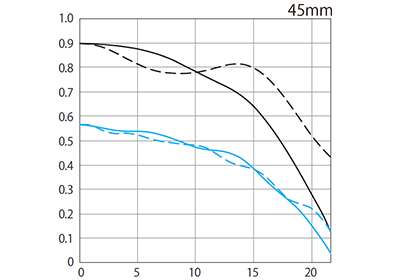
My take on it is lenses with very good across frame sharpness and very close sagittal and tangential MTF traces, which I believe means low astigmatism, generally have that 'clean' even bokeh ball quality. I believe it's also a fine balance of spherical aberration correction. And the degree of optical vignetting is likely another factor (the cat's eye bokeh effect that can contribute to unsettling bokeh swirl), combined with field curvature.
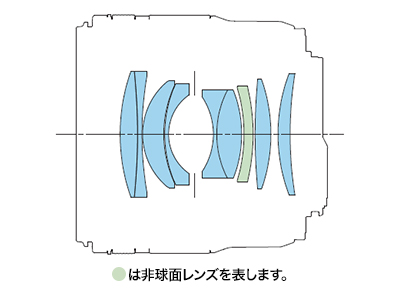
The L is just a better corrected lens and a modern 50mm optical design. The 45 is a variant of old school double Gauss design, but that's also the intent. It's simply an optical design that can't be as well corrected as the L or any other similar high end 50mm now available from Nikon, Sony, Sigma, Leica, Panasonic, Zeiss, even Tokina... I think the lenses that really kicked this off at 50mm were the Zeiss Otus and Sigma Art a bit over 10 years ago.
Before writing off the 45 though, you should try to find sample images at slightly stopped down aperture values to determine if it makes any difference/improvement. I don't have the 45 and can't comment, but I had the EF 50/1.2L and I liked its bokeh quality a lot more stopped down around f/2. A lot of 'old school' busy/wild 50mm lenses calm down stopped down a little. The side benefit here is that you can dial in the look you want depending on your mood, the subject content, etc. The modern 50s on the other hand seem to remain very consistent stopped down, which can be an advantage in its own right. Just depends on what you prefer.
For reference, here's the 45's MTF and block diagram: