old-gregg wrote:
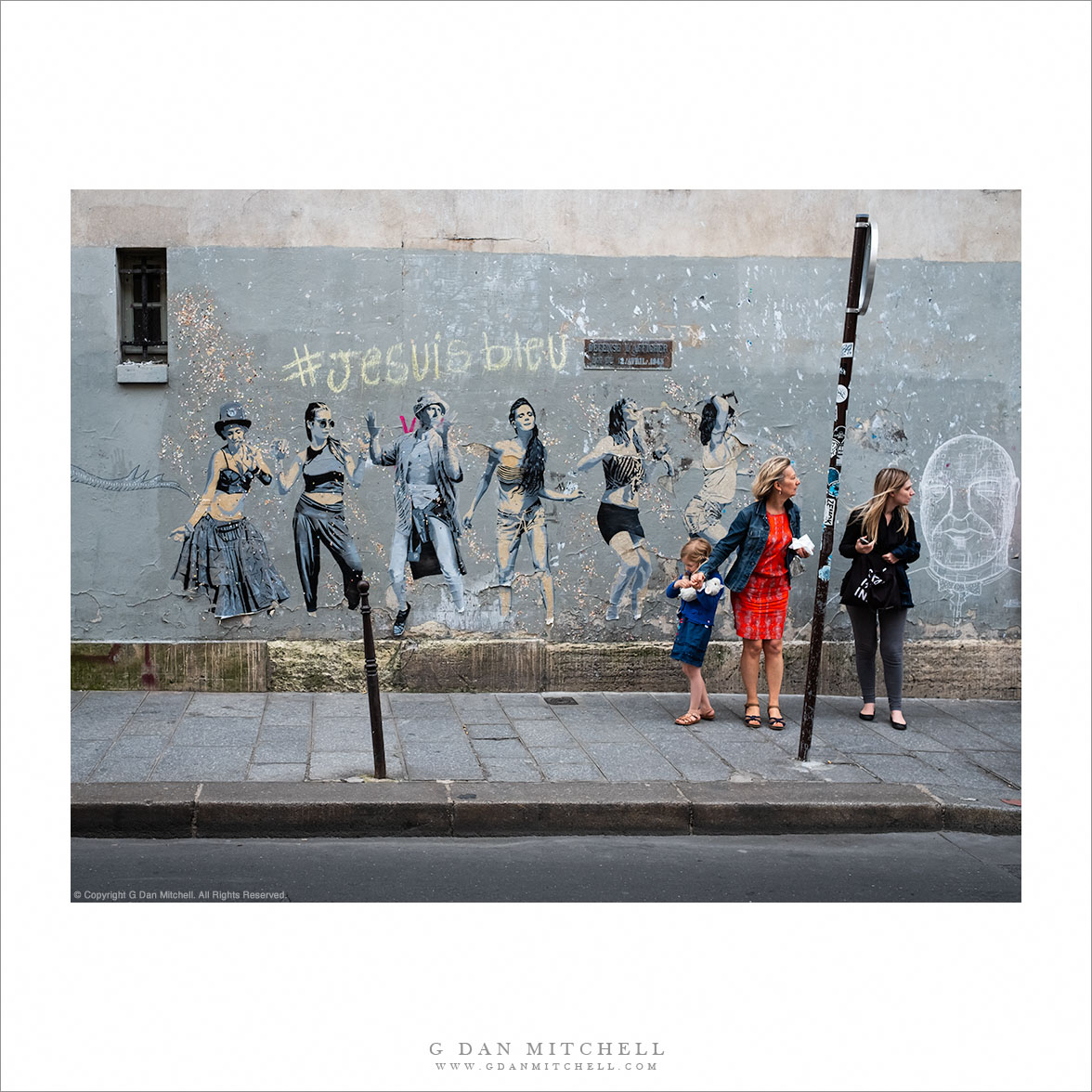
How do you shoot, I mean the technique? Center focus point AF + recompose? The thing about "street photography" is that it's not a well defined genre.
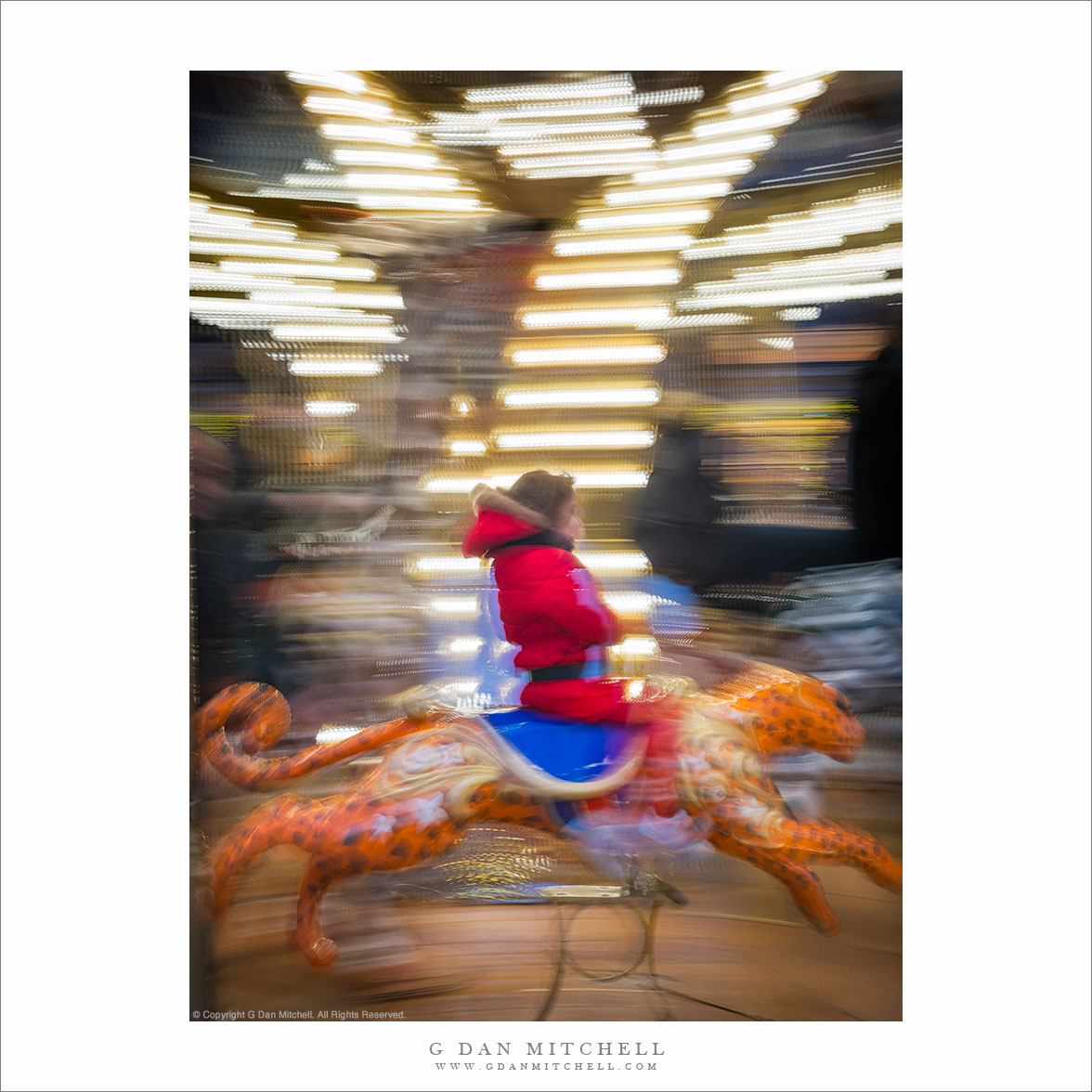
... and those are some of my favorite shots (and generally I prefer motion in an image). That's why I've settled on f/8, prefocus, and "be there" (which is the hard part!)
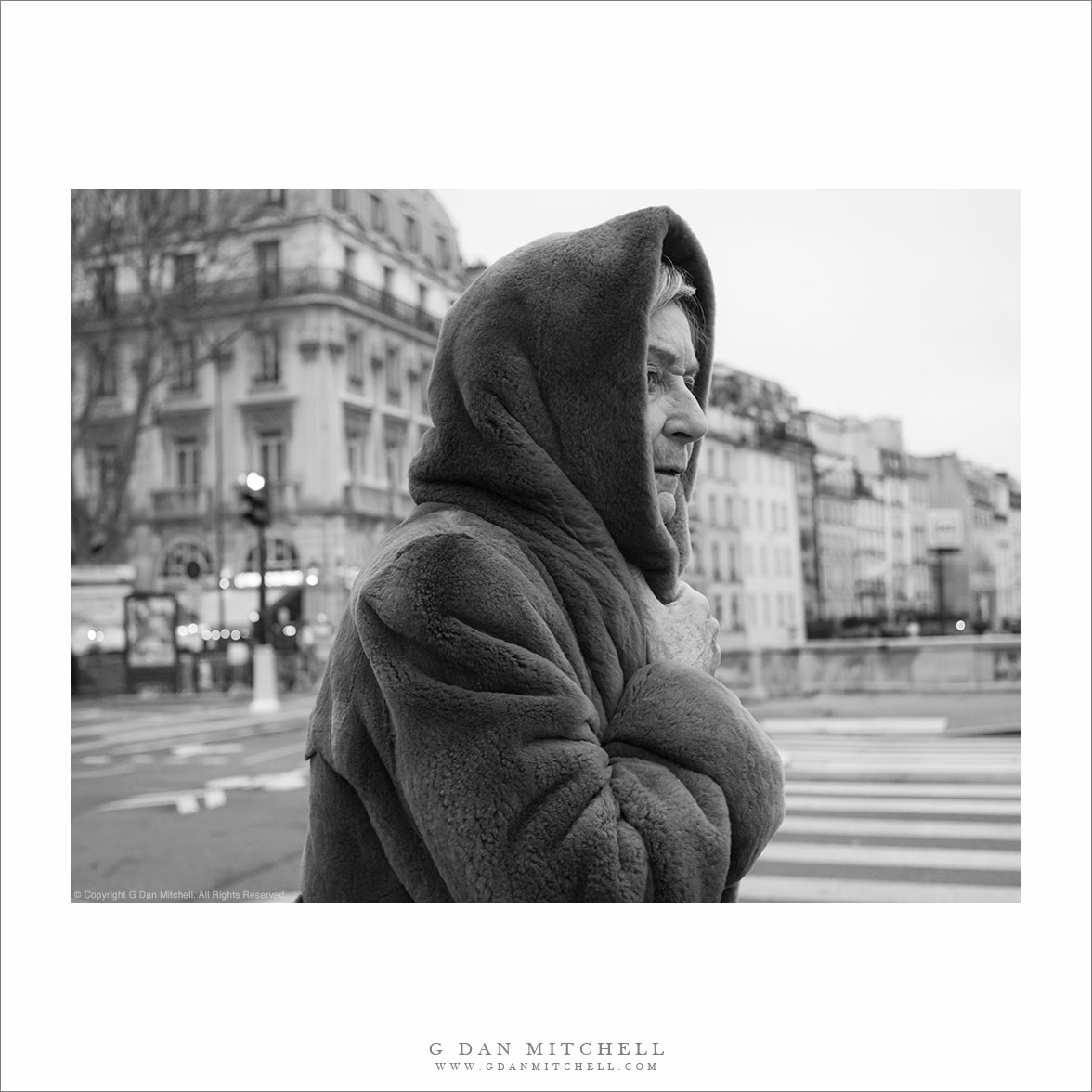
Generally I'am going to use a small focus zone, but not as small as a (so-called) point. In your second shot I would have made a split second decision as to whether I wanted to choose between the near or far subjects or, if things were happening very quickly, I might have focused on a portion of the car between them, slightly closer to the near figures than the further ones.
Congratulations on that third one — that was an incredibly good stroke of luck and timing and quick responses on your part! I also do a lot of bird photography — completely independent of street photography and I quite different locations — and I recognize that getting good focus on a bird and other subjects at different distances (even a second bird sometimes) is a real challenge. If I was lucky enough to get that combination of subjects and was quick enough to shoot it, the odds are that I'd try to AF on the bird. But given how quickly that must have happened, in that case refocusing or hyperfocal distance focusing (fortunately at the distance that included the bird!) would give a better result.
But that also highlights an other facts about street. Stuff happens fast sometimes and you are going to miss things. Often I shot what I think is about to happen since waiting to see it occur means I'll be too late — so I end up with a lot of frames where that thing did not end up happening. Also, however you set up your camera, the set won't be right for some things that occur. Fortunately, in the case of the wonderful bird photograph, you got lucky with the distances and timing and, obviously, you were ready to act.
One more thing. There are situations (at leases the way I shoot street) where I get the best results by using AF. But that doesn't mean I cannot choose to MF if I need to. Unfortunately, with that MF only lenses, you don't have the option to go the other way and momentarily switch to AF.
StuartB wrote:
Without rehashing the whole “equivalence” debate, I’d just mention that for street photography, I’m usually fighting for more DOF rather than less, so the fact that an APS-C sensor will yield more DOF for a given field of view and aperture is a pro rather than a con from my point of view (again, for street photography). I shoot both Fuji (multiple bodies) and Sony (A9), and would urge the original poster to consider whether full-frame is necessarily a benefit for his smaller street/travel setup. Sony certainly has better autofocus, but APS-C has real benefits for street use (including lens size, in addition to greater DOF). Sony (or Nikon) APS-C would also be an option, of course, but in the APS-C world, Fuji has by far the most extensive lens lineup. ...Show more →
I was speaking of light gathering more than DOF, but even so, FF will typically give you a stop of noise, so just stop down for equivalent DOF.
To your other point, it's well made. I always have an X100 series in my arsenal (currently X100V) and I love whole gestalt of Fuji cams, especially their XT series. The new XM is also really compact, and I think I prefer the output from the 26mp XTrans sensor vs. the 40mp. Fuji's f/2 WR series lenses are very small and very nicely built - I'd think twice before I ditched them if I was going for unobtrusive.
Pluses and minuses to both - and since this is a gear forum, and I heartily support GAS, i recommend running both systems and being very happy
StuartB wrote:
Yes, fair enough on the noise point, although I find it doesn’t really matter these days up to around ISO 3200.
Yes, I generally don't think about noise on my X100V until 3200 - I also think the Fuji handles noise at high ISO very nicely in black and white (Acros), and will shoot at 6400 for more of a Delta 3200 look.
I think we're pretty spoiled these days - most of the cameras from the top companies are just that - top notch. I think handling, size and lens selection are more of a deal breaker. If I had infinite money I'd also have an XT5 and a bevy of lenses just for fun.
I have Sony and Nikon, and I just started dabbling in Fuji.
I'm not entirely sure what you're hoping to accomplish with Sony that you can't accomplish with Nikon, but I'll take some guesses.
I would think that Nikon AF is good enough for street: you use it for birds so if you can be effective for that, you should be effective with the human eye as well.
For size, the only way to slim down the profile is to go with A7CII or A7CR. If so, it sort of predispositions you towards smaller lenses, because many full frame lenses are nose heavy on the small A7C series, IMO.
To cover these:
18mm 1.4 (interior architecture and landscape, + sharp)
23mm 2.8 (light and unobtrusive for street work)
23mm 1.4 (interior architecture and landscape, + sharp)
35mm 2 (light and unobtrusive for street work)
56 1.2 (low light, + sharp)
I suppose you'd want:
Either the Sony 24 1.4 GM or a Sigma 24 f/2 I Series
Sony 40 f2.5 (Very compact)
Sony 35 1.4 GM
Sony 50 f/2.5 (Very compact)
To cover the 56 1.2, you have a few options. If you want something compact, the Sigma 90mm f2.8 I series is a good bet, but much slower. If you want something fast, you have no choice but to go either with a large Sony 85 1.4, or the Sigma 85, and they will look *enormous* on an A7C series.
Then you can discuss the "feel" of it. I think the A7C is a great travel camera, but for me, when I think of street photography I think of something super responsive, low shutter blackout, etc. The shutter blackout on the A7C series is a bit long.
I personally don't think the A7C is any less noticeable than any modest sized mirrorless... you're going to get noticed pointing a camera in someone's direction.
nineblade wrote:
I personally don't think the A7C is any less noticeable than any modest sized mirrorless... you're going to get noticed pointing a camera in someone's direction.
100%. Strangers, at least here in the US, are increasingly hostile towards traditional-looking modern cameras like DLSRs or mirrorless, but...
- Smartphones are completely invisible to them, even when you're openly shooting.
- Retro cameras, even huge ones like Mamiya TLRs, somehow seem friendly to them.
old-gregg wrote:
100%. Strangers, at least here in the US, are increasingly hostile towards traditional-looking modern cameras like DLSRs or mirrorless, but...
- Smartphones are completely invisible to them, even when you're openly shooting.
- Retro cameras, even huge ones like Mamiya TLRs, somehow seem friendly to them.
To be fair, you could have just stopped at "increasingly hostile..."
StuartB wrote:
the fact that an APS-C sensor will yield more DOF for a given field of view and aperture is a pro rather than a con from my point of view (again, for street photography).
You are not making much sense here. We stop down until the DOF is where it needs to be.
StuartB wrote:
consider whether full-frame is necessarily a benefit for his smaller street/travel setup.
A full-frame user can often carry fewer lenses, which can mean lower weight, fewer lens changes and fewer missed shots during those changes.
For example, the OP carries a 23/1.4 (380 g) and a 35/2 (170 g). In full-frame terms, this roughly corresponds to a 35/2 and a 50/2.8.
On full frame, both of these can be replaced by a single 35/2. When needed, the lens can be used in APS-C crop mode to achieve a field of view and depth of field similar to a 50/2.8.
The Sony 35mm f/1.8 weighs about 280 g, which is significantly lighter than carrying both the 23/1.4 and 35/2 together (around 550 g total).
StuartB wrote:
Without rehashing the whole “equivalence” debate, I’d just mention that for street photography, I’m usually fighting for more DOF rather than less, so the fact that an APS-C sensor will yield more DOF for a given field of view and aperture is a pro rather than a con from my point of view (again, for street photography). I shoot both Fuji (multiple bodies) and Sony (A9), and would urge the original poster to consider whether full-frame is necessarily a benefit for his smaller street/travel setup. Sony certainly has better autofocus, but APS-C has real benefits for street use (including lens size, in addition to greater DOF). Sony (or Nikon) APS-C would also be an option, of course, but in the APS-C world, Fuji has by far the most extensive lens lineup. ...Show more →
Eco-Scott wrote:
(I shoot sometimes in conditions that benefit from weather sealing.)
My opinion on this is avoid the A7C series if concerned about weather sealing. I have an A7CR, which I have opened up to self repair a dial, and the weather sealing seemed weak. Personally I wouldn't trust it in more than a light rain.
dakel wrote:
My opinion on this is avoid the A7C series if concerned about weather sealing. I have an A7CR, which I have opened up to self repair a dial, and the weather sealing seemed weak. Personally I wouldn't trust it in more than a light rain.
Interesting.
Have you compared the weather sealing components to the same components on other cameras (Sony or not)?
Jonas B wrote:
Interesting.
Have you compared the weather sealing components to the same components on other cameras (Sony or not)?
I also opened up my A1 after it suffered sea water ingress - I attempted to replace the rear LCD which had stopped working. Alas it was not the rear LCD but some other component so I gave up. In any case, the weather sealing on the A1, as expected was noticeably better than the A7CR. Regrettably I neglected to take any photos to document this so it's just my word.
I have taken my cameras into some harsh conditions. Both are still operational but the A1 has a dead LCD. The A7CR which suffered fresh water ingress, twice now, has survived despite the lack of weather sealing, after letting everything dry out. Lucky I guess although it contradicts my earlier statement about weak weather sealing!
dakel wrote:
My opinion on this is avoid the A7C series if concerned about weather sealing. I have an A7CR, which I have opened up to self repair a dial, and the weather sealing seemed weak. Personally I wouldn't trust it in more than a light rain.
---------------------------------------------
dakel wrote:
I also opened up my A1 after it suffered sea water ingress - I attempted to replace the rear LCD which had stopped working. Alas it was not the rear LCD but some other component so I gave up. In any case, the weather sealing on the A1, as expected was noticeably better than the A7CR. Regrettably I neglected to take any photos to document this so it's just my word.
I have taken my cameras into some harsh conditions. Both are still operational but the A1 has a dead LCD. The A7CR which suffered fresh water ingress, twice now, has survived despite the lack of weather sealing, after letting everything dry out. Lucky I guess although it contradicts my earlier statement about weak weather sealing!...Show more →
Thanks.
Yeah, it's a bit contradictory, but at the same time, it's totally possible that it's true. What I'm writing below isn't directly related to you, but is just some general stuff.
My experience with the A7CR and A1 is limited to normal rain. Both cameras have survived just fine.
This is a tricky subject. The experiences you hear or read about are isolated incidents described by unknown individuals.
How can you tell that one camera has better protection than another? Thicker O-rings and gaskets? Better quality surfaces that meet so that a thinner gasket is sufficient? The design of surfaces that meet and prevent water from entering (and dust and moisture from escaping)? How important is the design of the camera body, for example, in terms of how much parts can flex when lifting a camera with a heavy lens?
I guess everything has an impact.
mojoh wrote:
How about a RX1R3, Leica Q3 or Q3 43?
I consider them too expensive for the overall preferences. I don't think there are true alternatives, A7CR has low resolution screen and considerably larger with an 35 F2 AF glass, Leica Q cameras are also 30% lighter than an ILCE alternative with high resolution EVF and high res tilting screen, also they have leaf shutter. Still those are not generally recommendable because the fixed lens and price/performance ratio, in this case I think they are disqualified due the need of different focal lengths. I'd consider RX1RIII for the size, and Leica Qs for the portability and shooting experience combined top tier IQ.
aCuria wrote:
You are not making much sense here. We stop down until the DOF is where it needs to be.
Perhaps not much, but maybe still a bit of sense. If you want to maintain a minimum shutter speed, stopping down will involve raising the ISO. As I mentioned above, I have no qualms doing so up to a point, and I know it is internet orthodoxy that full frame will always be 1-stop better than APS-C in terms of noise/ISO performance, but I like ISO 12800 on my A9 less than ISO 6400 on my Fuji cameras. It may be a personal idiosyncrasy, but I like a smaller sensor for street photography. Never was tempted to use medium format for street photos in the film days, either...
aCuria wrote:
A full-frame user can often carry fewer lenses, which can mean lower weight, fewer lens changes and fewer missed shots during those changes.
For example, the OP carries a 23/1.4 (380 g) and a 35/2 (170 g). In full-frame terms, this roughly corresponds to a 35/2 and a 50/2.8.
On full frame, both of these can be replaced by a single 35/2. When needed, the lens can be used in APS-C crop mode to achieve a field of view and depth of field similar to a 50/2.8.
The Sony 35mm f/1.8 weighs about 280 g, which is significantly lighter than carrying both the 23/1.4 and 35/2 together (around 550 g total). ...Show more →
Cropping certainly is a benefit -- it is what tempted me back to the RX1iii (I had the original RX1 once upon a time). In terms of interchangeable lens cameras, for your lightness approach to work I suspect you would need to use one of the A7C bodies. I don't personally love them, but I'm hoping a future iteration of those bodies is more palatable (I'd like a joystick for the focus point, and either a faster electronic shutter or a quieter mechanical shutter).
shadow9d9 wrote:
It only highlights your desperation, so I welcome it.
Adapted lenses only reinforce that it is closed. It is utterly laughable that you equate using a clunky third party adapter to being an open sustem. To be so intentionally disingenuous shows a staggering amount of cope.
Nikon rebadging tamron lenses with a price hike also tells all. No sigma does as well.
So please do...show how desperate closed mount owners are to jistify their poor choices. Nikon and Canon were cleae from the get go. They are laughing all the way to the bank. Tribalism often overrides logic. Brand loyalista will buy in anyway, and many have. That is the power of brands and the masses.
There is nothing clunky about Megadap adapters. I use them all the time with lenses big and small, mostly Sigma and a couple of GM. Nikon repurposing Tamron lens was a very good decision. Being that they are first party, AF, VR, and all other features work as first party. In addition the 70-180 got the ability to accept TC. However if someone is a "Tamron brand snob", all of those lenses are now also available as Tamron brand.
While on the topic of TC, to add insult to injury, the E2Z adapter allows Nikon bodies to mount Sony TC on Sigma lenses and use with full AF. I bought Sigma 105mm Macro just to get a 1.4x magnification for half the price of new Sony Macro alone (without the TC).
StuartB wrote:
for your lightness approach to work I suspect you would need to use one of the A7C bodies.
I don't think we necessarily need an A7C body:
OP's Setup: X-T5 (557g), 23/1.4 (380 g) and a 35/2 (170 g) Total 1107g
Example Setup: A7V (695g), 35/1.8 (280g) Total 975g
StuartB wrote:
I like ISO 12800 on my A9 less than ISO 6400 on my Fuji cameras.
This is probably camera model dependent to some extent. You can look at this, one is FF iso 12,800 and the other is APSC iso 6400.
Processing:
1) lightroom denoise applied at default strength (50),
2) images exported at the same resolution
3) 1024x1024 section cropped out (due to flickr limitation)
StuartB wrote:
Perhaps not much, but maybe still a bit of sense. If you want to maintain a minimum shutter speed, stopping down will involve raising the ISO. As I mentioned above, I have no qualms doing so up to a point, and I know it is internet orthodoxy that full frame will always be 1-stop better than APS-C in terms of noise/ISO performance, but I like ISO 12800 on my A9 less than ISO 6400 on my Fuji cameras. It may be a personal idiosyncrasy, but I like a smaller sensor for street photography. Never was tempted to use medium format for street photos in the film days, either...
Cropping certainly is a benefit -- it is what tempted me back to the RX1iii (I had the original RX1 once upon a time). In terms of interchangeable lens cameras, for your lightness approach to work I suspect you would need to use one of the A7C bodies. I don't personally love them, but I'm hoping a future iteration of those bodies is more palatable (I'd like a joystick for the focus point, and either a faster electronic shutter or a quieter mechanical shutter).
indusphoto wrote:
There is nothing clunky about Megadap adapters. I use them all the time with lenses big and small, mostly Sigma and a couple of GM. Nikon repurposing Tamron lens was a very good decision. Being that they are first party, AF, VR, and all other features work as first party. In addition the 70-180 got the ability to accept TC. However if someone is a "Tamron brand snob", all of those lenses are now also available as Tamron brand.
While on the topic of TC, to add insult to injury, the E2Z adapter allows Nikon bodies to mount Sony TC on Sigma lenses and use with full AF. I bought Sigma 105mm Macro just to get a 1.4x magnification for half the price of new Sony Macro alone (without the TC).
Switching lenses is a clunky process. Adding a second connector to part of your lens collections adds more clunk. Adding a new breaking point is just bad. It will never have the speed or accuracy as a native lens either. It is for those desperate, due to lack of diversity of native lenses in a closed, consumer hostile system that they decided on nonetheless.
shadow9d9 wrote:
Switching lenses is a clunky process. Adding a second connector to part of your lens collections adds more clunk. Adding a new breaking point is just bad. It will never have the speed or accuracy as a native lens either. It is for those desperate, due to lack of diversity of native lenses in a closed, consumer hostile system that they decided on nonetheless.
Just stop it please. It's basically a fine thing Nikon camera users can enjoy Sony lenses as well as Nikon and Tamron lenses. There is no need for this repeated bashing and/or namecalling. All it does is making this small community more hostile (and even smaller).