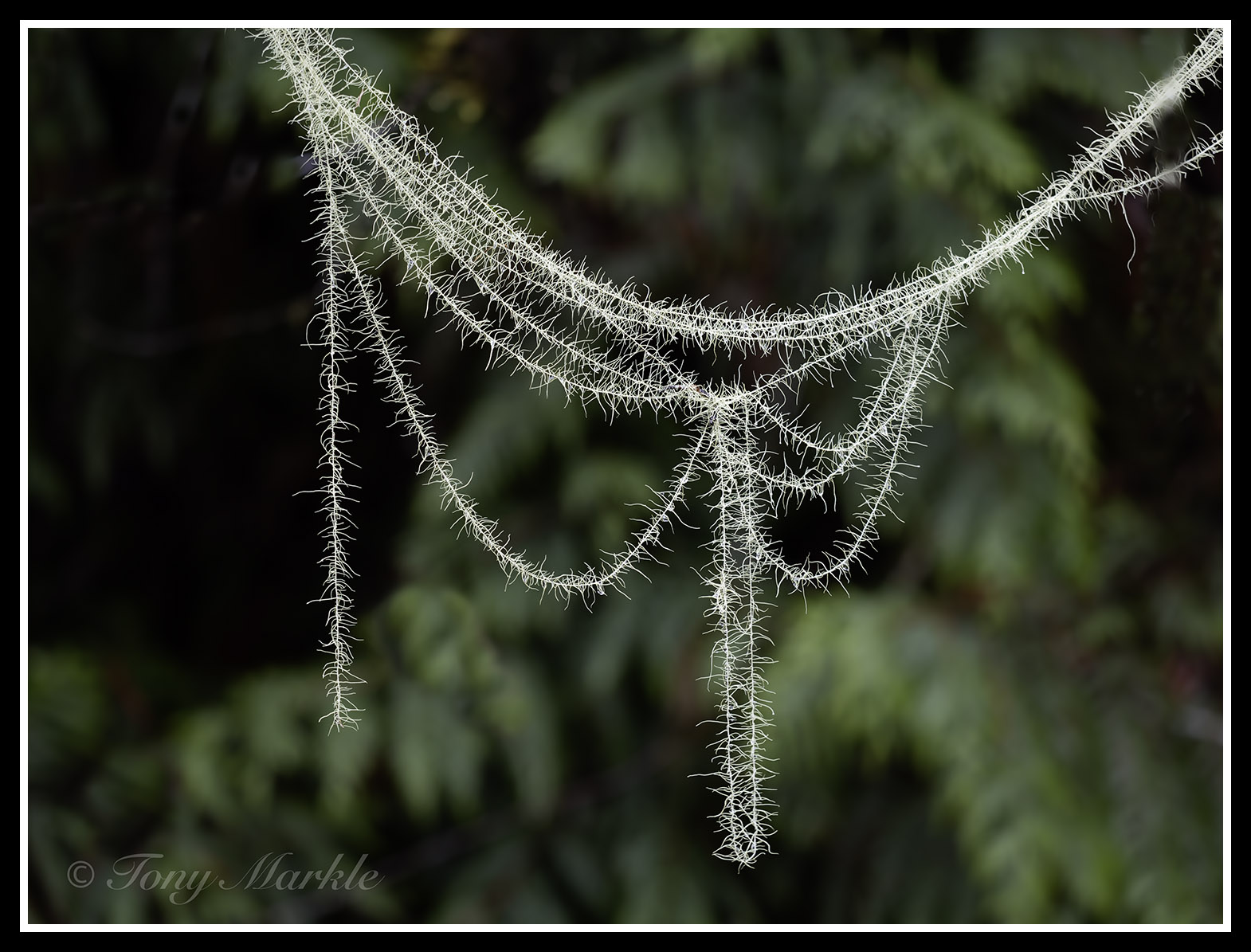
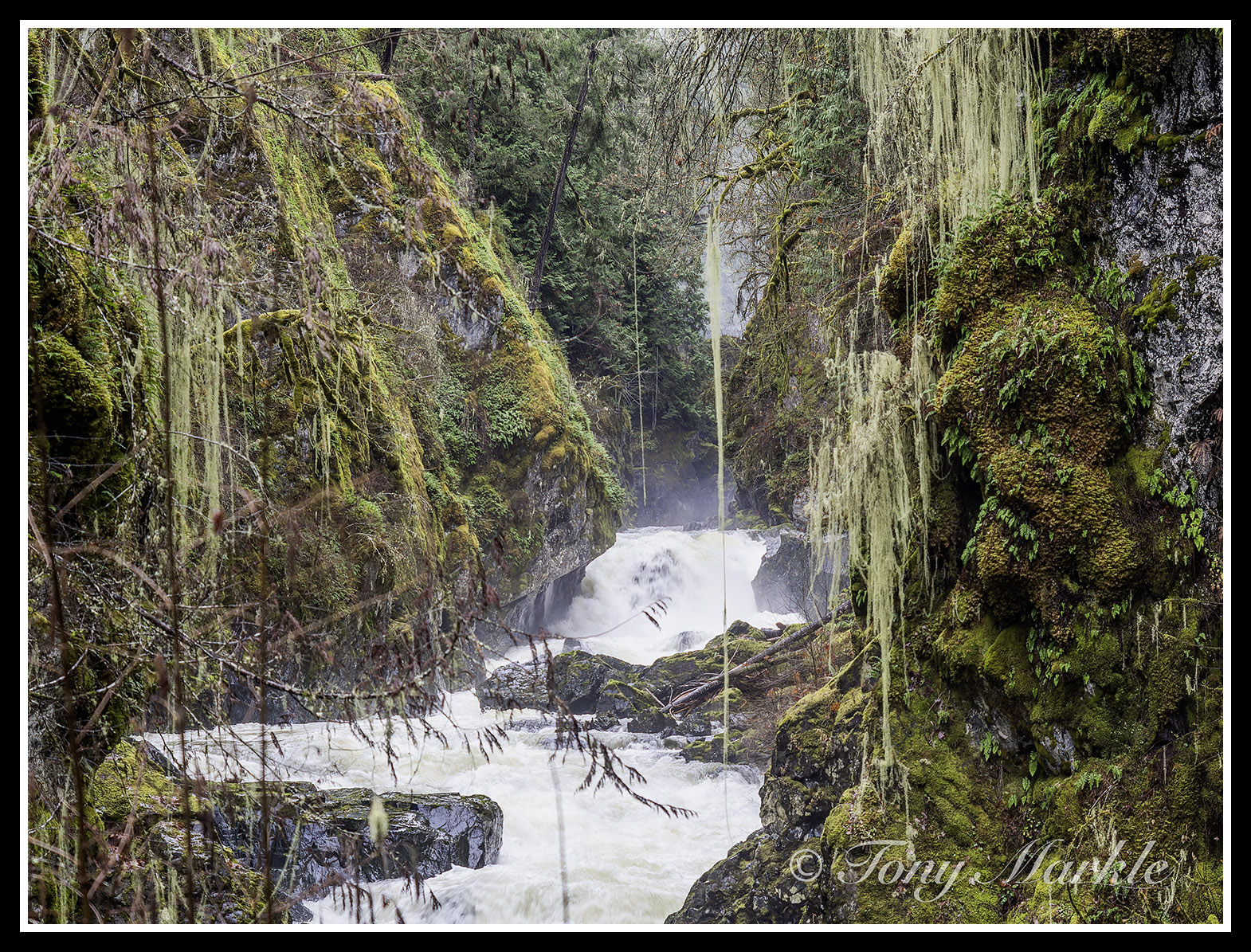
This lichen is fruticose, with very long stems and short, even side branches. It is considered the longest lichen in the world. The stems are usually 6 to 12 inches in length but are sometimes much longer. It is pale green to silvery-yellow. It has a distinct central cord, which is white. It may grow to be 20 feet in length. It predominantly reproduces asexually through fragmentation. Spore-producing structures are rarely observed. It can double its length each year.
Methuselah's Beard Lichen (Usnea longissima) and Spanish Moss (Tillandsia usneoides) both hang in wispy strands but are fundamentally different: the lichen is a fungus-algae combo, often with a stretchy white inner cord and bioindicator for clean air, while Spanish Moss is a flowering plant (bromeliad) with uniform strands, common in warm Southern US climates, and both are often confused due to their similar appearance. The key ID trick: pull a strand of lichen; the inner string snaps like a rubber band, which Spanish Moss lacks.
B Benson wrote:
Tony, very interesting, it looks a little like Spanish moss. Bruce
Thanks Bruce. They look similar, but Methuselah's Beard Lichen (Usnea longissima) and Spanish Moss (Tillandsia usneoides) both hang in wispy strands but are fundamentally different: the lichen is a fungus-algae combo, often with a stretchy white inner cord and bioindicator for clean air, while Spanish Moss is a flowering plant (bromeliad) with uniform strands, common in warm Southern US climates, and both are often confused due to their similar appearance. The key ID trick: pull a strand of lichen; the inner string snaps like a rubber band, which Spanish Moss lacks.