Coltrane wrote:
I don't believe there is one definitive answer to this question. I've seen great portraits taken with focal lengths from 28mm to 400mm. For portraits, I personally prefer a portrait range from 85mm to 200mm with the sweet spot being around 135mm. If I had to select an ideal Fuji lens for portraits, I'd go with the 90mm f2.
For portraits the theory is something a bit on the long side to avoid unfortunate perspective effects, wide angles will give large noses and small ears. But you have to interact with sitter, at least to get them to 'say cheese', if it's too long you have to shout! Most people would choose around 50 to 60mm on Fuji aps-c.
Gerry
Dec 25, 2025 at 02:16 AM
Steve Spencer Offline • • • • • • • Upload & Sell: Off
gyoung143 wrote:
For portraits the theory is something a bit on the long side to avoid unfortunate perspective effects, wide angles will give large noses and small ears. But you have to interact with sitter, at least to get them to 'say cheese', if it's too long you have to shout! Most people would choose around 50 to 60mm on Fuji aps-c.
Gerry
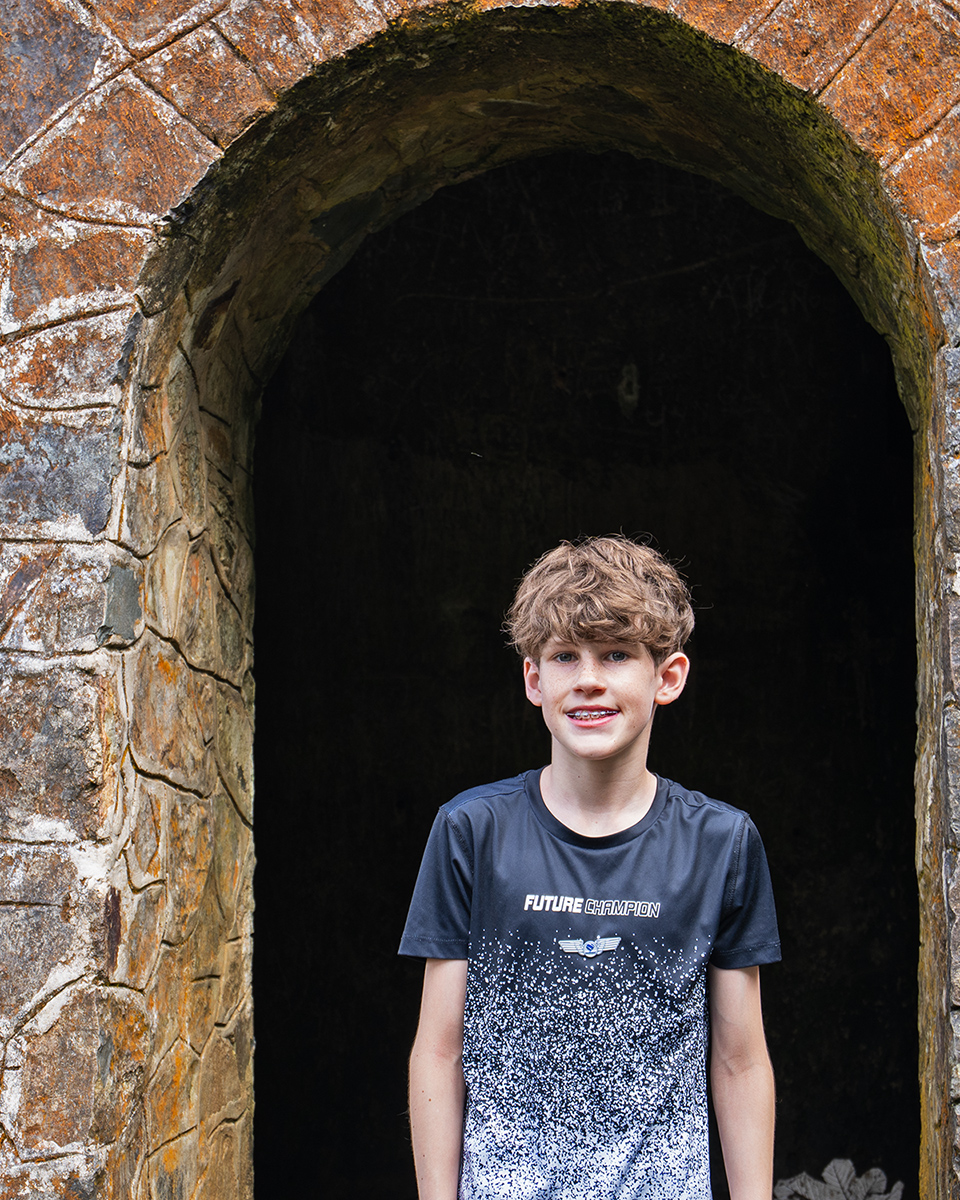
I have the Viltrox 27 f/1.2 Pro, the Viltrox 56 f/1.2 Pro, and the Fuji 90 f/2 and they all make excellent portrait lens. I don't find the perspective difference between them to be that great. Even the 27mm is a normal focal length (the perspective close to what our eyes see). The focal length does affect the distance from which you shoot. I pick the 27mm if I am in close quarters and the 90mm when I know I will be further away. I think for portraits the focal length is a very small matter and interacting with the person being photographed and getting the expression you want is the much more important part.
To illustrate that point. I am attaching two photographs of my son that are similar in composition. I like the first one much better as it captured an expression of his I like. The second one is off to my eye. I asked him afterward and he said he was scared because there were a number of bees in the area and didn't want to get stung. I think that anxiety shows up in the shot.
ILCE-7RM5FE 16-35mm F4 ZA OSS lens28mmf/4.01/100s100 ISO+0.3 EV
ILCE-7RM5Voigtlander NOKTON 40mm F1.2 Aspherical lens40mmf/2.01/500s100 ISO0.0 EV
The better ( or latest ? ) the fuji lenses get or supposedly get, by individual criteria, it appears to me the lenses get bigger, heavier, more costly.
I bought into the Fuji eco-system to avoid heavy and large ( for me xf 33/1.4 is large for 50mm effective focal length in 35mm terms).
I have quite a few xf lenses. I don’t use most of them ( not easy to sell where I am ).
If I am not sure what to take on travels, a 18-55 plus a 35/1.4 will do, for me.
Besides the effect on the fact of the subject, a significant difference between using longer and shorter focal lengths is your ability to control the background and its relationship to the subject. (This is such basic photography 101 stuff, that I’m almost embarrassed to post it, but there you go.)
Let’s say that you want your subject (or subject’s head) to occupy y some portion of the frame. With a wider lens a larger area of the background will be included within this angle of view. With a longer lens and narrower angle of view, you have more control over limiting the extent of the background that will be included. By moving the camera position or the subject a bit you might completely change what is in the background.
In addition, due to the way DOF works with different focal lengths, a lot of that background is likely to be closer to being in focus with the wider lens, again increasing the potential for distraction. The “OOF-ness” is magnified with the longer lens at the same apertures.
As to the thread question about where there is some one lens that is best among Fujifilm lenses, you’ll never get any agreement about that, so no.
My 33m f1.4 LM WR I like to refer to as my "gun". Just point in the general direction of something cool and it looks brilliant. I like the 50mm FFeq focal length, can be a little tight indoors but the versatility saved me from carrying more lenses.
Some people refer to it as clinically sharp, I am newish to the hobby so that could be so, but to me the contrast and colors look better than reality. That feels like a type of character to me.
griddle151 wrote:
My 33m f1.4 LM WR I like to refer to as my "gun".
Oh, I like that =D
Some people refer to it as clinically sharp, I am newish to the hobby so that could be so, but to me the contrast and colors look better than reality. That feels like a type of character to me.
I heard that before, but nothing you can change in the settings or a mist filter, should you want that. It is good to have options.
Personally, it also feels the AF works better with the 33mm f1.4 that with the 27mm f2.8, or maybe I'm missing something.
griddle151 wrote:
Some people refer to it as clinically sharp, I am newish to the hobby so that could be so, but to me the contrast and colors look better than reality. That feels like a type of character to me.
Thats a bad thing, and thats what people mean if a lens looks clinical (sharp or not).
More precisely, what you describe is not actually possible. Therefore you probably describe the opposite.
gdanmitchell wrote:
“Clinically sharp” is one of my least favorite comments.
What does that even mean? The lens would be better if it were less sharp? “Yeah, I’d buy that lens if they just made it less sharp!”
;-)
I would see it as praise, but often it's meant as criticism. Hence the love for designs with residual uncorrected aberrations at full aperture.
But then against all evidence they would claim that it was sharper anyway!
gyoung143 wrote:
I would see it as praise, but often it's meant as criticism. Hence the love for designs with residual uncorrected aberrations at full aperture.
But then against all evidence they would claim that it was sharper anyway!
Gerry
It is usually offered as a criticism of a lens, as it “I prefer lens A because lens B is too clinically sharp.”
How a lens can be too sharp is beyond me. (I’m certainly not sayng that a lens must always be the very sharpest lens available. Sharp enough is sharp enough.)
But unless you are doing something rather unusual in your photography — creating intentionally blurry images? — having a lens that is potentially very sharp will hardly hold you back. Heck, you could always shoot slightly out of focus with that sharp lens if you felt that it was a problem. Or you do useful and interesting things in post to get the effect you want.
gdanmitchell wrote:
It is usually offered as a criticism of a lens, as it “I prefer lens A because lens B is too clinically sharp.”
How a lens can be too sharp is beyond me. (I’m certainly not sayng that a lens must always be the very sharpest lens available. Sharp enough is sharp enough.)
But unless you are doing something rather unusual in your photography — creating intentionally blurry images? — having a lens that is potentially very sharp will hardly hold you back. Heck, you could always shoot slightly out of focus with that sharp lens if you felt that it was a problem. Or you do useful and interesting things in post to get the effect you want. ...Show more →
Yes you can always soften effectively, even with the old film remedies, smeared vaseline on a UV filter, or a ladies stocking over the lens :-)
gyoung143 wrote:
Yes you can always soften effectively, even with the old film remedies, smeared vaseline on a UV filter, or a ladies stocking over the lens :-)
Heh.
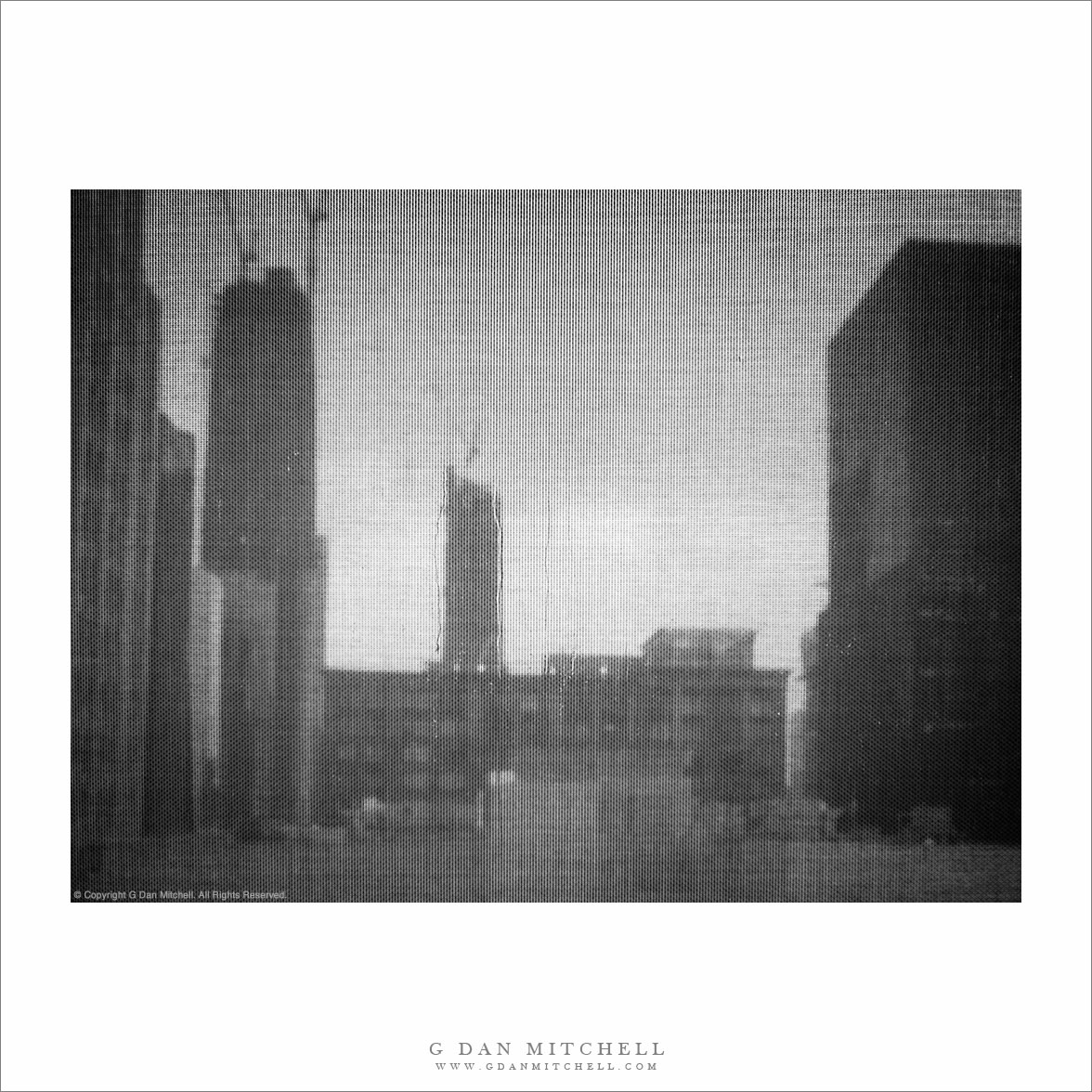
That reminded me of this photograph. I licensed it to a magazine some years back — I think it was “Elle” for an article or story related to San Francisco, where I made the photograph.
I interpret 'clinically sharp' as meaning very sharp, high micro contrast, with nuetral or sterile rendering. Some portrait photographers prefer lenses that aren't clinically sharp. Being able to see the pores on the nose of a female model is usually not desirable. Sure you can always soften in post but that is more work. As for shooting out of focus, that requires manual focus and will mean something else will be in focus - tip of the nose or ears instead of eye.
To give an example, for what I use them for I prefer the Fuji 18mm f2 and 35mm f1.4 to the Panasonic Leica 15mm f1.7 and 25mm f1.4 for M4/3 , which I have since sold, even though the Panasonic Leica lenses were sharper and might fit the 'clinically sharp' description.
gdanmitchell wrote:
“Clinically sharp” is one of my least favorite comments.
What does that even mean? The lens would be better if it were less sharp? “Yeah, I’d buy that lens if they just made it less sharp!”
;-)
Clinically sharp and character are 2 different things. Those who want clinically sharp, don't like to want character. Those who like character, don't like or get clinically sharp lenses for a test.
Nikon Z's are more "clinically sharp", Fuji's are more "character", and the Fujicron's are more character than there f/1.2 and f/1.4's...
RWNPhoto wrote:
Clinically sharp and character are 2 different things. Those who want clinically sharp, don't like to want character. Those who like character, don't like or get clinically sharp lenses for a test.
Nikon Z's are more "clinically sharp", Fuji's are more "character", and the Fujicron's are more character than there f/1.2 and f/1.4's...
Hmm, depends what character you value. I can think of several lenses that have lots of character in terms of colour rendering and are also amongst the sharpest of their focal length and coverage. Mostly Zeiss and Leitz designs.
I think you will probably be amongst a very s all group if you thing tge Fuji 35mm f/2 has more 'character' than the 1.4
RWNPhoto wrote:
Clinically sharp and character are 2 different things. Those who want clinically sharp, don't like to want character. Those who like character, don't like or get clinically sharp lenses for a test.
Nikon Z's are more "clinically sharp", Fuji's are more "character", and the Fujicron's are more character than there f/1.2 and f/1.4's...
Define “character.”
Then show me objective examples.
And demonstrate that none of that “character” is the result of normal, creative post-processing.
And demonstrate that none of that “character” is the result of normal, creative post-processing.
;-)
Sorry, not gonna go down that route. I didn't invent the term "Character". You tubers and others did. If you ONLY want "Sharp" lenses, ones that can make every detail sharp, in your images, then buy them. But them all and enjoy.
You can get AI to make dull images sharper. You can make AI, or clueless slider dragging in LR/C1, and make them "less sharp" and thus, maybe "more character". So, do it either way.
But, there IS a difference in the images straight from the Fujicron 35mm f/2, and Fuji 35mm f/1.4, and the newest Fuji 33mm f/1.4 LM... You can love one and the others are junk, or like 2 and discount the other, whatever. I have 2 of them, for a reason.
If we assume "clinical" is a negative and "character" is a positive, I suspect that all of us would still have different examples of what that means to us personally. I don't see why some feel like they have to choose a style or that one or the other is "better". I feel that there is room for both and choice is a beautiful thing. We don't all like the same food, same music, or have matching definitions of beauty.