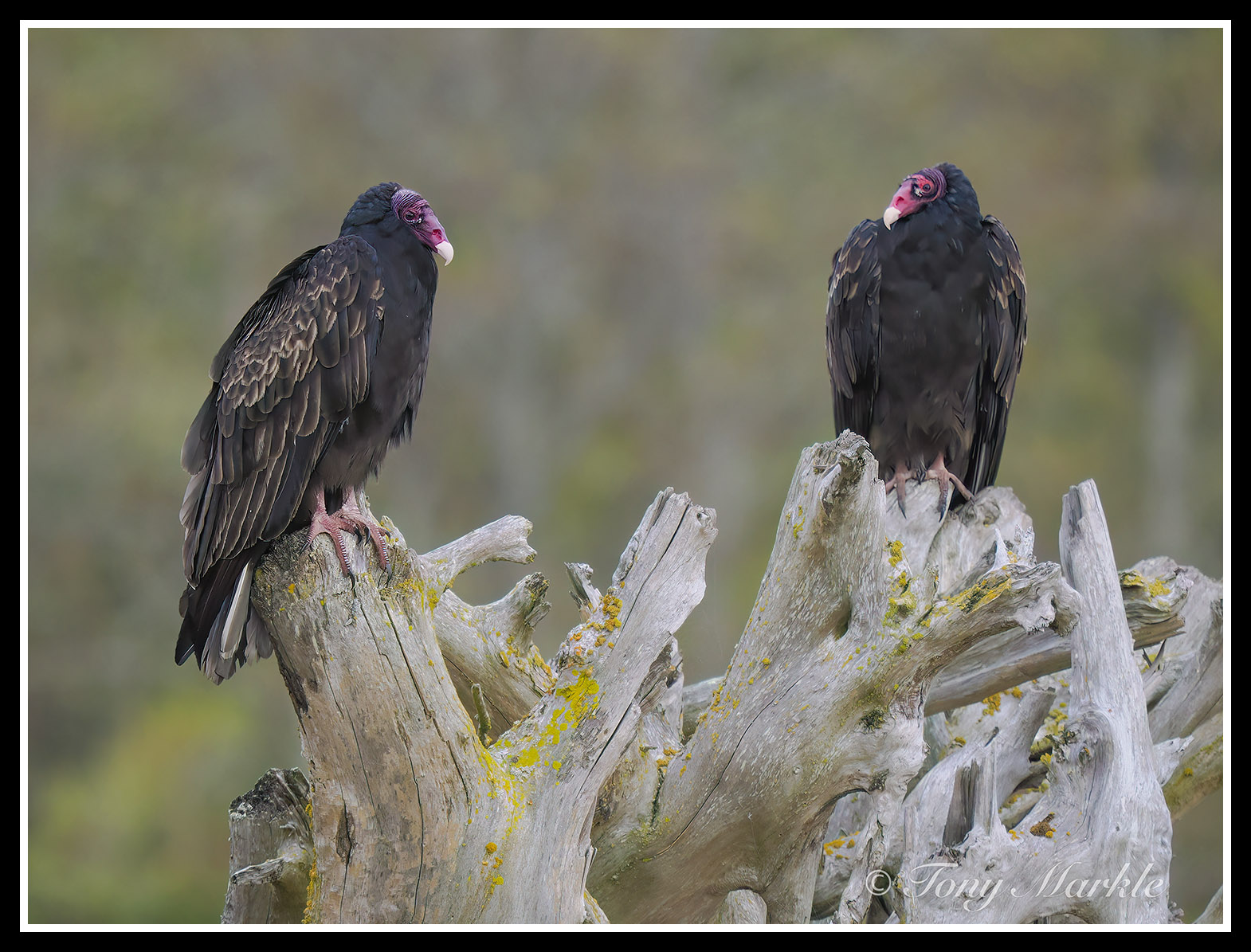
Turkey vultures migrate from Vancouver Island in large numbers in mid-to-late September, concentrating in areas like East Sooke Park before crossing the Juan de Fuca Strait towards their wintering grounds in California and Mexico. They "kettle" in large flocks, using thermals to gain height and find the best conditions for crossing the water.
Cool shot, Tony.
I learned something interesting about vultures this past week at the Raptor Demonstration I attended in Rockport, TX. Turkey vultures have an incredibly keen sense of smell, so they are very adept at locating carrion. Black-headed vultures can't smell very well, but have very keen eyesight, so the Black-headed vultures watch the Turkey vultures locate food and then chase the Turkey vultures away so they can help themselves. The Black-headed vultures are very aggressive when it comes to food.
gmccroskery wrote:
Cool shot, Tony.
I learned something interesting about vultures this past week at the Raptor Demonstration I attended in Rockport, TX. Turkey vultures have an incredibly keen sense of smell, so they are very adept at locating carrion. Black-headed vultures can't smell very well, but have very keen eyesight, so the Black-headed vultures watch the Turkey vultures locate food and then chase the Turkey vultures away so they can help themselves. The Black-headed vultures are very aggressive when it comes to food.
Greg
Thanks Greg. We don't get any Black-headed ones up on Vancouver Island.
Turkey Vultures circling over something can also indicate a gas leak in a pipeline:
The term "Turkey Vulture Pipeline" refers to a historical and sometimes ongoing method of detecting natural gas leaks using the turkey vulture's highly developed sense of smell. Gas companies add a strong-smelling chemical called mercaptan to otherwise odorless natural gas. Since mercaptan smells like decaying animals, which attracts turkey vultures, these birds will circle over pipelines where leaks are present, allowing workers to locate the leaks