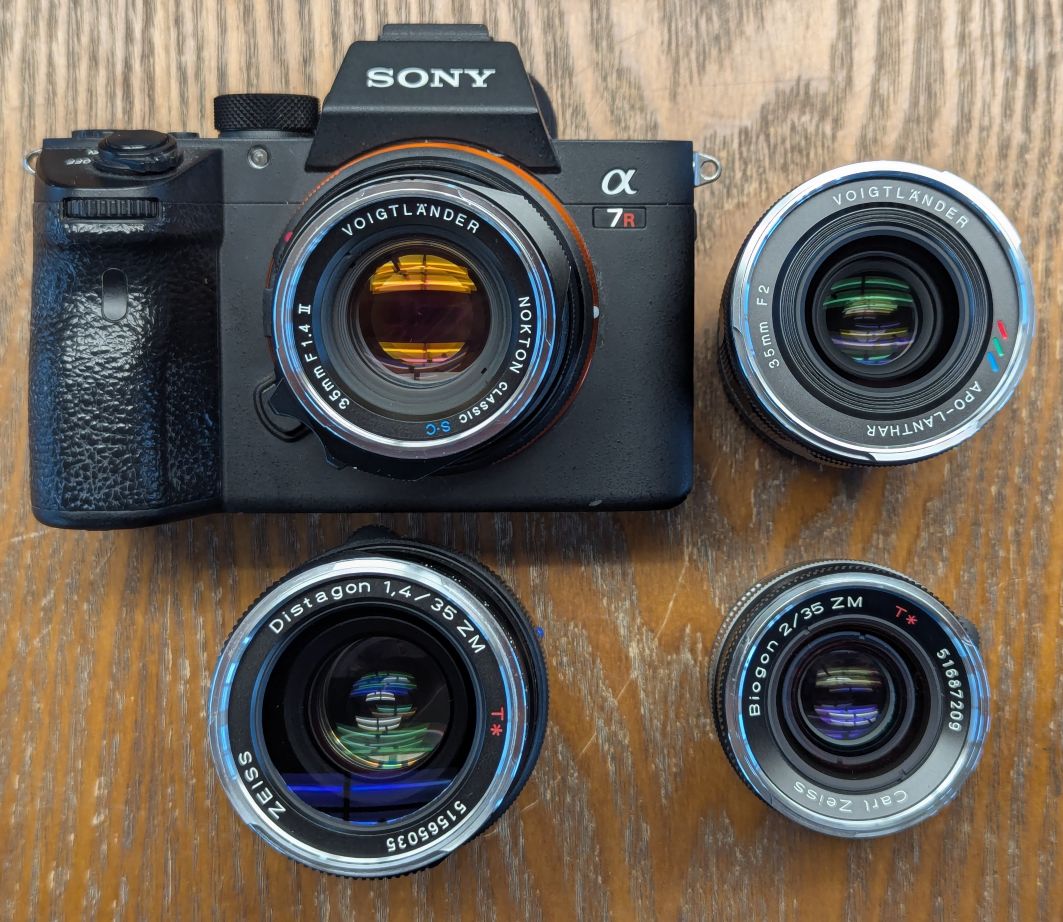
Lenses and filters are here. Camera has an ETA of Friday, and Saturday is supposed to be crystal clear, so fingers crossed I can get straight to IR hot spot testing.
SOOC jpgs, but they are already telling a compelling story.
To recap, I have an A7R4A which was modified for full spectrum monochrome, and I wanted to check for IR hot spots. A bit of GAS led me to compare:
Voigtlander 35mm f/1.4 II SC Leica M
Zeiss Biogon 2/35 ZM
Zeiss Distagon 1.4/35 ZM
Voigtlander 35mm f/2 APO-Lanthar M
The filter was a single 49mm Hoya R72, the CV 35mm f/1.4 II SC and the Biogon used a step up ring, while the filter screwed onto the Apo-Lanthar and the Distagon without a step-up ring.
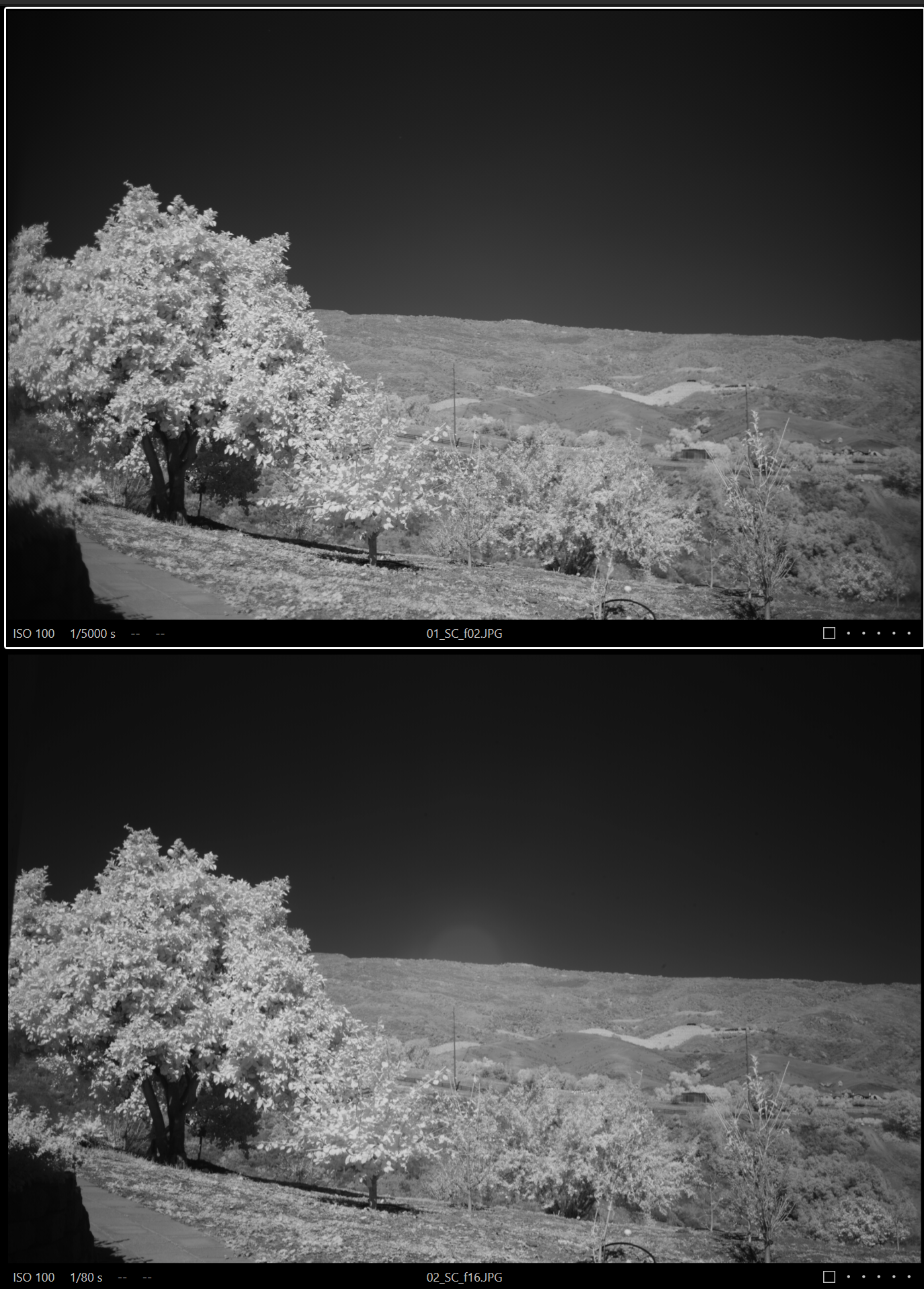
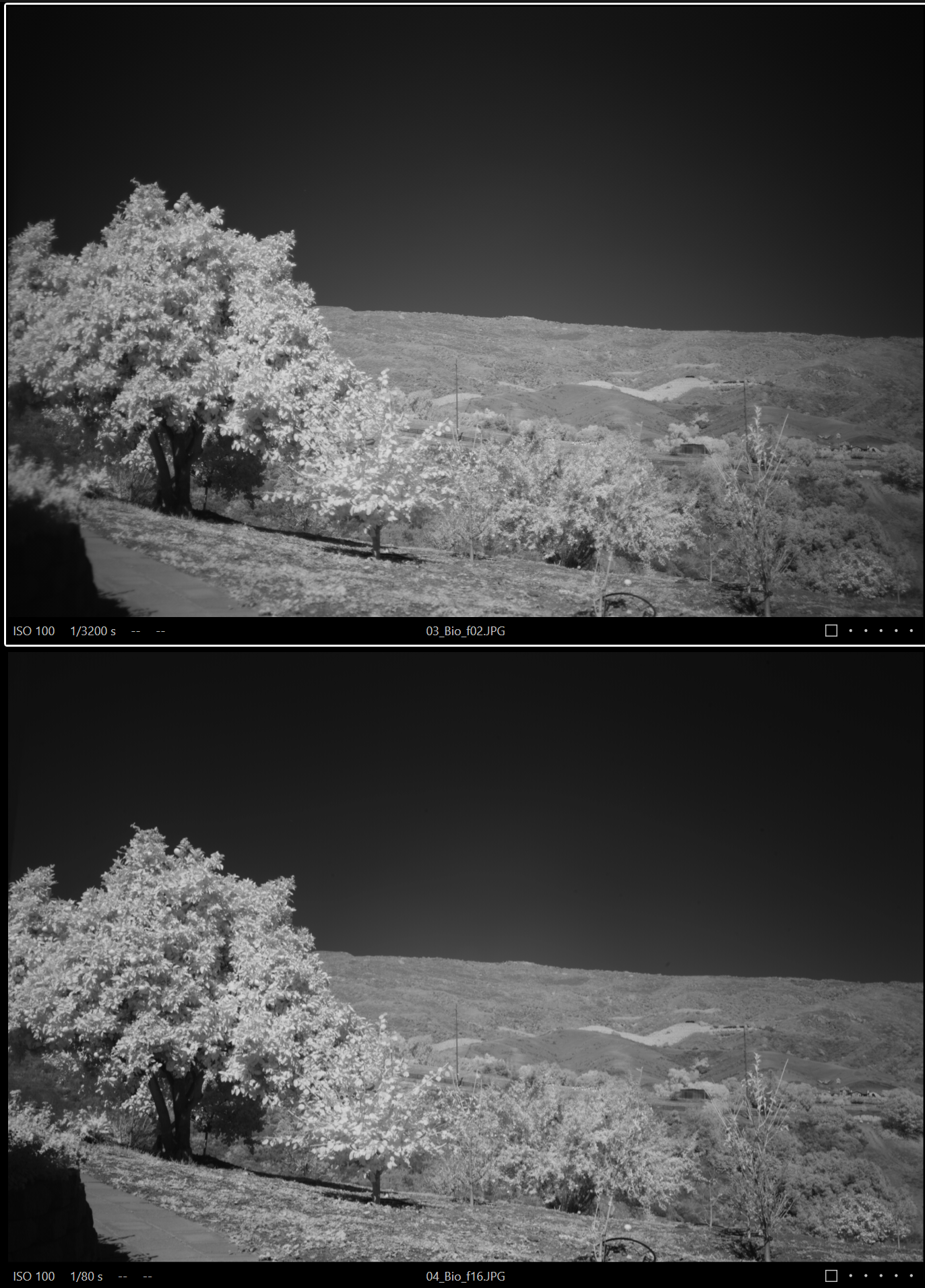
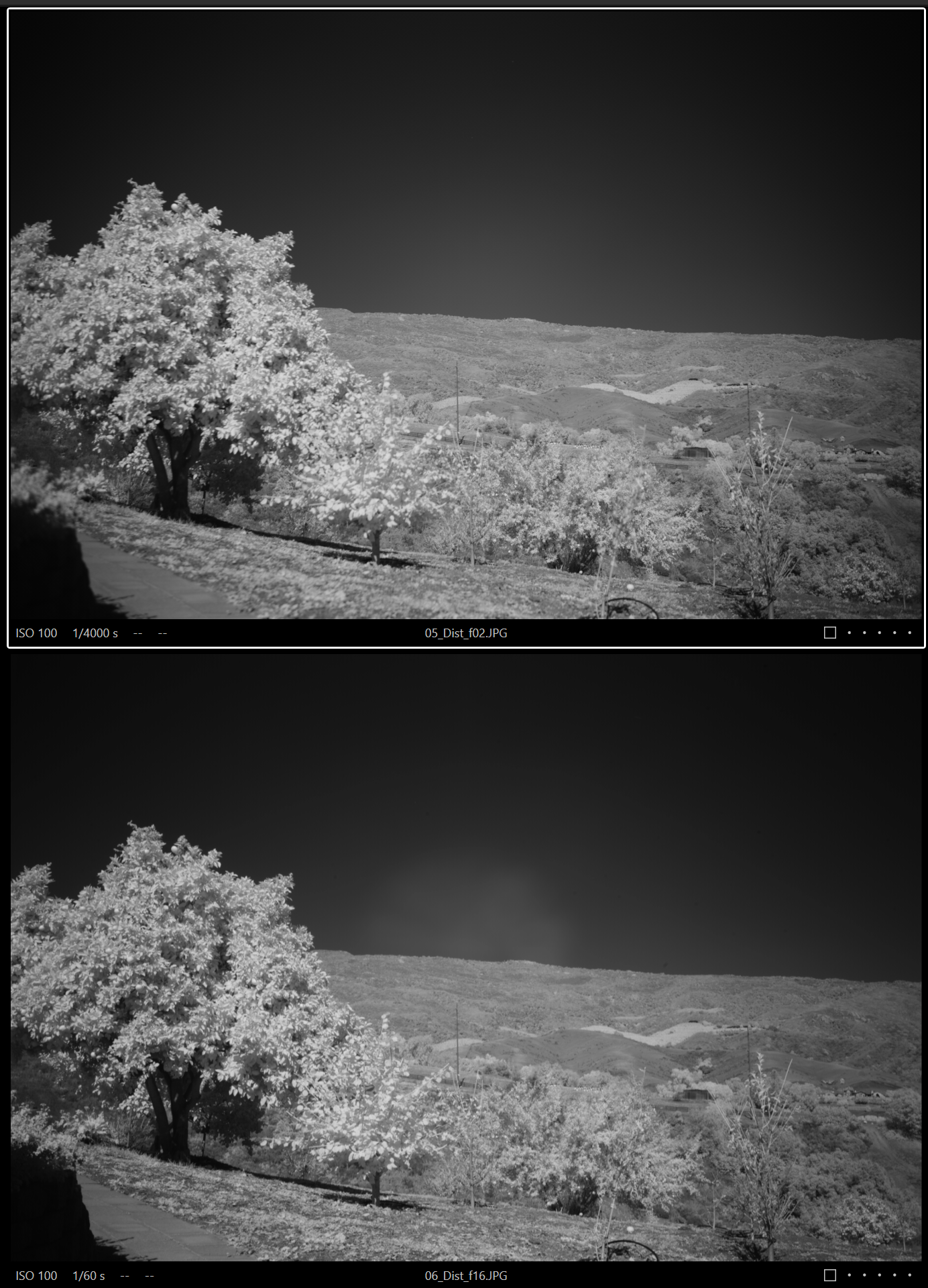
I am not at all surprised that the SC-coated CV has a hot spot (at f/16) and that the Apo-Lanthar is clean. But I am surprised by the difference between the Biogon and the Distagon. I had assumed that their performance was going to be dominated by their T* coatings, so if one was going to be bad/ok, the other should be bad/ok too. But that is not at all the case. Ok, not a big deal, it just confirms my motivation to do this test. And I am fine with one character lens for regular monochrome shooting and a separate lens for IR. It looks like it will be the two CV lenses, but I'll do a couple more tests to verify.
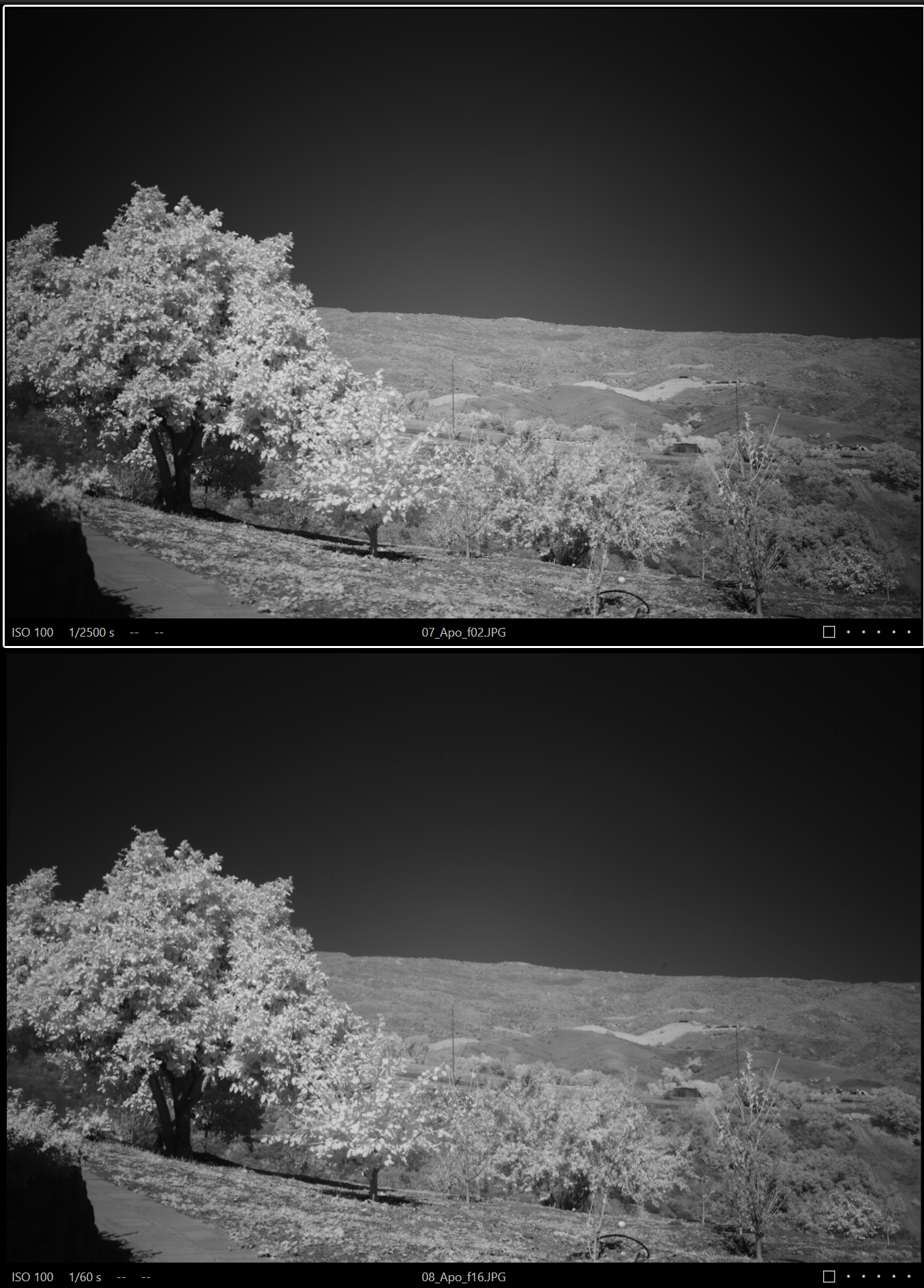
Pics below are in the same order as in the list above. Top frame is f/2 and bottom frame is f/16.
Voigtlander 35mm f/1.4 II SC Leica M: top f/2 top, bottom f/16
Zeiss Biogon 2/35 ZM: top f/2 top, bottom f/16
Zeiss Distagon 1.4/35 ZM: top f/2 top, bottom f/16
Voigtlander 35mm f/2 APO-Lanthar M: top f/2 top, bottom f/16
reva wrote:
Ooh thanks for the thread, it hadn't even occurred to me that I could add a 72R filter to the M10M and get a whole new spectrum to play with!
You can, but the M10M has an aggressive IR cut filter, so expect insane ISO levels when you add an R72 filter.
Zeiss is a real hit and miss proposition when it comes to IR, proving that it's not all about the coatings, and it's typically their fast lenses that get the worst of it. By the way, you swapped the labeling on the APO-Lanthar and Distagon, so it looks the the shots don't jibe with your conclusions. I didn't figure it out until I noticed the text on the photos themselves.
I haven't run into a problem with any modern CV lens yet. The AL 28/2 is particularly pleasing.
Keep in mind that the longer wavelength IR light reduces the needed f-stop of about one stop for getting the same DoF as in regular light. I normally never use a smaller aperture than f/8 or a max. of f/11 to avoid hot spot creation - f/16 often will cause hot spots in IR light due to earlier IR light diffraction setting in which only happens in regular light at around f/22. Meaning testing for hot spots at f/16 is kind of an extreme condition since you shouldn't use it in IR photography. I consider a lens not suitable in IR light if it shows already a hot spot at f/5.6 for example.
Do the lenses you tested have an IR focus mark, or is the focus aligned with regular light that pretty much no noticeable shift occurs? Most Leica M rangefinder lenses have no IR focus mark since it's not needed, but I hve the mark on some older LTM and also Voigtlander lenses.
retrofocus wrote:
Keep in mind that the longer wavelength IR light reduces the needed f-stop of about one stop for getting the same DoF as in regular light. I normally never use a smaller aperture than f/8 or a max. of f/11 to avoid hot spot creation - f/16 often will cause hot spots in IR light due to earlier IR light diffraction setting in which only happens in regular light at around f/22. Meaning testing for hot spots at f/16 is kind of an extreme condition since you shouldn't use it in IR photography. I consider a lens not suitable in IR light if it shows already a hot spot at f/5.6 for example.
Do the lenses you tested have an IR focus mark, or is the focus aligned with regular light that pretty much no noticeable shift occurs? Most Leica M rangefinder lenses have no IR focus mark since it's not needed, but I hve the mark on some older LTM and also Voigtlander lenses. ...Show more →
I am aware I am doing an extreme test. Nevertheless, the CV Apo and the Biogon pass this harsh test with flying colors. In addition, the CV Apo has a circular aperture at f/2.8, f/5.6 and f/11, giving it a slight advantage over the Biogon in my book.
The Distagon and Biogon have an IR mark, the CVs do not.
theHUN wrote:
My understanding is that the M10M and M11M do not have much of an IR response (though I am having trouble finding the link right now), but I know for a fact that my Q2M is practically blind with an R72 filter. Interesting to see the M246 is working fine with an R72.
I don't have any examples handy but I've shot a handful of landscape photos with an R72 on mine and it worked well.
If those samples were in fact shot wide open at f/1.4 then 1/180s and ISO5000 do support my argument that there is a strong IR cut filter. My full spectrum camera can shoot at f/5.6, 1/90s and ISO100 with an R72 filter.
theHUN wrote:
If those samples were in fact shot wide open at f/1.4 then 1/180s and ISO5000 do support my argument that there is a strong IR cut filter. My full spectrum camera can shoot at f/5.6, 1/90s and ISO100 with an R72 filter.
I think those numbers sound accurate, I was struggling handholding at f/2 with the filter. But the results were nice.
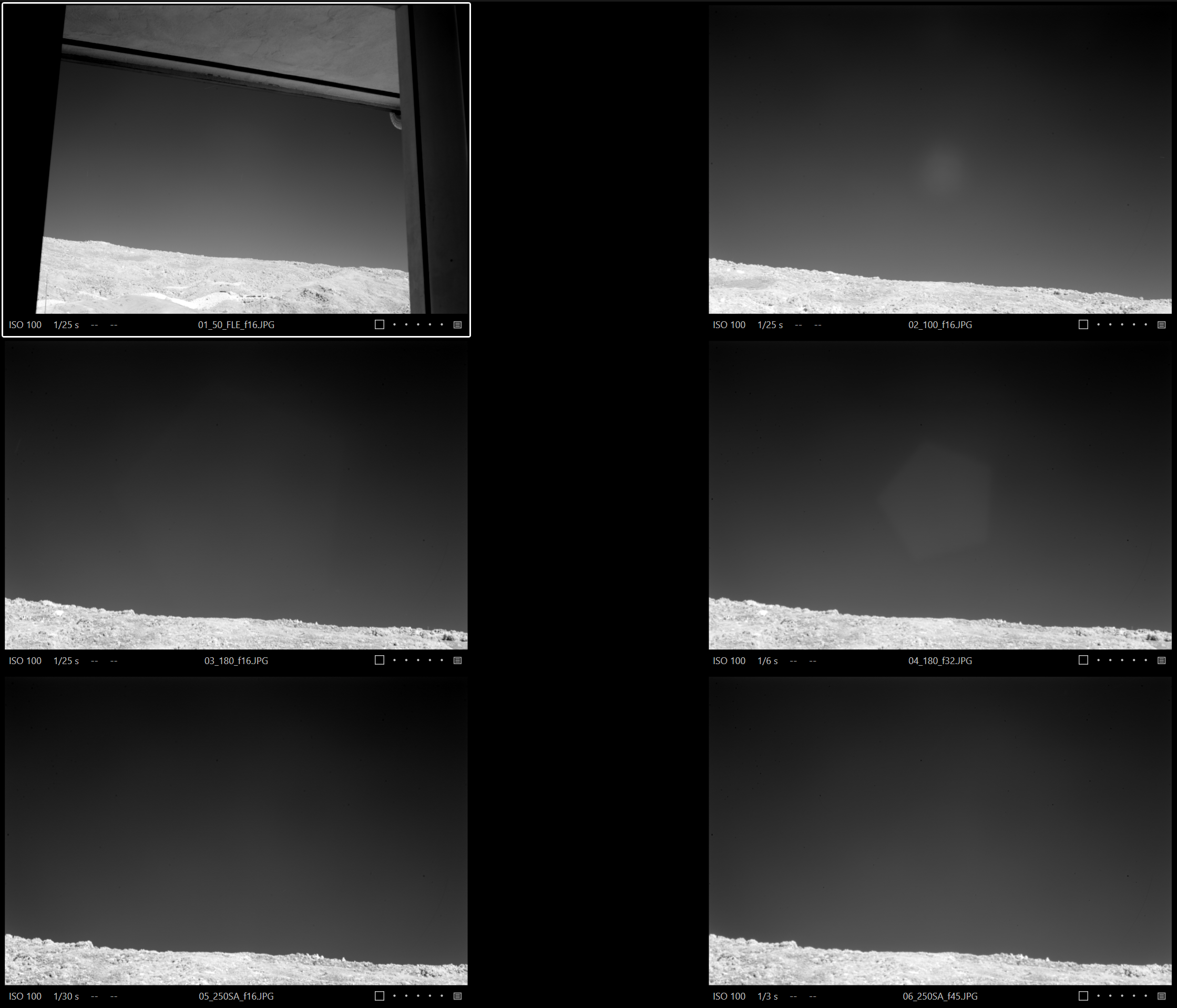
Not because it makes any sense, but because I have the lenses on hand I looked for IR hot spots on the following Hasselblad V lenses:
50 mm FLE (f/16)
100 mm (f/16)
180 mm (f/16 and f/32)
250 mm Superachromat (f/16 and f/45)
I fully expected the SA to breeze through this test, and I am happy to see the 50 mm is fine at f/16. The 100 and 180 mm will probably work fine wider open. I'll do more testing if I find the need.