I just won a canon powershot pro 1 for ….£10.50 (£14.40 inc postage)
To those who don’t know it’s canon’s only ever bridge camera with da Red Ring L glass. Unbelievably it came with OEM lenshood which I bet is worth the price I paid
I just charged up the battery - same battery as 5d, 40d, 50d and shoved a CF card in
Seems to be working as should
lol the EVF is awful 🤣
But I wanted to see what it delivers
Anyone here have fond memories or were you glad to be ridden of it ? 😬
Believe it or now, I actually have one of those, too. I bought it back in the very early 2000s as my last bridge camera before getting a DSLR.
From the perspective of that era, it was a remarkable camera in some ways with its (ostensibly high(er) quality lens, small size, and mirrorless (!) design.
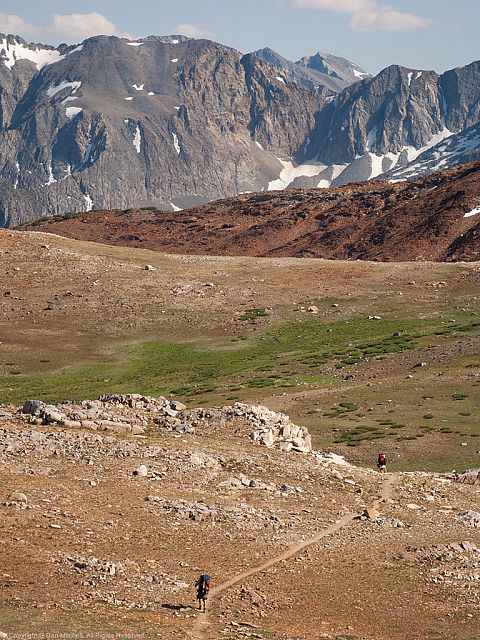
It produced decent image quality given the era and the small sensor. I have some decent photographs I made with it, including some backcountry Sierra Nevada stuff that I’ll have to see if I can locate.
The EVF was, indeed, “abominable” by today’s standards and not great even by the standards of that time— small, slow, not too bright, and subject to glitching.
When I was looking at taking the plunge into "real" digital in 2004, the PowerShot Pro 1 attracted a lot of attention. I had been using an Ixus since 2001, 2 MP and I was looking for a more serious camera. Difficult to remember what steered my choices, probably the sensor size, a proper mirror viewfinder, multiple AF points and the interchangeable lens ability, but I ended up buying a Digital Rebel with the EF-S 17-85mm lens. In 2007, I found online a used PowerShot Pro 1 and out of curiosity I bought it and took some shots of family, landscapes, etc.. Having at that point already moved up to the 5D and EF 24-105 L and some 4-5 lenses, the results of the PowerShot Pro 1 in comparison were underwhelming, and it was not compact enough to be the carry-around camera, the PowerShot G9 fitted that role better. I re-sold the PowerShot Pro 1 a few months later. I do recall the heated conversations online at the time of launch about the red ring on the lens of a point-and-shoot camera, and with hindsight one has to recognize that while the lens did have fluorite, aspheric and other high-end elements it was not paired to a sensor that could show these attributes to their full potential. The lack of commercial success precluded a follow up improved product, a shame because 3 years later they could have tried for a CMOS sensor and improved AF, IS and other features that may have made it more attractive and performant.
Speaking of prehistoric (I know, they aren’t actually “pre…”) my first digital camera, years before I had my Pro 1, was the Apple Quicktake 100.
As the result of a relationship with Apple, I was given one of these to use in the mid-1990s, about the time I was first building websites at the college where I was a faculty member. We used the Quicktake to produce imagery for an early site.
By today’s standards the thing was pathetic, but by the standards of the mid-90s it was almost miraculous. It made quite small images (640x480) with a ton of noise. (From the wikipedia article linked above: “ The QuickTake 100 was capable of storing eight photos at 640×480 resolution, 32 photos at 320×240 resolution, or a mixture of both sizes.” In order to offload those photos you had to connect the camera to a computer using an AppleTalk cable.
Well I had to try it
And fully expected it to be dire…
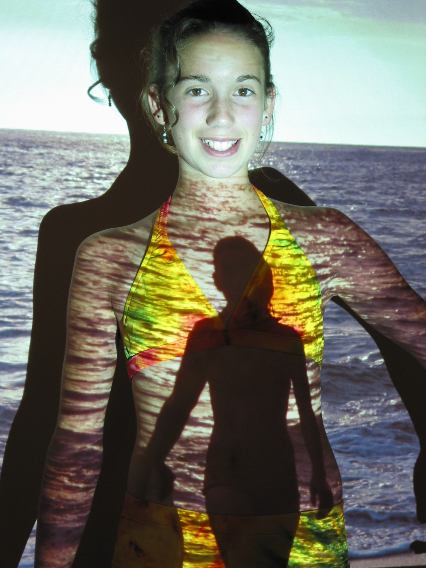
Only took 5 shots of random stuff
The lens does seem to be ok
I viewed the shots on a iPad and using the magic wand made a significant boost
However, that’s it. I was just curious
I seriously doubt I’ll ever use it again
Both battery and card have been removed and I’ve stored it away with silica gel sachets.
The tread got me to go WAY back into my digital archives to locate some XPro1 photos made in 2004.
The thing had its value. It was relatively small and self-contained. For the time, its image quality was fine. (But don't look too closely today!)
This one came from a very long Sierra Nevada backcountry trip with friends.
(BTW, I was able to reconstruct me gradual surrender to digital and move away from film. The first step was the QuickTake camera I mentioned above, followed by an updated version of the QuickTake. Then I got a small Olympus all-in-one camera (3 or 4MP?) that I used for a few years before picking up the Pro1. I think it was in 2005 when I got a Canon XT and shortly after that the 5D.)
The Powershot Pro1 was my first digital camera. I believe I bought it in 2005. That was the time that the "influencers" of the time, i.e., Outdoor Photographer articles and reviews started to reach a consensus that digital photography was becoming a credible competitor to film.
I bought it as a cost-effective and budget sensitive entry point to learning digital photography and post-processing. I post-processed using Photoshop Elements. I used it until I felt fairly comfortable with the digital ecosystem and the full-frame EOS 5D started to fall within my budget range about 2010. Ironically, I realized soon after buying the 5D that I had completely overlooked the Pro1's ability to shoot in RAW. I shot the Pro1 exclusively in JPG mode. Here is one of my favorite images. I don't know how much post-processing I did except for cropping from landscape to portrait for composition.
During that time, I travelled to England annually to visit my newly-wed daughter and her British husband where I used the camera for travel photography.
Pixelpuffin wrote:
I just won a canon powershot pro 1 for ….£10.50 (£14.40 inc postage) ..
lol the EVF is awful 🤣...
I had something similar - an Olympus C8080. 8mp bridge camera. And yes the EVF was so awful the manual focus mode was completely useless!
But I still took some pics that I was fond of.
By 2005 I had two 1Ds II and an older 20D. Some of the 1Ds II images with the 500/4 IS are among my best and I'm glad not to have used a crummy camera back then.
Desmolicious wrote:
I had something similar - an Olympus C8080. 8mp bridge camera. And yes the EVF was so awful the manual focus mode was completely useless!
But I still took some pics that I was fond of.
That just might have been the Olympus camera I had before the Pro1.
(I have to keep resisting typing “X Pro1,” as a Fujifilm user…)
I had an Olympus 2.1MP camera that used a Smartcard. The memory card was ridiculously small, only a few MB, and that memory tech soon was obsolete. IQ at base ISO was enough for the online postings. I gave it to someone a few years later.
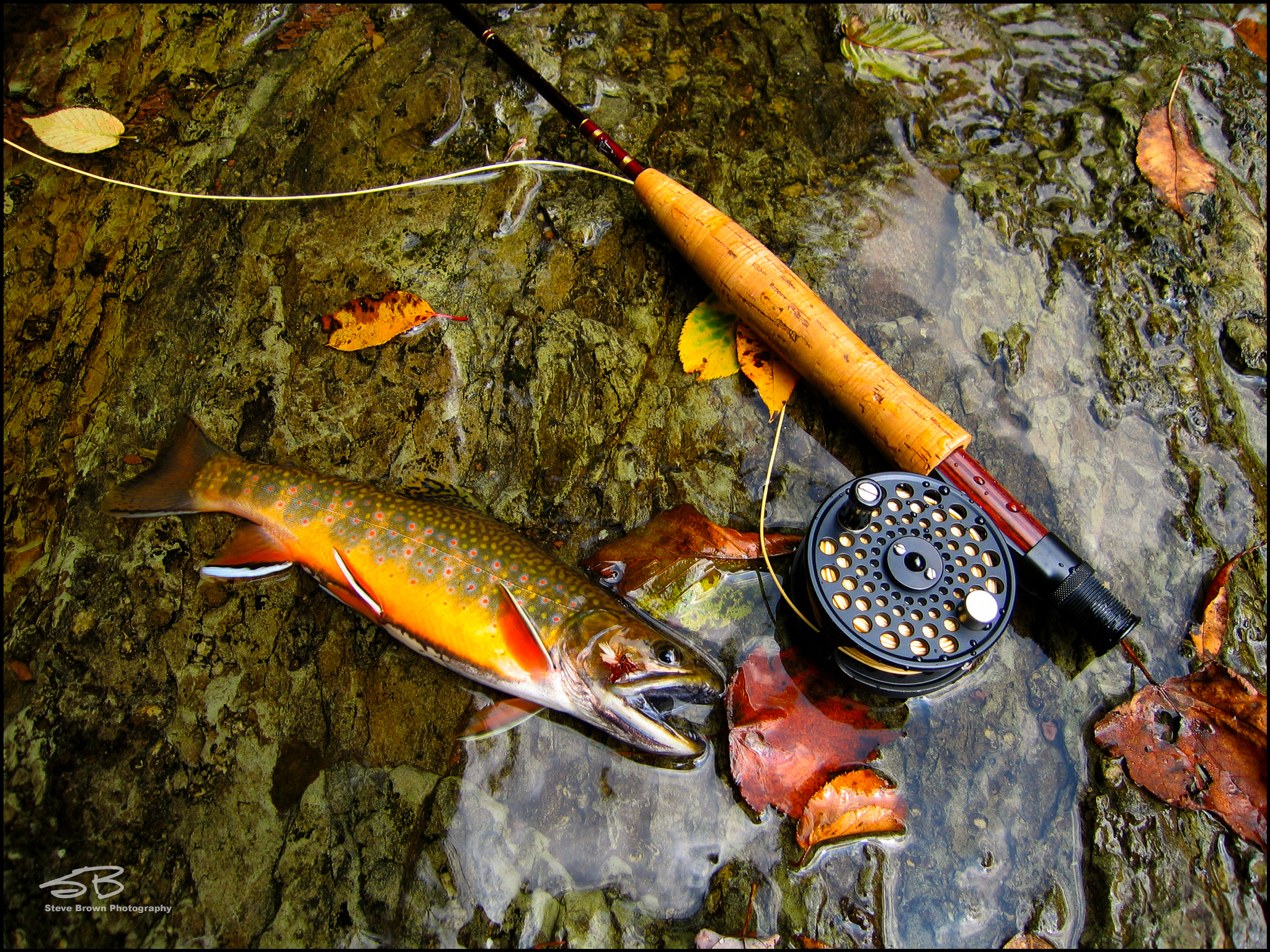
My first digital camera was a Canon Digital Elph that my wife gifted me way back when. As they improved in subsequent years, I upgraded to slightly better point and shoots, I think the best of which was the Canon Powershot S60, which was the first that could shoot RAW images. I shot this image in September 2004 while trout fishing here in West Virginia. I entered it in a local competition and won first place. I donated the image to a Trout Unlimited chapter for their annual auction and prints from it did very well for many years thereafter. After that, I moved up to a Sony NEX 5, which I shot mostly with adapted legacy glass and it was off to the races from there. I'm enjoying reading the historical posts of all of you folks! Steve
EB-1 wrote:
I had an Olympus 2.1MP camera that used a Smartcard. The memory card was ridiculously small, only a few MB, and that memory tech soon was obsolete. IQ at base ISO was enough for the online postings. I gave it to someone a few years later.
EBH
That was more or less how I felt about the very early cameras — good for only postings. (And keep in mind that back in that early era we tended to keep web images VERY small since a lot of people were still using modem connections!)
That QuickTake camera I mentioned was fine for web images, given the standards of the day, but that was really about it. The Olympus I had was similar in that regard, though the images did have much larger dimensions than the QuickTake.
One interesting observation: Using current image processing software and tools, it is possible to get more out of those old files than we could back then. They still aren’t going to be great, especially at larger sizes, but they’ll be better than we thought possible 20 years ago.