Vento
Offline
• • •
Upload & Sell: Off
|
Yes, but the profit margins are significantly lower for DX bodies.
In addition, as I already mentioned, DX buyers generally invest significantly less in lenses.
So, overall, selling an FX body is much more lucrative for Nikon than selling a DX body in the Z50II category.
They need much higher volumes to achieve/generate similar sales figures.
When the D500 was released, this was offset by the sheer volume of DX bodies sold, so that higher development costs were also justified.
Today, this can no longer be taken for granted.
A Z500 or Z90, whatever you want to call it, would initially mean significant development costs.
The Z500 advocates are not satisfied with a Z50II; it has to be the full package, fully stacked and with a higher pixel density, i.e., a new, expensive sensor, and that costs money in development, without the foundation to recoup these development costs over many models of a generation.
Unlike the Nikon Z full-frame models, where the development costs of a Z9 are spread across many models, such a Z500 would have to recoup the development costs almost single-handedly.
The price of such a Z500 with a stacked sensor and higher pixel density would certainly not be far from the street prices of a Z8.
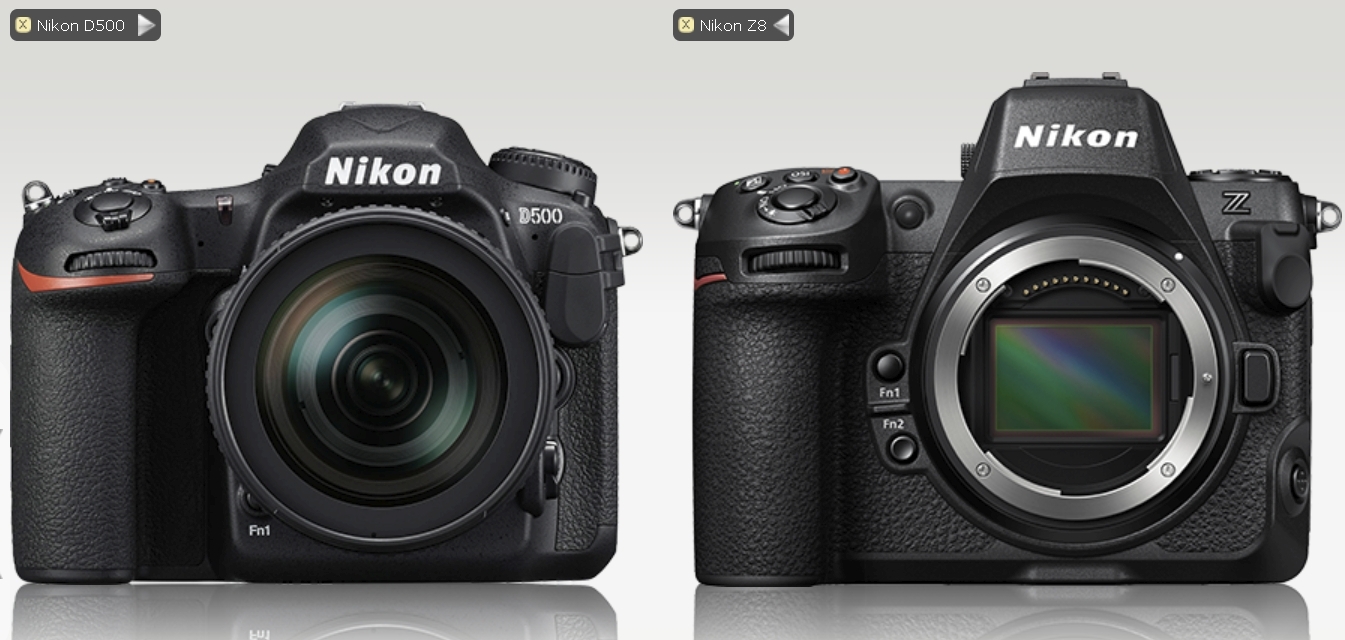
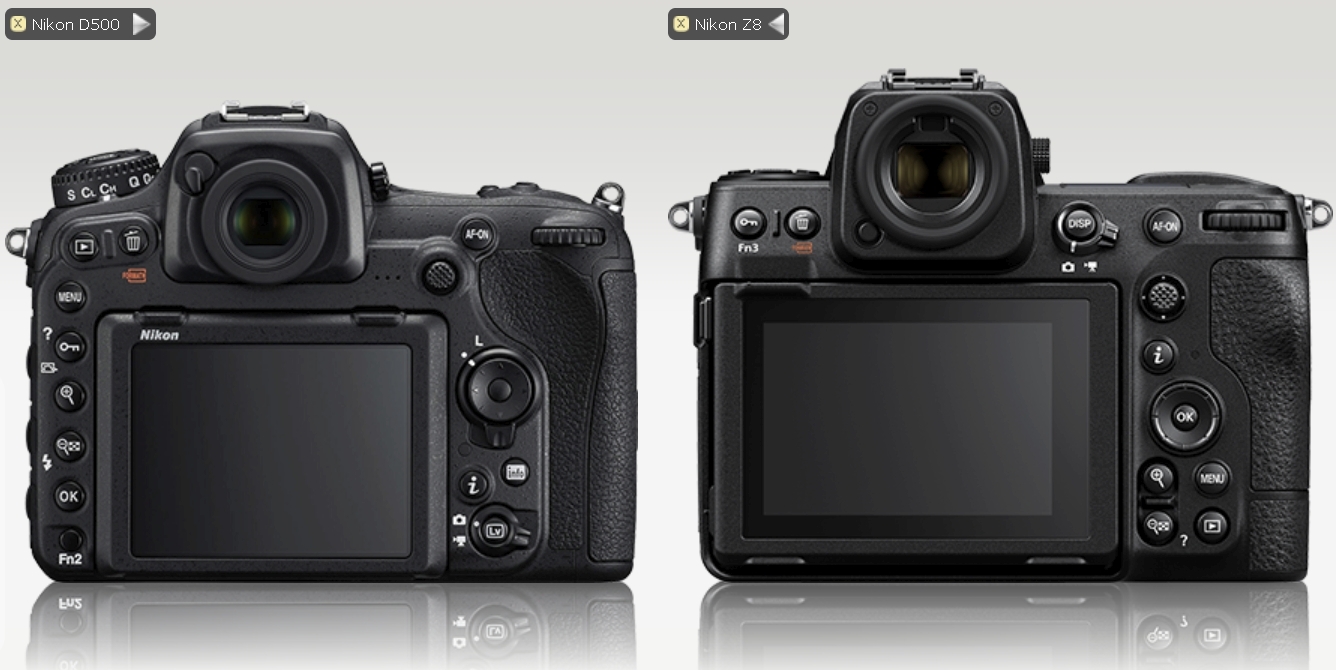
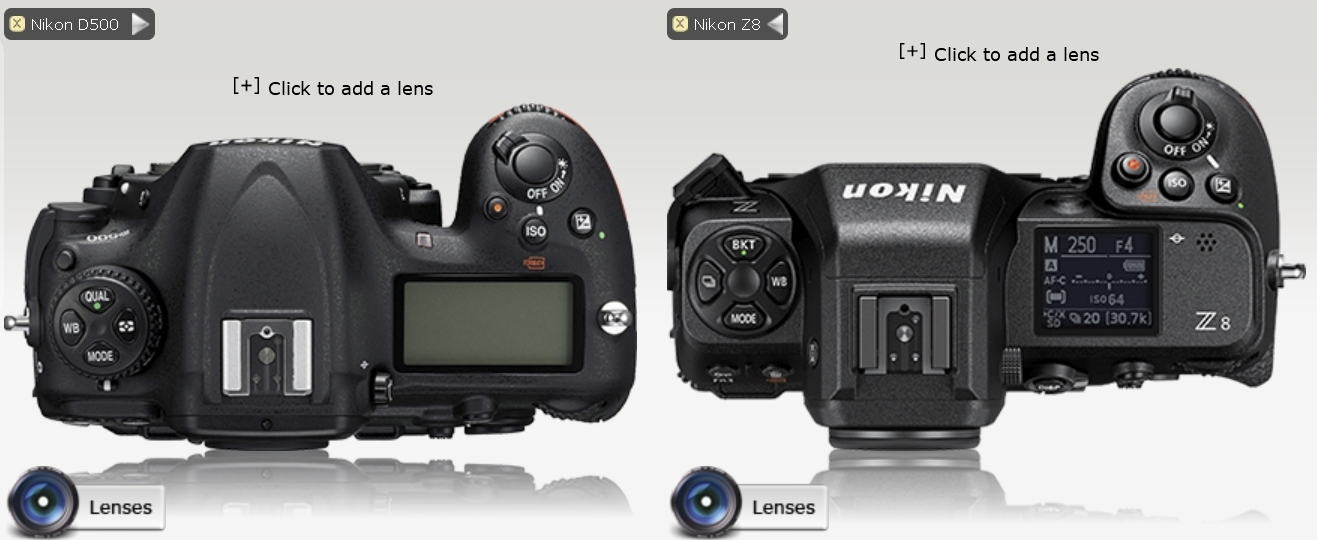
The argument about weight and dimensions is certainly relevant for some, but ultimately the Z8 has almost identical dimensions to a D500 and the difference in weight is in the range of 50g.
So if you love the D500 and are one of those who always want a successor to the Z, you should be familiar with the dimensions of a Z8 and have no problem with it.
Nothing else in the Z range comes closer to the body feel of a D500.
As far as I'm concerned, Nikon can release as many new products as it wants, but I just don't see the market that would make the investment worthwhile for Nikon at this point in time.
That may change with the next generation and Expeed8, but it will also depend on which sensor solutions are available at what prices.
It's clear that Nikon makes its money with full-frame cameras, where the margins are not only much higher, but there is also the potential to spread development costs across a large number of models within a single generation.
Buyers of these cameras are usually willing to invest several times the cost of a Z5II, Z6III, Z8, or Z9 body when purchasing high-quality FX lenses, where Nikon has the highest margins.
So even if the numbers in the chart are at a comparable level, Nikon only earns a fraction with Nikon DX.
This means that we would have to sell many times more DX bodies to achieve comparable margins, and the APS-C market no longer offers this potential, at least not for a manufacturer like Nikon, which is limited in terms of possibilities and market share.
Nikon is currently only covering the mainstream DX range, as an entry point into the Z system.
From their perspective, this is understandable.
The focus is clearly on a broad spectrum of full-frame solutions and following the acquisition of R.E.D, the transformation of the portfolio in these areas, all this with significantly lower market shares and R&D capabilities compared to Canon and Sony.
That's why I wouldn't waste my time waiting for a D500 successor.
If solutions like the Z50II aren't enough and the Z8 doesn't fit either, then there are other manufacturers who have made these areas one of their focal points, such as Fuji.
Edited on Sep 02, 2025 at 12:23 PM · View previous versions
|