I came across a video that's worth sharing. It walks through how to disable the GR III to clean the sensor from dust. The video makes it look "easy" but I'd say it's more moderate and still very doable. Once you have done it the first time it will feel much easier the next time around.
If anyone knows of a similar guide for the RX1 or RX1R, please let me know.
Jaree wrote:
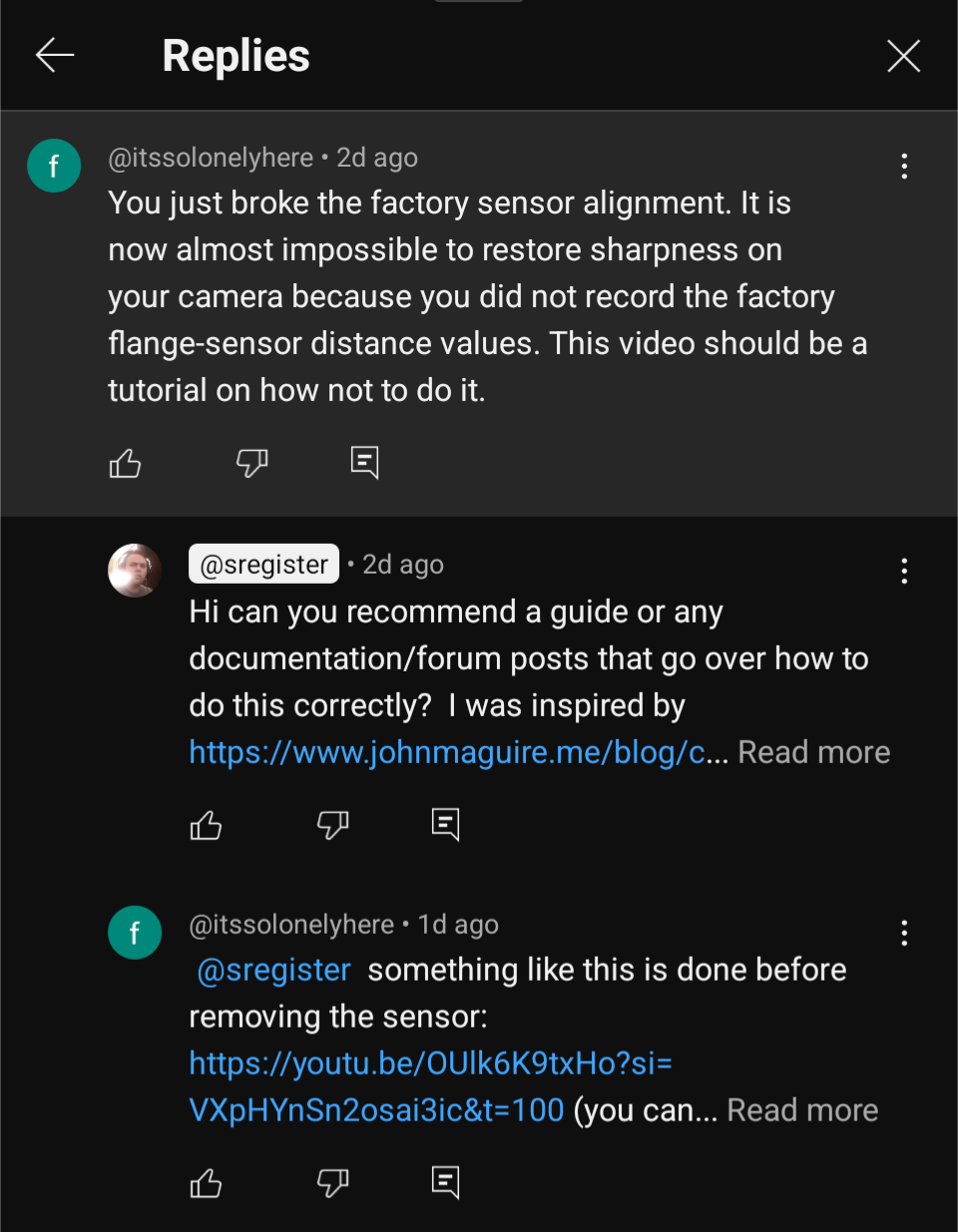
I am referring to one comment posted on the video - apparently the steps shown are not the proper way to do this.
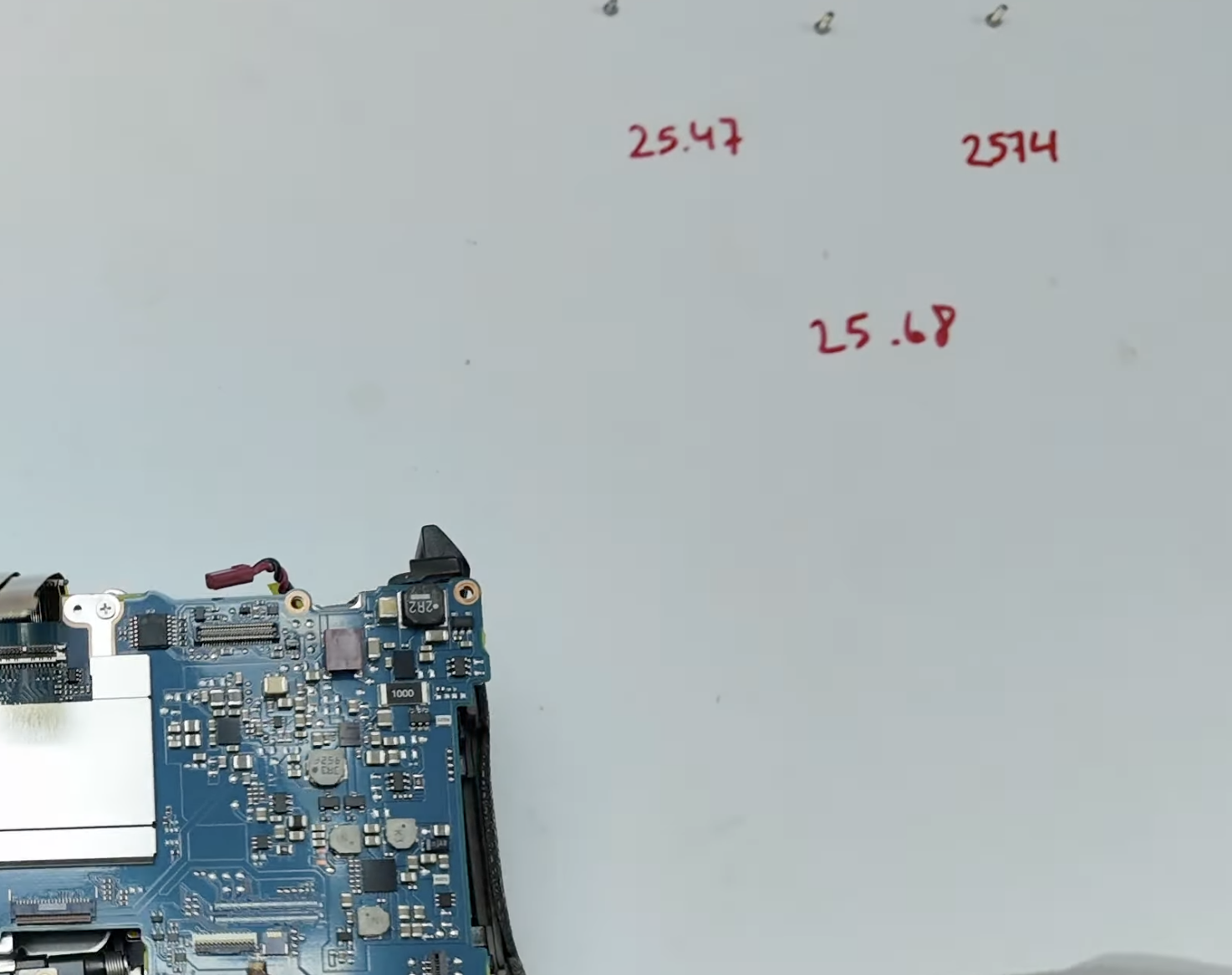
I see what's happening here. Ricoh doesn't use shims for calibration. Instead, they rely on the tightness of the three screws to achieve alignment. In this video:
...the screws are set to nearly the same height (25.47, 25.74, 25.68). But when reassembling, if you end up with a much different measurement on one of the screws, that could indicate decentering.
So yes, it's a smart idea to measure the height of each screw before disassembly and then match those values when reassembling. It's just an extra step, but I'm glad you mentioned it...I hadn't checked the video comments before.
Something else I noticed in the Russian video (post right above this one) is that the camera being disassembled is a Canon, not the Ricoh GR. I also asked AI whether measuring screw height is necessary for the GR, and here's the response I received:
"On some cameras (like certain Canon compact models), the top plate or lens unit is “floated” or leveled using very fine screw tension. That’s why in your Russian video the tech measured screw height — tightening even a fraction more or less can tilt the optical path and cause decentering or softness.
• On the Ricoh GR specifically, most of the screws holding the top plate, rear shell, or front ring are structural only. They don’t control optical alignment directly. The lens module in the GR is a sealed, self-contained unit that drops into the body as one piece. Its optical alignment is done at the factory and not dependent on the torque of the case screws.
• Where screw depth might matter on the GR:
• The sensor shim stack (thin washers under the sensor unit) — those set the sensor-to-lens distance. If those are disturbed, infinity focus and centering can shift.
• The lens barrel itself — but since it’s sealed, you’d have to intentionally open the optical block, which dust cleaning normally doesn’t require.
So in short:
For normal GR dust cleaning where you’re just removing the top and front covers, you don’t need to measure screw depth like in the Canon video. Just keep track of which screw goes where (they differ in length sometimes) and don’t overtighten. The risk of decentering from those cover screws is basically zero.
The caution about alignment is more of a general “be gentle” reminder than a specific GR issue."
I was looking into how to remove dust from another fixed-lens camera, the RX1R and RX1R II. The process to reach and clean the sensor is actually very similar and pretty straightforward. The only difference with the RX1 series is that there are calibration shims behind the sensor unit. As long as you keep track of where each shim belongs, it's no problem at all. (The GR, on the other hand, doesn't seem to require this step.)
Also check out this disassembly guide for cleaning sensor dust, specifically for the Sony RX1R II. The process should be similar for other cameras in the RX1 series as well.