Does anyone have experience using a ProGrade Digital 480GB CFexpress 2.0 Type A Gold Memory Card (sustained write speed of 600MB/sec) with the Sony A9III? Your thoughts?
What about the ProGrade Digital 480GB CFexpress 4.0 Type A Iridium Memory Card (sustained write speed of 800MB/sec). Would this card be a bit faster/better?
Am I correct to assume that sustained wrote speed is the critical spec for how fast a filled A9III buffer will clear as opposed to the max read and write speeds?
Yes, from what I've read (and it makes sense) it's sustained write speed that's important, but unfortunately that's a figure that few card manufacturers disclose because AFAIK there's no accepted definition of how to measure it (unlike, for example, the VPG rating that is independently certified and based on specific conditions). We just have to rely on user tests and they can be confusing -- showing the same card is faster in one camera model than in another model, for example. Whether it's worth spending a lot more money on the ProGrade Iridium cards for a few seconds faster buffer clearing is a calculation only you can make.
terencepatrick wrote:
I really like the Nexstorage cards in terms of price/performance/capacity. They're Japanese made chips, too.
I have a pair of Nextorage A1SE cards that I got for a good price last year but they're the slowest CFe cards I have, according to buffer-clearing tests I've seen (although "slow" is a relative term -- still much faster than SD cards and plenty fast enough for me). The Nextorage "Pro" cards are the fast ones, but they're not nearly as price competitive -- my other CFe cards (Lexar Silver, OWC, and ProGrade Gold) were all cheaper than equivalent Nextorage Pro cards last time I checked.
wordfool wrote:
Yes, from what I've read (and it makes sense) it's sustained write speed that's important, but unfortunately that's a figure that few card manufacturers disclose because AFAIK there's no accepted definition of how to measure it (unlike, for example, the VPG rating that is independently certified and based on specific conditions). We just have to rely on user tests and they can be confusing -- showing the same card is faster in one camera model than in another model, for example. Whether it's worth spending a lot more money on the ProGrade Iridium cards for a few seconds faster buffer clearing is a calculation only you can make.
I have a pair of Nextorage A1SE cards that I got for a good price last year but they're the slowest CFe cards I have, according to buffer-clearing tests I've seen (although "slow" is a relative term -- still much faster than SD cards and plenty fast enough for me). The Nextorage "Pro" cards are the fast ones, but they're not nearly as price competitive -- my other CFe cards (Lexar Silver, OWC, and ProGrade Gold) were all cheaper than equivalent Nextorage Pro cards last time I checked. ...Show more →
The Prograde Iridium wasn’t much more than the Prograde Gold. I just wasn’t sure if the Iridium would clear the buffer any faster. Someone linked to a posters tests and all the cards tested cleared in about 11 seconds though the author said he didn’t test in the A9III and didn’t know if some cards would clear faster in that camera. I also wanted to know if anyone had any compatibility issues with Prograde and the A9III.
The card that seems much cheaper than the rest is OWC.
TT1000 wrote:
The Prograde Iridium wasn’t much more than the Prograde Gold. I just wasn’t sure if the Iridium would clear the buffer any faster. Someone linked to a posters tests and all the cards tested cleared in about 11 seconds though the author said he didn’t test in the A9III and didn’t know if some cards would clear faster in that camera. I also wanted to know if anyone had any compatibility issues with Prograde and the A9III.
The card that seems much cheaper than the rest is OWC.
To quote: "The CFexpress Type A cards hit a bottleneck of around 445MB/s, so picking different brands will not significantly improve performance".
I guess that answers your question -- no it's not worth paying a bit more for the Iridium card unless faster download speeds to a computer are a factor in your choice. That reviewer's tests are generally well regarded AFAIK, but his results for the A9iii are interesting because the bottleneck speed he reports is slower than the buffer write speeds he's recorded in tests of other Sony cameras like the A7r5 and A1. I have read elsewhere that the A9iii can't write faster than about 500Mbps so that does ring true.
Not sure about the A9III, I use two 256gb cards in each of my A1 bodies and the buffer feels unlimited. I got the Nexstorage USB4 card readers and downloading cards takes but mere seconds.
TT1000 wrote:
Something like this works well in A9III? How long to clear a full buffer of co,pressed raw?
Nextorage 500GB NX-A2AE CFexpress 4.0 Type A Memory Card
To quote: "The CFexpress Type A cards hit a bottleneck of around 445MB/s, so picking different brands will not significantly improve performance".
I guess that answers your question -- no it's not worth paying a bit more for the Iridium card unless faster download speeds to a computer are a factor in your choice. That reviewer's tests are generally well regarded AFAIK, but his results for the A9iii are interesting because the bottleneck speed he reports is slower than the buffer write speeds he's recorded in tests of other Sony cameras like the A7r5 and A1. I have read elsewhere that the A9iii can't write faster than about 500Mbps so that does ring true. ...Show more →
Thanks, I did not. Assuming it’s reliable it seems they’re all about the same speed to clear the A9III buffer and may only differ materially in speed when downloading the card to a storage device. I guess brand/reliability obviously matter.
There's also the Standard Entry A2SE which says sustained 800 but doesn't have the VPG800 rating.
I did scan dclark's thread about the bottleneck and seems like nothing uses 4.0 yet. So, the advantage would just be faster offloading. SE is still VPG200 but should match sustained of the older cards.
VPG200 even covers the highest requirements on the Burano with ample headroom.
EDIT: comparing prices, I would skip the SE and just go for AE since they are the same and the AE also has the DAPS feature as the PRO. The PRO would only be necessary for a camera that uses CFe-A 4.0 releasing a few years later (VPG800).
The PRO does have an interesting feature:
"DYNAMIC AUTO POWER SAVE
The NX-A2PRO series is equipped with Nextorage’s proprietary “Dynamic Auto Power Save” low power consumption technology. It effectively suppresses power consumption during high-speed continuous shooting and video recording, as well as the rise in temperature of the card itself. Compared to models without this function, power consumption is reduced by up to 89%, and thermal throttling* is suppressed to enable stable, long-time shooting. 3
* Thermal throttling: a control function that suppresses the transfer speed to prevent thermal runaway"
EDIT EDIT: The AE series in fact does NOT have the DAPS and it was a typo on BHPhoto's website which they will correct now.
-----------------------------------
TLDR: Lexar Gold Pro 4.0 for VPG400 + IP68, Nextorage A2PRO for DAPS (edge in temp extremes and long video recordings thermals)
TT1000 wrote:
Does anyone have experience using a ProGrade Digital 480GB CFexpress 2.0 Type A Gold Memory Card (sustained write speed of 600MB/sec) with the Sony A9III? Your thoughts?
What about the ProGrade Digital 480GB CFexpress 4.0 Type A Iridium Memory Card (sustained write speed of 800MB/sec). Would this card be a bit faster/better?
Am I correct to assume that sustained wrote speed is the critical spec for how fast a filled A9III buffer will clear as opposed to the max read and write speeds?
Make sure you get VPG400 cards - has the Film icon with 400. I have cards that say they are rated 1600 write speed and VPG200 and they don't work for some video formats and are pretty slow to copy data from. The seem to have high burst rates but poor sustained rates.
I do have a ProGrade VPG 400 card which works fine for video and stills on the A9iii.
I figured they the producers are probably friends in Shenzhen (the same way Sony Tough cards are made in the same factory like Nextorage cards), but the price was a little lower per storage so I ordered it too.
Just tested both on the A9iii at Lossless RAW L at High+ set to 120fps, simult-recording, 1/80000s exp. Full 120fps sustains up to about 200 shots and then it maintains to somewhere between 60-100 seemingly forever. I gave up after 1,200 shots. The buffer clears identically as expected.
The build quality of the Dajingyu seems the same as the Lexar as well, additionally it came in a nice wooden box with padding vs. the lexar was usually cardboard and thin plastic. It's not IP68 rated and has similar protection notes as the Nextorage cards. NOTE: They have a VPG400 (1780r/1600w), 200, and non-VPG all listed on amazon and their prices are identical so double check if you wanna try these out.
I just received a novachips 400GB VPG400 and it cost AUD230 - which is about half the price of anything else so it remains to be seen how reliable it proves to be. It has a 3 yer guarantee so we shall see. Seems to work fine though.
This is to replace a Pergear 256GB VPG200 that does not allow 8K recording on the A1ii and is quite slow to copy files off.
duncangr wrote:
.....
This is to replace a Pergear 256GB VPG200 that does not allow 8K recording on the A1ii and is quite slow to copy files off.
The Sony specs for the ILCE-1M2 state that for XAVG HS 8K (with or without proxy recording) requires VPG200.
Are you saying that the Pergear VPG200 card does not work even though it carries a VPG200 certification logo?
dclark wrote:
The Sony specs for the ILCE-1M2 state that for XAVG HS 8K (with or without proxy recording) requires VPG200.
Are you saying that the Pergear VPG200 card does not work even though it carries a VPG200 certification logo?
Yes - the camera pops up a message saying VPG200 or greater card is required.
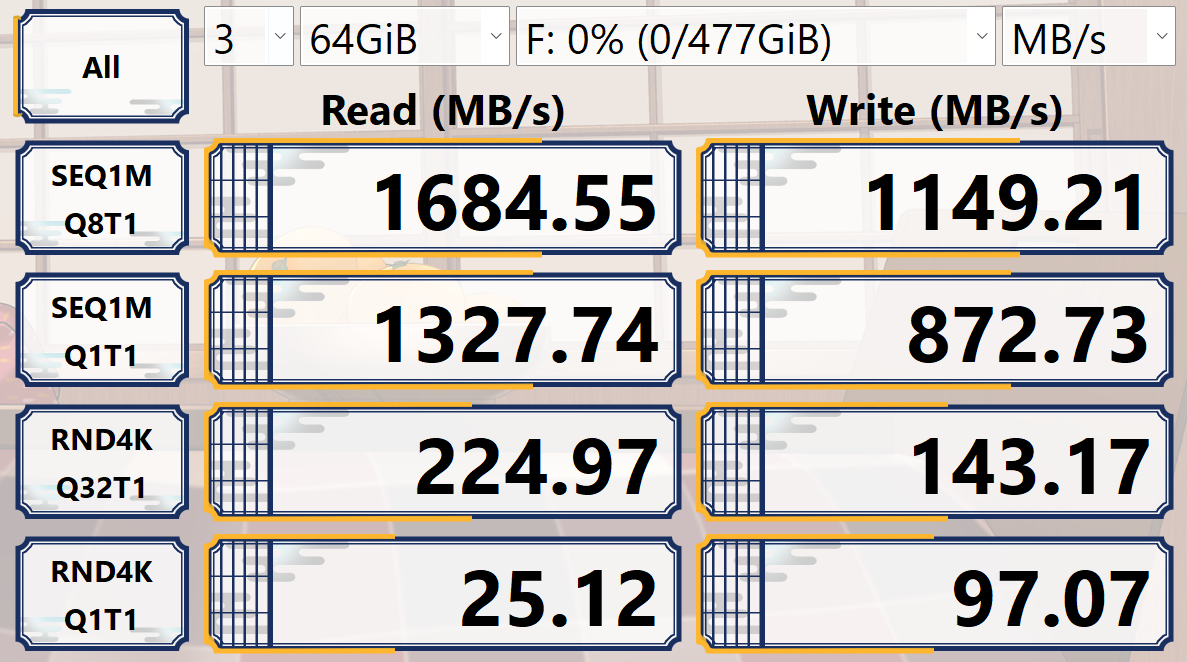
Lexas Pro Gold vs the cheaper Dajingyu ones. Note Lexar is 1TB and DJG is 512GB.
There was a discount on the 1TB Lexars but they seem to have went out of stock and now the price is at normal MSRP for now. Interestingly, there is a double bundle pack that's new selling for around the same discount price rate of $425 of the single pack.
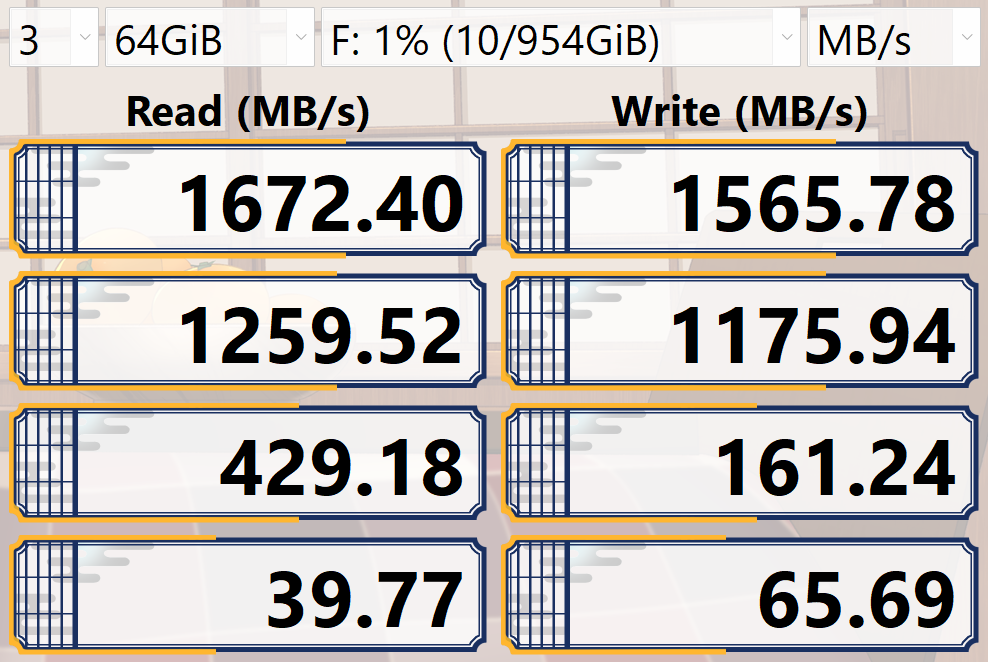
CrystalMark ran Nextorage NX-SA1PRO 4.0 Card Reader USB4 > Thunderbolt PC side.
duncangr wrote:
Yes - the camera pops up a message saying VPG200 or greater card is required.
You have to be careful buying cards based on specs alone. Cards to need to meet a certain set of criteria to achieve VPG certification, and some of the cards barely pass the tests. Sony requires a slightly more strict set of criteria to be fully compatible with their cameras. This is precisely why Sony lists specific recommended cards as opposed to simply stating "Any VPG200 card". Pergear in particular is known to have inconsistent sustained write speeds, so I'm not surprised it is causing issues.
There are basically 2 ways to avoid this...purchase a brand that is known for consistently meeting or slightly exceeding it's listed specs, or buy any VPG400 card. Even if the card barely met the VPG400 criteria, you can be almost guaranteed it will easily exceed the VPG200/Sony criteria.
As a side note, I've always had great results with Lexar and OWC.
Probably wouldn't hurt to look at this list as well, not saying it's a guarantee....but if a card isn't on this list, probably should warrant a little more scrutiny.
MMP wrote:
..... Sony requires a slightly more strict set of criteria to be fully compatible with their cameras. This is precisely why Sony lists specific recommended cards as opposed to simply stating "Any VPG200 card"....
[/quote}
Where do you find the that "Sony requires a slightly more strict set of criteria"?
The ILCE-1M2 User Manal does not provide a list of recommended cards.
tsdevine wrote:
Probably wouldn't hurt to look at this list as well, not saying it's a guarantee....but if a card isn't on this list, probably should warrant a little more scrutiny.
dclark wrote: MMP wrote:
..... Sony requires a slightly more strict set of criteria to be fully compatible with their cameras. This is precisely why Sony lists specific recommended cards as opposed to simply stating "Any VPG200 card"....
[/quote}
Where do you find the that "Sony requires a slightly more strict set of criteria"?
The ILCE-1M2 User Manal does not provide a list of recommended cards.
tsdevine wrote:
Probably wouldn't hurt to look at this list as well, not saying it's a guarantee....but if a card isn't on this list, probably should warrant a little more scrutiny.
Both the Pergear Master and Pergear Prime are on the list.
Okay....so there have been brands in the past, who did not get their cards certified, but had the logo. All I was suggesting, when buying cards, to at least make sure they are on that list.
I wasn't specifically talking about the Peargear and others. Just as a general reference.
My apologies for suggesting that any card you buy, you might want to check the standards body. I realize that it is still no guarantee that it will meet the performance requirements, but seemed like a worthwhile thing to do. (As others should.)
I mistakenly (possibly) thought this thread was broader than it turned out to be. Based on the title of the thread....just trying trying to suggest it might be a way to avoid the below, some AI drivel summarizing supposed violations of meeting the standards requirement.
-----------------
Brands found with uncertified cards (AI generated, not verified by me personally):
Airusan: In April 2024, the CFA confirmed that Airusan was not a member and that its cards bearing the VPG logo were illegitimate.
BILITU: A report in July 2025 indicated that BILITU was another cheap brand selling CFexpress cards with fraudulent VPG claims.
Exascend: A 2023 report identified Exascend as a brand that had previously sold cards with unverified VPG claims. The company has since rectified the issue and now produces VPG-certified cards.
Wise: This brand was also named in the 2023 report but has since gained VPG certification for its products.
Pergear: The brand was mentioned among those that had previously sold unverified cards but has since corrected the issue.
Angelbird: This company was also named in the 2023 report. While it stopped producing the specific card that violated the VPG process, it was the last major brand to resolve its status as of mid-2024.