These images Gary are stunning with amazing detail. But the magic is the nice backgrounds and lighting. Can't wait to show the bug loving grandson. I knew you were using the OM-1, for the small package and weight advantage, but hadn't realized you moved up to the MK II. Is there a big difference in the newer model. How does it perform for your bigger wildlife work.?
Dave
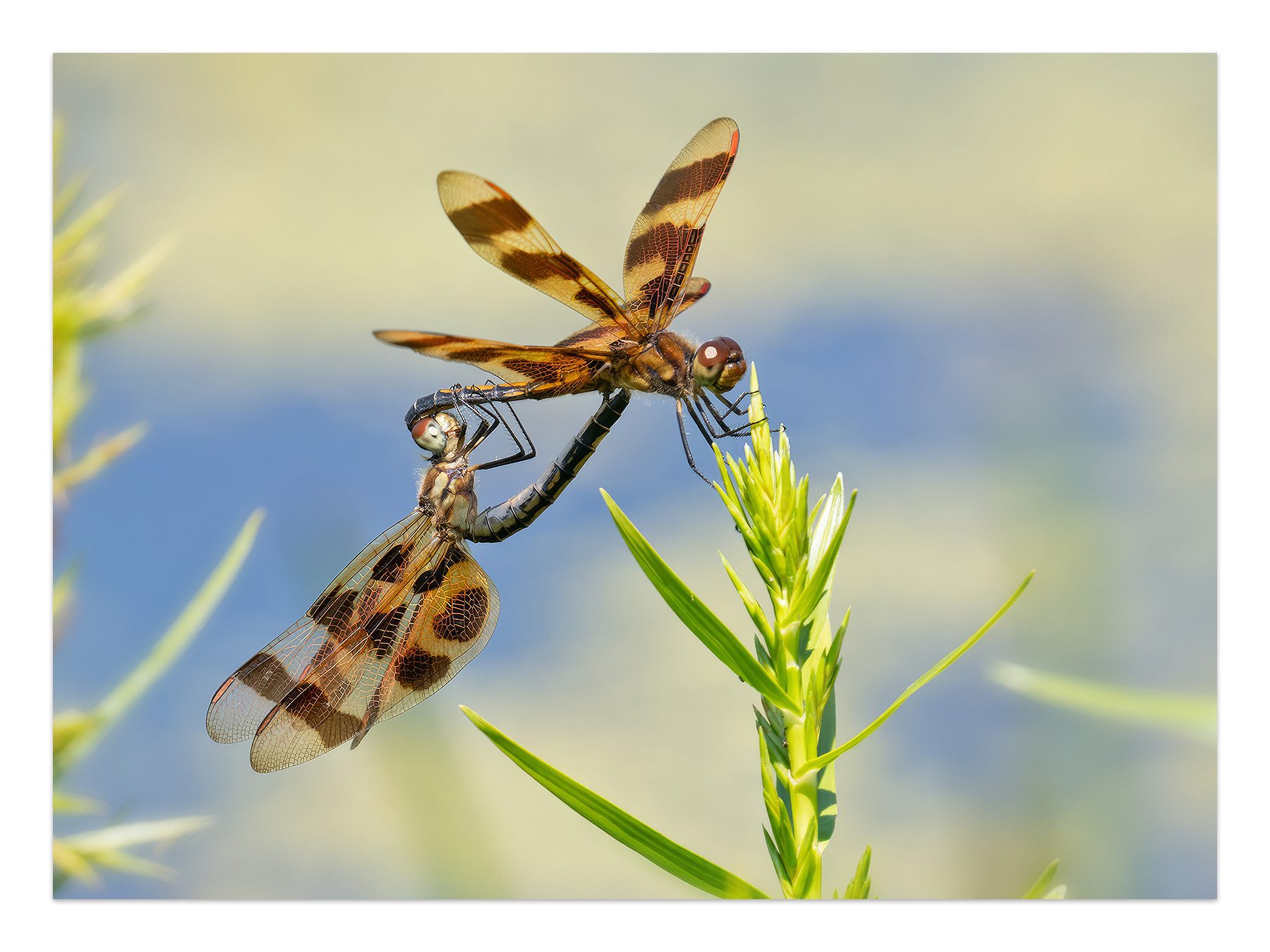
Image #2 is the standout here. You have done a great job with the depth of field which is often hard to do at these magnifications.
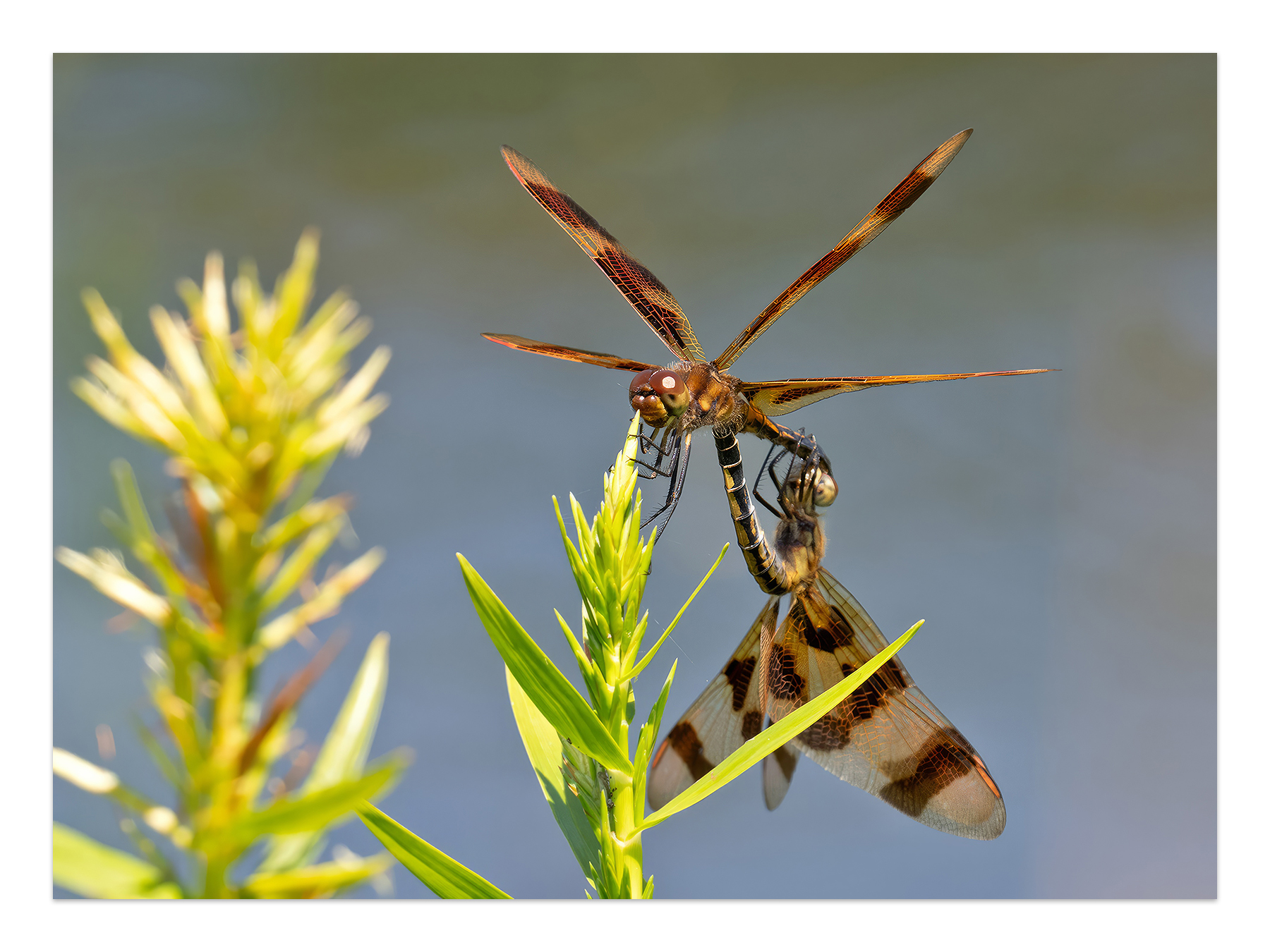
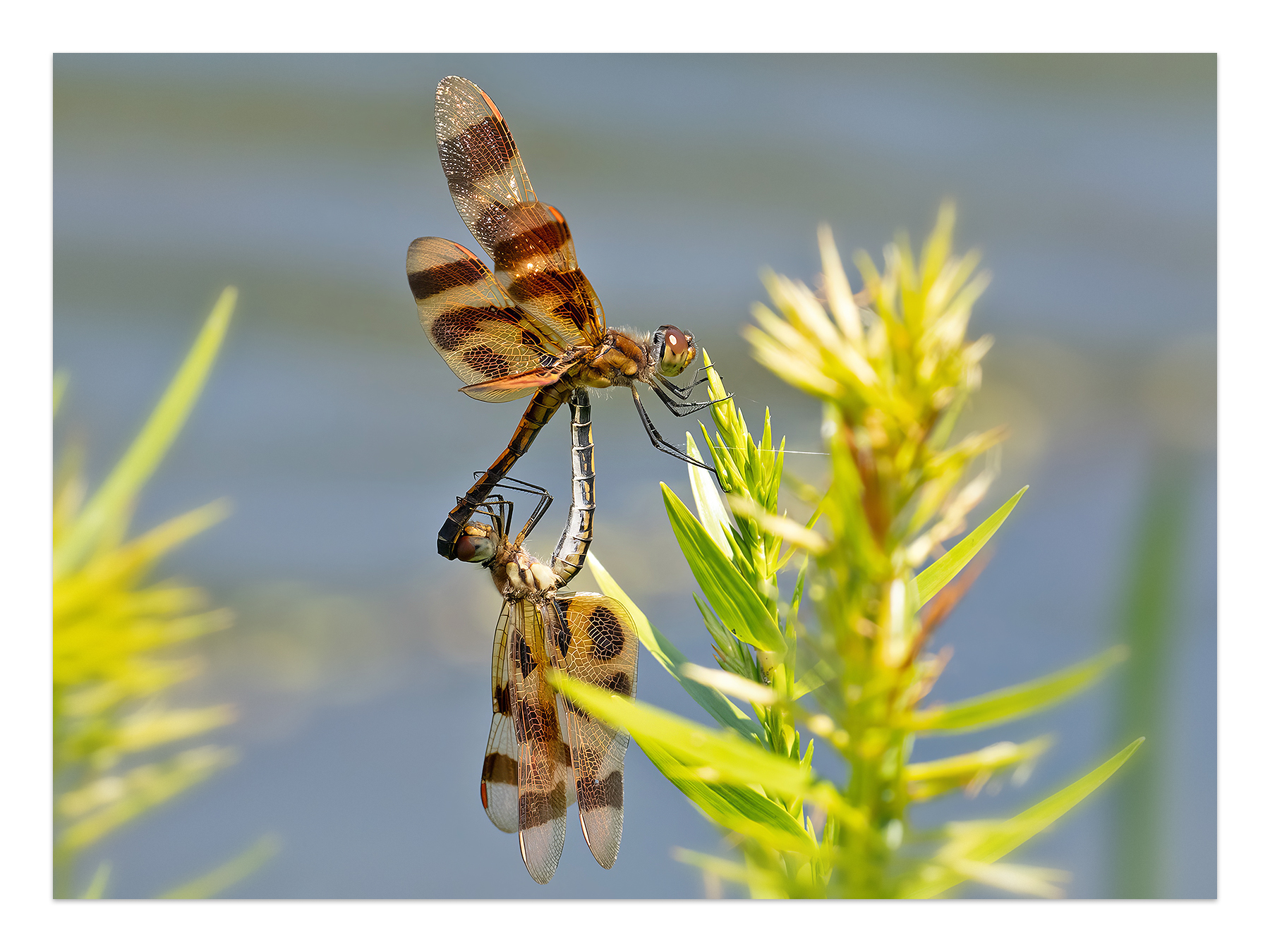
The other two images have too much distracting out of focus 'stuff' for my taste. Although the first could be cropped to a 4:5 ratio vertical frame which would eliminate the out of focus elements.
You've done a good job of 'playing the angles' with #2. As I am sure you are aware, with this type of photography small changes in camera position can have large effects on what is included in the frame.
Lastly, again, a little biology. These frames show mating behavior in calico pennants.
The male is grasping the vegetation with his legs and the female with a 'clamp' at the end of his abdomen ('tail'). The female has a special 'socket' behind her head into which the 'clamp' fits.
Once the individuals are paired up, the female swings her abdomen around into the mating wheel position shown in these photos and then picks up sperm from the male.
Dave_E wrote:
These images Gary are stunning with amazing detail. But the magic is the nice backgrounds and lighting. Can't wait to show the bug loving grandson. I knew you were using the OM-1, for the small package and weight advantage, but hadn't realized you moved up to the MK II. Is there a big difference in the newer model. How does it perform for your bigger wildlife work.?
Dave
Thanks very much Dave. I've gone 100% OM System. I got tired of the weight and size of the Z9 and Z 180-600 and also switching between two systems was getting more difficult for me. I didn't want to give up on the OM system because I enjoy it so much so I made the jump. I've kept my original OM-1 and Olympus 100-400 and added the MK 2 and the OM 150-600. I haven't gotten out nearly enough yet to notice any difference. The MK ll does have a bigger buffer which is good and the AF is said to be slightly improved but I haven't noticed any difference yet. I'm hoping to get out Monday morning to my favorite spot where I should be able to see how the new combo holds up against the Z system. I know it won't be as good, I loved that Z combo, but we'll see how it goes.
I noticed these Dragonflys as I was pulling my kayak into the water. I quickly grabbed my camera and got a bunch of frames before they flew off. These were at 450mm (900mm equivalent), just standing there handheld as I was trying to get into position for a clear shot. To come away with these shots from that situation is what I love about the OM System.
Image #2 is the standout here. You have done a great job with the depth of field which is often hard to do at these magnifications.
The other two images have too much distracting out of focus 'stuff' for my taste. Although the first could be cropped to a 4:5 ratio vertical frame which would eliminate the out of focus elements.
You've done a good job of 'playing the angles' with #2. As I am sure you are aware, with this type of photography small changes in camera position can have large effects on what is included in the frame.
Lastly, again, a little biology. These frames show mating behavior in calico pennants.
The male is grasping the vegetation with his legs and the female with a 'clamp' at the end of his abdomen ('tail'). The female has a special 'socket' behind her head into which the 'clamp' fits.
Once the individuals are paired up, the female swings her abdomen around into the mating wheel position shown in these photos and then picks up sperm from the male....Show more →
Appreciate the input


 Thanks for taking a look !