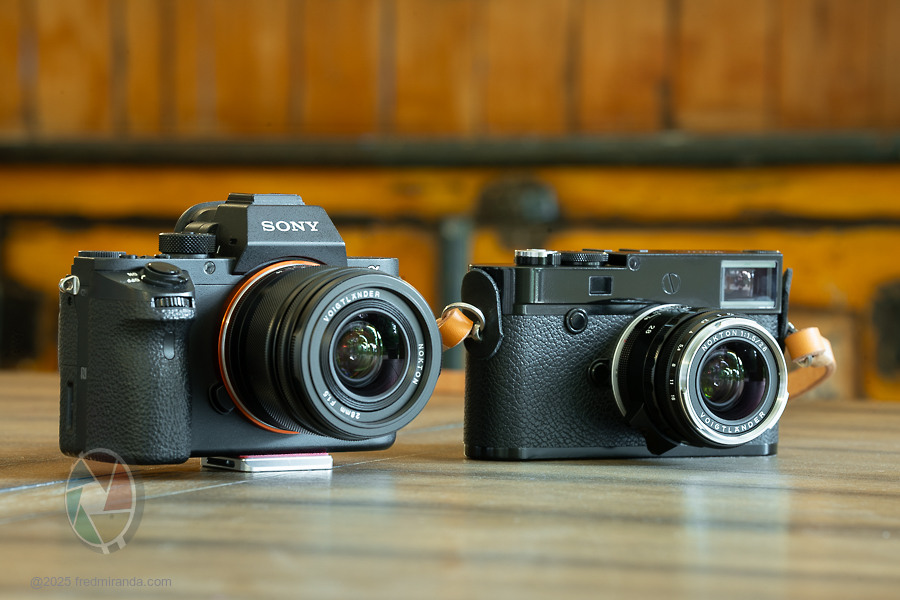
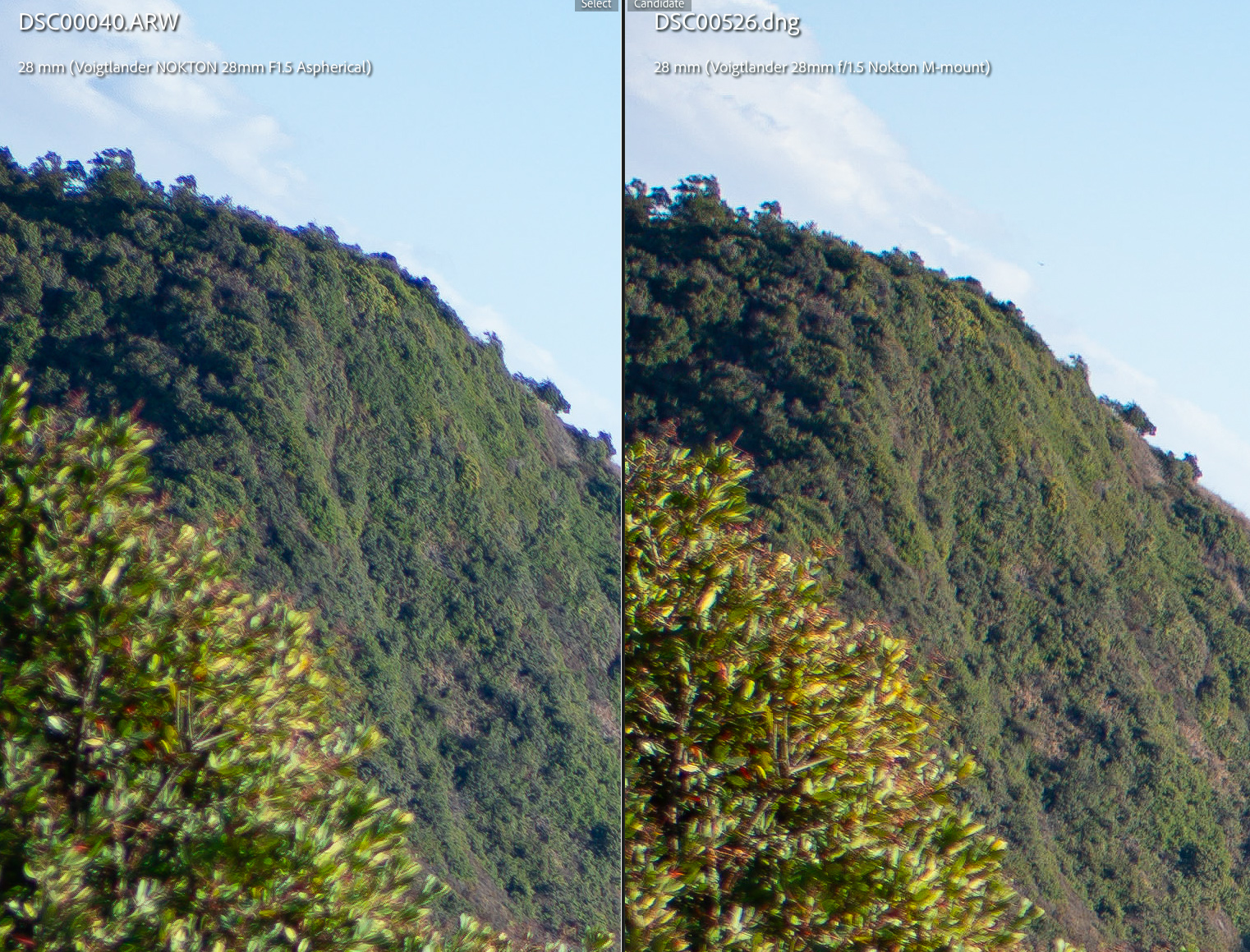
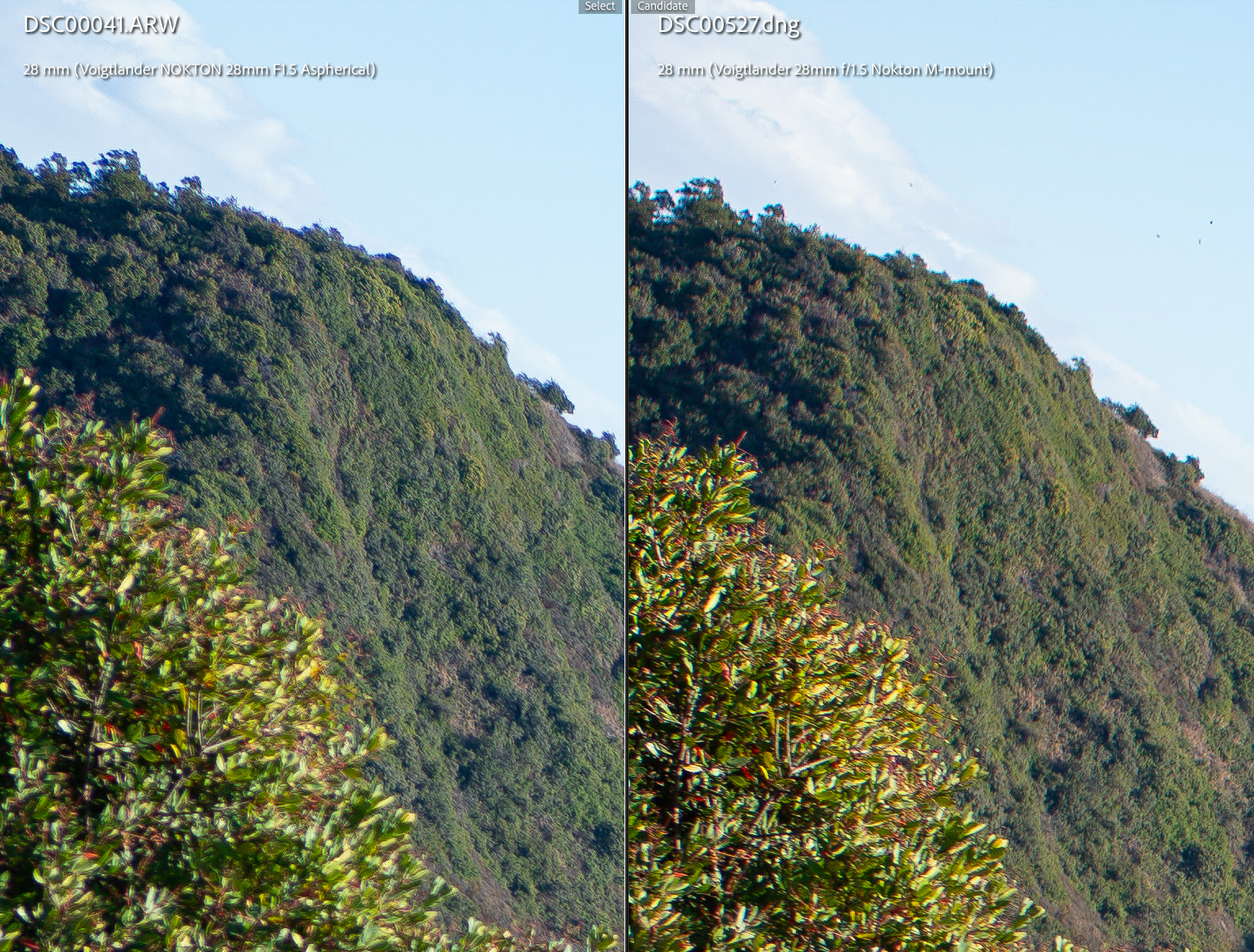
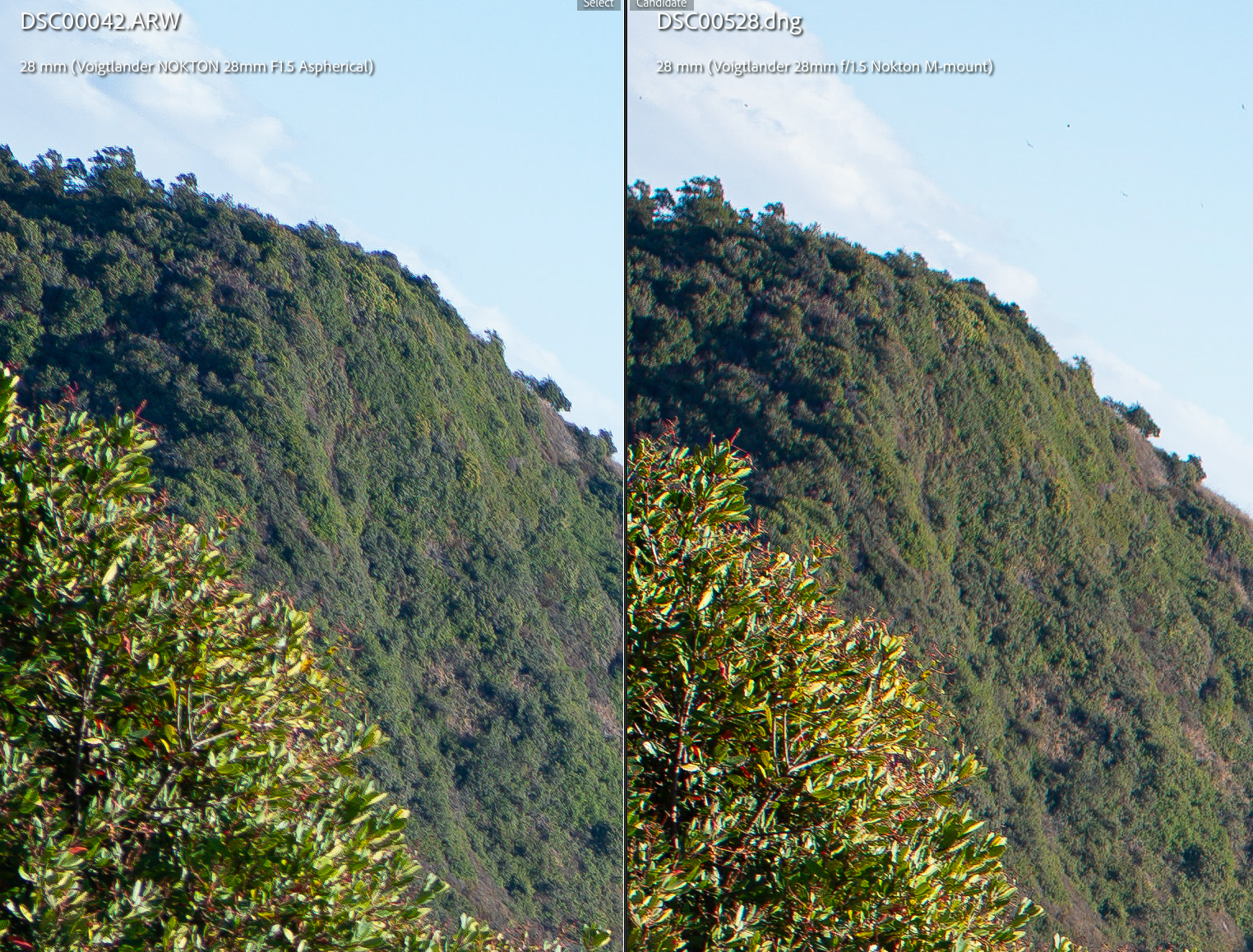
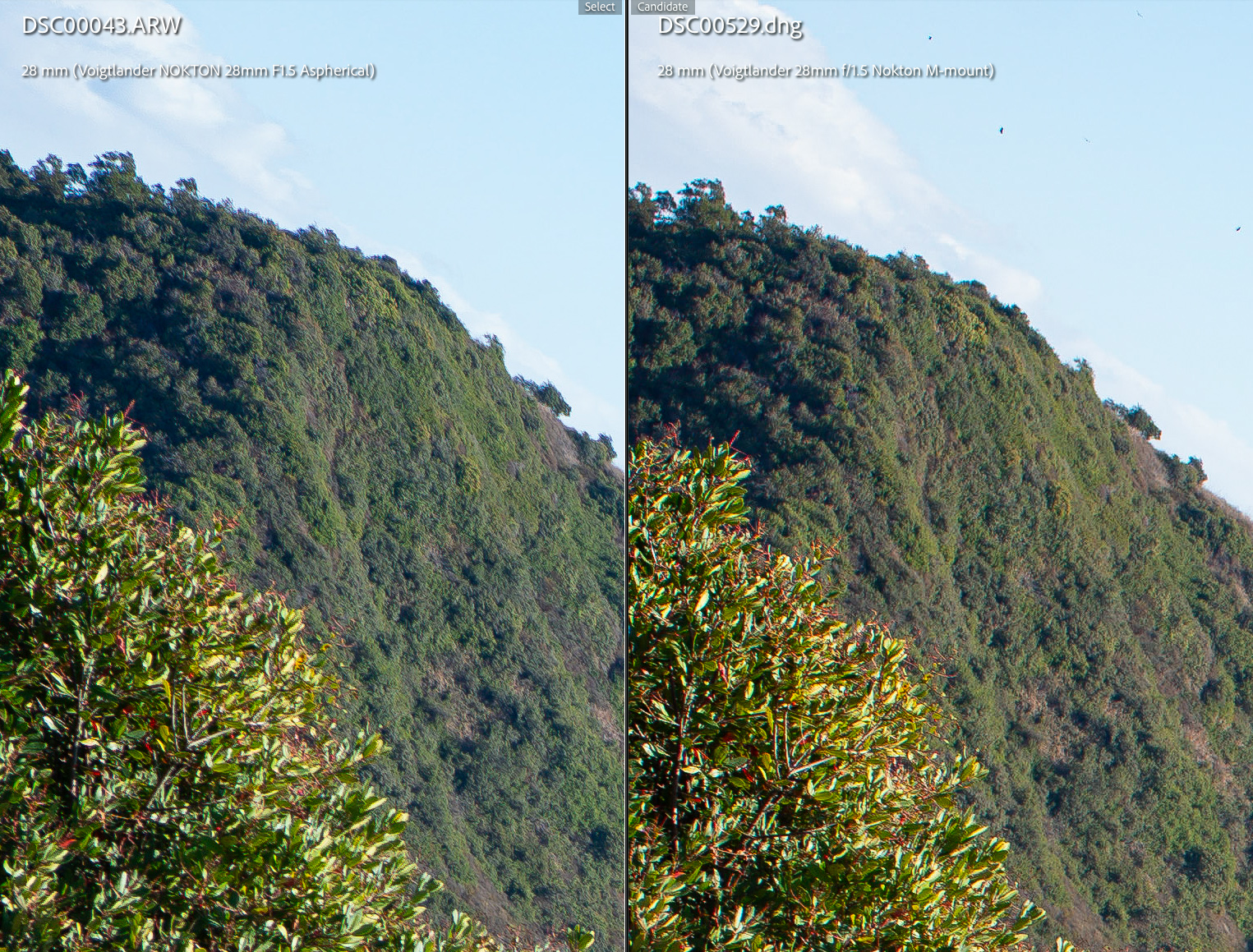
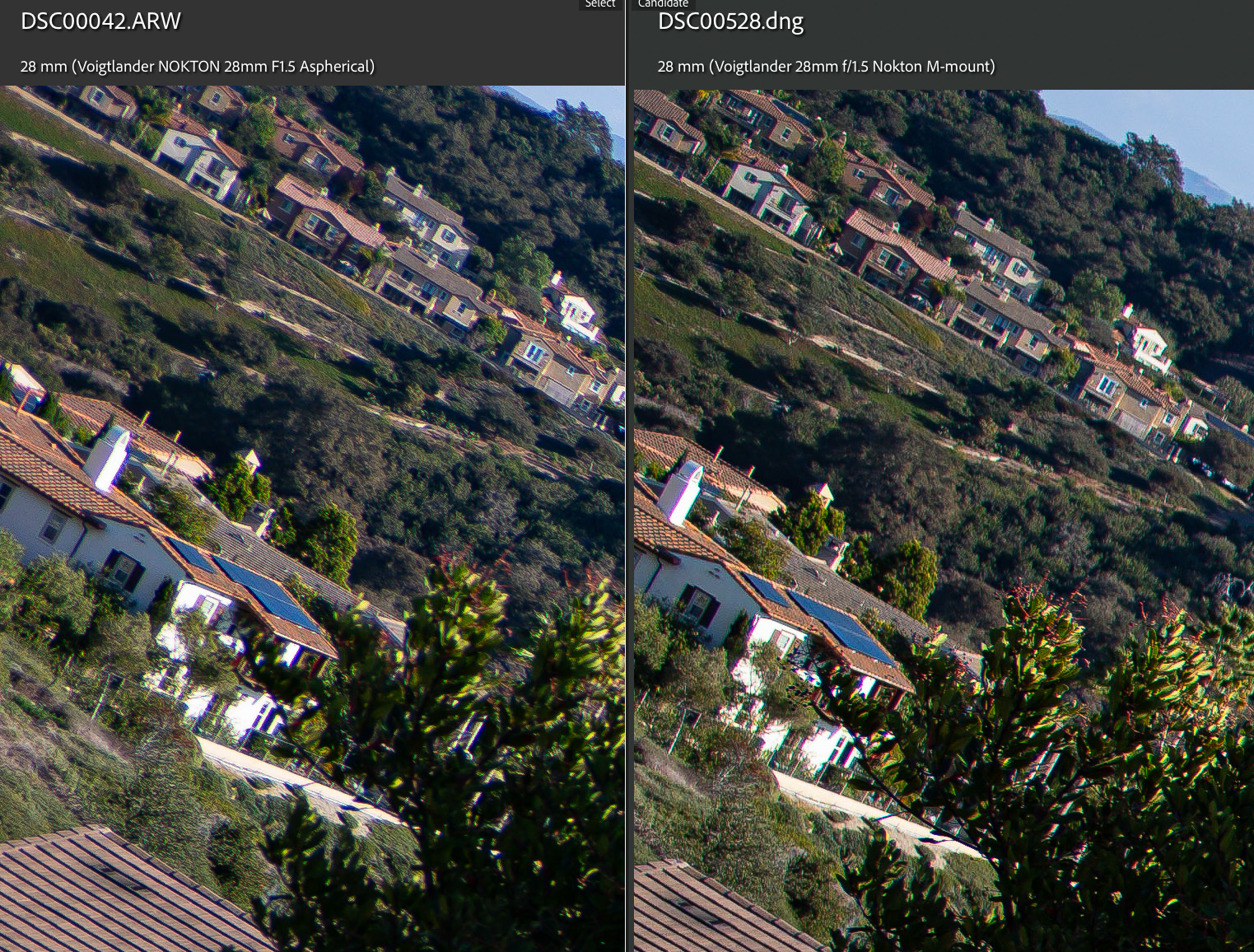
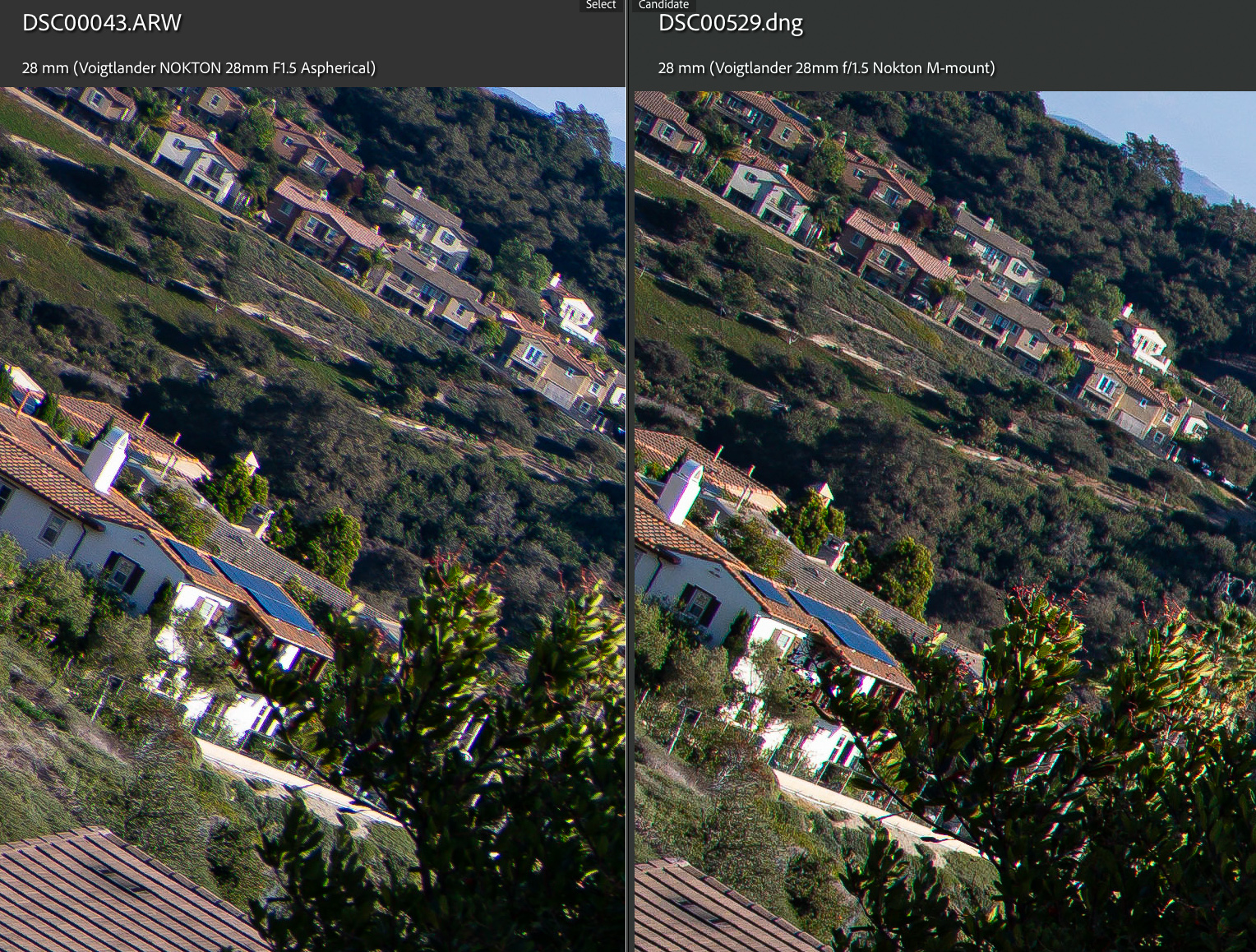
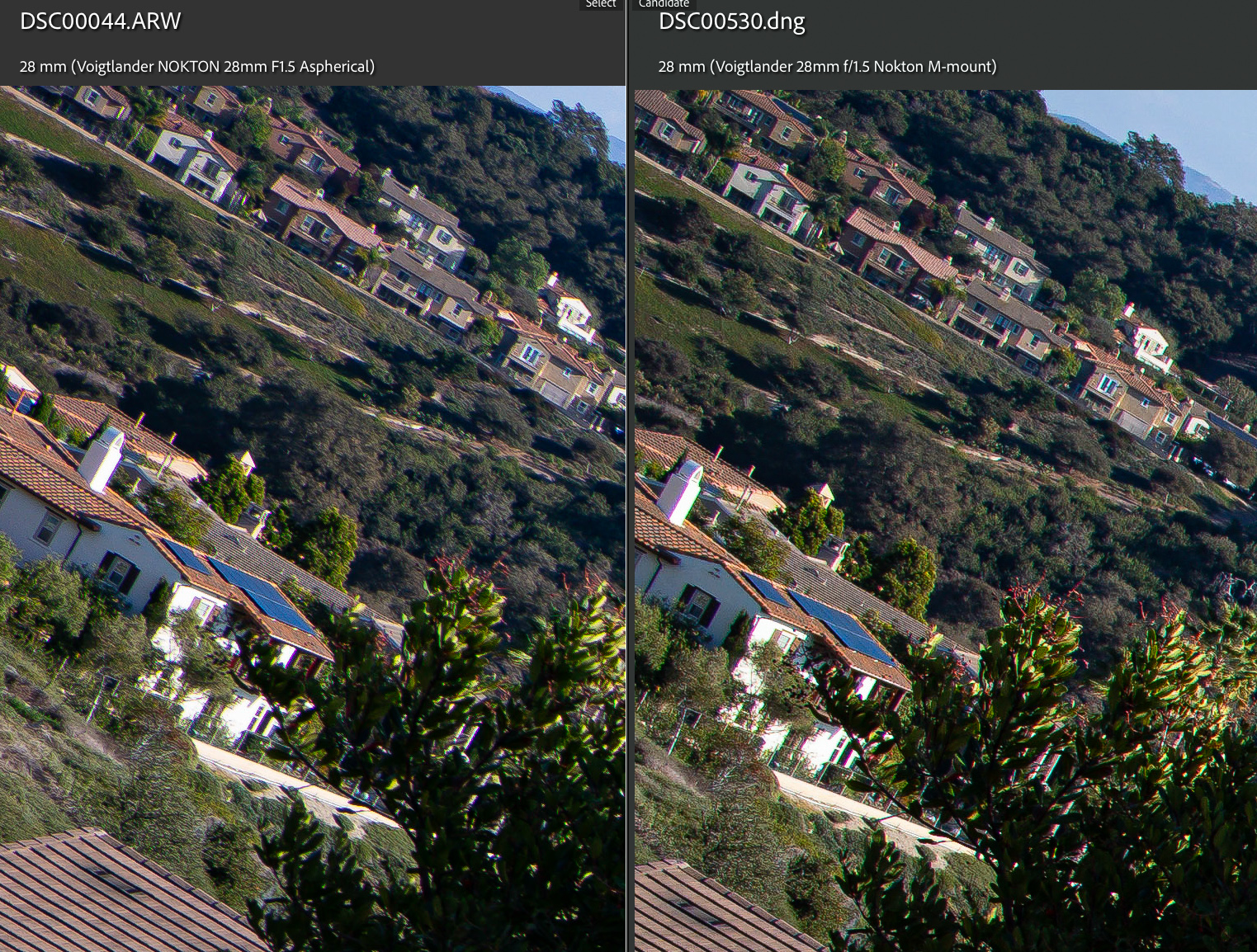
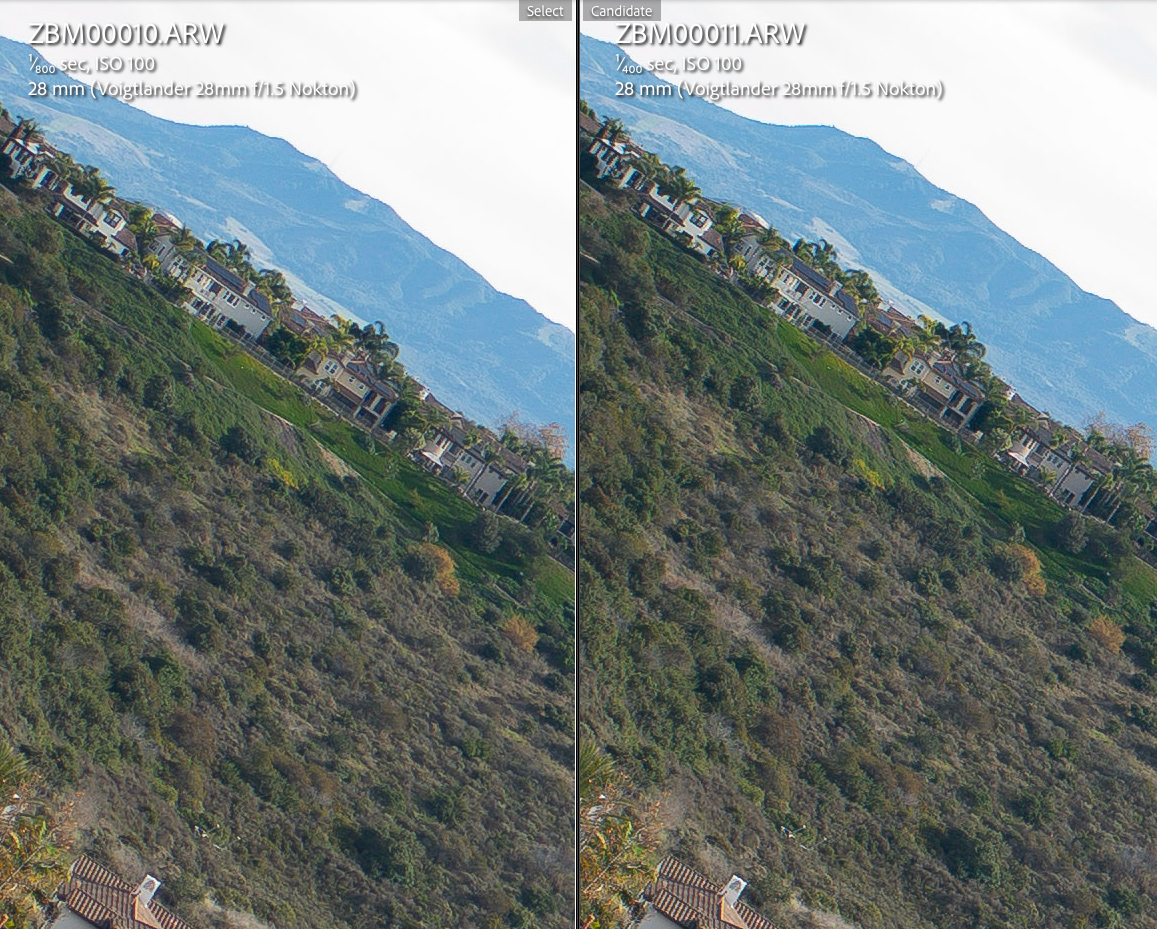
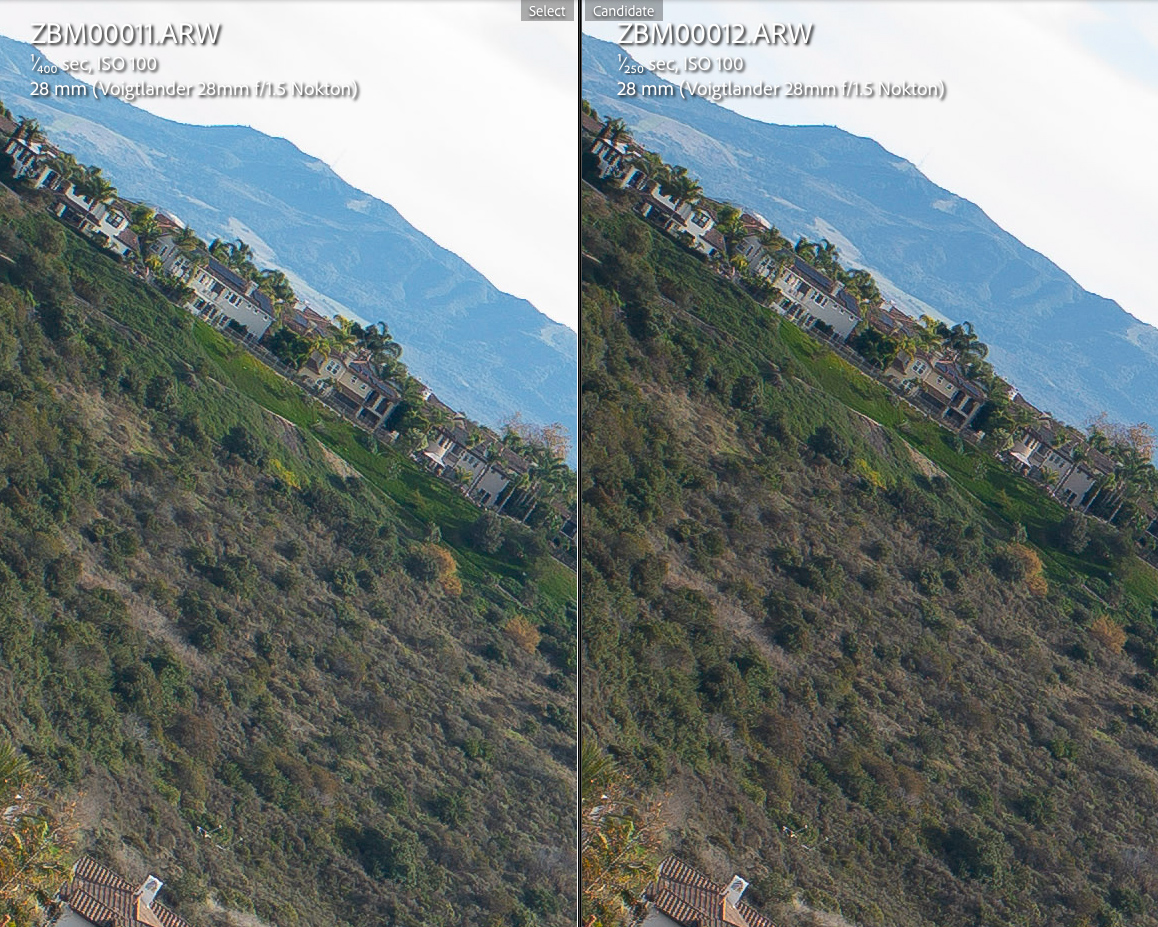
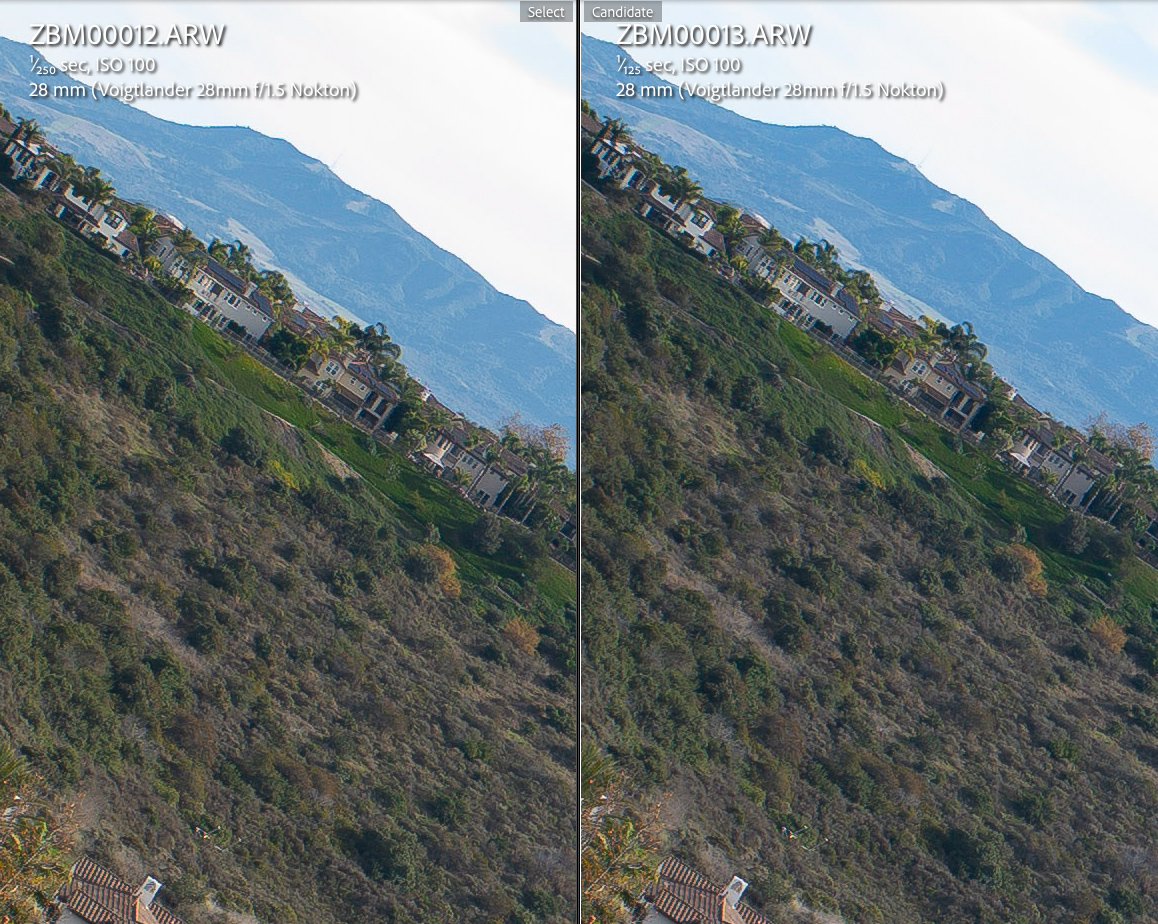
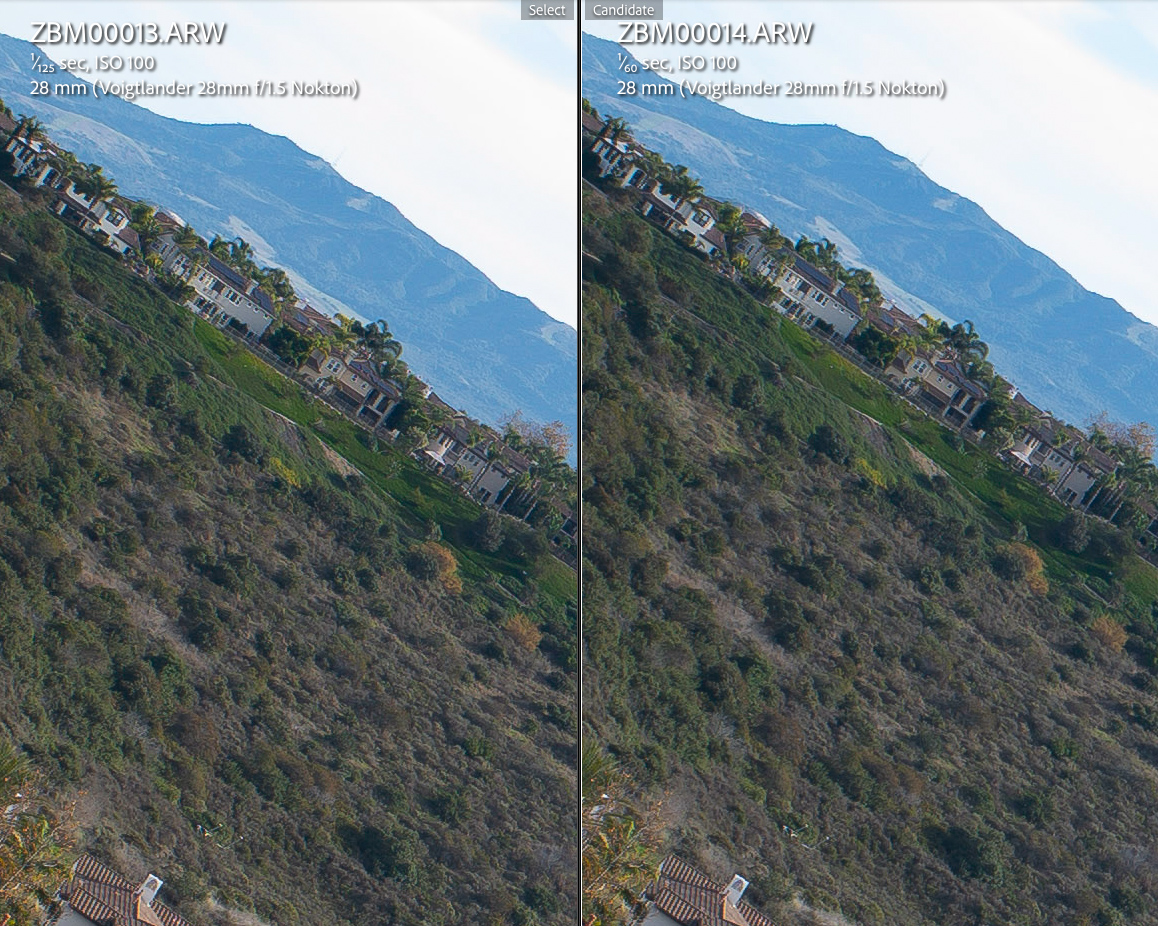
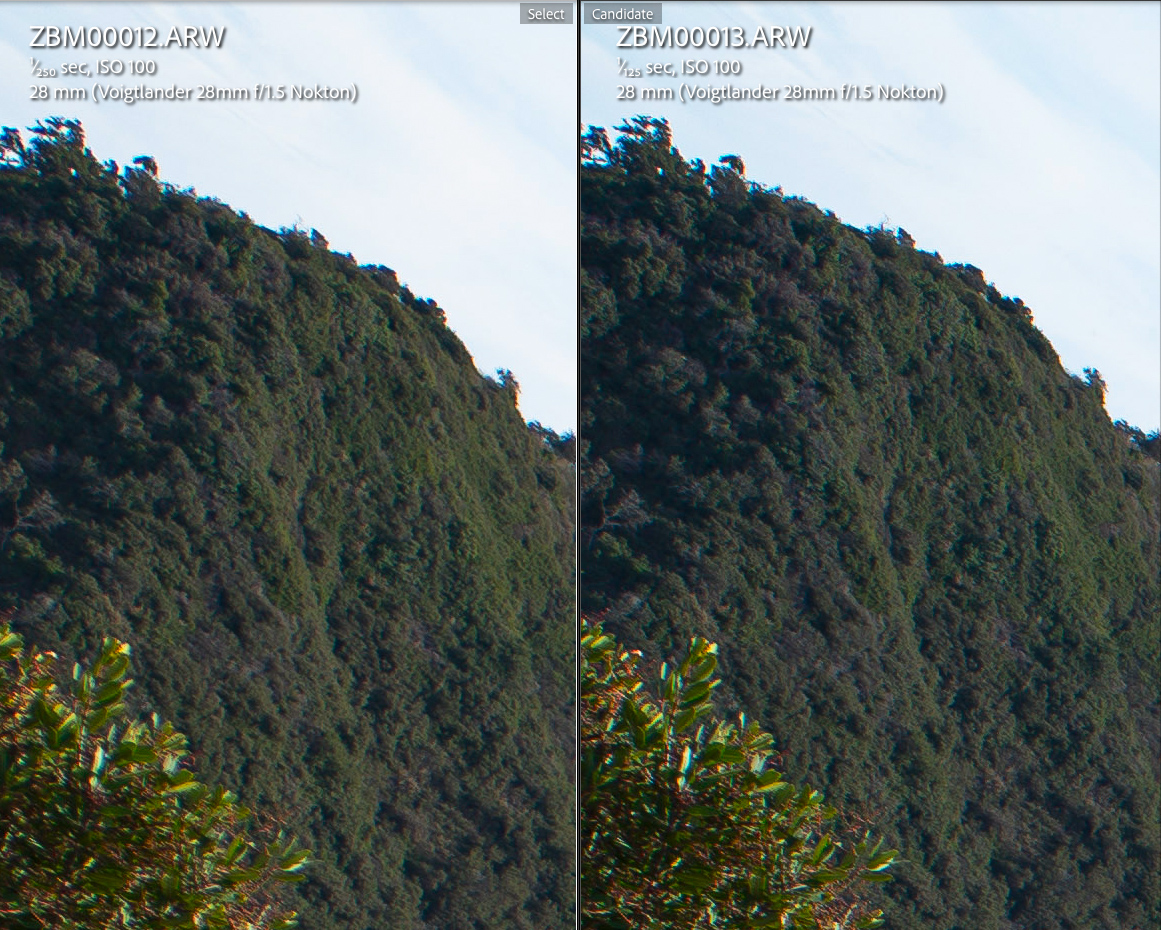
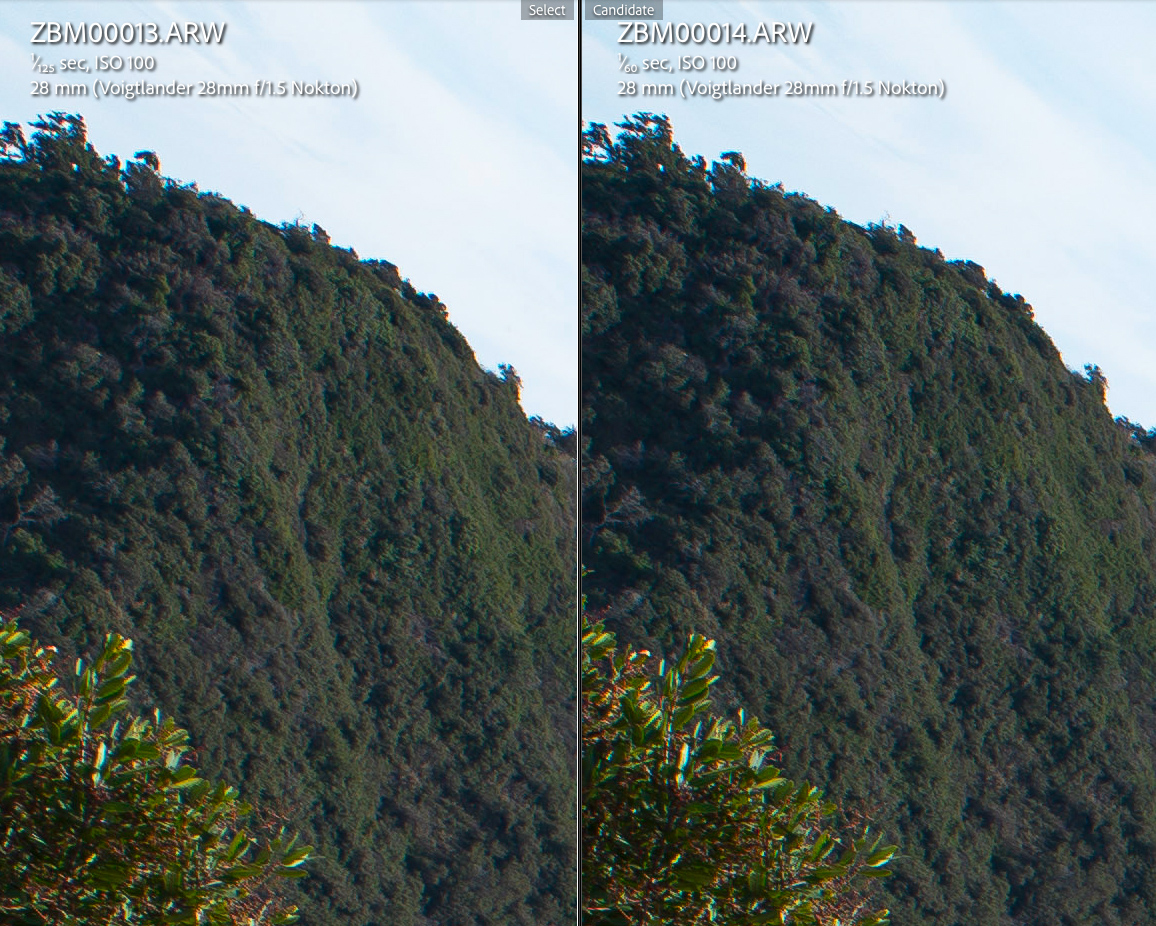
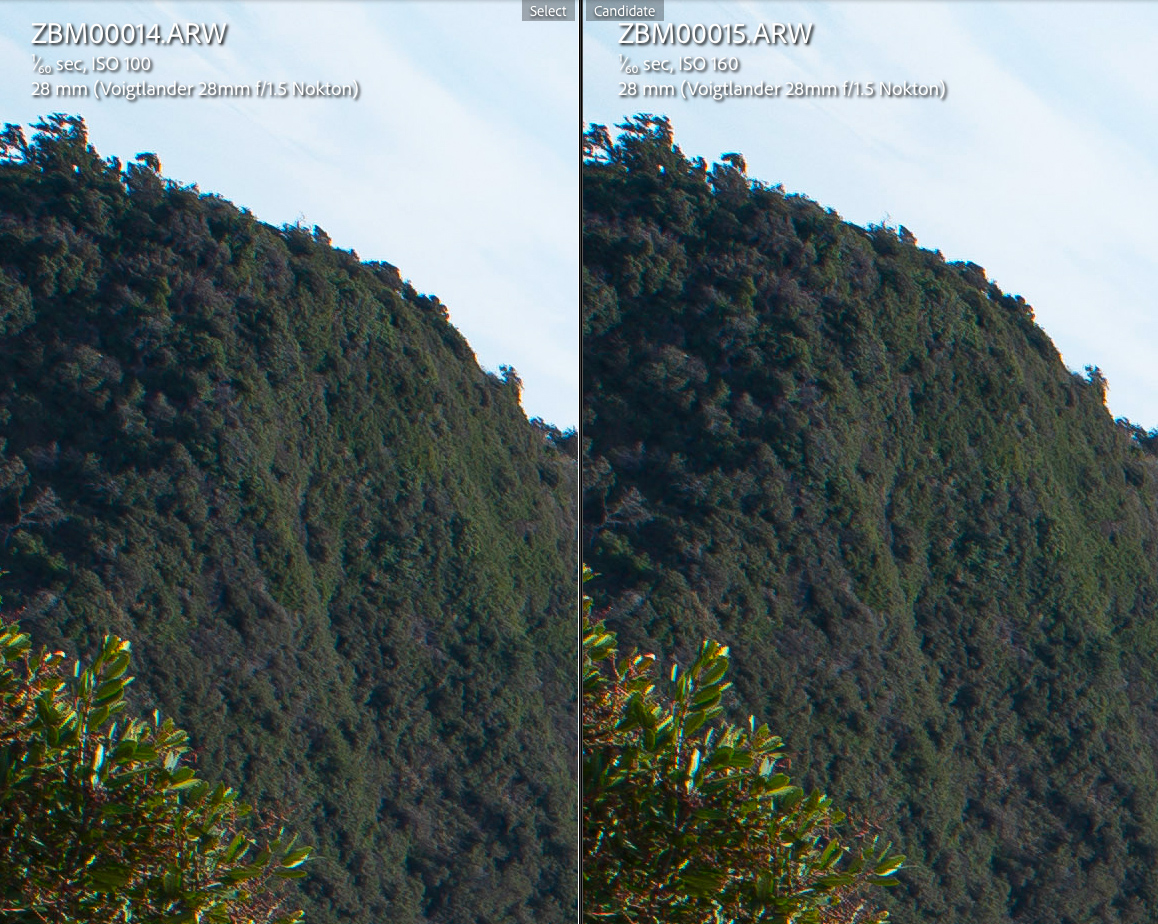
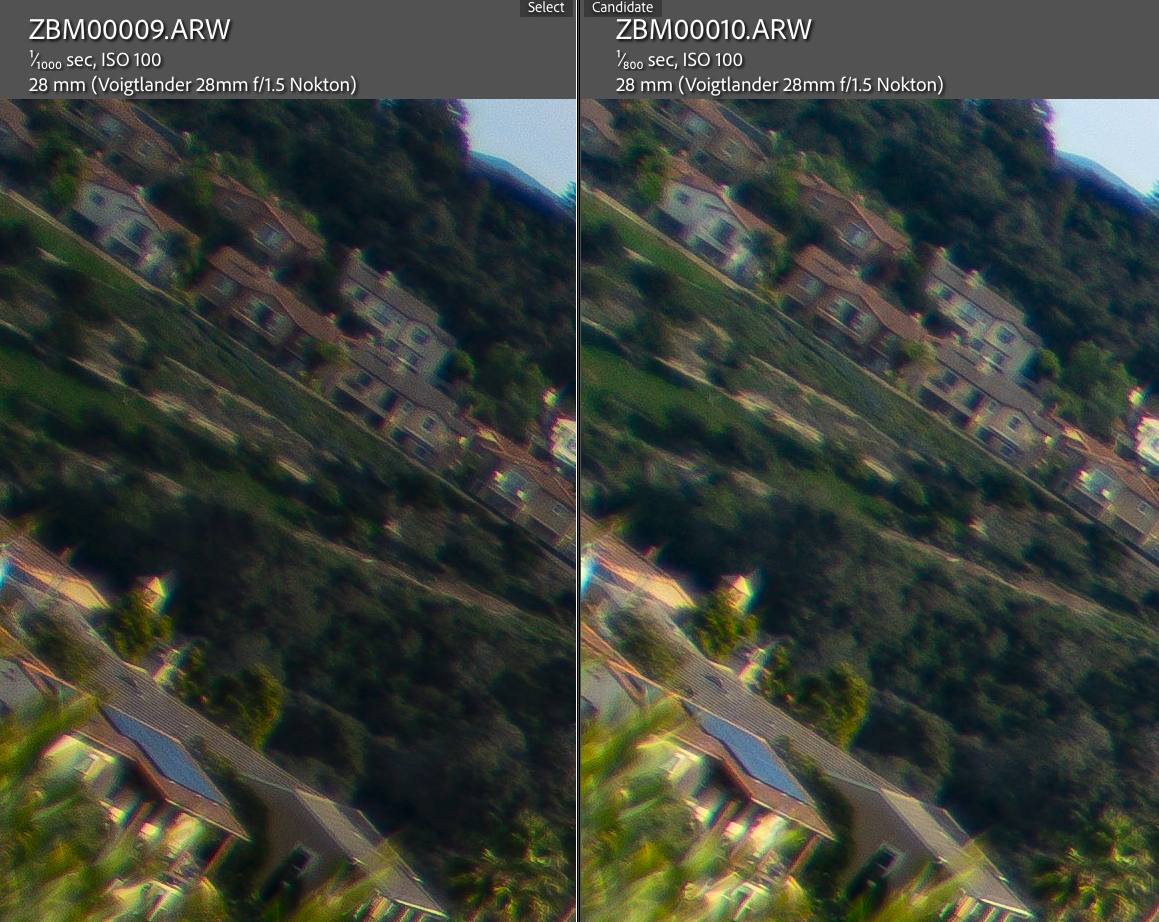
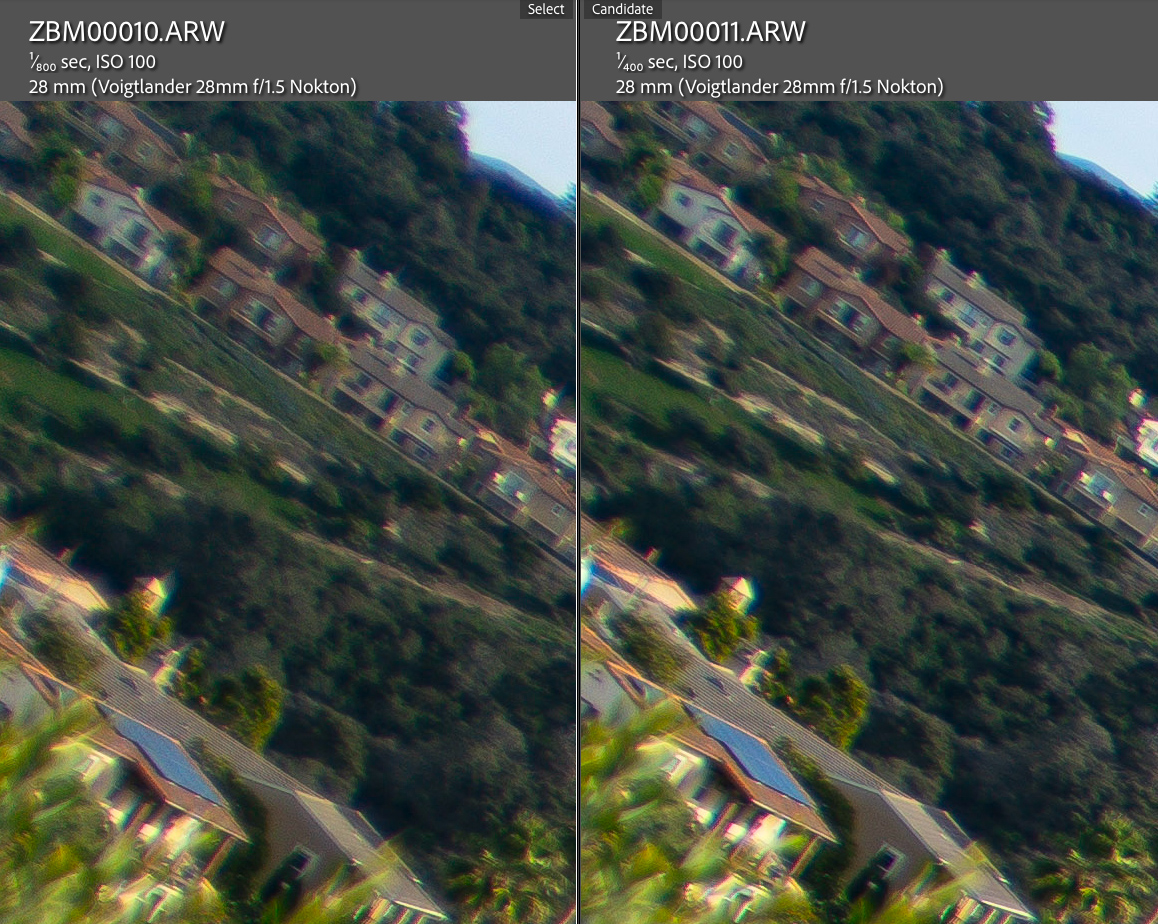
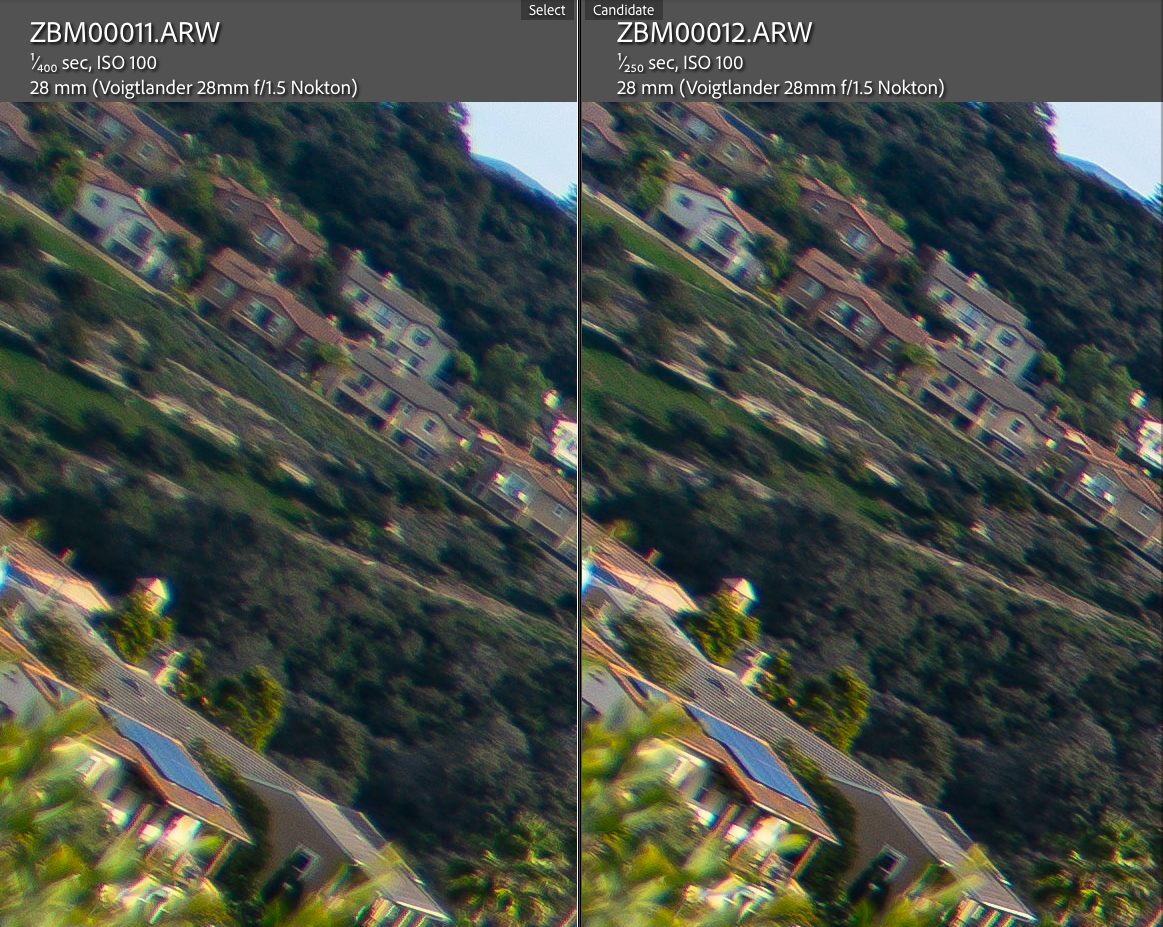
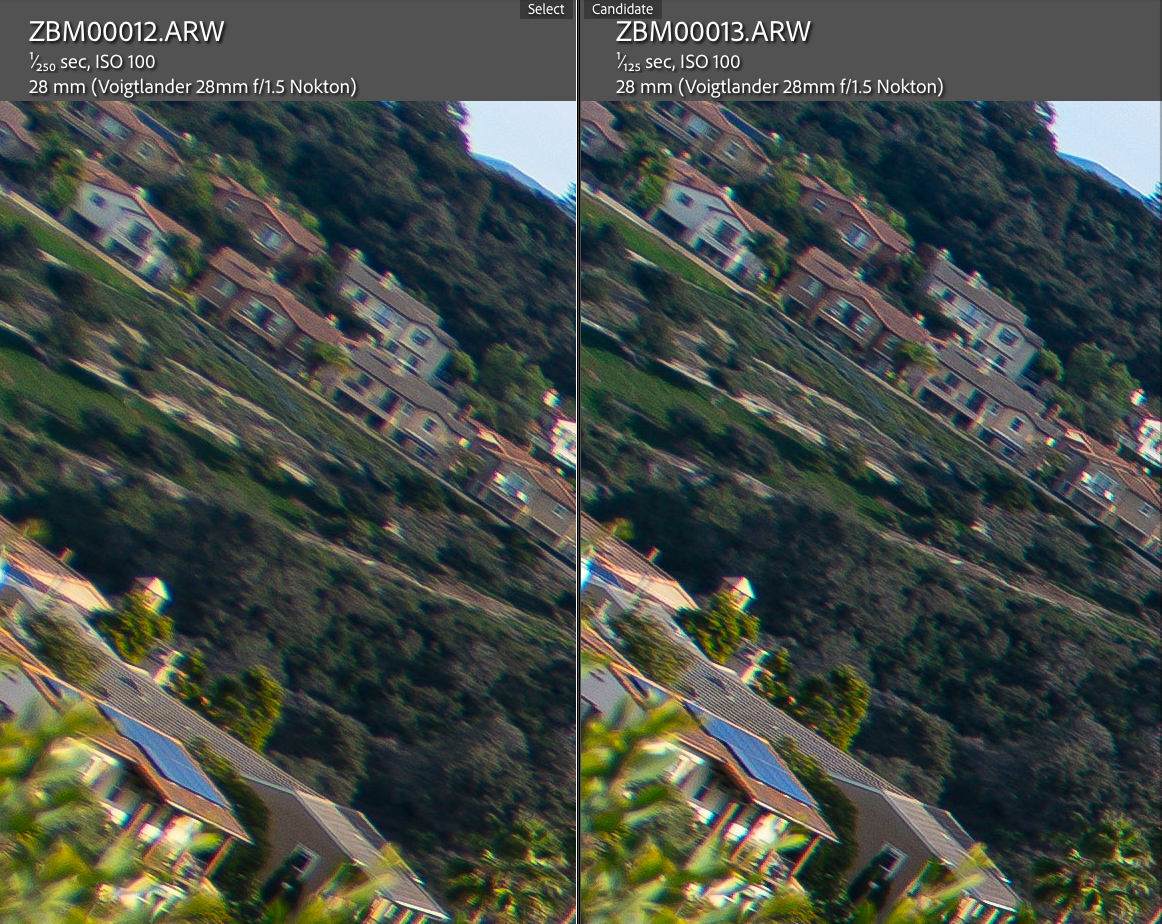
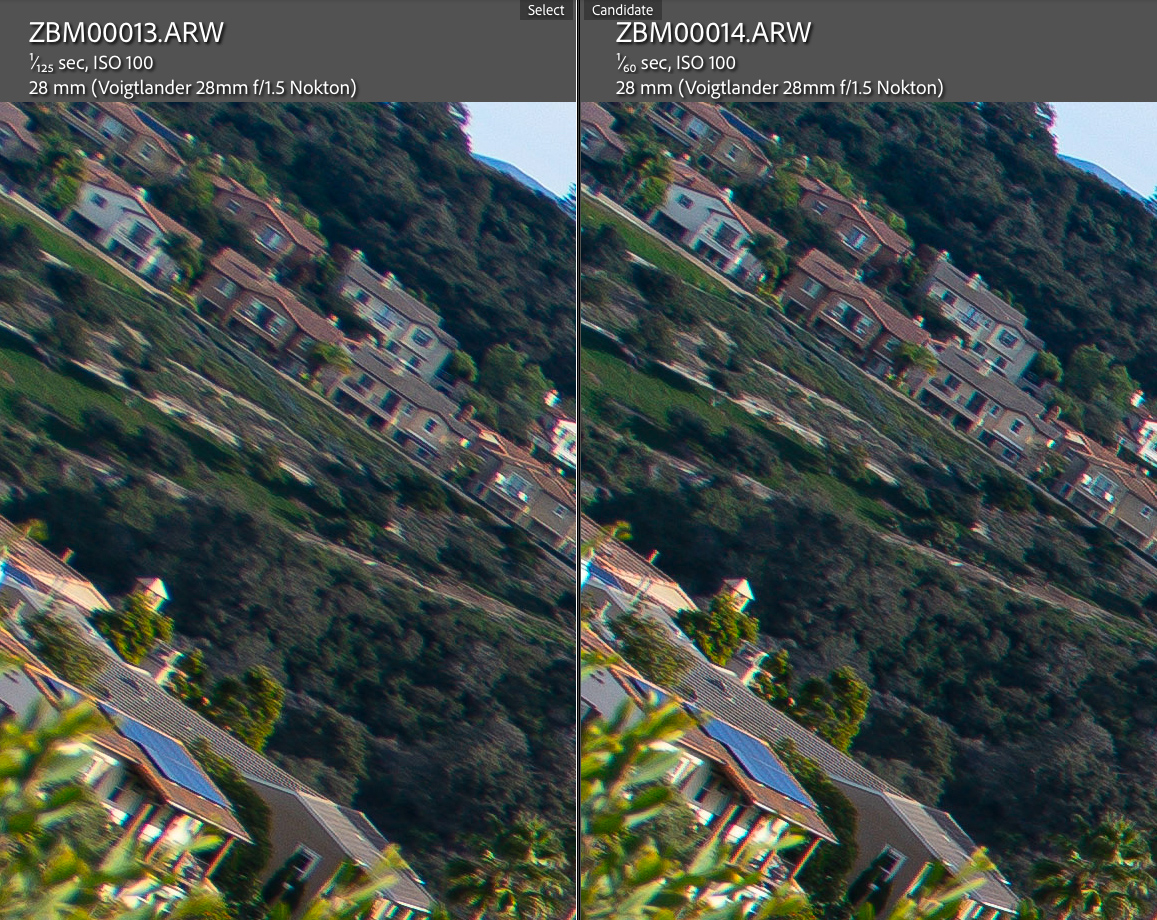
This review focuses only on comparing the lenses at infinity focus. Since both lenses share the same overall optical design, their rendering and optical characteristics are fundamentally similar. The only difference lies in how each version has been slightly adjusted to account for variations in sensor stack thickness.
For the full review of the Voigtlander 28mm f/1.5 Nokton, click here.
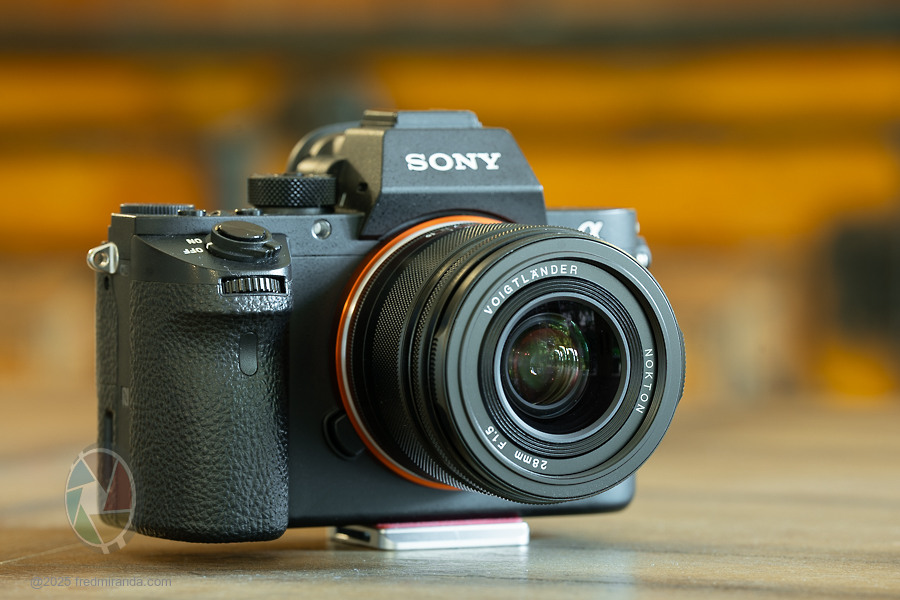
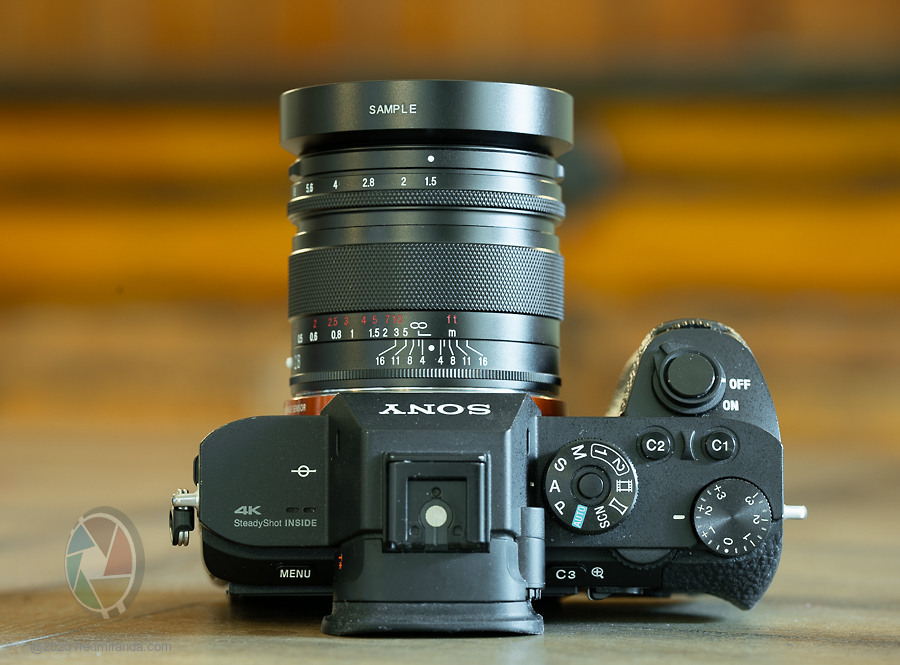
Sony A7R II paired with Voigtlander 28mm f/1.5 Nokton E-mount lens
I’ve received several requests to compare the Voigtlander 28mm f/1.5 Nokton E-mount and Leica M-mount versions, both on their respective cameras and to evaluate how the M-mount performs when adapted to a Sony E-mount body. While the lenses share the same optical design, Cosina made slight adjustments to account for the thicker sensor stack in Sony cameras, compared to the thinner stack used in Leica M cameras.
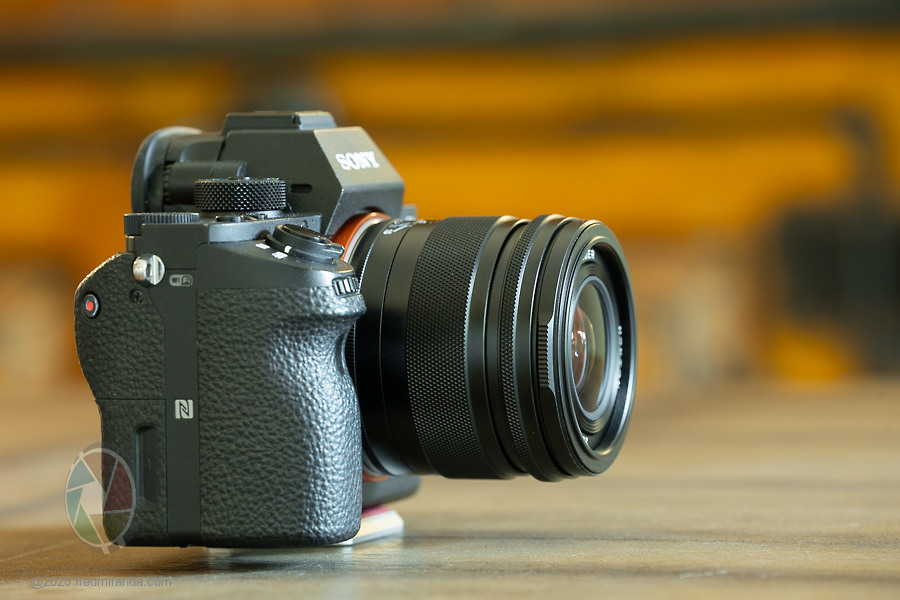
Sony A7R II paired with Voigtlander 28mm f/1.5 Nokton E-mount lens
This comparison serves as a complement to my review of the Voigtlander 28mm f/1.5 M-mount lens. Since the design changes were focused on accommodating Sony’s sensor, the overall optical performance remains quite similar. The key differences will be in resolution, contrast, and rendering, which are areas where the M-mount and E-mount versions diverge. All other tests should show consistent results for both lenses.
You can read the full review of the Voigtlander 28mm f/1.5 M-mount lens here.
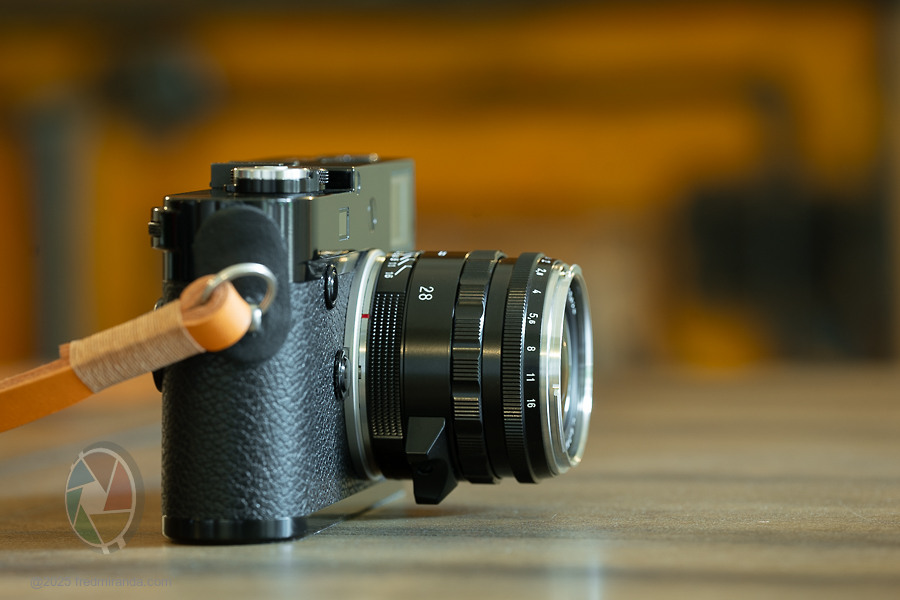
Leica M10-R paired with Voigtlander 28mm f/1.5 Nokton M-mount lens
A common question is whether adapting the more compact and lighter M-mount version of the 28mm f/1.5 Nokton to a Sony E-mount camera will deliver acceptable results. Unfortunately, I can confirm that there will be noticeable image quality degradation. This is due to induced field curvature and astigmatism, which occur because the lens is designed for a thinner sensor stack, while Sony uses a thicker one. While both versions perform similarly at the center of the frame, image quality degrades noticeably towards the edges and corners.
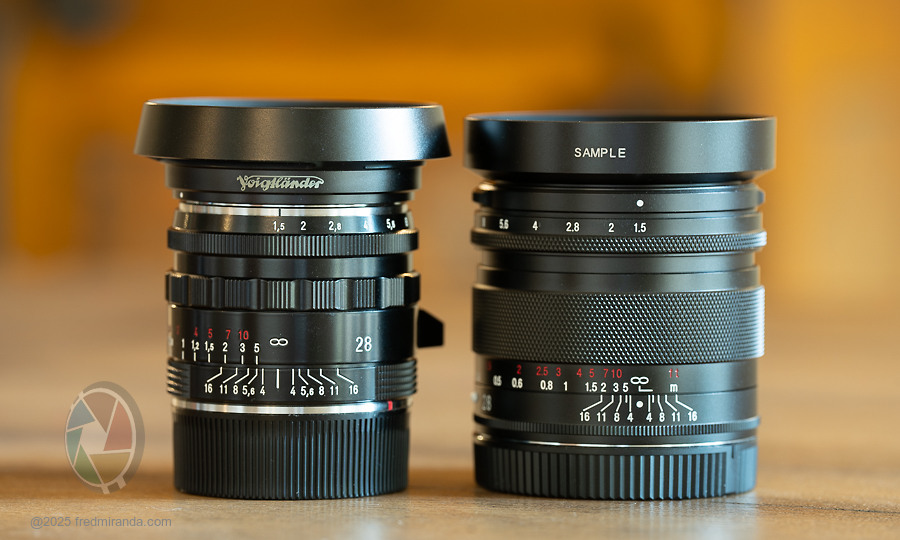
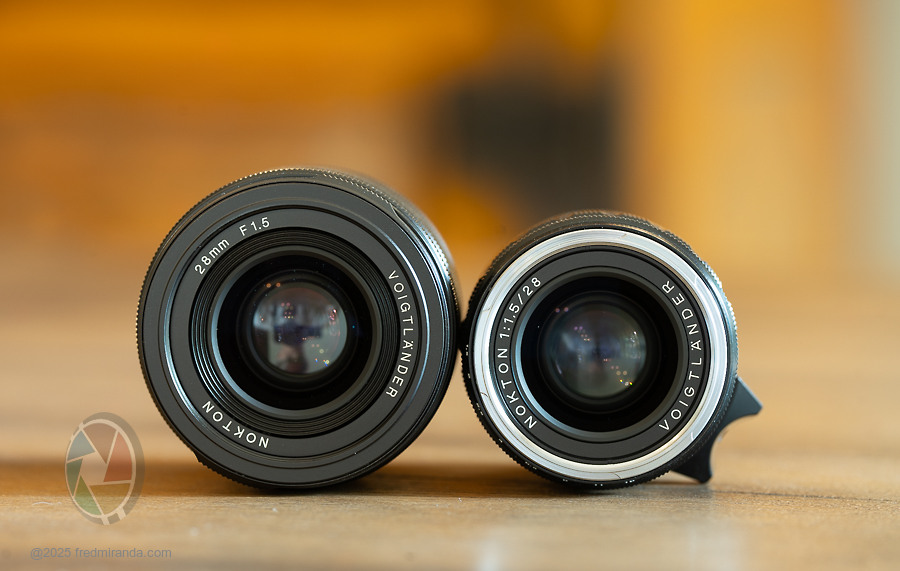
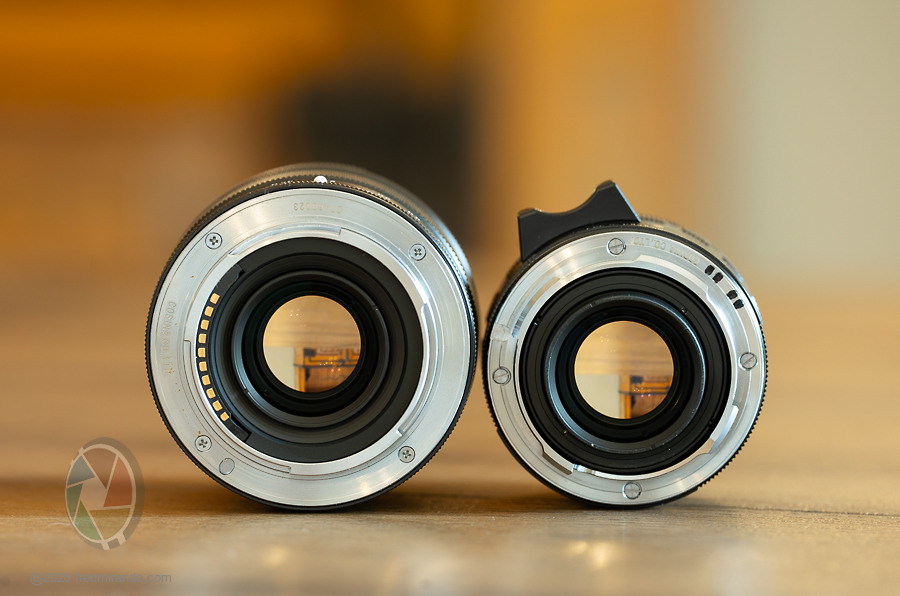
Voigtlander 28mm f/1.5 Nokton M-mount and E-mount comparison with their respective hoods
Stopping down the M-mount lens to about f/8 increases the depth of field, which helps reduce much of the induced field curvature, but it still doesn’t quite match the performance of the dedicated E-mount version. For optimal results, it’s best to use the lens designed specifically for your camera’s mount.
E-mount and M-mount shown on their dedicated bodies
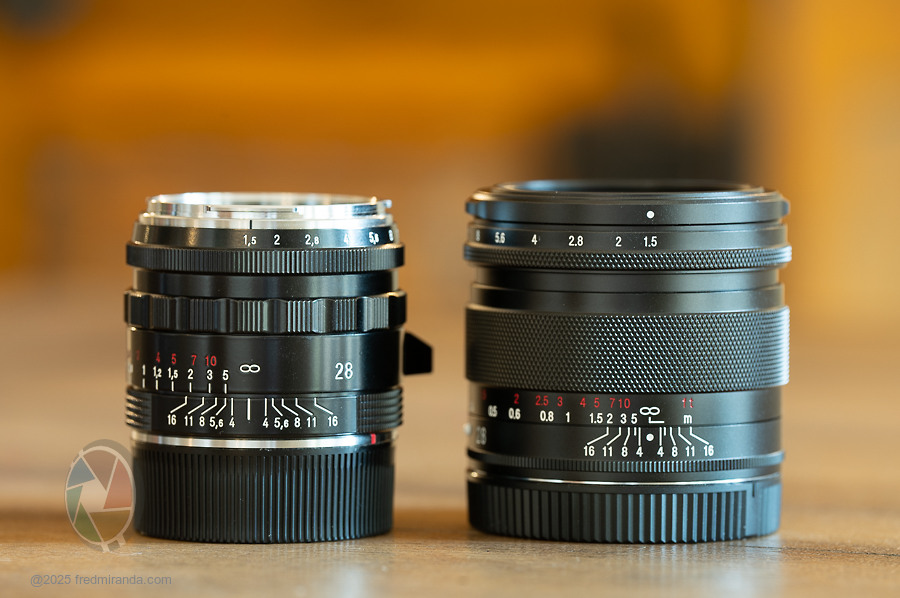
Just like the M-mount version, the new 28mm f/1.5 Nokton for E-mount offers outstanding optical performance. It features two aspherical elements with four aspherical surfaces and two special partial dispersion lenses, resulting in a total of 10 elements in 8 groups. Despite its fast f/1.5 aperture, this wide-angle lens remains compact, measuring only 55mm in length (45.5mm for the M-mount version).
The E-mount lens is equipped with electronic contacts, enabling lens usage data to be recorded in the Exif data of your images. It also includes a built-in distance encoder, which ensures compatibility with 5-axis in-body image stabilization. Additionally, the lens allows you to magnify the viewfinder display simply by turning the focus ring.
Sony A7R II paired with Voigtlander 28mm f/1.5 Nokton E-mount lens
One key difference between the M-mount and E-mount versions is the minimal focus distance (MFD). The E-mount version has a MFD of 0.28m, while the M-mount version is limited to 0.5m, providing the E-mount with a significant advantage in close-up photography. Also, the E-mount's aperture ring can be easily de-clicked, making it more suitable for video use.
Let’s now take a closer look at the full specifications of the Voigtlander 28mm f/1.5 Nokton E-mount:
Voigtlander 28mm f/1.5 Nokton M-mount and E-mount comparison
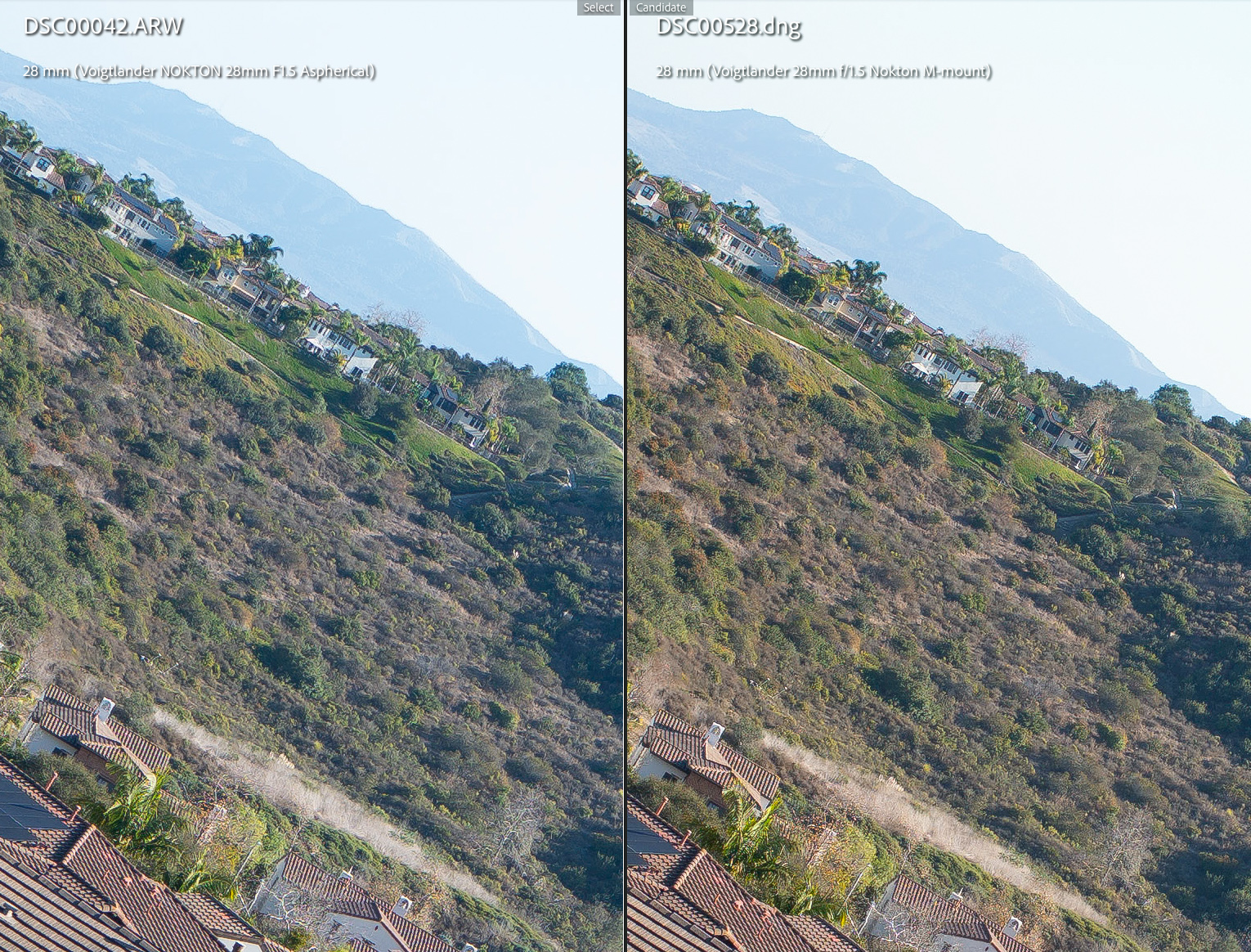
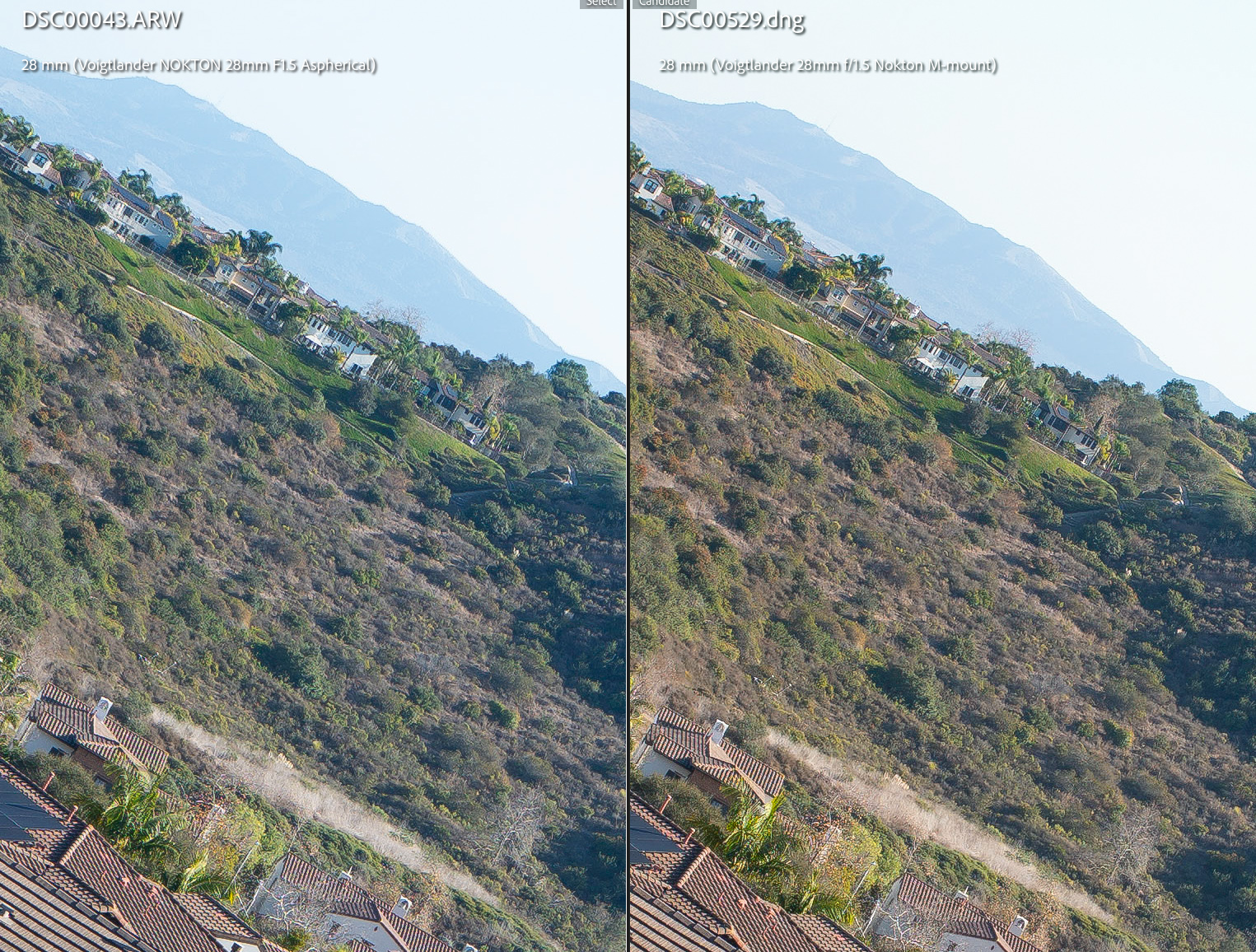
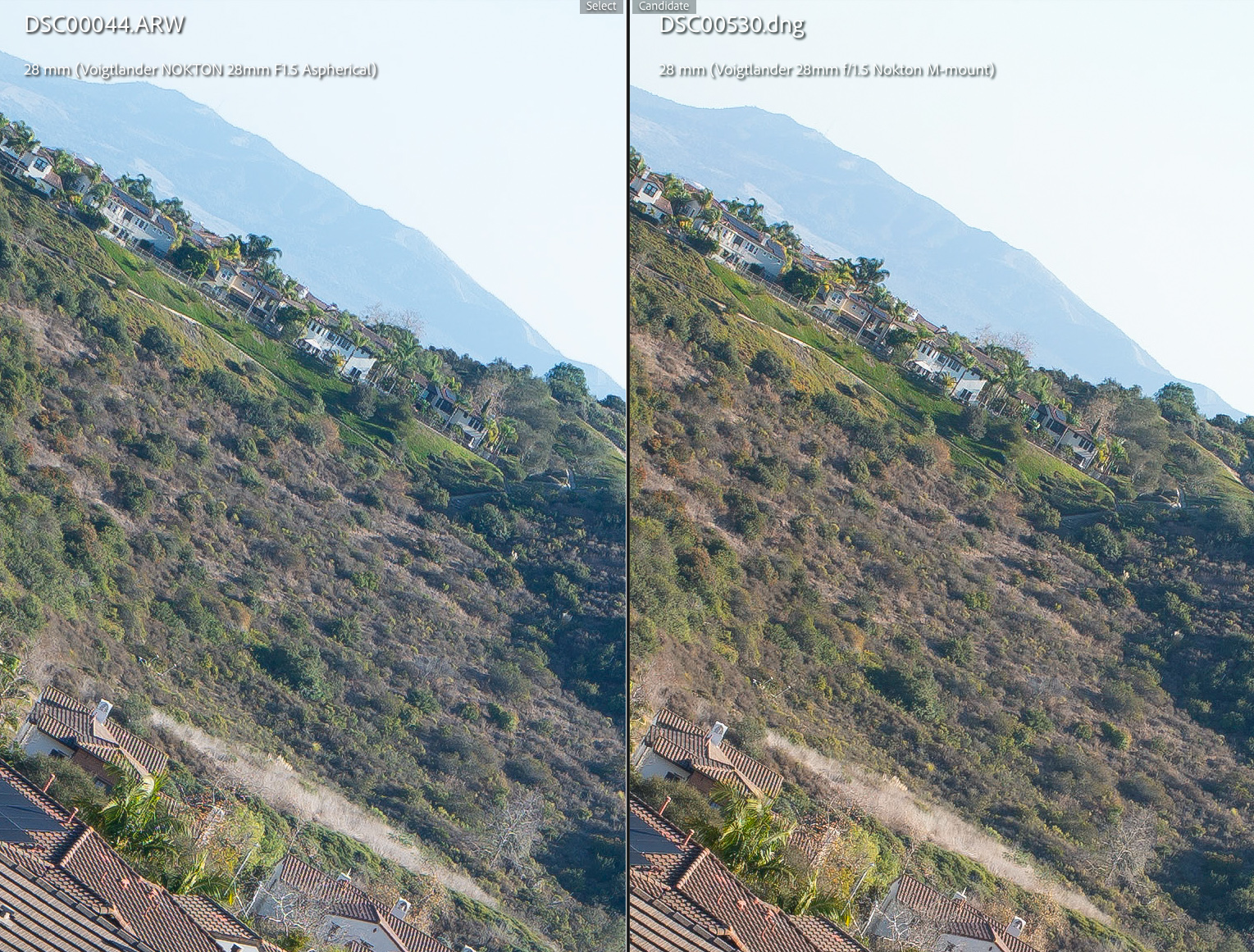
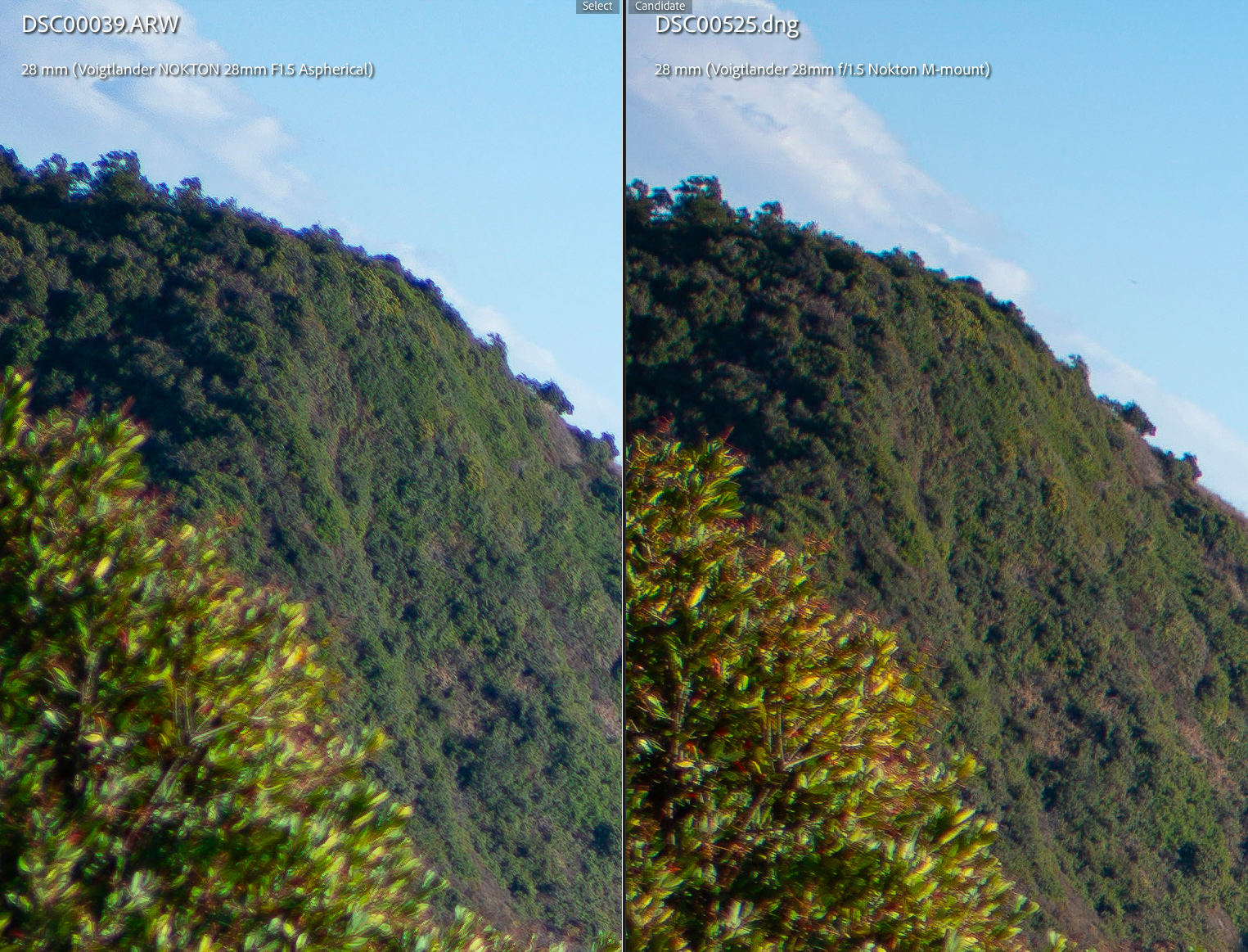
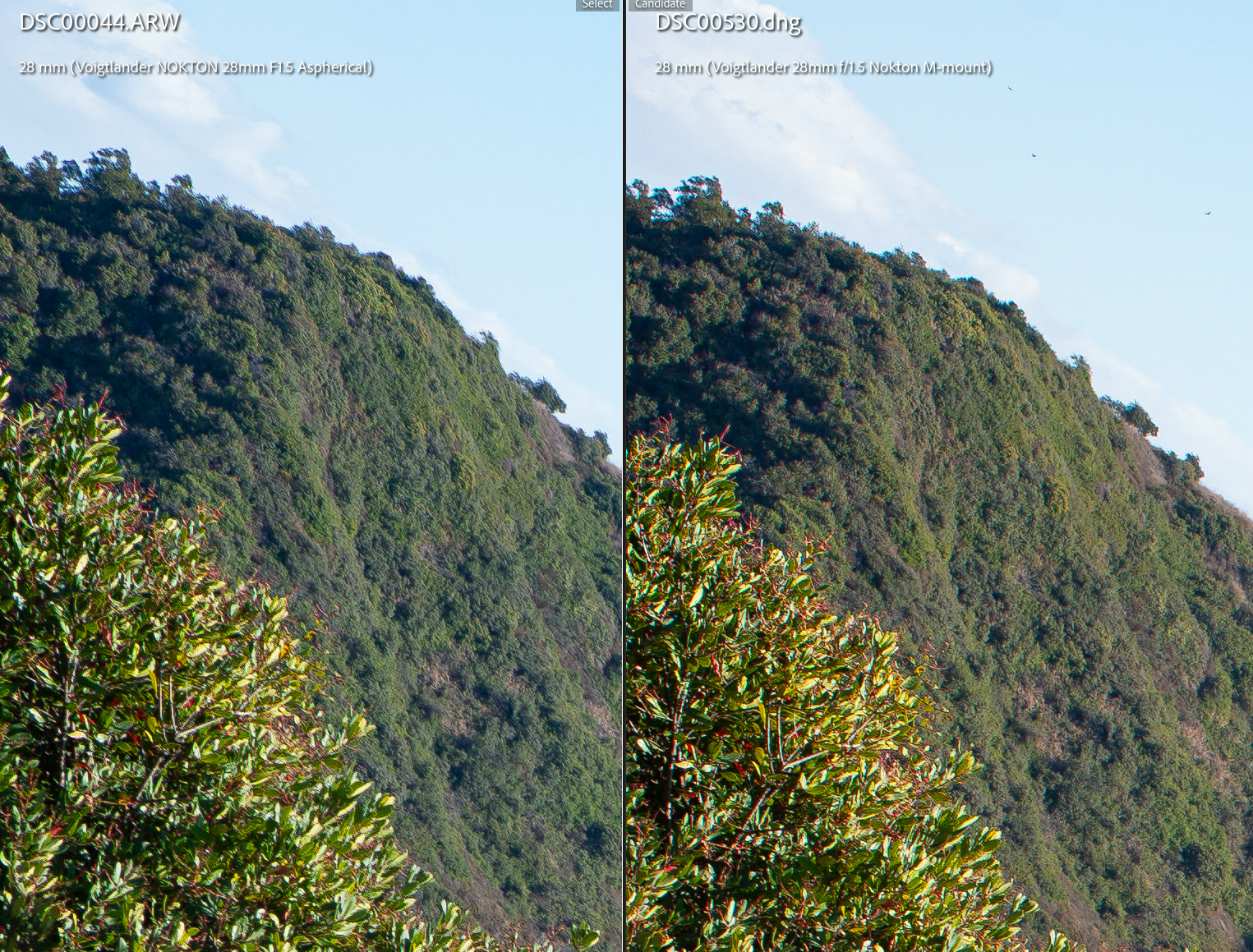
Infinity resolution and contrast comparison: Voigtlander 28mm f/1.5 E-mount on Sony A7R II vs. 28mm f/1.5 M-mount on Leica M10-R
When Cosina introduced the Voigtlander 28mm f/1.5 Nokton M-mount and shared its specifications and optical design, it was clear the lens was engineered for high performance. The design follows a similar approach to the acclaimed Voigtlander 28mm f/2 Ultron II M-mount but includes an additional double-sided aspherical element. With this in mind, I expected high resolution and contrast, and the lens certainly delivers.
The Voigtlander 28mm f/1.5 is sharp across the frame, even when used wide open, and achieves its best performance at f/2.8 and f/4. Given its fast and compact design, I anticipated some lateral chromatic aberration, which is indeed noticeable with the M-mount version, a common characteristic in fast 28mm lenses. However, with the E-mount version, lateral chromatic aberration is automatically corrected and is barely noticeable. A standout feature of the Voigtlander 28mm f/1.5 Nokton is its consistent performance across the field, showing no particular weakness at mid-field.
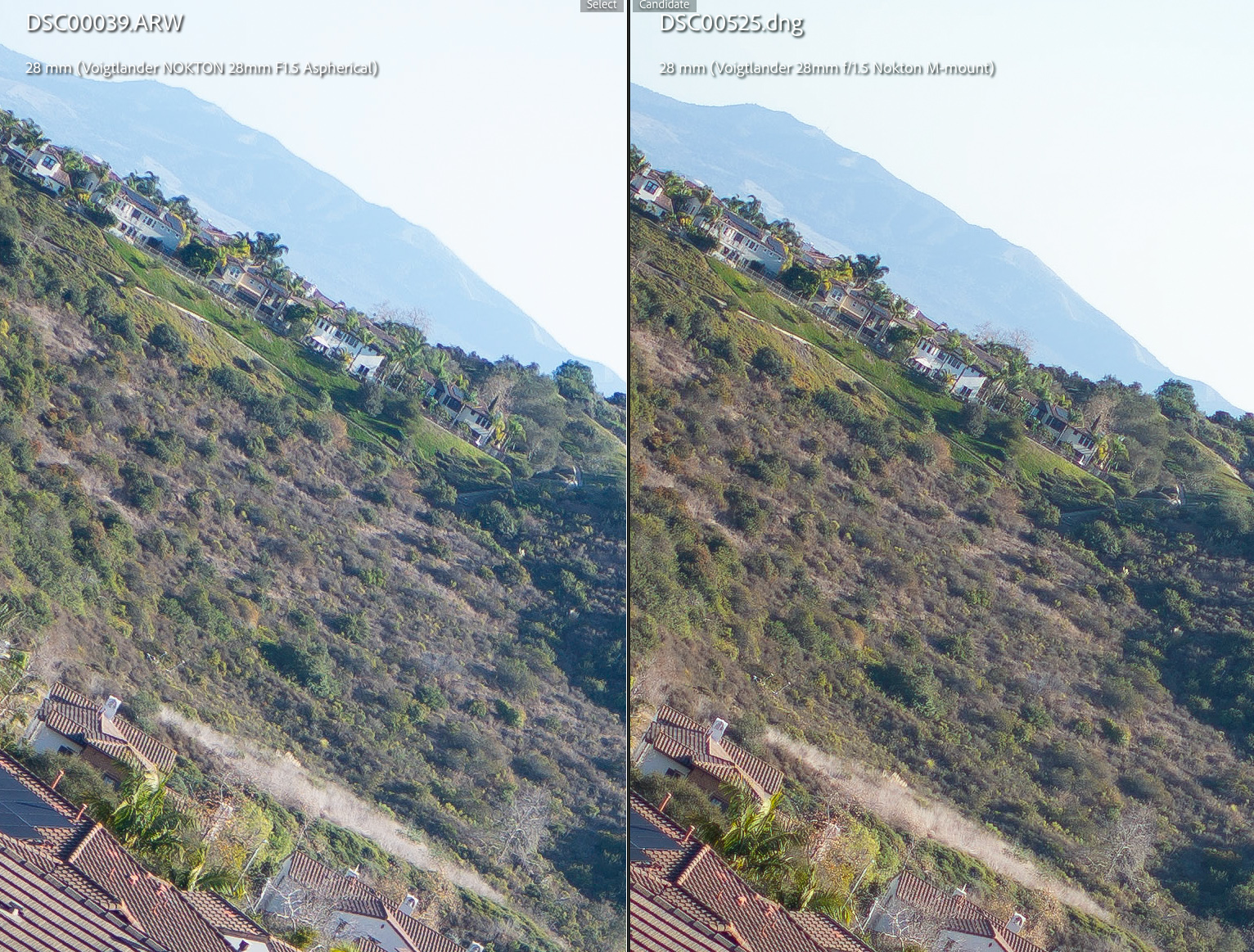
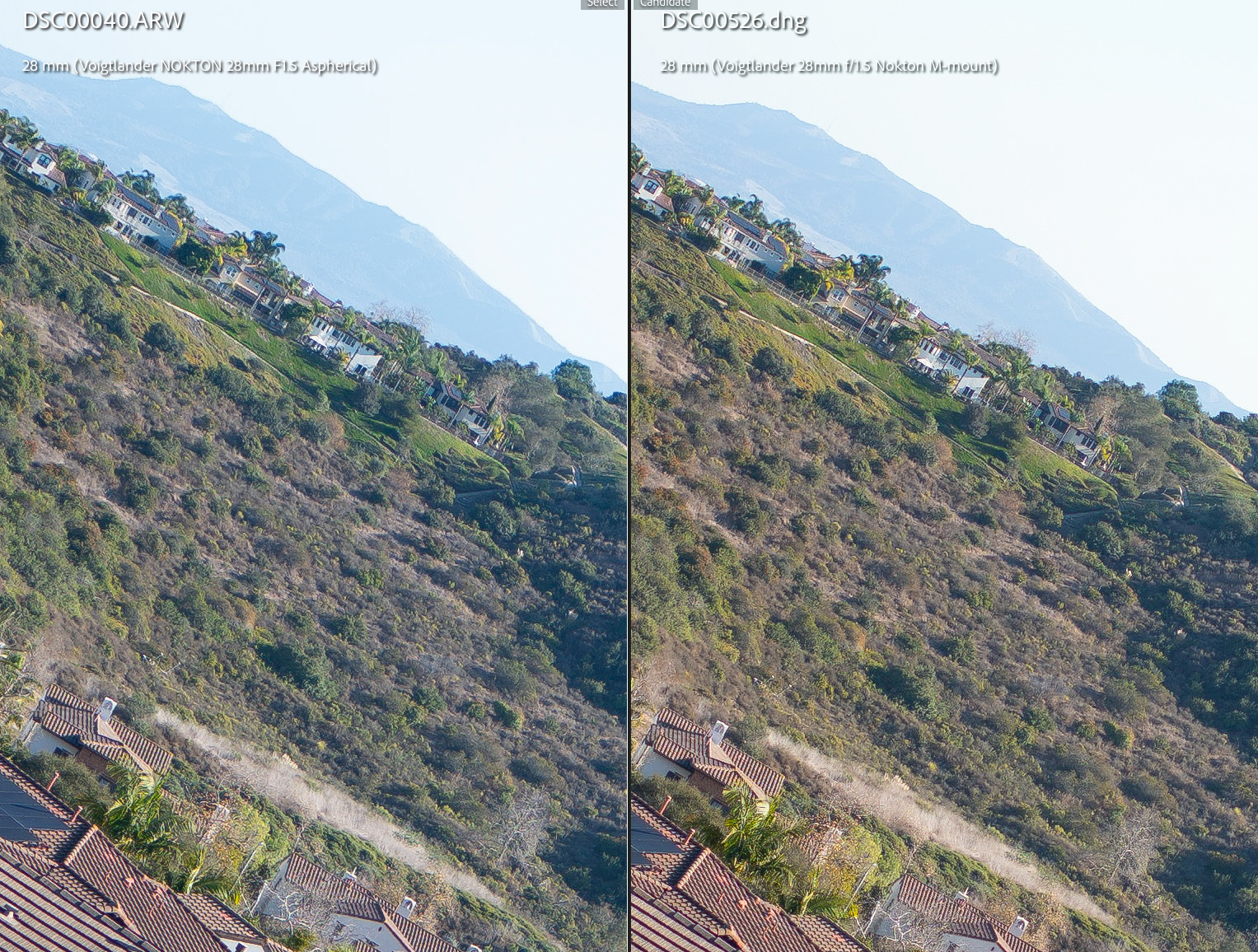
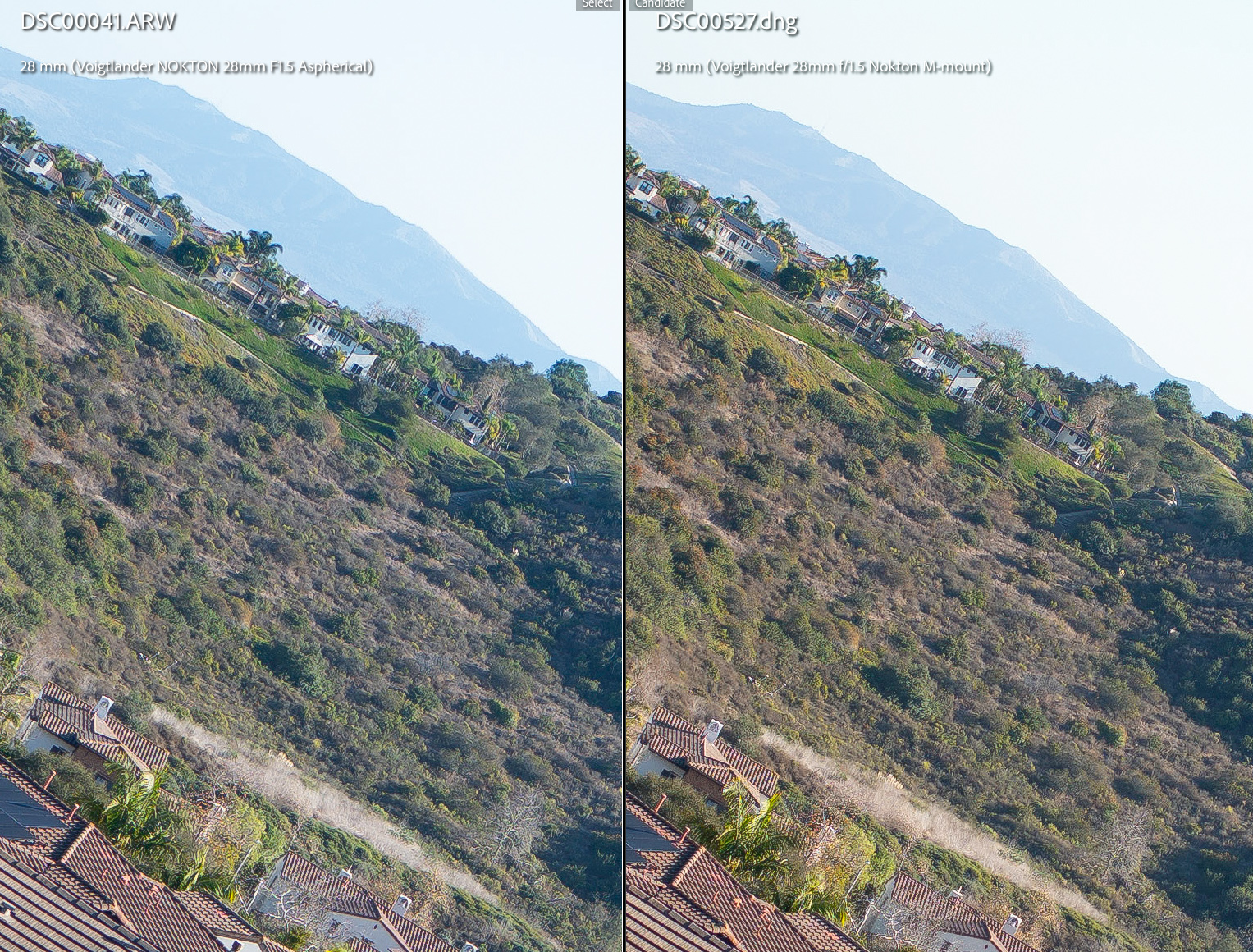
So, how does the Voigtlander 28mm f/1.5 E-mount on the Sony A7R II compare to the 28mm f/1.5 M-mount on the Leica M10-R? This is the question I wanted to answer., as both lenses share the same optical design but are fine-tuned for different sensors. The results reveal very similar performance when used on their respective dedicated bodies. While small differences exist, it is important to note that we are examining these lenses at the pixel level, where tolerances and lens variability come into play. I ensured both lenses tested were well-centered and optimal copies.
For this test, I avoided any corrections for vignetting or chromatic aberration to evaluate their performance without post-processing influences.
Distance: Infinity
Focus: Center - Best of three @ 12.4x magnification
Software: Lightroom with FM Default Landscape Sharpening. All other settings set to default
PS: Vignetting, CA and distortion were NOT corrected for both lenses.
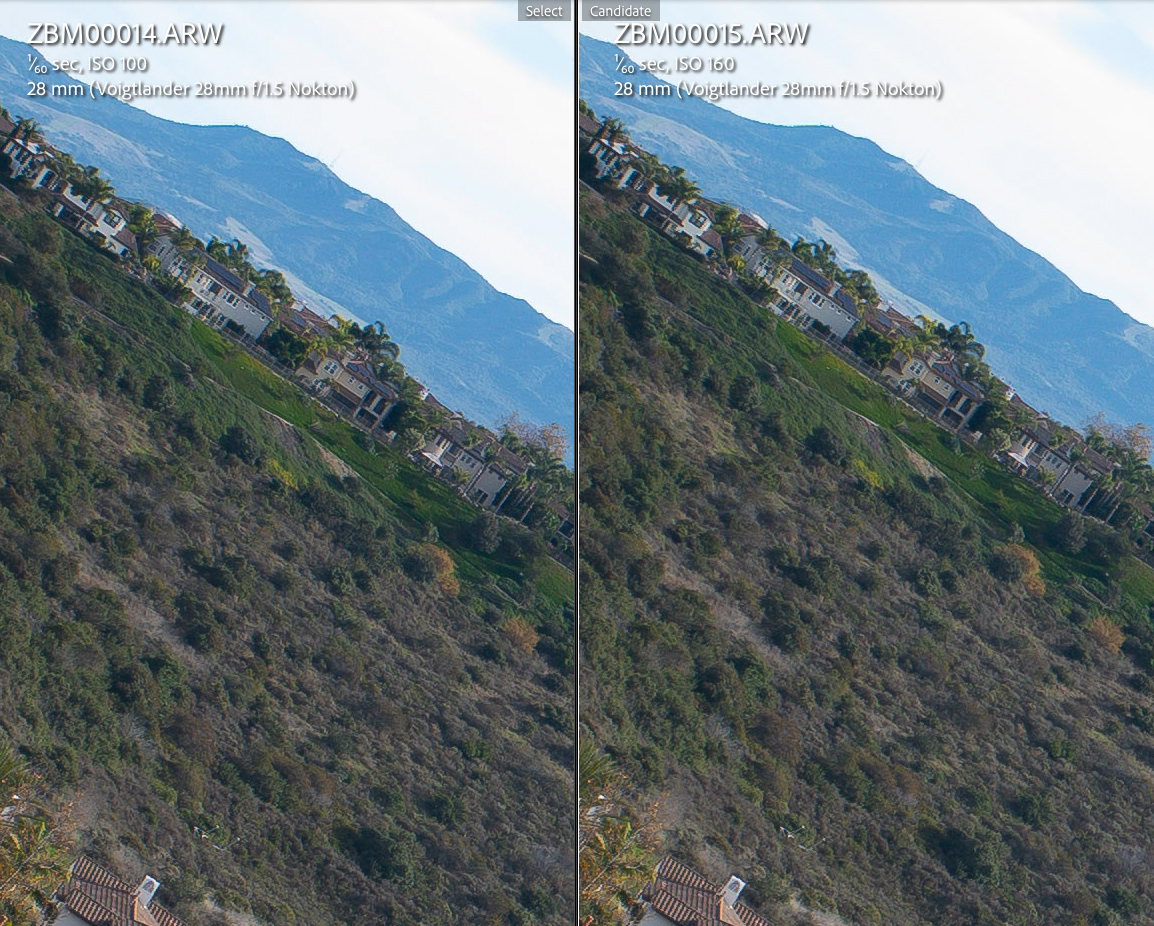
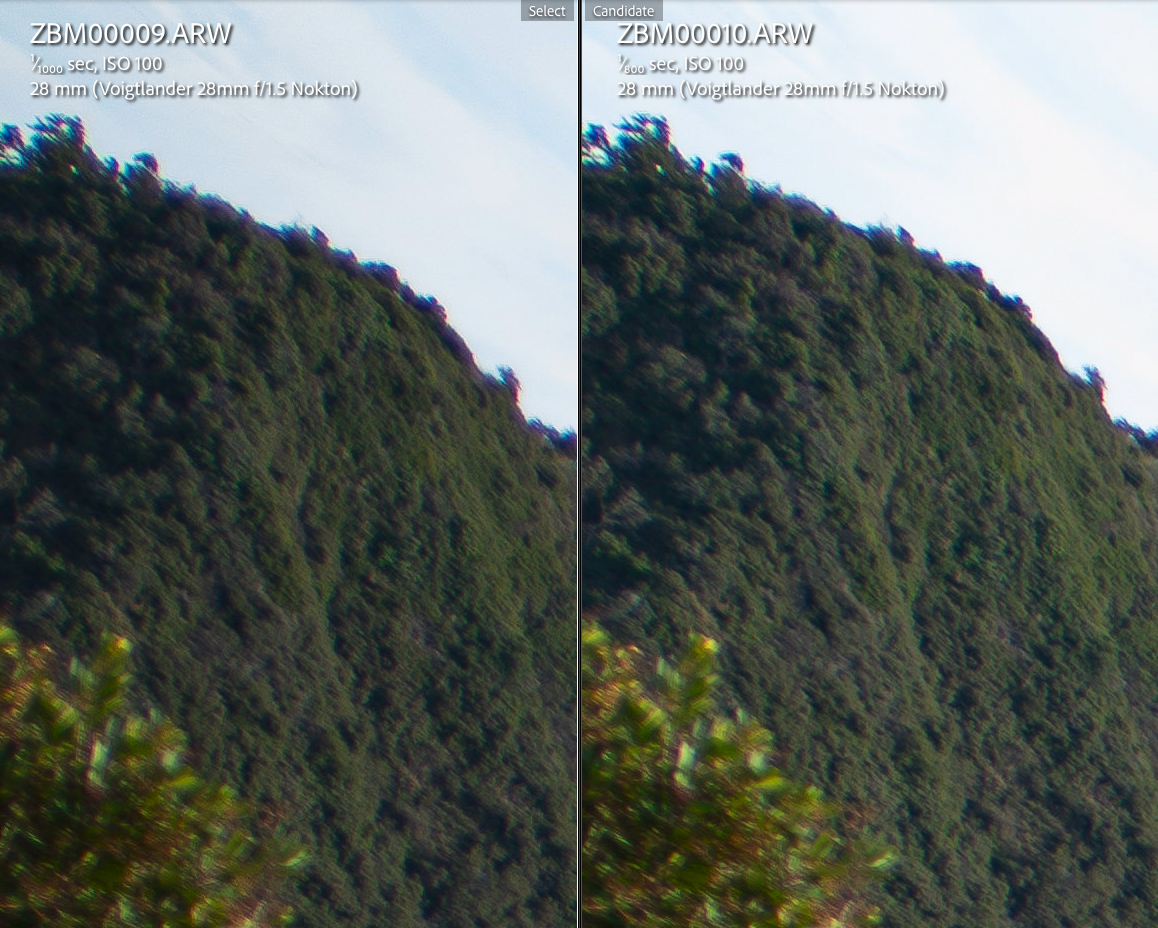
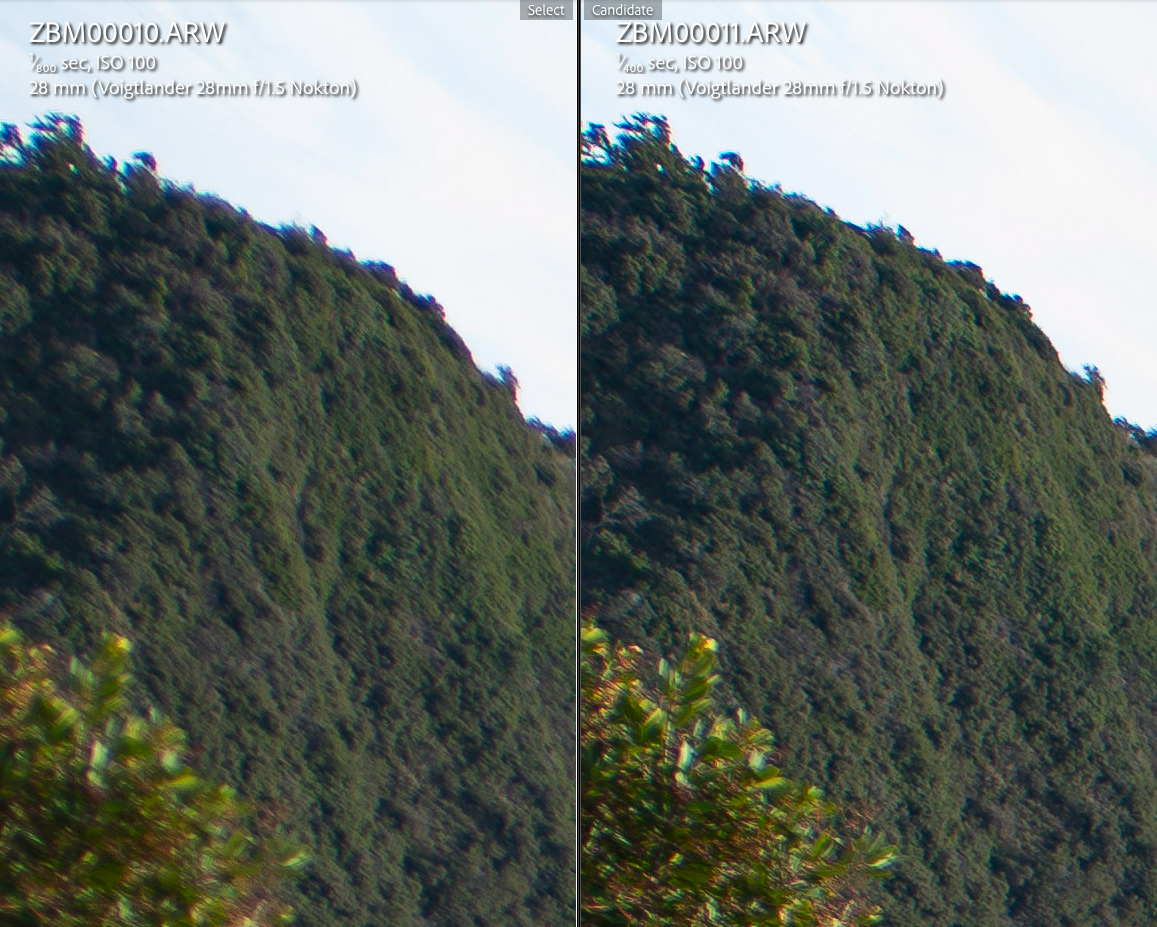
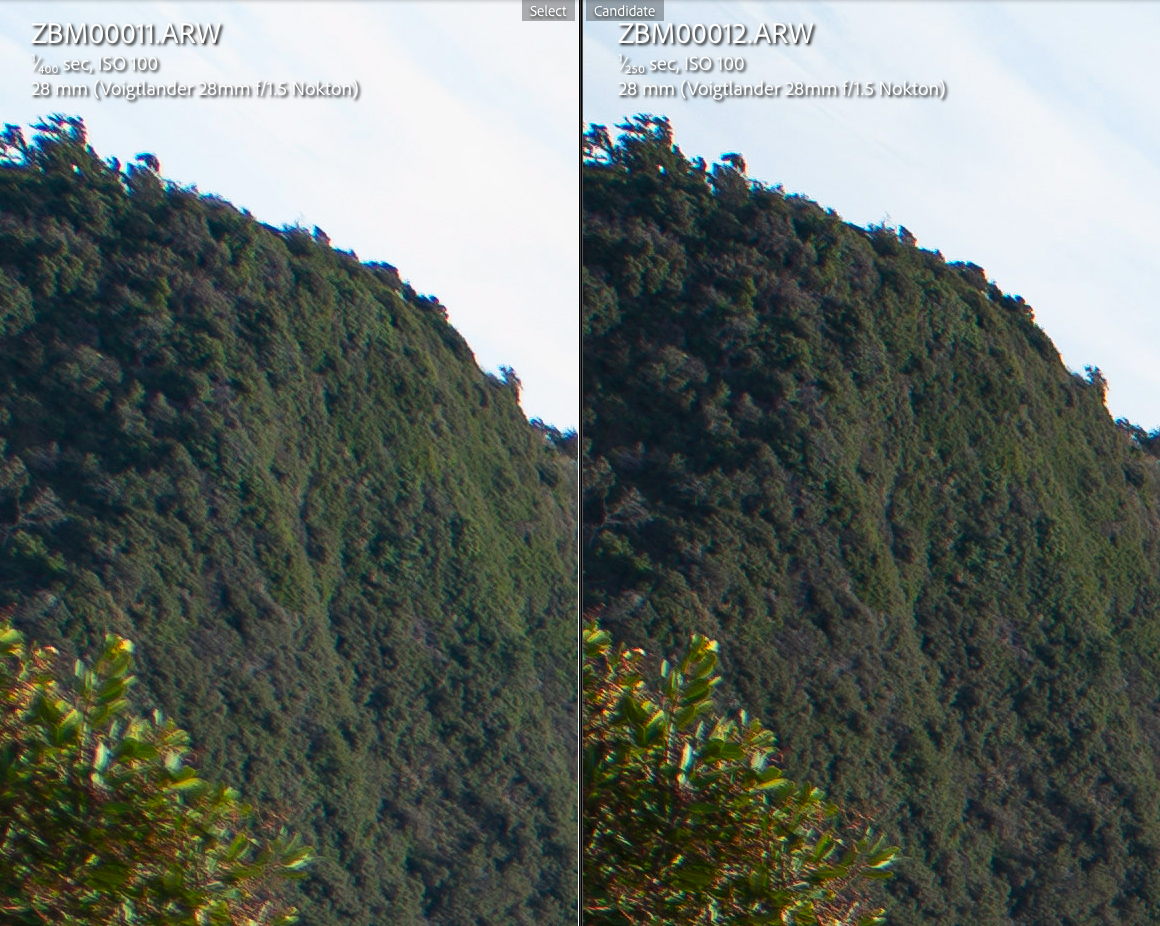
Center Resolution and Contrast Infinity resolution and contrast comparison: Voigtlander 28mm f/1.5 E-mount on Sony A7R II vs. 28mm f/1.5 M-mount on Leica M10-R
Mid-field Resolution and Contrast Infinity resolution and contrast comparison: Voigtlander 28mm f/1.5 E-mount on Sony A7R II vs. 28mm f/1.5 M-mount on Leica M10-R
Extreme Corner Resolution and Contrast Infinity resolution and contrast comparison: Voigtlander 28mm f/1.5 E-mount on Sony A7R II vs. 28mm f/1.5 M-mount on Leica M10-R
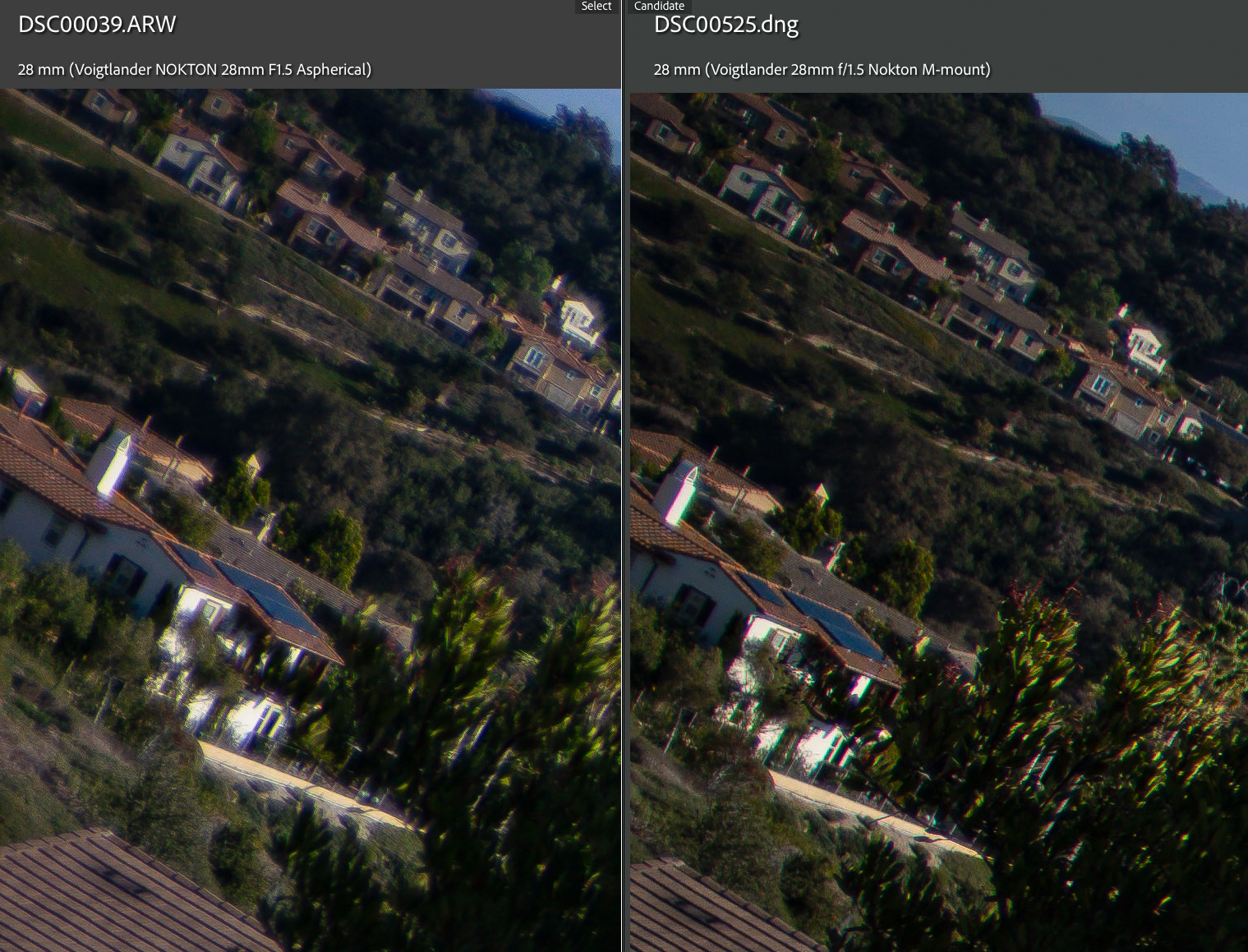
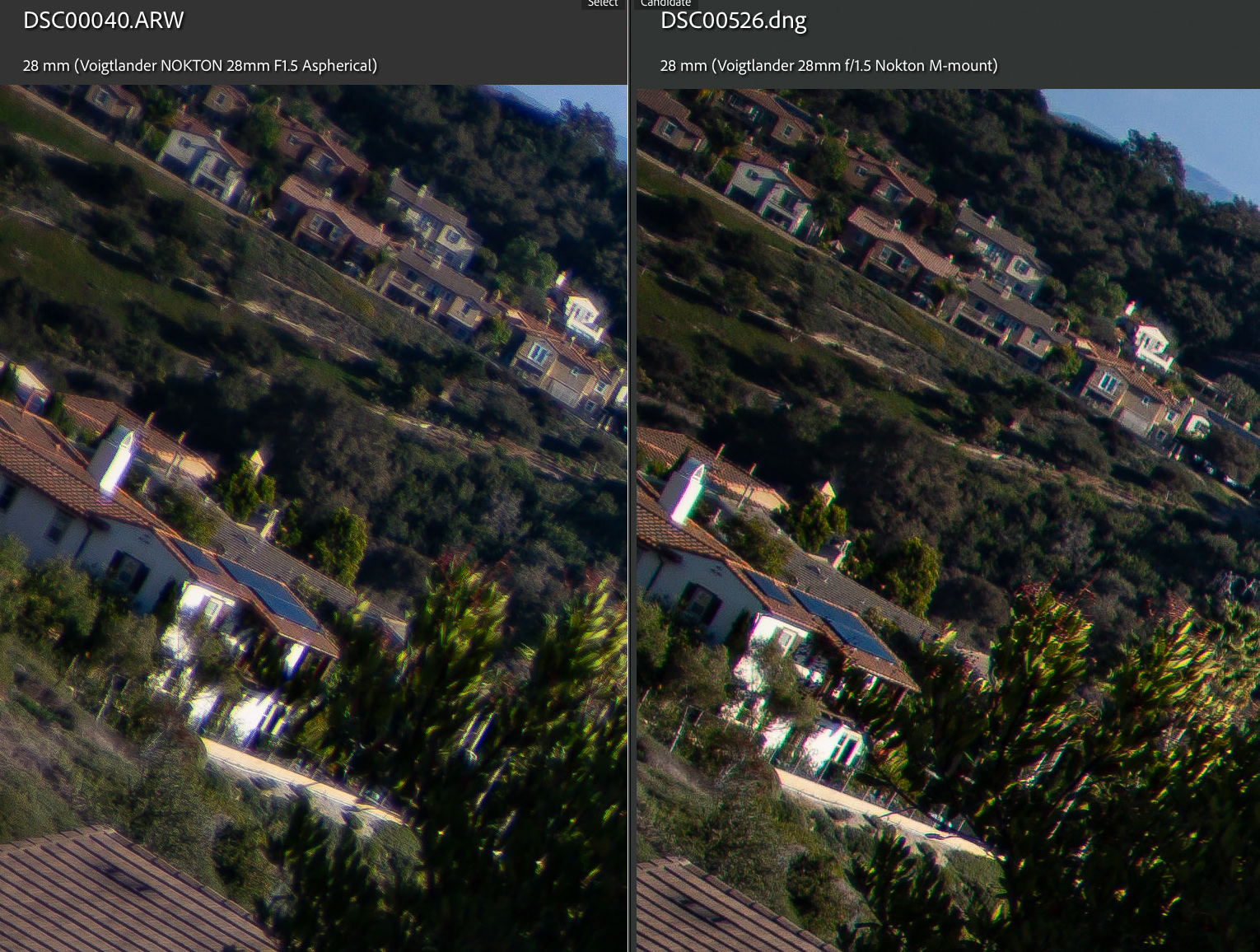
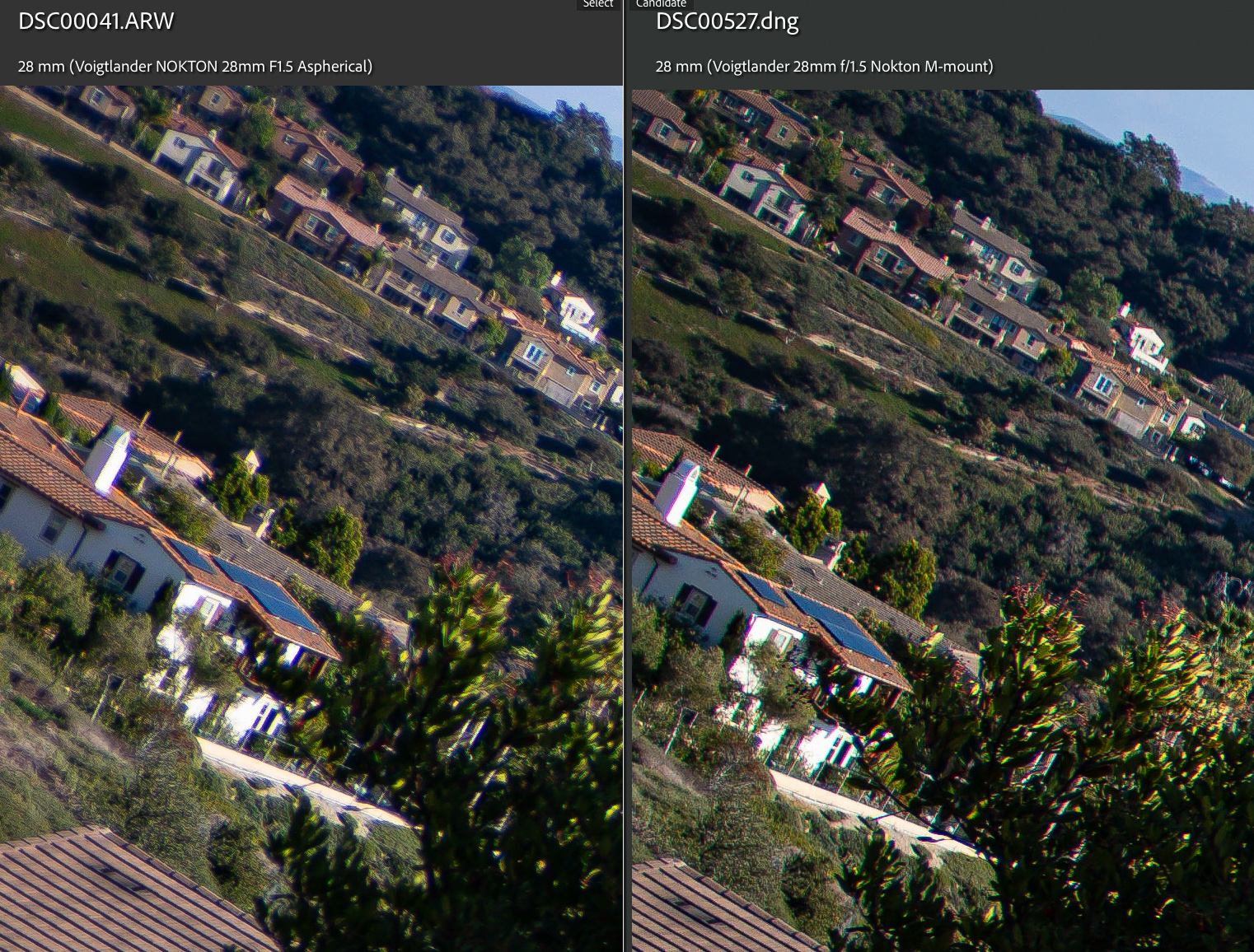
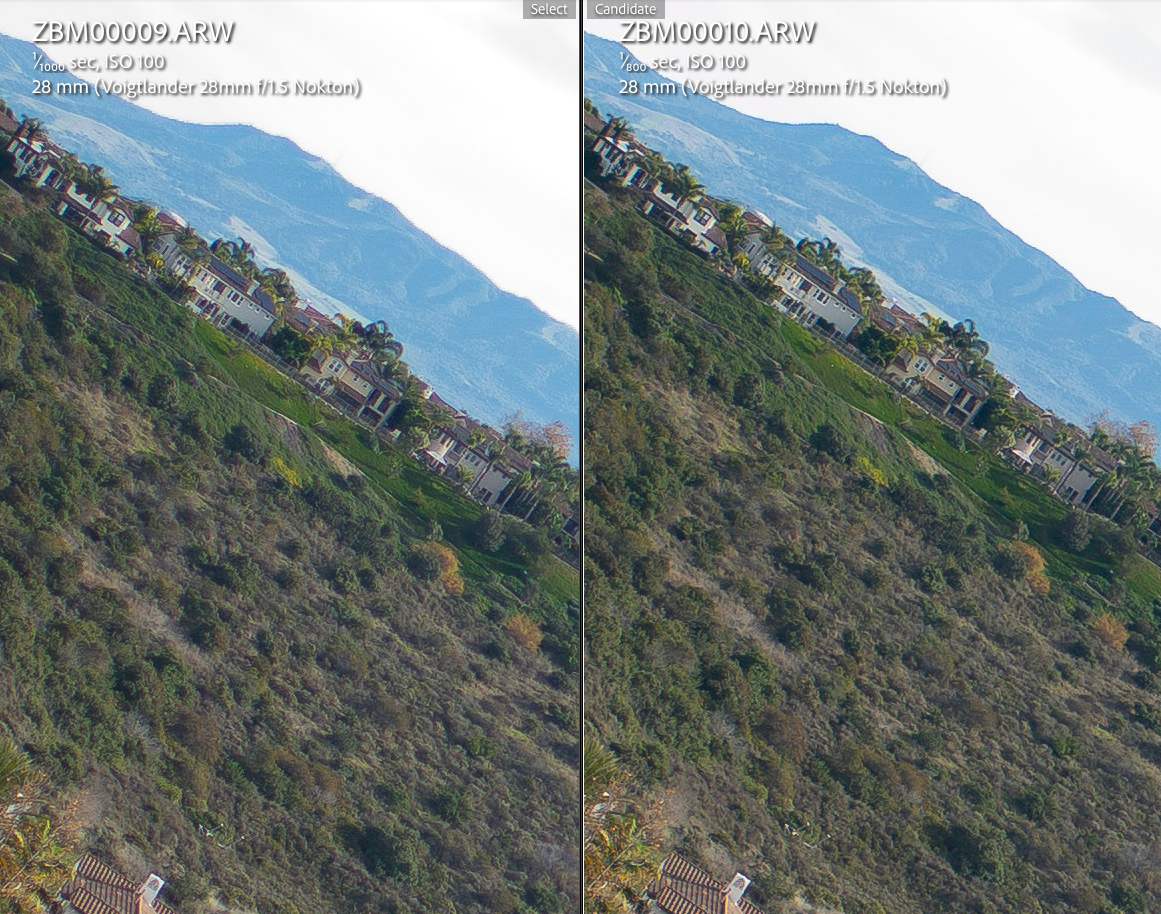
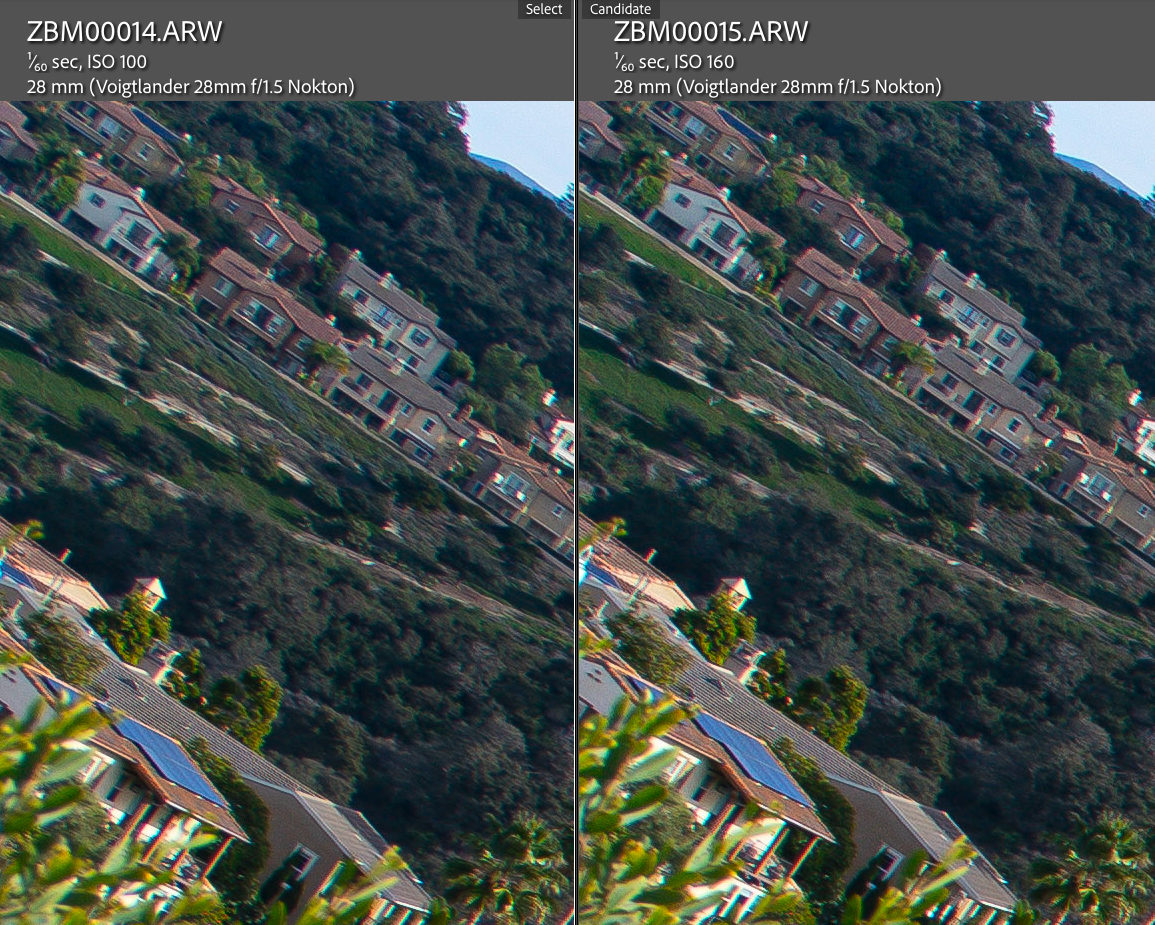
Infinity resolution and contrast comparison: Voigtlander 28mm f/1.5 M-mount adapted to Sony A7R II
The Voigtlander 28mm f/1.5 Nokton is designed for the thin sensor of the Leica M, which makes it less ideal for use with other mirrorless bodies. That said, many photographers manage to adapt M-mount lenses to their mirrorless cameras. In this test, I adapted the Voigtlander 28mm f/1.5 Nokton M-mount to the Sony A7R II, which has a thicker sensor stack compared to Leica.
The results were surprisingly better than other wide and fast Nokton lenses, but they are still far from matching the performance of the dedicated E-mount version. The mid-field sharpness improves significantly starting at f/2.8, but the corners only start to show good performance at f/8, when the depth of field compensates for the induced field curvature.
For this test, I kept things straightforward and didn’t apply any corrections for vignetting or chromatic aberration, allowing us to evaluate the raw performance without post-processing adjustments.
Distance: Infinity
Focus: Center - Best of three @ 12.4x magnification
Why are there no replies / discussions in this topic? Is there another post that discussion the lens further, with user experience etc.? Or is nobody interested in the lens?
I'm consider this lens for landscape and street/travel photography. Seems like one of the best options available for native emount.
Michel85 wrote:
Why are there no replies / discussions in this topic? Is there another post that discussion the lens further, with user experience etc.? Or is nobody interested in the lens?
I'm consider this lens for landscape and street/travel photography. Seems like one of the best options available for native emount.
I thought the same thing!
Great test, Fred. As always.
I was going to buy the e-mount version of this lens and then got captivated by the Thypoch Simera 28/1.4 and purchased it a couple months ago. It’s been one of the best lenses I’ve owned.
Jun 17, 2025 at 11:49 AM
Steve Spencer Offline • • • • • • • Upload & Sell: On
I was going to buy the e-mount version of this lens and then got captivated by the Thypoch Simera 28/1.4 and purchased it a couple months ago. It’s been one of the best lenses I’ve owned.
I agree this is a great test. I am likely to get the E mount version. I would love to see comparisons of vignetting and a discussion of focus throw in comparing the M mount version to the E mount version as I think the E mount version might have a little less vignetting as it has a bit wider diameter and it might have a longer focus throw (which I would see as an advantage, but I realize not everyone would). Adjusting the optical formula for the thicker sensor stack on Sony and the shorter MFD are clear advantages for the Sony E mount version, but some examination of vignetting and focus throw which are less clear advantages would be something I would like to see.
Michel85 wrote:
Why are there no replies / discussions in this topic? Is there another post that discussion the lens further, with user experience etc.? Or is nobody interested in the lens?
I'm consider this lens for landscape and street/travel photography. Seems like one of the best options available for native emount.
Thanks for the testing Fred! I owned this in both mounts, but I liked it a lot better in m because of the smaller size, ability to use it on film and shorter focus throw. If you use it on MILC’s, a close focus helicoid makes up for the difference in minimum focus distance.
I feel like the rendering on the amount version was a little bit crunchier, but I will be curious to see what you’re testing bears out as I never tested them side-by-side.
I’d be very curious to see this CV-E 28/1.5 versus the Simera 28 in e-mount!
Bastian also has extensive comparisons in his review of 28mm lenses at philipreeve.net
It would be interesting to see if a comparison of the E-mount lenses looked similar or not. That might give us some information about the extent to which Thypoch adjusted the E mount lens for the thicker sensor stack.
I picked this lens up for Sony over the thypoch recently though it's yet to arrive.
I chose the nokton even though I did not love the rendering in every shot I've seen, I did like the look it provides, a little more interesting to my eye and more punch and bite from what I saw.
Will likely pick up the apo when it comes out for emount down the line too.
With thypoch Im interested in their 75mm cinema version over the nokton 75mm for people shots. Samples posted by philip_pj remind me of the Sigma 45mmf2.8, but at a more comfortable distance but without autofocus, and maybe a little more muted and less contrast for an older look. Similar to samyang 75mmf1.8 maybe but ultra smooth background and a little less harsh on skin. The samyang isnt particularly harsh compared to other lenses, but i think the thypoch is just softer there from what I've seen. MrLeica on YouTube (female portrait photographer) also mentioned preferring the thypoch over the nokton on digital bodies for that reason.
On the 28mm I am curious about the rendering difference between the emount and vm version as there was a user in the e-mount announcement thread who made the switch to e mount and said he preferred the vm version but didnt have both to do a side by side comparison shot. I believe he said the the vm was 'smoother'.
Looking at the infinity examples here wide open you can see some differences, but not sure how they translate into regular shots.