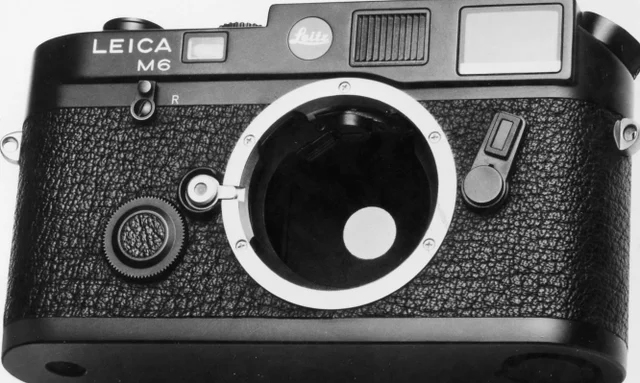
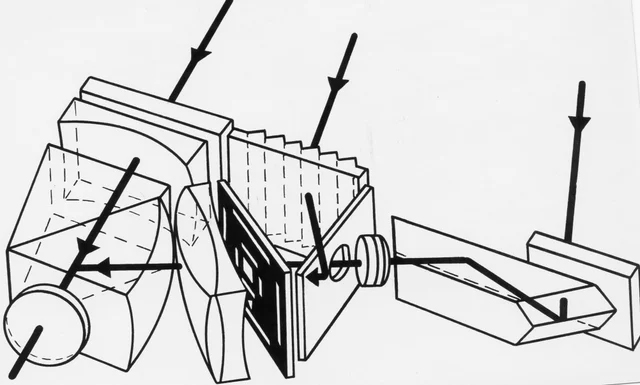
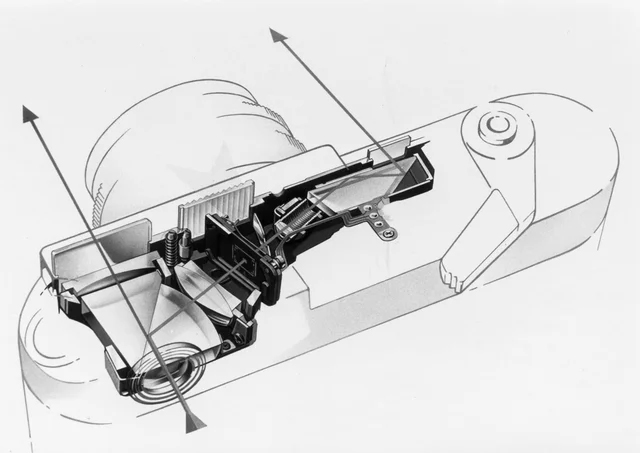
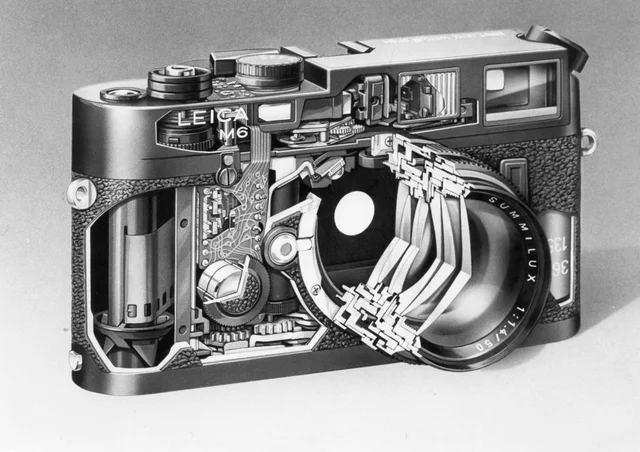
Would love to see where the missing condenser part was located in the rangefinder before it was removed for cost cutting reasons and which caused the rangefinder patch flare very imminent in the M6 classic. This condenser was present in the M3, M2, and some M4 versions which don't suffer from the patch flare. I don't know if a condenser was added again in the M-P rangefinder patch or resolved differently since it has no patch flare, too and is used to replace e. g. older M6 rangefinders to overcome this issue.
retrofocus wrote:
Would love to see where the missing condenser part was located in the rangefinder before it was removed for cost cutting reasons and which caused the rangefinder patch flare very imminent in the M6 classic. This condenser was present in the M3, M2, and some M4 versions which don't suffer from the patch flare. I don't know if a condenser was added again in the M-P rangefinder patch or resolved differently since it has no patch flare, too and is used to replace e. g. older M6 rangefinders to overcome this issue.
From perusing around at some different sites and looking at Youxin Ye's description, it's behind the frame line window. It was originally removed when the M4-2 went into production in 1978 and returned with the introduction of the MP in 2003. It prevents the rangefinder from flaring to white in certain lighting situations. When the MP came into production, multicoated rangefinder windows were also made standard for better visibility in all light.
madNbad wrote:
From perusing around at some different sites and looking at Youxin Ye's description, it's behind the frame line window. It was originally removed when the M4-2 went into production in 1978 and returned with the introduction of the MP in 2003. It prevents the rangefinder from flaring to white in certain lighting situations. When the MP came into production, multicoated rangefinder windows were also made standard for better visibility in all light.
Excellent info about the location - I was always wondering about this! Few later produced M7 cameras were also equipped with this corrected M-P rangefinder. I am observing the patch flare on my M6 classic most, less often on my M4-2 and M7. When the flaring occurs, the center focus patch in the viewfinder turns reddish (not white) and does not allow to bring the image parts together to align in focus. I have to shake the camera carefully a bit and it resets. But I lost critical focus shots with my M6 due to this flare. After I reset the patch, the moment was gone. I currently remediate the situation by positioning a polarized foil cut out from plastic cinema 3D glasses on the M6 frame line window (Scotch tape on the borders of the piece) which seems the correct positioning regarding your description. It makes the frame lines a bit darker but avoids the flare in > 50% of cases. Not as perfect as with a new M-P rangefinder installed but for now a free of cost solution!
d.s. wrote:
Apparently early M4-2s had the condenser. Was yours born in early ‘78?
No mine is from July 1978 but had a red dot like the very early ones. It had been Huss' camera and was serviced at some point also having the rangefinder windows coated. Last January, I bought a 3D printed replacement flash block, sent it to DAG in July. He installed the flash block, added a M3 style lens release collar and gave it a CLA. I've used it extensively since its return and haven't noticed any flaring.
The only Leica I owned that flared badly was a M6 TTL Millennium, that I bought long before the prices skyrocketed. It took a trip to the factory when it was still in Solms and got the full MP finder treatment, condenser, multicoated windows plus some additional upgrades to a camera that sat unused for twelve years.
madNbad wrote:
No mine is from July 1978 but had a red dot like the very early ones. It had been Huss' camera and was serviced at some point also having the rangefinder windows coated. Last January, I bought a 3D printed replacement flash block, sent it to DAG in July. He installed the flash block, added a M3 style lens release collar and gave it a CLA. I've used it extensively since its return and haven't noticed any flaring.
The only Leica I owned that flared badly was a M6 TTL Millennium, that I bought long before the prices skyrocketed. It took a trip to the factory when it was still in Solms and got the full MP finder treatment, condenser, multicoated windows plus some additional upgrades to a camera that sat unused for twelve years....Show more →
I’d no idea the M4-2 had a red dot early on. The one I had was from June ‘78. Never once experienced flare. But good idea with the flash socket. I had Sherry CLA mine when I first got it. She just said “Never touch the flash ports.”
The 0.85x M6 Classic I had also flared when light hit the frame illumination window, I believe, at 110 degrees. Don took care of that one. Fantastic work.
d.s. wrote:
I’d no idea the M4-2 had a red dot early on. The one I had was from June ‘78. Never once experienced flare. But good idea with the flash socket. I had Sherry CLA mine when I first got it. She just said “Never touch the flash ports.”
The 0.85x M6 Classic I had also flared when light hit the frame illumination window, I believe, at 110 degrees. Don took care of that one. Fantastic work.
This is a couple of weeks after it returned from DAG. I asked him about the red badge, his answer was some of them have them.
d.s. wrote:
That’s odd. I thought there was (only) a batch of them just prior to the M4-P. Interesting.
Both Huss and I asked on every forum but it's a mystery. The serial number is 1504101 and that puts it at the beginning of the July 1978 run. Research shows the very first batch had the badge and the top plate was engraved with the Leitz logo plus "Made in Canada". My camera has Leitz on the top plate and "Canada" on the back right side of the plate. No one, so far, knows why this mid run camera has one. I asked Don Goldberg if it was a M4 shell and they were covering up the self time hole but he told me the self timers were mounted lower on the body. Plus it's a metal badge set into the vulcanite and not just a sticker. It works great and I love it. Hope the weather clears soon enough to take it out and use it.
d.s. wrote:
Apparently early M4-2s had the condenser. Was yours born in early ‘78?
Interesting! Mine was made between 1978 and 1979. My serial number is within the largest batch of 6000 copies made numbered 1502001 to 1508000 (closer to the end of this batch production). Likely this means it was made in 1979 and already had the condenser removed.
madNbad wrote:
Both Huss and I asked on every forum but it's a mystery. The serial number is 1504101 and that puts it at the beginning of the July 1978 run. Research shows the very first batch had the badge and the top plate was engraved with the Leitz logo plus "Made in Canada". My camera has Leitz on the top plate and "Canada" on the back right side of the plate. No one, so far, knows why this mid run camera has one. I asked Don Goldberg if it was a M4 shell and they were covering up the self time hole but he told me the self timers were mounted lower on the body. Plus it's a metal badge set into the vulcanite and not just a sticker. It works great and I love it. Hope the weather clears soon enough to take it out and use it....Show more →
I read in the Leica Pocket Book, 7th edition (Hove Collection Books) the following regarding the section under M4-2 variations: "Earliest examples of the M4-2 had a red Leitz logo on the front of the camera. Although nearly all M4-2s are of Canadian origin, a certain number were produced in Wetzlar. Minor variations of engraving exist, including the somewhat confusing "Leitz Wetzlar" and "Canada" on the same camera."
I interpret it that your M4-2 is one of the few made in Wetzlar using the Canadian design. Likely also an early batch run explaining why yours has the Leitz logo on it.
retrofocus wrote:
I read in the Leica Pocket Book, 7th edition (Hove Collection Books) the following regarding the section under M4-2 variations: "Earliest examples of the M4-2 had a red Leitz logo on the front of the camera. Although nearly all M4-2s are of Canadian origin, a certain number were produced in Wetzlar. Minor variations of engraving exist, including the somewhat confusing "Leitz Wetzlar" and "Canada" on the same camera."
I interpret it that your M4-2 is one of the few made in Wetzlar using the Canadian design. Likely also an early batch run explaining why yours has the Leitz logo on it. ...Show more →
The actual “Leitz” logo on the top plate is applied and not engraved. My mistake.
madNbad wrote:
Both Huss and I asked on every forum but it's a mystery. The serial number is 1504101 and that puts it at the beginning of the July 1978 run. Research shows the very first batch had the badge and the top plate was engraved with the Leitz logo plus "Made in Canada". My camera has Leitz on the top plate and "Canada" on the back right side of the plate. No one, so far, knows why this mid run camera has one. I asked Don Goldberg if it was a M4 shell and they were covering up the self time hole but he told me the self timers were mounted lower on the body. Plus it's a metal badge set into the vulcanite and not just a sticker. It works great and I love it. Hope the weather clears soon enough to take it out and use it....Show more →
I even emailed Leica in Germany, gave them the serial number and asked them about the red dot.
Their reply?
“Zum haz zem, zum do not”. Ok, they actually wrote “Some have them, some do not”, but it is more fun imagining the dood’s annoyed voice as he wrote that.
“Vy iz dis Huss karacter vaystin meine time? I haz all deeze qvality kontrol kards to sign”….
Went to the eBay source for some information and managed to find a image of one of the very early run M4-2's. The serial number puts it in the first batch:
It has the "Leitz Wetzlar" logo on the top plate plus "Made in Canada". The back of the top plate is marked "Made by Leitz Canada" and it has the red badge. Since Leica was trying to save money, it's obvious why many of these markings were reduced. Even in it's relatively short life (16,000 units) the M4-2 had changes and modifications all the way through leading to the M4-P and eventually the M6.