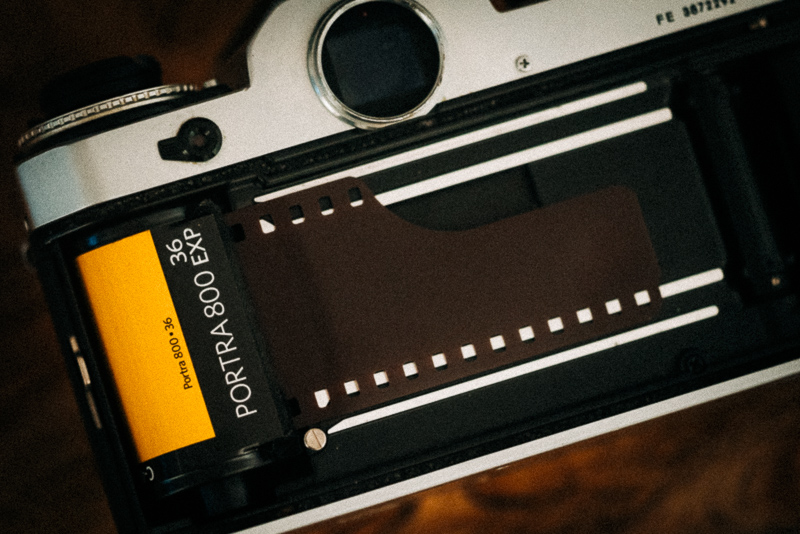
I've begun reading @BastianK's articles on film, and they're really informative. I think it'd be fantastic to share this information on our film board for more discussion. Even though I'm a bit late to the party, here's Analogue Adventures - Part 27:
Thanks for sharing. I was a lil confused. He states that Silbersalz recommends over exposing by 1 stop. It seems that he did that by pushing one stop but I don't think that is the same thing.
Still, the results are very nice. I would have liked to see same via C41 to see if EC2N itself imparts a different look.
Keahi08 wrote:
He states that Silbersalz recommends over exposing by 1 stop. It seems that he did that by pushing one stop but I don't think that is the same thing.
There is another article where I overexposed the film by one stop without having it pushed in the lab.
If you follow their advice you are pretty much "stuck" with slow films, so the question was, if having it pushed in post
to offset that 1 stop difference would work and after having tested that with different films the answer for me is yes.
BastianK wrote:
There is another article where I overexposed the film by one stop without having it pushed in the lab.
If you follow their advice you are pretty much "stuck" with slow films, so the question was, if having it pushed in post
to offset that 1 stop difference would work and after having tested that with different films the answer for me is yes.
Keahi08 wrote:
Thanks for elaborating. Do you have a sense of whether the EC2N processing changes the color pallet compared to C41?
With the ECN-2 processing performed by them also comes the scanning where their operator color corrects every scan and by my experience some of the origin color cast of the films get lost in that process.
I cannot possibly tell you if this is mainly due to the ECN-2 processing or their scanning workflow, but my money is on the latter.
Just to be clear, it looks like they recommend overexposing 1 stop if you use the ECN-2 developer. So pushing a stop gets you back to 800
I usually overexposed everything a stop or more on color and B&W print film (slight underexposure on non-Velvia chromes.) It just seemed like death if you underexposed print film, since you then couldn't get the maximum black of the paper. Overexposure may have added grain though, not sure, but a much better negative imo
I still remember talking to a recently retired pro that shot for a magazine I really read a lot at one point. We talked about the superiority of digital at 1600 and how much better digital is at 1600. His camera? The original Digital Rebel! 6mp. So I might not be super interested in ISO 1600 film, although you may be able to do a lot in pp lately. 800 could be really good, though, potentially the same as 100 or close
I have a local lab that will process via ECN-2- Its more than double the cost but will do it happily.
The lab tech said he has to really adjust the colors when scanning ECN-2 to processed film. He is said there is always way to much green that is coming out of the rolls that are developed in this process.
What makes ECN-2 a better option vs typical C-41 for pushing Porta 800?
@BastianK love the analog adventures, please keep them up!
I looked into processing c-41 films as ECN-2, and I may play with it once, but the price (at my lab at least) is over double and so is the turn around time.
lifeandmylens wrote:
@BastianK@ love the analog adventures, please keep them up!
I looked into processing c-41 films as ECN-2, and I may play with it once, but the price (at my lab at least) is over double and so is the turn around time.
I always wonder if I should continue with those. They get way less clicks than the reviews and obviously they don't generate any money from affiliate links.
So, comments like yours are definitely a motivation to keep up the series!
Regarding the ECN-2 processing I am lucky in the way that there is a good lab in the city I live in.
I am aware that sadly not everyone has easy access to that.
Check out David Hancocks' video reviews on film. They often run between fifteen and twenty five minutes but he offers a lot of information and images. He will push and pull films to the extreme and offers a lot of analysis.