p.1 #1 · Real Focal Length of Leica Q series: 28mm f/1.7 Summilux
Spoil Alert: The Q's 28mm f/1.7 Summilux lens is naturally a 25mm lens from its optical design, with significant distortion. However, thanks for Leica's software corrections, the images displayed in-camera or during post-processing closely resemble those captured with a 27mm lens (to be precise, approximately 26.7mm) with an "equivalent" aperture of f/1.8 in terms of depth of field. Read on....
--------------
I've shared this information on the forum before in one of the threads. However, to make it more accessible, I've created this new thread to display the details.
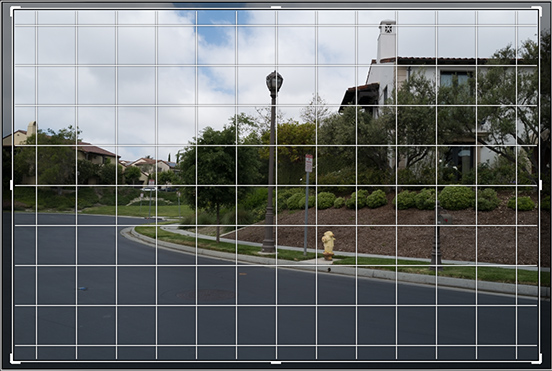
I recently had the opportunity to compare the field of view of two lenses: the Leica 28mm f/1.4 Lux and the 28mm f/1.7 Lux on the Q2.
After performing some calculations, I determined that the Q lens actually has an effective focal length of 26.7mm, which is very close to 27mm. This is in the vicinity of the 28mm focal length of the Leica 28/1.4 Lux, assuming the latter truly behaves like a 28mm lens when focused at infinity.
Full image (Q2), Crop showing the Leica 28mm f/1.4 Lux FOV
p.1 #2 · Real Focal Length of Leica Q series: 28mm f/1.7 Summilux
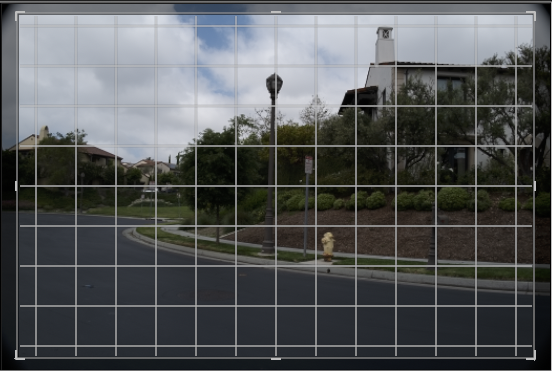
Depending on your post-processing software, you can reverse Leica's corrections and see the unaltered image as captured by the lens.
If we take the "uncorrected" Q2 image and merely crop it to match the field of view of the "corrected" DNG without applying distortion correction, we find that the uncorrected version corresponds to a focal length of approximately 25.2mm.
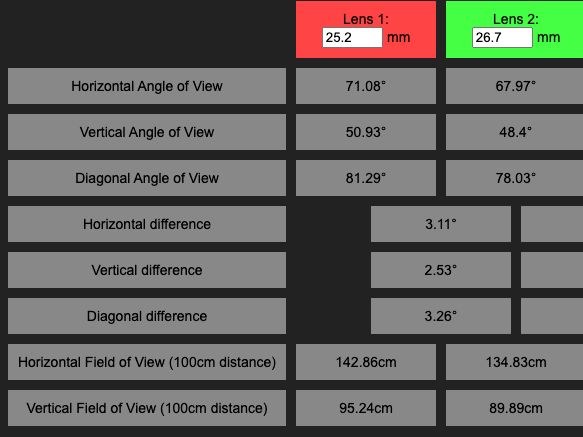
Consequently, the Leica 28/1.7 Lux lens has the following field of view characteristics:
25.2mm (DNG uncorrected)
26.7mm (DNG corrected automatically)
In essence, this lens behaves like a 25/1.7 lens but exhibits noticeable distortion. Leica tackled this distortion by applying correction and a slight crop, resulting in a field of view of 26.7mm. However, when considering depth of field, it's like shooting with a lens with an effective aperture size of f/1.8 (26.7mm f/1.8).
By comparing the two values:
26.7 / 25.2 = 1.06
f/1.7 x 1.06 = f/1.8
In simplified terms, this confirms what we already knew: 25mm uncorrected and 27mm corrected out of the camera.
p.1 #3 · Real Focal Length of Leica Q series: 28mm f/1.7 Summilux
With its effective focal length of around 27mm, it's reasonable for Leica to label this lens as a 28mm. Although it's technically possible to bypass the post-processing correction and capture a wider image, I don't anticipate many shooters doing this regularly.
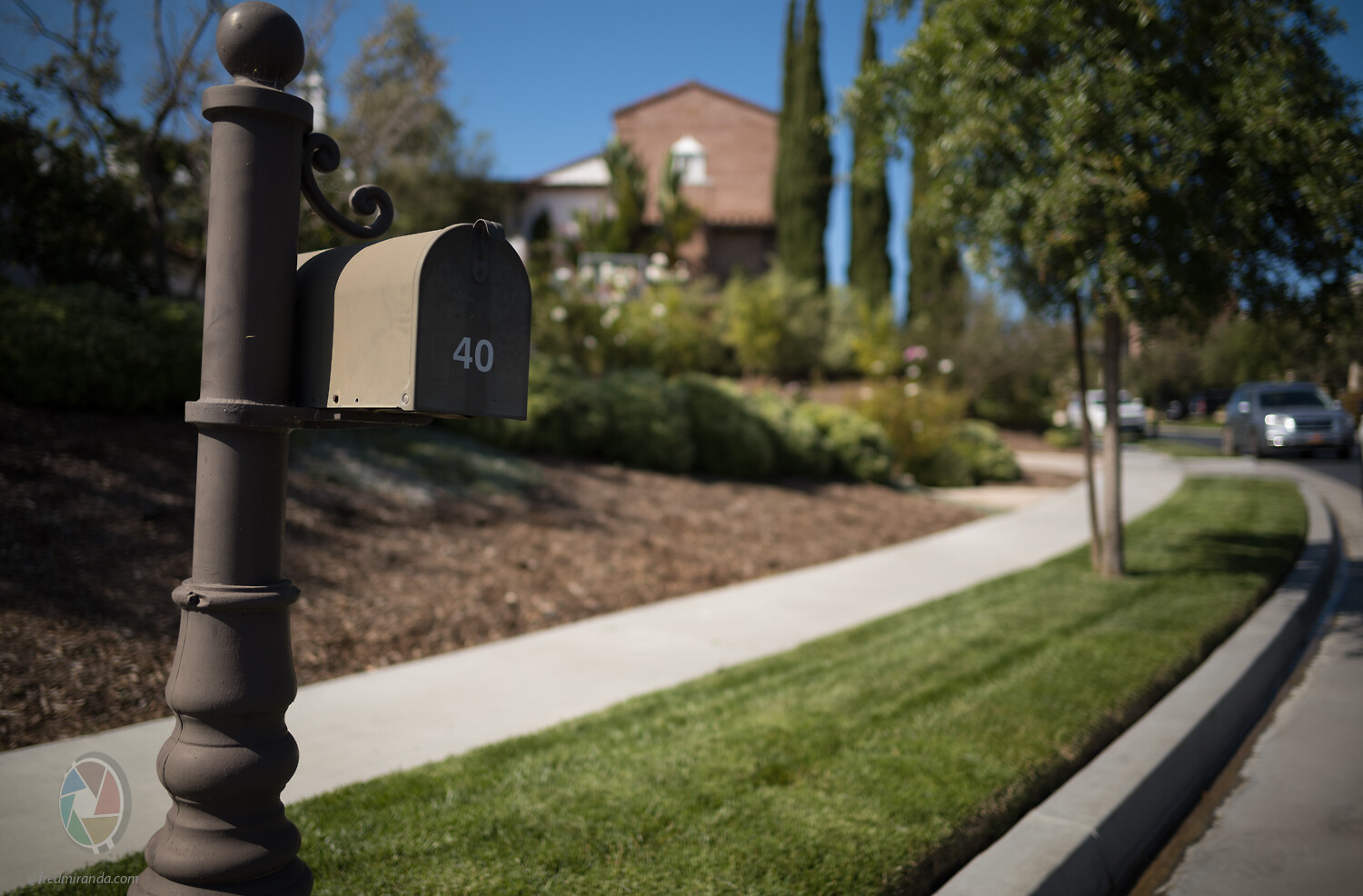
I did a comparison of the amount of background blur produced when using both lenses at f/1.7, which is the Q's largest aperture.
In my observation, the blur in the images appears quite similar. This is expected because I took great care to align the framing as accurately as possible by adjusting my distance. Nevertheless, the Q2 will consistently display more elements in the background towards the corners due to its slightly wider angle of view.
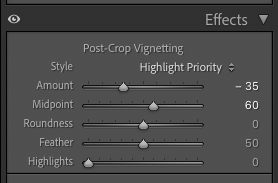
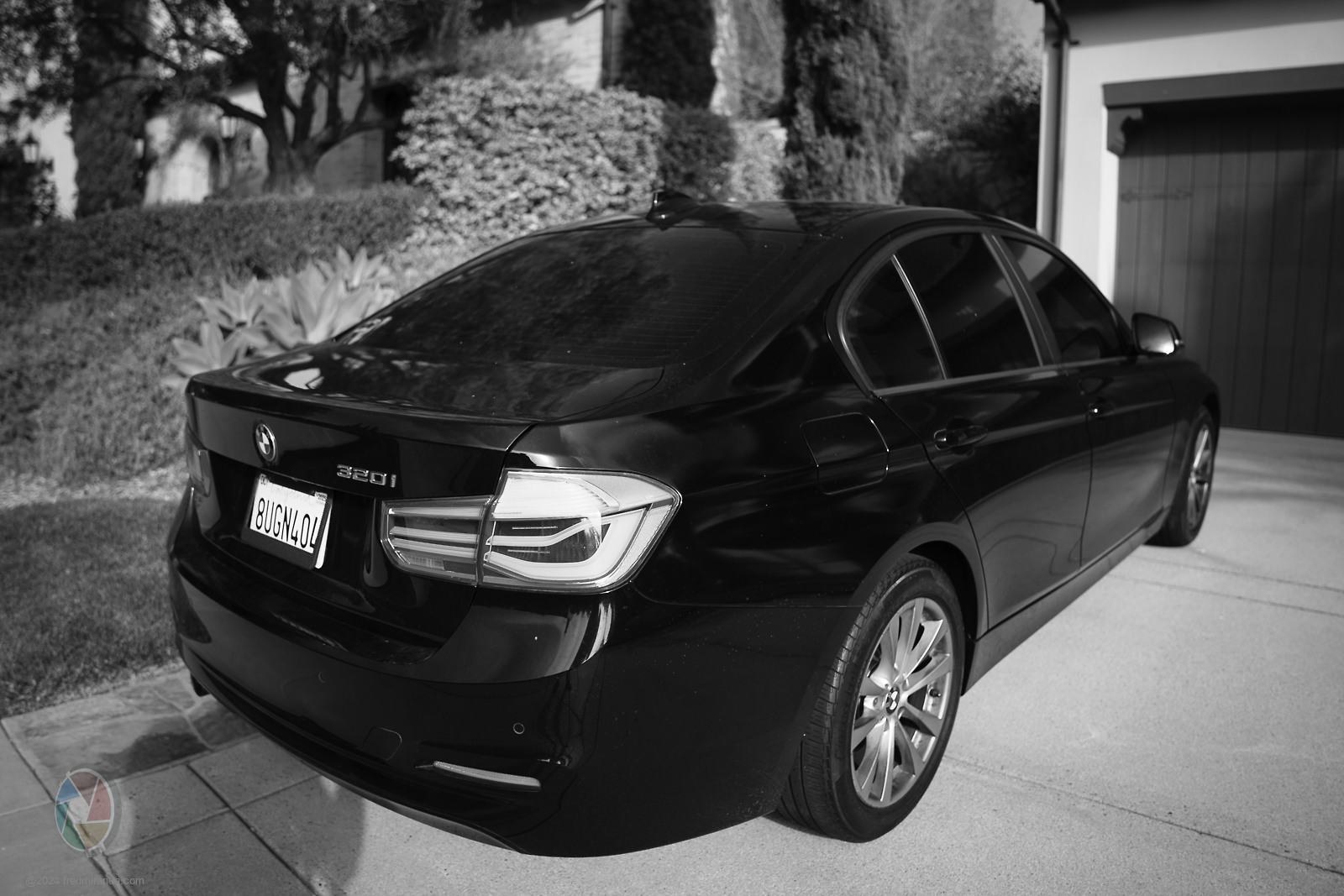
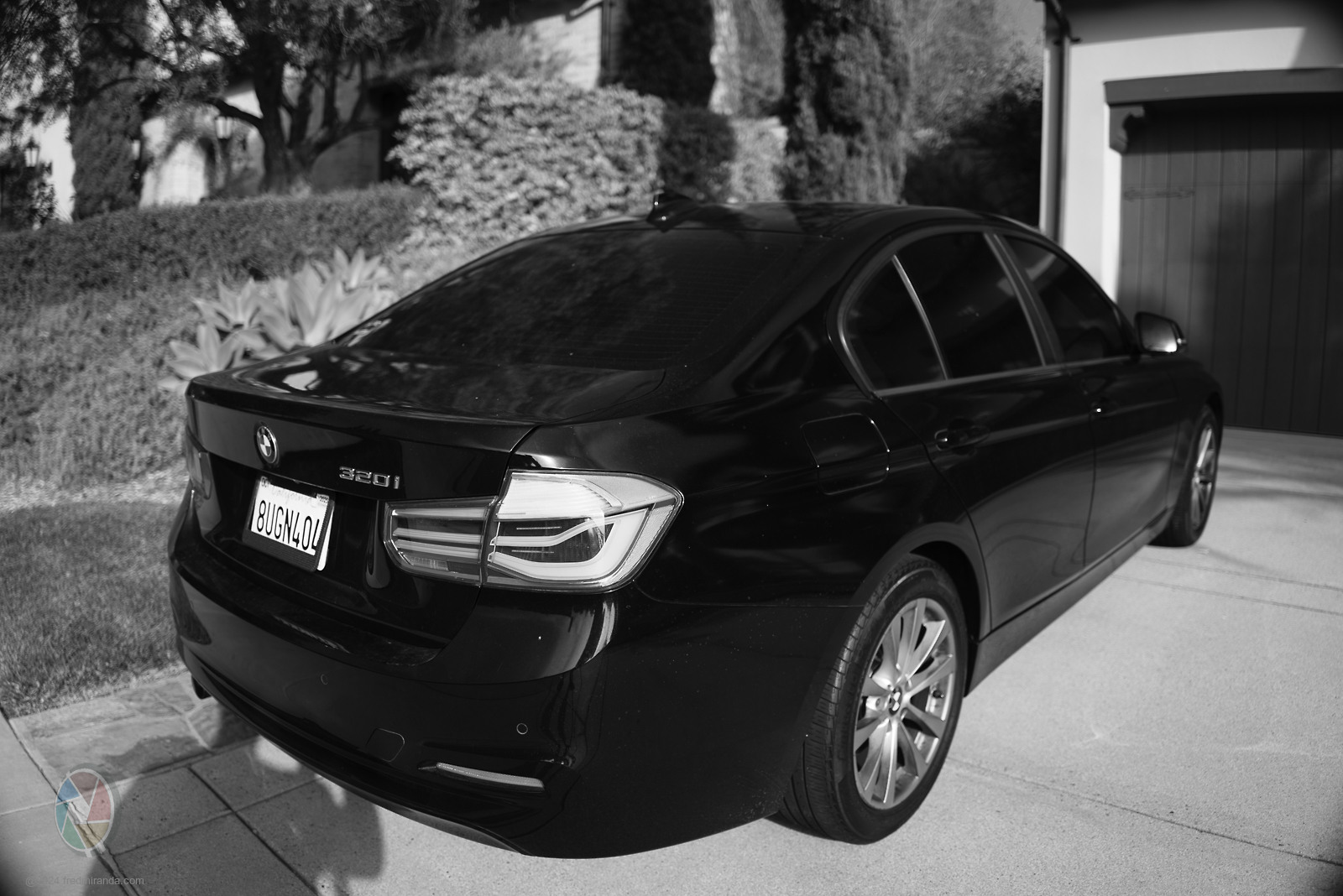
Leica Q2 (Added vignetting to match the 28/1.4 lux's)
p.1 #4 · Real Focal Length of Leica Q series: 28mm f/1.7 Summilux
For curiosity, I compared the angle of view from the Zeiss Batis 25mm lens, which is 24.9mm from my calculations, making it a true 25mm lens, against the "uncorrected" 28mm f/1.7 Summilux. By "uncorrected," I mean the lens's true performance without the in-camera and post-processing corrections Leica applies for vignetting, distortion, and cropping.
Interestingly, the Q2 28mm f/1.7 Summilux has nearly the same angle of view as the Batis 25mm when I add some barrel distortion to the Batis (about 15 points). In terms of blur, they are quite similar as well. Here is a comparison in black and white to avoid being distracted by color differences between the two lenses. Vignetting was not corrected for either lens.
ILCE-7RM2ZEISS Batis 2/25 lens25mmf/2.01/2000s100 ISO0.0 EV
LEICA Q2SUMMILUX 1:1.7/28 ASPH. lens28mmf/1.71/2500s100 ISO0.0 EV
p.1 #5 · Real Focal Length of Leica Q series: 28mm f/1.7 Summilux
Interesting, the 25 Batis was my favorite lens I used on Sony (got out in 2018). The 28mm on the Q is now one of my favorites, this explains that lol. I don’t want to get into a direct comparison much, but from web size the 25 Batis looks to have a bit nicer falloff
p.1 #6 · Real Focal Length of Leica Q series: 28mm f/1.7 Summilux
rsolti13 wrote:
Interesting, the 25 Batis was my favorite lens I used on Sony (got out in 2018). The 28mm on the Q is now one of my favorites, this explains that lol. I don’t want to get into a direct comparison much, but from web size the 25 Batis looks to have a bit nicer falloff
Before this test, I was considering selling my Batis 25, but I do appreciate its smoother focus transitions compared to the Q, despite its higher axial CA.
The 28mm lens on the Q is actually a 25mm lens with very high barrel distortion (as calculated on the first posts on this thread). Leica corrects this distortion in-camera, but the correction is so severe that the image has to be cropped to 27mm. The final result is still amazing though, but this is why there is very little vignetting from the Q series lens --- it gets cropped out.
p.1 #7 · Real Focal Length of Leica Q series: 28mm f/1.7 Summilux
Fred Miranda wrote:
Before this test, I was considering selling my Batis 25, but I do appreciate its smoother focus transitions compared to the Q, despite its higher axial CA.
The 28mm lens on the Q is actually a 25mm lens with very high barrel distortion (as calculated on the first posts on this thread). Leica corrects this distortion in-camera, but the correction is so severe that the image has to be cropped to 27mm. The final result is still amazing though, but this is why there is very little vignetting from the Q series lens --- it gets cropped out.
p.1 #9 · Real Focal Length of Leica Q series: 28mm f/1.7 Summilux
Fred Miranda wrote:
Could you clarify what "Plena..." refers to in this context? I'm curious about the comparison.
The NIKKOR Z 135mm f/1.8 S Plena lens is designed to project a much larger than full frame image circle so that the edges are cropped out to improve image quality. It improves, vignetting, distortion, and bokeh at the edges by doing this.
p.1 #10 · Real Focal Length of Leica Q series: 28mm f/1.7 Summilux
1bwana1 wrote:
The NIKKOR Z 135mm f/1.8 S Plena lens is designed to project a much larger than full frame image circle so that the edges are cropped out to improve image quality. It improves, vignetting, distortion, and bokeh at the edges by doing this.
I see, but with the Q, it's the opposite of the Plena. The 25mm lens does not fully cover a full-frame sensor, evident from the hard vignetting in the 'uncorrected' image. While the lens performs very well overall, its distortion isn't optically well-corrected. Therefore, Leica has to fix the vignetting (and distortion) and ensure the image covers the full-frame sensor without hard vignetting, resulting in a slight crop of the image. This adjustment is baked into the DNG file, so you won't notice it when viewing images on your camera. Effectively, it functions as a 27mm lens...
Some software, such as DXO PureRAW, CaptureOne, and others, provide the option to access the uncorrected DNG.
And here is what that profile looks like, as rendered by DngOpcodesEditor:
That’s really interesting! The correction profile adjusts the color channels (Plane 0, 1, and 2) for radial and tangential distortion based on the distance from the optical center. While the profile itself doesn’t seem to include cropping parameters, the distortion correction can lead to a slight crop. This cropping effectively changes the field of view from 25mm to around 27mm.
Does that make sense to you?
I usually use exiftool to remove the Opcodes with this: (if you have a better faster option, let me know)
p.1 #13 · Real Focal Length of Leica Q series: 28mm f/1.7 Summilux
Fred Miranda wrote:
I see, but with the Q, it's the opposite of the Plena. The 25mm lens does not fully cover a full-frame sensor, evident from the hard vignetting in the 'uncorrected' image. While the lens performs very well overall, its distortion isn't optically well-corrected. Therefore, Leica has to fix the vignetting (and distortion) and ensure the image covers the full-frame sensor without hard vignetting, resulting in a slight crop of the image. This adjustment is baked into the DNG file, so you won't notice it when viewing images on your camera. Effectively, it functions as a 27mm lens...
Some software, such as DXO PureRAW, CaptureOne, and others, provide the option to access the uncorrected DNG....Show more →
It similar in that they both crop away the problems at the edges of the image circle.
It is different in that one does it optically and the other does it with software.
Doing it in software helps keep the form factor of the lens smaller than doing it optically. This likely drove the choices made by the different manufactures.
p.1 #14 · Real Focal Length of Leica Q series: 28mm f/1.7 Summilux
Fred Miranda wrote:
That’s really interesting! The correction profile adjusts the color channels (Plane 0, 1, and 2) for radial and tangential distortion based on the distance from the optical center. While the profile itself doesn’t seem to include cropping parameters, the distortion correction can lead to a slight crop. This cropping effectively changes the field of view from 25mm to around 27mm.
Does that make sense to you?
I usually use exiftool to remove the Opcodes with this: (if you have a better faster option, let me know)
WarpRectilinear can handle both geometric distortion and chromatic aberration - the latter is handled by skewing the correction between the three color planes. The DNG spec doesn't specifically describe the post-correction crop but the formula does yield the furthest pixel coordinates away from the center, which could be used to algorithmically determine the crop, although it probably just uses the "Default Crop Size" EXIF fields instead, which are post-correction, ie the pre-correction "Image Width and Height" is 8424x5632 and "Default Crop Size" post-correction is 8368x5584.
Btw you can see the formula for WarpRectilinear in the DNG spec (page 106):
p.1 #15 · Real Focal Length of Leica Q series: 28mm f/1.7 Summilux
snapsy wrote:
WarpRectilinear can handle both geometric distortion and chromatic aberration - the latter is handled by skewing the correction between the three color planes. The DNG spec doesn't specifically describe the post-correction crop but the formula does yield the furthest pixel coordinates away from the center, which could be used to algorithmically determine the crop, although it probably just uses the "Default Crop Size" EXIF fields instead, which are post-correction, ie the pre-correction "Image Width and Height" is 8424x5632 and "Default Crop Size" post-correction is 8368x5584.
Btw you can see the formula for WarpRectilinear in the DNG spec (page 106):
I understand. Since it tweaks the three color planes, it also corrects for lateral chromatic aberration. While many people are against this type of "baked-in" correction, I believe the final image quality is what truly matters, and it still looks outstanding to me and the reason Leica continues to use the same lens even in their latest Q camera.