I have the Sony 24-105 and the 20 f1.8. and I have been reading about their newer 20-70 f/4. I find, for me, that the 24-105 is a bit heavy and unbalanced for routine uses on my a7Riii. As such, I have been questioning whether it makes sense to swap it for the lighter 20-70. If I did that, I would keep my 20 because the f/1.8 works great for night sky photos, the reason I bought it. That brings me to the 20-70 being more than 5 ozs and about 23% lighter than the 24-105. So I then ask myself, is that enough to make the swap? I read that some say the extra 35mm longer focal length to 105 is important to them. Others say the same about going to 20 on the shorter end. Setting my lens to 105mm and then to 70mm, I find that about 1 to 1.5 steps (about 4 feet) forward in my living room will about match the two image widths. That is also about the same distance I find stepping back for the 28 and 24mm to about match the two image widths. I assume this is the same going from 24 to 20mm. For real-life photos, that's not a big deal. Then I also read that the 20-70 has somewhat better image quality (ok, good), but no OSS (perhaps not good). Next, to complicate my considerations, a while back I got a great deal (half price) from Amazon on a new (sans damaged box and papers) and the often-reviewed with high regard Sony 28-60 kit lens. I find that real-world walkabout images from this almost toy-looking lens fairly match those from the 24-105. So, after all of this overthinking, I conclude that I'll just keep using the 28-60 as my main zoom-walkabout-street lens, and mostly keep the 24-105 in a bag for those times when I think more reach at both ends might be needed, for example, when visiting our national parks and similar dramatic landscapes. Plus, I do have the 20mm for whenever I think a landscape photo needs to be wider and I can't step back. Your thought?
ILCE-7RM2FE 28-60mm F4-5.6 lens28mmf/8.01/320s100 ISO0.0 EV
20-70 is simply a better and more modern lens. In the last few years Sony made a huge leap in optical quality. I would prefer better lens plus wider angle to extra 35mm of reach here.
Never had 24-105 but I had 20-70 for a short period. 20-70 handles very well. Very small, very light. Only 500 grams, very well balanced. Built well. Very-very well corrected lens.
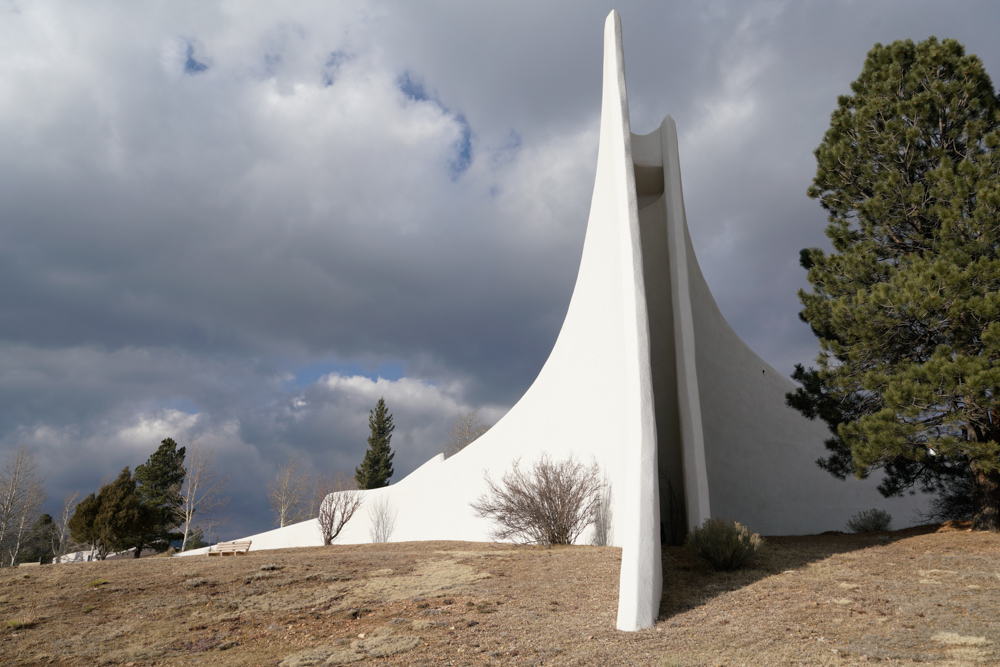
I agree, lensfan, that the lens quality of the more recent Sony lenses has greatly improved, as has the Sigmas. That is why the Sony 28-60 has gotten many highly positive reviews. Ditto for many Sigma C lenses (my 45 f/2.8 C is a great one). But I find the dividing line between "good enough" and "great" increasingly harder to see for recent lenses vs. many older ones, without 100%+ screen magnifications or in 11"x17" prints (the largest my printer does) or smaller. If I thought I would make many 2-ft wide or larger metal prints, then I likely could justify the swap. But I don't and likely won't. I have to wonder how much difference in impression would result if the photo of the NM Vietnam Veterans Memorial I posed above from my 28-60 instead had been made using the 20-70? Thanks for the comment!
You might want to consider visiting your local camera store and seeing if they have a 20-70 and take a few test shots with both the 20-70 and the 24-105 and see how they compare. I agree that while the newer lens may be "better" how does that translate into real world images.
They both cover similar amounts of range 20 vs 24 is similar to 70 vs 105, however the 24-105 has oss but quite a bit larger. Both are great optics and you’ll have to decide what’s most important, size, oss, long vs wide.
Size is really important for me, and I happen to prefer the range of the 20-70, not by a large margin, but it is nice. Not too concerned about optics in this scenario.
mdmarcus wrote:
I have the Sony 24-105 and the 20 f1.8. and I have been reading about their newer 20-70 f/4. I find, for me, that the 24-105 is a bit heavy and unbalanced for routine uses on my a7Riii. As such, I have been questioning whether it makes sense to swap it for the lighter 20-70. If I did that, I would keep my 20 because the f/1.8 works great for night sky photos, the reason I bought it. That brings me to the 20-70 being more than 5 ozs and about 23% lighter than the 24-105. So I then ask myself, is that enough to make the swap? I read that some say the extra 35mm longer focal length to 105 is important to them. Others say the same about going to 20 on the shorter end. Setting my lens to 105mm and then to 70mm, I find that about 1 to 1.5 steps (about 4 feet) forward in my living room will about match the two image widths. That is also about the same distance I find stepping back for the 28 and 24mm to about match the two image widths. I assume this is the same going from 24 to 20mm. For real-life photos, that's not a big deal. Then I also read that the 20-70 has somewhat better image quality (ok, good), but no OSS (perhaps not good). Next, to complicate my considerations, a while back I got a great deal (half price) from Amazon on a new (sans damaged box and papers) and the often-reviewed with high regard Sony 28-60 kit lens. I find that real-world walkabout images from this almost toy-looking lens fairly match those from the 24-105. So, after all of this overthinking, I conclude that I'll just keep using the 28-60 as my main zoom-walkabout-street lens, and mostly keep the 24-105 in a bag for those times when I think more reach at both ends might be needed, for example, when visiting our national parks and similar dramatic landscapes. Plus, I do have the 20mm for whenever I think a landscape photo needs to be wider and I can't step back. Your thought?...Show more →
I had the 24-105 and found it very unwieldy for travelling. It was both too heavy and too large to fit in a tiny sling bag. The 20-70 is much more portable in that respect. 200g doesn't feel much but it makes a substantial difference in situations where I would otherwise think twice about bringing the camera out.
IQ wise I don't notice a difference between the two though I'm using a 24mp body
lensfan wrote:
Never had 24-105 but I had 20-70 for a short period. 20-70 handles very well. Very small, very light. Only 500 grams, very well balanced. Built well. Very-very well corrected lens.
It is a compromise, from my limited understanding we get a lens at a size and weight that shouldn’t exist,
Maybe if I had the difference between a software corrected lens and an optically perfect lens pointed out to me I would see the difference, I do know that for certain areas of photography the size and weight saving is a huge benefit for me.
Uncle Chip wrote:
It is a compromise, from my limited understanding we get a lens at a size and weight that shouldn’t exist,
Maybe if I had the difference between a software corrected lens and an optically perfect lens pointed out to me I would see the difference, I do know that for certain areas of photography the size and weight saving is a huge benefit for me.
I understand. I own the lens, The lens is fine but is it considered well corrected?
Choderboy wrote:
Obviously, the lens is the opposite of well corrected.
Whether or not one likes the small size and weight, and if, after software does it's thing the result is well corrected, are both separate questions.
Exactly my point. Thanks. This is my most uncorrected lens. The corrected end results are fine but nowhere as corrected (raw) as my some of my primes, which is expected.
fotografur wrote:
Exactly my point. Thanks. This is my most uncorrected lens. The corrected end results are fine but nowhere as corrected (raw) as my some of my primes, which is expected.
Let’s not forget there are more things to correct than just distortion. By choosing not to correct distortion optically, the lens designers were able to correct other optical defects very well, keeping the lens small, and resulting in image quality that still looks very good after digitally correcting the distortion. It’s a different approach but they seem to have done a great job, IMO.
I agree. Other than distortion at wide end the lens is well corrected.
PaulMoorePhoto wrote:
Let’s not forget there are more things to correct than just distortion. By choosing not to correct distortion optically, the lens designers were able to correct other optical defects very well, keeping the lens small, and resulting in image quality that still looks very good after digitally correcting the distortion. It’s a different approach but they seem to have done a great job, IMO.
jwpstl wrote:
Does the distortion correction result in a cropped frame at 20mm? In other words, does it really end up as a 22 or 24mm after correction?
I mostly use the 24-105 in the 70 to 105 range while out hiking . I recently hiked up Mount St. Helens and backing up or moving around for some shots would have not been possible. The thing that bothers me and I'm sure bothers you as a fellow 24-105 owner is the horrible lens creep. It gets worse as lens gets older with more use and when hiking with it on strap, I will look down and see zoom fully extended .
I think there may have been a design change somewhere during the manufacturing run of the 24-105. I looked at a few copies while I was trying to find a nice used one and some (i think earlier) had a much stiffer zoom adjustment. The one I ended with creeps a little but I can live with it, and I usually carry it plus the camera in a shoulder bag rather than on a strap hanging down.
I do own both, but the 24-105 collects dust since the 20-70 arrived. Both are intended for travelling and the latter is so much lighter. I never liked carrying the 24-105, my A7IV was always unbalanced with it.. And with the extra 4mm on the wide end, landscapes and cityscapes are so much more fun.
Regarding the rendering, I find the rendering of the 20-70 a tad warmer which is more pleasing, especially when shooting people. The 24-105 has a more flat and cold rendering, though this for sure is a personal feeling.