So, I’m asking another fear question and I’m sorry haha.
I’m moving toward the lessons and the books Lester in my last thread. Buying the book tonight as I just got paid. The lessons I’m up to the actual photo part but I have questions.
In one of them there’s a kit with a flash etc. I’m thinking of making it easier to move around my house and other places rather than JUST being in the light tent. Such as table tops, counters, other buildings/homes etc. if antique boxes or other cool back drops pop up I can do it anywhere.
Anyway, I’m curious which light/s and stands and soft box, reflectors, or whatever else would be suggested. I do t want to go crazy and have tons of gear, just a light or two that’s portable and would spice up night time low light in my house or supplement natural light through windows.
But idk if these are smart or quality options and am super open to a simple option/s that isn’t over the top expensive. A few hundred dollars or so is my allowance. I did notice Godox makes a kit and filter at a decent price as well.
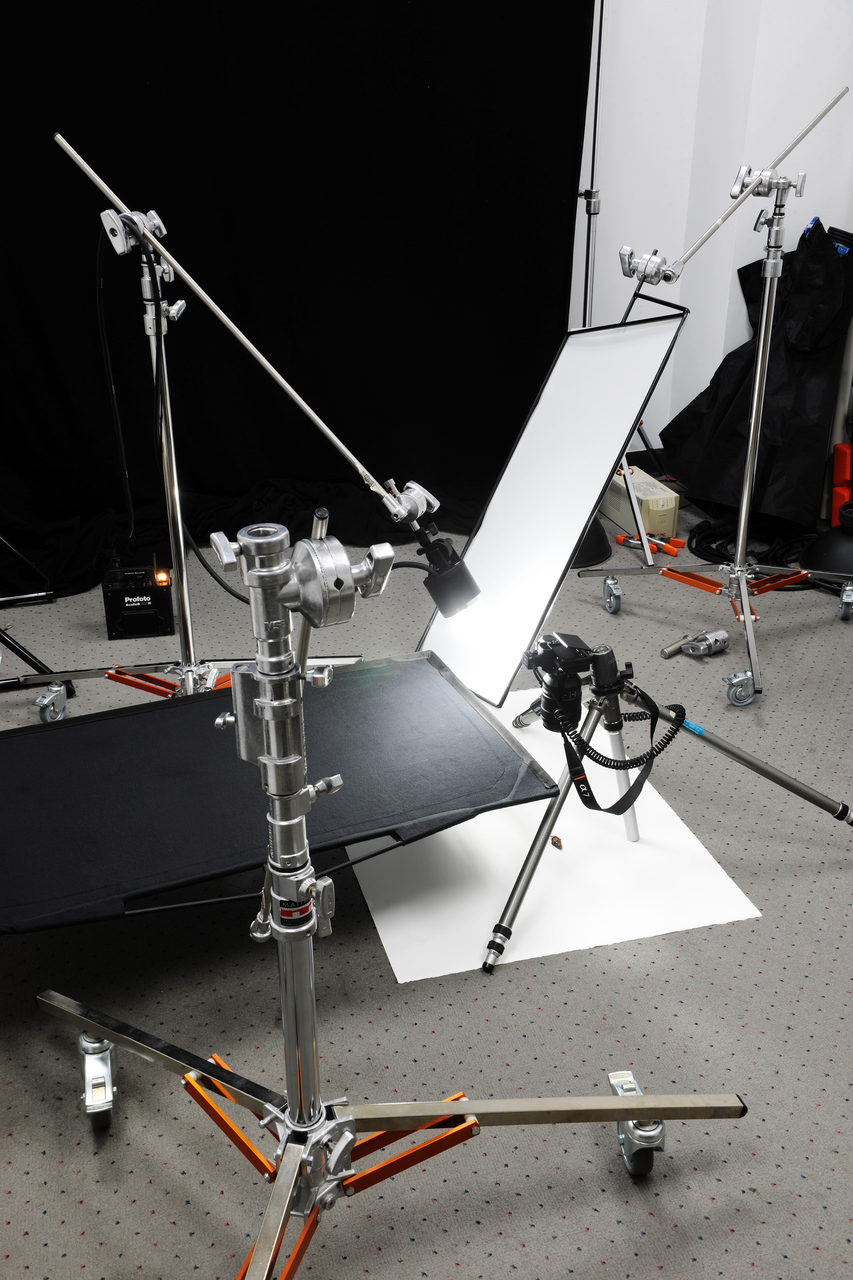
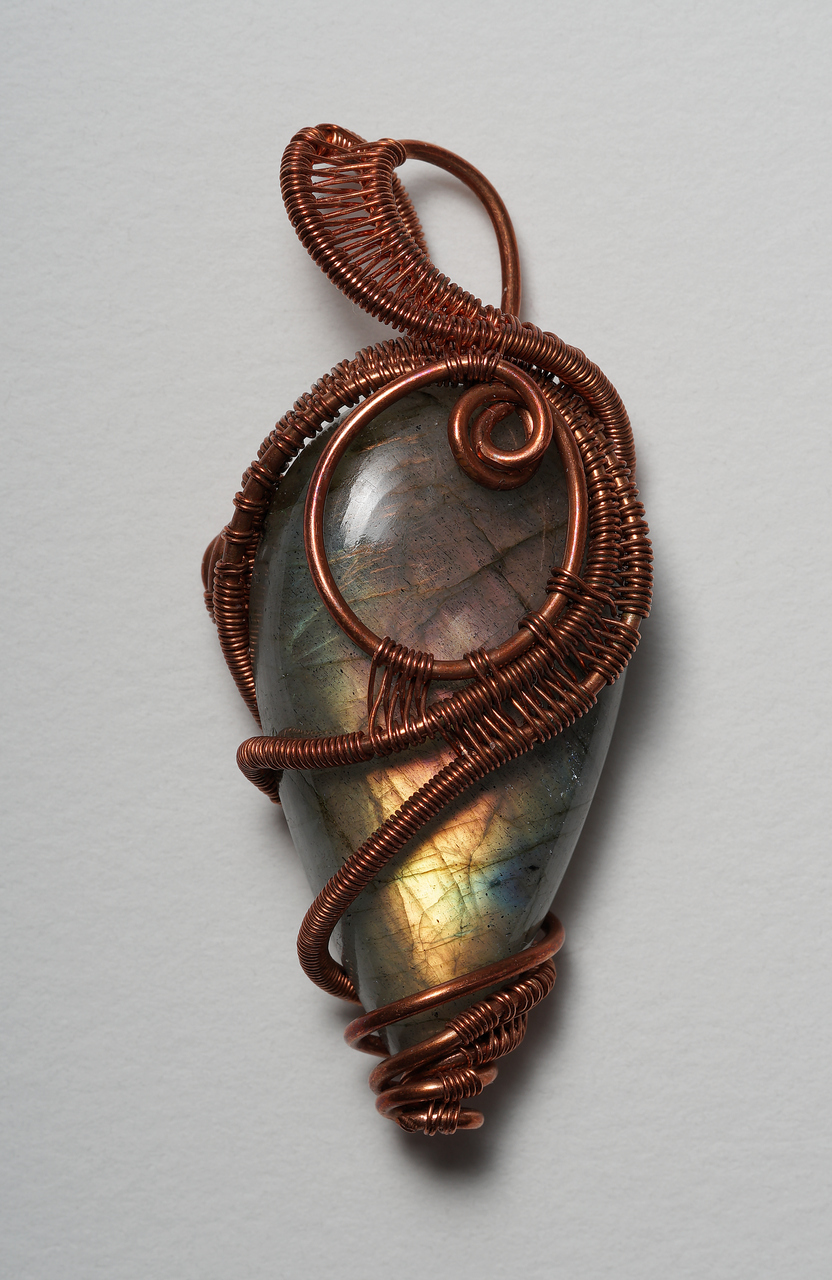
Product is difficult, and product with shiny metal is even more so. For knives, you must manage a large expanse of specularity on the blade without burning out the grain. This calls for a large, uniform key light. The matte portions of the item, like the handle, must retain some texture to avoid looking flat, so some hardness is required. You want directional light to produce the shadows that indicate dimensionality of the item. Finally, you want clean light and a lot of it so you can shoot at f/20. This produces sufficient DOF because product photography is about showing the product, not defocussed artistic blur. Softening at this aperture due to diffraction is valuable to eliminate aliasing: you sharpen to taste in post. I suggest one strobe, or a larger flash, various panels of foamcore and diffusers, plus support.
rico wrote:
Product is difficult, and product with shiny metal is even more so. For knives, you must manage a large expanse of specularity on the blade without burning out the grain. This calls for a large, uniform key light. The matte portions of the item, like the handle, must retain some texture to avoid looking flat, so some hardness is required. You want directional light to produce the shadows that indicate dimensionality of the item. Finally, you want clean light and a lot of it so you can shoot at f/20. This produces sufficient DOF because product photography is about showing the product, not defocussed artistic blur. Softening at this aperture due to diffraction is valuable to eliminate aliasing: you sharpen to taste in post. I suggest one strobe, or a larger flash, various panels of foamcore and diffusers, plus support.
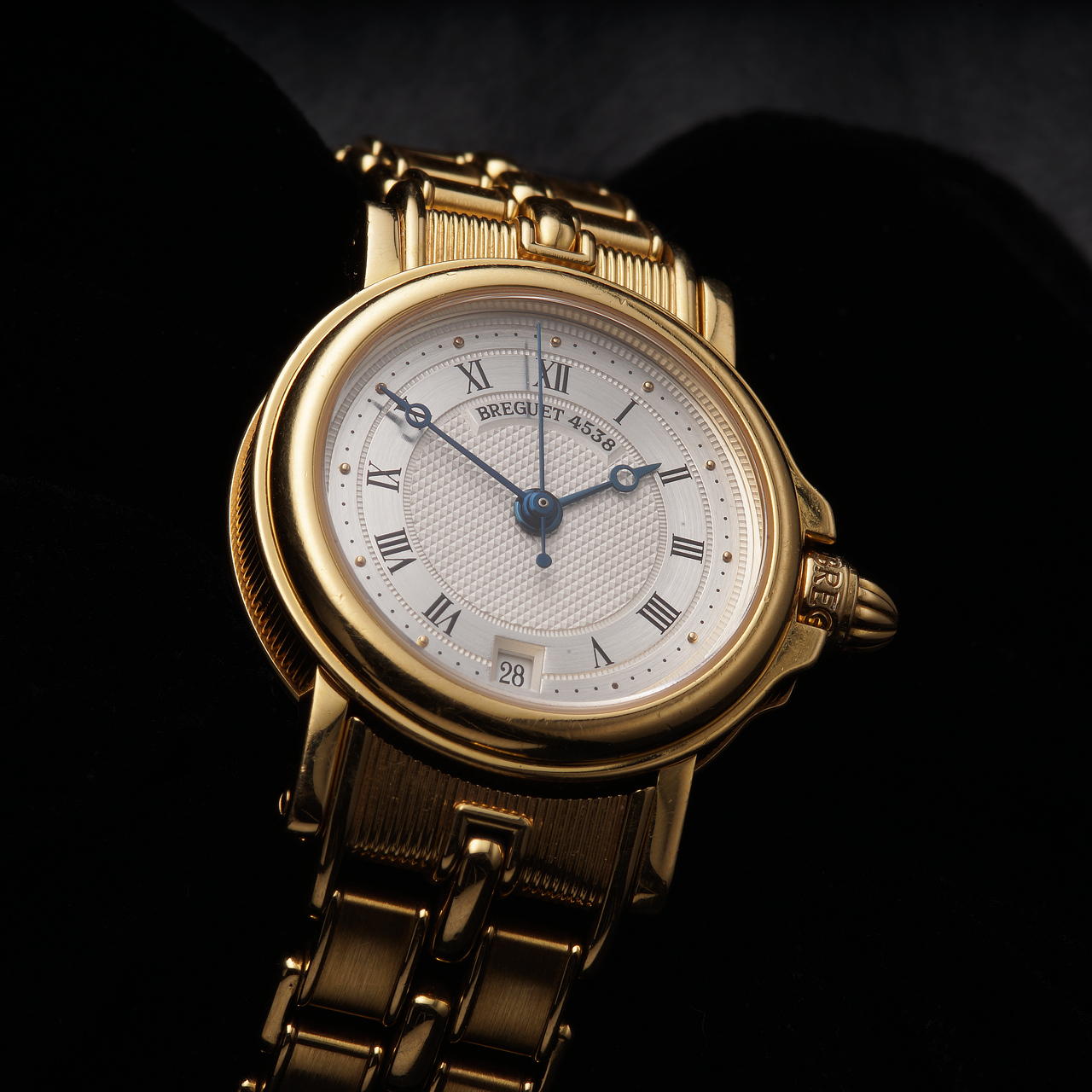
All images taken with one light in a studio....Show more →
Would you mind giving specifics on which light, diffusers, stands and such? Is $400 enough for that list? No soft box needed on the light it looks like.
EDC knives tend to be small enough. What Rico said is spot on, though I don't think you need to go to f/20 for a knife. The quickest way to learn is to get a LED light and move it around yourself to see how to light it best. Using a flash like a Xplor 100 Pro would be plenty for your purpose and more flexible than a LED light, but more difficult to find the angles that work. Rico's set up costs a whole lot more than $400. For knives, I think you can ditch the light stands and find more DIY solutions to fit in that $400 budget.
or if you can access to something like Photoshop, take multiple pictures with just 1 light to merge them.
When I was in the applied photography program in college, first year studio was all continuous lights (no strobes). Back then it was tungsten lighting (big, power hungry Mole-Richardson lights) but now you can easily do this at home with LED.
The benefit to you of going LED continuous light is you see exactly how light is interacting with the subject. How the reflections and shadows look. This will build your baseline knowledge and experience for an eventual transition to strobe. But for still life work, you could probably just stick with LED.
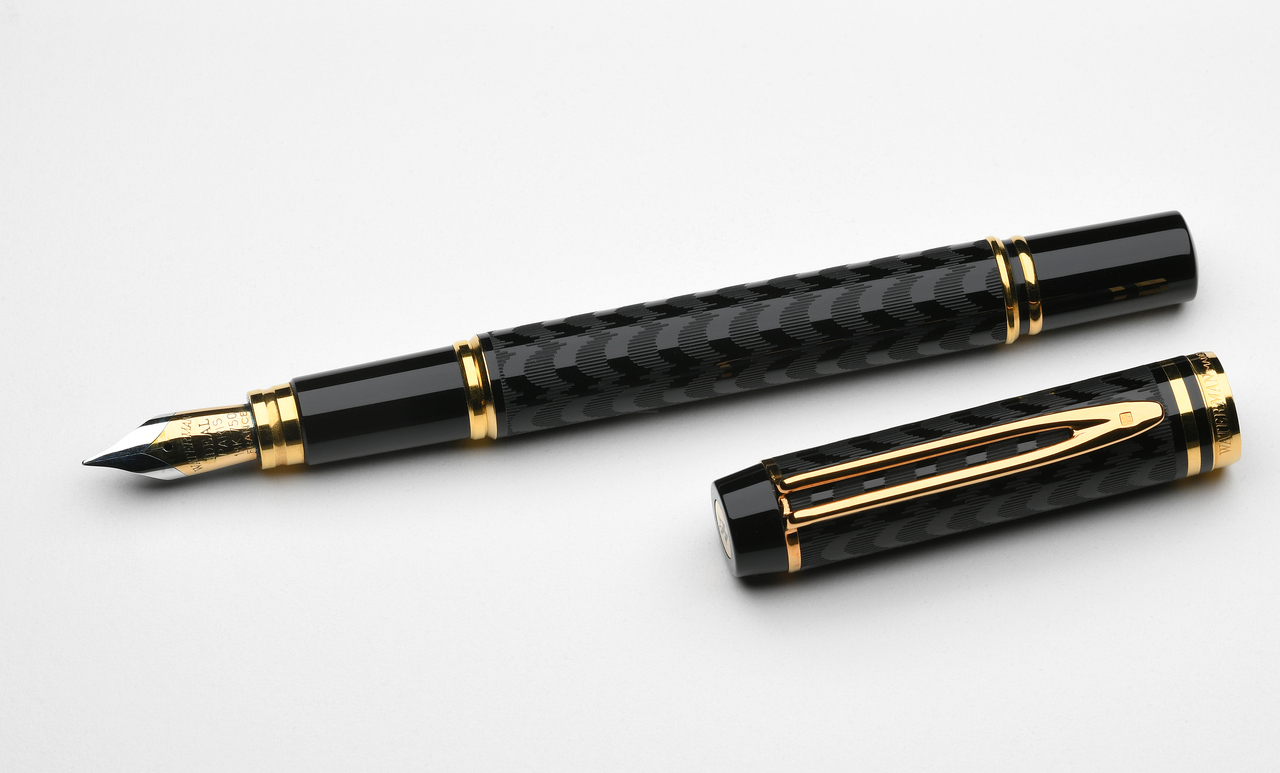
So what kind of LED to get? Panel or spot? If you look at Rico's photo, he's shooting bare strobe head through a diffusion panel. I'd suggest similar for you. Get LED spots rather than panels and shoot them through diffusion material. Different materials will give you different effects, as will changing the distance between the light and the panel - more diffused, softer, more even reflections, or hot spots with falloff for more contrast. You can and also should use reflectors, which can be as simple as sheets of white paper/card cut to the appropriate size and shape. Rico's first example is hot spot with fall off. The pen is even diffusion. You can 'read' this in the photos by observing and analyzing the reflections in the objects. Which is right for the exact knife you're photographing will take some trial and error as you learn. Given that your products are all relatively small, you don't necessarily need huge lights. If you start with large panels or soft boxes, it's difficult to make them smaller. But if you start with small heads, you can shoot them into large diffusion when you need that look.
As for what LEDs to get? I honestly don't know. I only shoot strobe and have not ventured back to continuous light since leaving school a LONG time ago. (I generally don't shoot 'product' in the studio, rather people and that just seems to work better with strobes, at least for me.)
If you're getting strobe/flash, for what you're doing, you don't need big units (100-200W/s would be fine). But you should get something that can accept, or uses an adapter that accepts 'speed rings' used to connect soft boxes and other types of modifiers to strobes.
I was thinking of using Led panels, diffusion and reflectors just as you say. Mainly because you can see what you’re getting before taking a shot and it’s be easier to learn and get stuff done that way.
I suppose I could pick whatever LEDs I find for a decent price and make diffusion easy enough. The reflectors are simple too. I guess the LEDs I linked should work fine? Or are they lame ones?
Great comments above from our FM regulars. I cannot advise OP about LED lights since I use strobes and flash only. Be aware that strobes have modelling lights so positioning is an easy matter. For either xenon flash or continuous light there will be repeated cycles of test shot and review to lock in the exposure: highlight placement, fill ratio and shadow hardness are not parameters you can magically establish by looking at continuous light shining onto the set.
As for budget, more is better. I can work with a lowly Canon 430EX, a coat rack, and a napkin if required, but why make life hard? Some people invest thousands into a camera body and f/2.8 zoom. I invest thousands into light stands. For knives, the only real essential is a large, uniform key. That can be achieved with a bedsheet covering a window in a dark room. Spend money on foam core, not lights.
rscheffler wrote:
The pen is even diffusion. You can 'read' this in the photos by observing and analyzing the reflections in the objects. Which is right for the exact knife you're photographing will take some trial and error as you learn. Given that your products are all relatively small, you don't necessarily need huge lights.
One thing to note is the curvature of the shiny bits. The size of the subject does not necessarily limit the size of the light source. What is important is what the subject "sees" of the light source, and whether that portion of the subject needs definition. For the fountain pen, I wanted the gold trim (which has a pronounced convex surface) to be fully illuminated, and I deployed a 24" strip light up close. This fixture would be ideal for knives but costs $3000—not including the pack.
I don’t have thousands to spend. I’m sure I can make things happen in the mean time without spending that much. I’ve literally had a camera for 10-12 days lol and could barely scrape that money together. Im trying to drink from the firehose.
I've got a couple of Nanlite LED panels that I've used for all sorts of things from small product to lighting for Zoom sessions. The smaller ones are not that expensive and are fully adjustable for both brightness and color temperature plus they have a very high Contrast Rendering Index (CRI) of about 98 at all luminance and color temp settings. A couple of these for about a hundred bucks a piece and you can do a lot with small products.
To be honest almost all of my personal product images are shot with the modeling lights of my strobe units. Just easier that way and the main reason is that most strobe units are too powerful to keep reasonably moderate apertures and with tungsten that is not an issue. Large product are either lit with the strobes or simply with the modeling lights. I also have half a dozen Arri 650's, a 650 watt tungsten lamp with a focusable beam through a fresnel lens. Great for video or when you want the specific look of that fresnel light as a harder light on a product or a person.
Start off with two lights as you can do a ton with just two and then add as needed.
If money is tight, consider good old tungsten lights. With everyone going nuts for LED, you can pick amazing used ones for cheap. And tungsten is arguably the next best colour quality next to daylight.
Or a used KinoFlo Diva 400 might set you back about £400-£500 and that's a nice big even light with excellent colourimetry. (With cheap LEDs you may have a problem with a smooth colour spectrum that can't be easily corrected).
leethecam wrote:
If money is tight, consider good old tungsten lights. With everyone going nuts for LED, you can pick amazing used ones for cheap. And tungsten is arguably the next best colour quality next to daylight.
Or a used KinoFlo Diva 400 might set you back about £400-£500 and that's a nice big even light with excellent colourimetry. (With cheap LEDs you may have a problem with a smooth colour spectrum that can't be easily corrected).
LED is popular, but not your only option.
If you go tungsten, check the replacement cost for the bulbs and expected lifetime. Also keep in mind wattage, how many amps you're drawing and how that might impact your electricity bill. One great thing about a few 1K tungsten lights is they'll keep your room toasty in the winter. You also have to be more cautious about modifier construction/materials and whether they'll resist the heat of tungsten.
But I suspect OP is on a budget and LED is a pretty inexpensive entry point without having to deal with replacement bulbs and associated costs.
newyork wrote:
Any certain model/wattage nanlite? Bi-color or daylight? I’m thinking bi color.
Presumably the advantage of bi-color is you can fine-tune color temperature to other fixtures, which would be useful if you intend to rely on existing ambient light for some aspects of your shots, such as taking care of the background while you use your lights for the subject. This would be more of a concern, in my mind, if you're shooting video or doing environmental photos.
Your focus is small products. You'll be controlling and lighting everything. Therefore whether or not it's bi-color is probably less critical. I'd still opt for their monolight models over panels for flexibility with modifiers - you can add reflectors, soft boxes, etc.
You had a question about a fabric grid for the Godox AD200 kit that comes with an octabox. The grid is good for giving a more directional quality to the light with less spill. But for photographing highly reflective objects, the grid will be visible in reflections (it's basically like you're photographing mirrors). If you want a grid for a softbox, B&H has been including fabric grids with the Impact line of modifiers. So, buy a softbox and it will come with a grid. I bought a couple of the Impact small strip boxes and they seem decently made and reasonable value for the money. But shop around. I think there are also some Godox boxes where they include a fabric grid. I seem to recall an octabox with grid for something crazy like $35 at B&H. Some reviews indicated the Godox box was thin fabric and potentially easy to rip/damage. But it might be fine for light use and for learning (but still be careful even with LED because those can also build up some heat, which might cause problems with cheaper materials in inexpensive modifiers).
rscheffler wrote:
The pen is even diffusion. You can 'read' this in the photos by observing and analyzing the reflections in the objects. Which is right for the exact knife you're photographing will take some trial and error as you learn. Given that your products are all relatively small, you don't necessarily need huge lights.
rico wrote:
One thing to note is the curvature of the shiny bits. The size of the subject does not necessarily limit the size of the light source. What is important is what the subject "sees" of the light source, and whether that portion of the subject needs definition. For the fountain pen, I wanted the gold trim (which has a pronounced convex surface) to be fully illuminated, and I deployed a 24" strip light up close. This fixture would be ideal for knives but costs $3000—not including the pack.
Yes, so in the aforementioned first year studio lighting class, one of the later assignments was photographing a highly reflective (such as chrome or polished stainless steel) small object. We were explicitly told not to pick highly rounded/curved objects due to the difficulty being outside the scope of the assignment. Of course, I chose mom's old 60s style highly polished SS toaster with nary a sharp edge transition on it. The contortions I went through with diffusion panels and sculpting white no-seam paper wraps, off which to reflect light with the hope of showing no seams, was humorous in hindsight. So yeah, the reflections off that toaster basically had an 'angle of view' of nearly 360 degrees. Best solution probably would have been to put it inside a large white hemisphere or globe, cut an opening for the lens, then retouch the lens out of the image. (Easier to do now in digital)
rscheffler wrote:
... The contortions I went through with diffusion panels and sculpting white no-seam paper wraps, off which to reflect light with the hope of showing no seams, was humorous in hindsight. So yeah, the reflections off that toaster basically had an 'angle of view' of nearly 360 degrees. Best solution probably would have been to put it inside a large white hemisphere or globe, ...
Ha, ha, good story. I was utterly defeated by a Bodum French Press with its dome-shaped top cap. The cap was chromed like a mirror and, besides showing every fingerprint on its surface, could see the entire studio: lights, panels, furniture, door, camera, myself. I actually went online for an acrylic globe to regain control. Such globes and related shapes are specialty items generally available up to 4' diameter for use in trade shows. The only alternative I could imagine for this shooting assignment is a full overcast day for coverage from above, and a white hemispheric construction from below. ANd that doesn't address the black (subtractive) elements needed to complete the lighting scheme.
It's fun to see the product shots on Amazon for chromed kitchen appliances. Some of them are quite good, some are cheap composites. I'm pretty sure the highest grade of product imaging (think Apple) has gone full digital with a 3-D model being lit in a virtual fashion: no distracting real-world elements to reflect or cast color, infinite DOF, no dust.
I recall reading an interview with the photographer who shot Apple's product photos. But perhaps it is now all 3D renders.
newyork wrote:
Would you say a Godox or 2 is more appropriate or a couple nanlight for what I’m doing?
For what you're doing, you can have long shutter speeds because nothing is moving. And considering that you're learning lighting techniques, continuous lighting is the better solution because of WYSIWYG. I read some of the B&H user reviews for the lower priced Nanlite monolight-style units, and it all seemed reasonable. I think the monolight style unit is the way to go because you can use it so many different ways, from specular point light source with or without a reflector, with soft boxes, with diffusion panels, umbrellas, etc. But you will want to get some sort of diffusion for it. Or get one monolight style unit and one panel unit and experiment. My concern with the panel units is that with some designs, you can still see hotspots of the individual LEDs behind the panel through the diffusion, which will be noticeable in highly reflective objects. Remember, highly reflective objects are basically like photographing mirrors.
There really isn't one right answer to what light to use. You could start with just a lightbulb socket on a clamp, or light paint with a flashlight or one of those light wands/sticks (basically moving the wand during a time exposure would give a similar effect to a softbox with a face the same dimensions as the area covered by the moving light wand). I've used iPad displays, laptop displays with just white screens as light sources for small objects. In fact, something like an iPad would be pretty good for a knife, if you have one kicking around.




 (I generally don't shoot 'product' in the studio, rather people and that just seems to work better with strobes, at least for me.)