I had something very similar on a Sony camera once. On the Sony, the menu option that fixed it was called Pixel Mapping. It ran what seemed like a quick sensor cleaning process, but apparently it also takes a photo with the shutter closed and maps out those hotter pixels. It was like magic ... no more spots whatsoever. I don't have an X-T5 to check, but from a quick Google search it looks like it has the same function. Might be worth a try.
nadroj wrote:
I had something very similar on a Sony camera once. On the Sony, the menu option that fixed it was called Pixel Mapping. It ran what seemed like a quick sensor cleaning process, but apparently it also takes a photo with the shutter closed and maps out those hotter pixels. It was like magic ... no more spots whatsoever. I don't have an X-T5 to check, but from a quick Google search it looks like it has the same function. Might be worth a try.
Unfortunately, there is no consistency to the location of the spots. My guess is that this is introduced in read-out in some fashion.
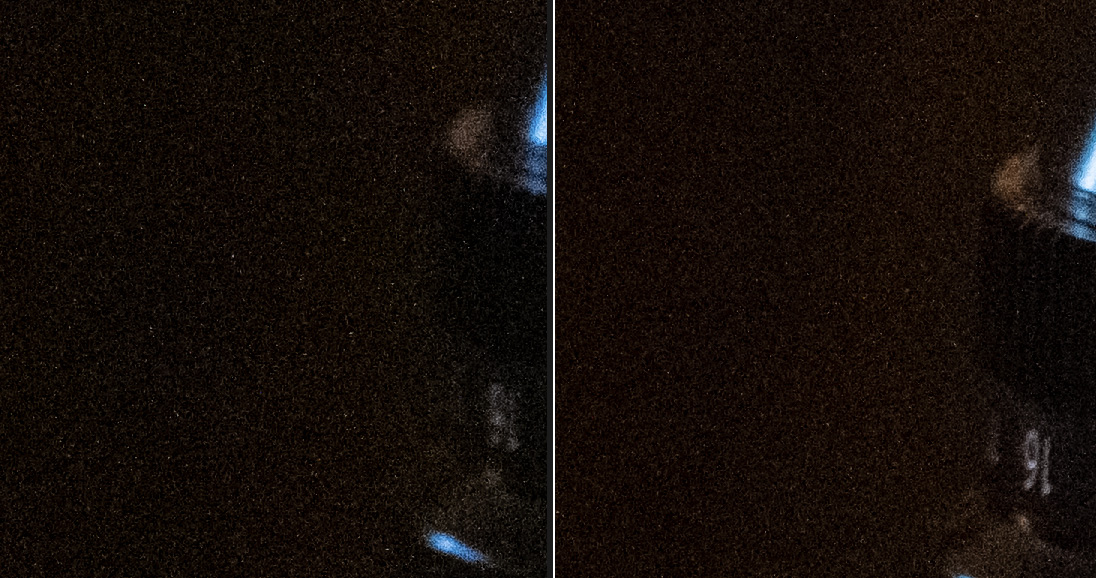
These are two consecutive shots, tripod mount.
I suspect that what you are seeing is simply what happens with noise at such very high ISOs. I obviously don't have an XT5 at this point, but on my earlier Fujifilm cameras (which I often use in very low light) I would generally not shoot at such a high ISO at all — perhaps only in a situation where there was no other way to get the shot and I needed it for record purposes.
FWIW, unless I looked very closely at the deer image at extremely high magnification image (as in your posted example) ... I don't think I would even notice this effect. And in your second example, where all o the luminosity values are extremely low — very close to zero if not actually zero — and the luminosity range is very small... we expect to see issues develop, including the blotchiness in the lower right corner.
Digital capture (like film capture) will always fail in particular ways if you push things far enough. One way to get close to that point of failure is to shoot at extremely high ISOs. (We're glad to have them, but we have to recognize their limitations.) Another is to make photographs of pure or nearly pure black areas at high ISOs and then look at them at greater than 100% magnification. At some point ANY file like that is going to show problems.
By the way, the "lack of consistency" in the exact location of the individual lighter/darker pixels supports what I'm suggesting.
In other words, I'm not convinced that you have a camera with any kind of defect — it may be that you are just running into the limits of what a digital camera can do. qu
When shooting in ways that will naturally produce images with higher noise, there are specific techniques that will help the situation. Using post-processing software with more sophisticated controls...
1. Raise the masking slider on as you increase NR — this lets you apply more NR to lower detail areas of smooth gradients and solids while focusing the sharpening on higher contrast edges.
2. Keep the "details" setting very low (or even at zero) with x-trans files. Raising it creates issues along those high contrast edges. Better to deal with the after raw conversion in your regular post processing application or at least elsewhere in the process.
3. You may already know this (and it may not be too relevant in this case) but be sure you understand the relationships between "amount" and "radius" of NR and where/how to use particular settings when doing NR.
And, again, avoid shooting about 6400 unless you really have no other choice. In fact, I only use 6400 in situations where I have no other option. And if your photography is frequently done in conditions where you have no choice but to use extremely high ISOs as a regular thing... you may be better off with a camera with a larger sensor and lower MP counts.
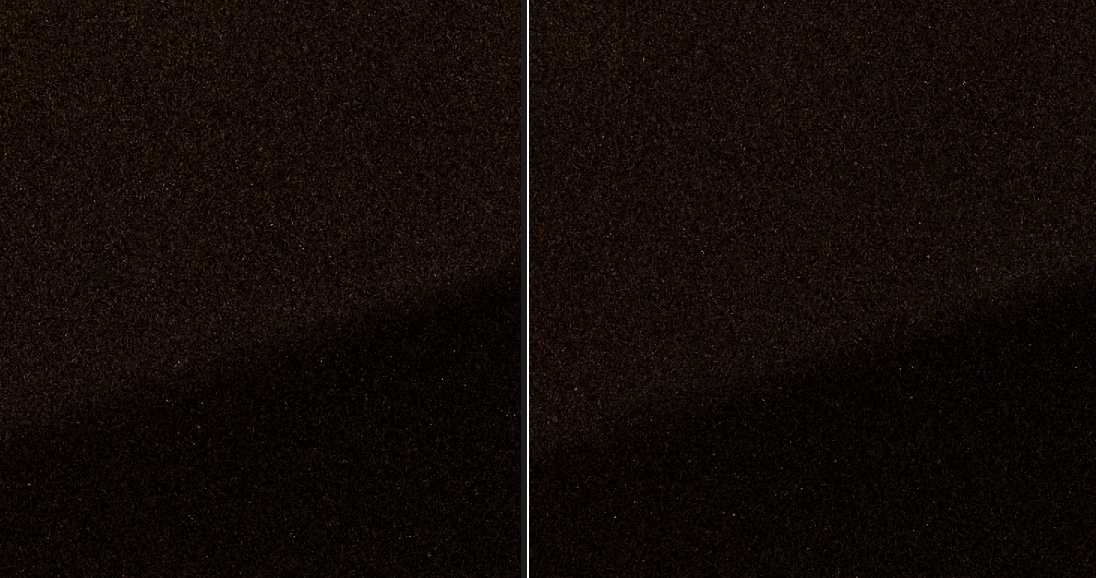
I should mention that the samples I am posting are at ISO 6400. For sake of comparison, here are some similar dark portions at ISO 6400 from the X-H2s and X-T4. Of the 4 cameras, the X-T4 exhibits the least amount of this type of noise. And I think gdanmitchell is correct in defining it as such- regardless of where in the pipeline it is introduced. I do not believe it is a defect, as such.
Lifting exposure, sharpening, increasing clarity or texture all exacerbate the definition of the white specs. I am evaluating if this is a show-stopper for my own needs, but I think many and most won't even notice.
Just did a test, and in general, in dark areas, ISO 3200 looks clean, ISO 6400 and some white specs are creeping in, and at 12800 its like a starry night.
I push and pull my files a lot, so the ability to pull detail out of a shadow when exposed for the highlights without the file falling apart does matter to me.
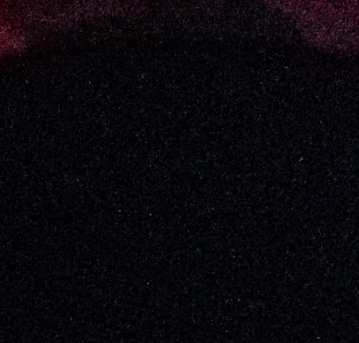
In a quick look through some of my previous files, this is what I saw - all at ISO 6400, and pushed until details begin emerging from the black. This is completely unscientific - so take this with a grain of salt:
Canon R5 - exhibits this a little
Canon EOS R - does not exhibit
Nikon Zfc - does not exhibit
Nikon Z5 - does not exhibit
Olympus Pen F - very, very little
Leica SL - exhibits
Leica CL - does not exhibit
Fuji GFX 50s II - exhibits moderately
Panasonic S1r - does not exhibit
Sony A7r IV - exhibits
I don't see a trend in brand, sensor size, or generation of sensor.
Keep in mind, some of these, like the SL, S1r, and A7r IV fall apart in other ways, such as banding, pattern noise or color degradation.
Note: The 40mp exhibits this in areas that are dark, but not black, without the file being pushed at all. This is unique in that I did not see it in the other cameras without any pushing.
I also have an Om1, Z6, and I had a Z7II for a while.
None of them have this starry night noise.
Intentionally underexposing tests of Z7II vs Om1, the Om1 color falls apart faster than the others. The Z6 and Z7 have more recoverable dark area image data than the Om1 (which has close to the same pixel pitch as the XT5).
However, none of the above, Om1, Z6, Z7 have this starry night noise issue. If any would have it you would think the Om1 would, but I have clean Om1 test images at 51200.
At ISO 51200, the Om1 images hold up better than the XT5 at 12800.
tammons wrote:
Just did a test, and in general, in dark areas, ISO 3200 looks clean, ISO 6400 and some white specs are creeping in, and at 12800 its like a starry night.
That's about what I'd expect.
Those super-high ISO values are going to cough up some noise (and other issues) that will be seen when looking at full resolution images at large sizes.
I think of those ISOs as being there for outlier situations, and especially for situations where folks will reproduce the images at more typical sizes.
6400 ISO on APS-C high-resolution sensors has always been tempting fate with stuff like this. Again, if that's the mode one usually shoots in... a lower resolution FF system probably makes more sense.
gdanmitchell wrote:
I suspect that what you are seeing is simply what happens with noise at such very high ISOs. I obviously don't have an XT5 at this point, but on my earlier Fujifilm cameras (which I often use in very low light) I would generally not shoot at such a high ISO at all — perhaps only in a situation where there was no other way to get the shot and I needed it for record purposes.
And, again, avoid shooting about 6400 unless you really have no other choice. In fact, I only use 6400 in situations where I have no other option. And if your photography is frequently done in conditions where you have no choice but to use extremely high ISOs as a regular thing... you may be better off with a camera with a larger sensor and lower MP counts....Show more →
This type of noise looks unusual from my experience as well as what you see on other websites that post high resolution, high ISO images from similar sensors (if not the same sensor).
For example, DPR's high ISO images from the XH2 do not exhibit this effect.
Maybe the sensor is overheating a bit? If you're taking a lot of photos at high ISO, that could exacerbate noise.
Have you tried using a different software, maybe Lightroom or Capture One, instead of X Studio Raw?
ISO 6400 is not that high. People should feel comfortable shooting at that ISO without an image looking like this.
mdude85 wrote:
This type of noise looks unusual from my experience as well as what you see on other websites that post high resolution, high ISO images from similar sensors (if not the same sensor).
For example, DPR's high ISO images from the XH2 do not exhibit this effect.
Therefore I wonder if it's how the image is being processed in X Studio Raw. Have you tried using a different software, maybe Lightroom or Capture One? I say this because the same issue is exhibited across multiple cameras so it could be a sensor issue or a processing issue, and not an issue isolated to your specific camera.
ISO 6400 is not that high. People should feel comfortable shooting at that ISO without an image looking like this. ...Show more →
What gets me is the Om1 has a much cleaner high ISO than the XT5 which I dont get, unless OM is baking the raw files.
Anyway, I ran one of my white speckled raw files through On1 NR and it got rid of it.
But it still has some pretty bad magenta and green low level color noise.
tammons wrote:
What gets me is the Om1 has a much cleaner high ISO than the XT5 which I dont get, unless OM is baking the raw files.
Anyway, I ran one of my white speckled raw files through On1 NR and it got rid of it.
It's not uncommon for cameras to do a little bit of in-camera noise reduction, even to RAW files. It's just part of the very complex processing from capture to output. Fuji does it, I assume OM does too.
I was told no in camera raw NR was done on the Om1.
But who knows really.
It is so clean, I dont really believe it.
And the image chip of the Om1 is really 80mp. Four sensors under each microlens or something like that. So, you would think it would be more noisy than it is.
My tests were done with the camera "cold", so it is not a matter of heat.
The same dots are present in both Lightroom and Capture One.
I'm of the mind that modern APS-C should be usable at 6400, and I have done so quite a bit. Regardless, based upon the files I have been reviewing from other cameras, I don't think this specific phenomenon is related to sensor size.
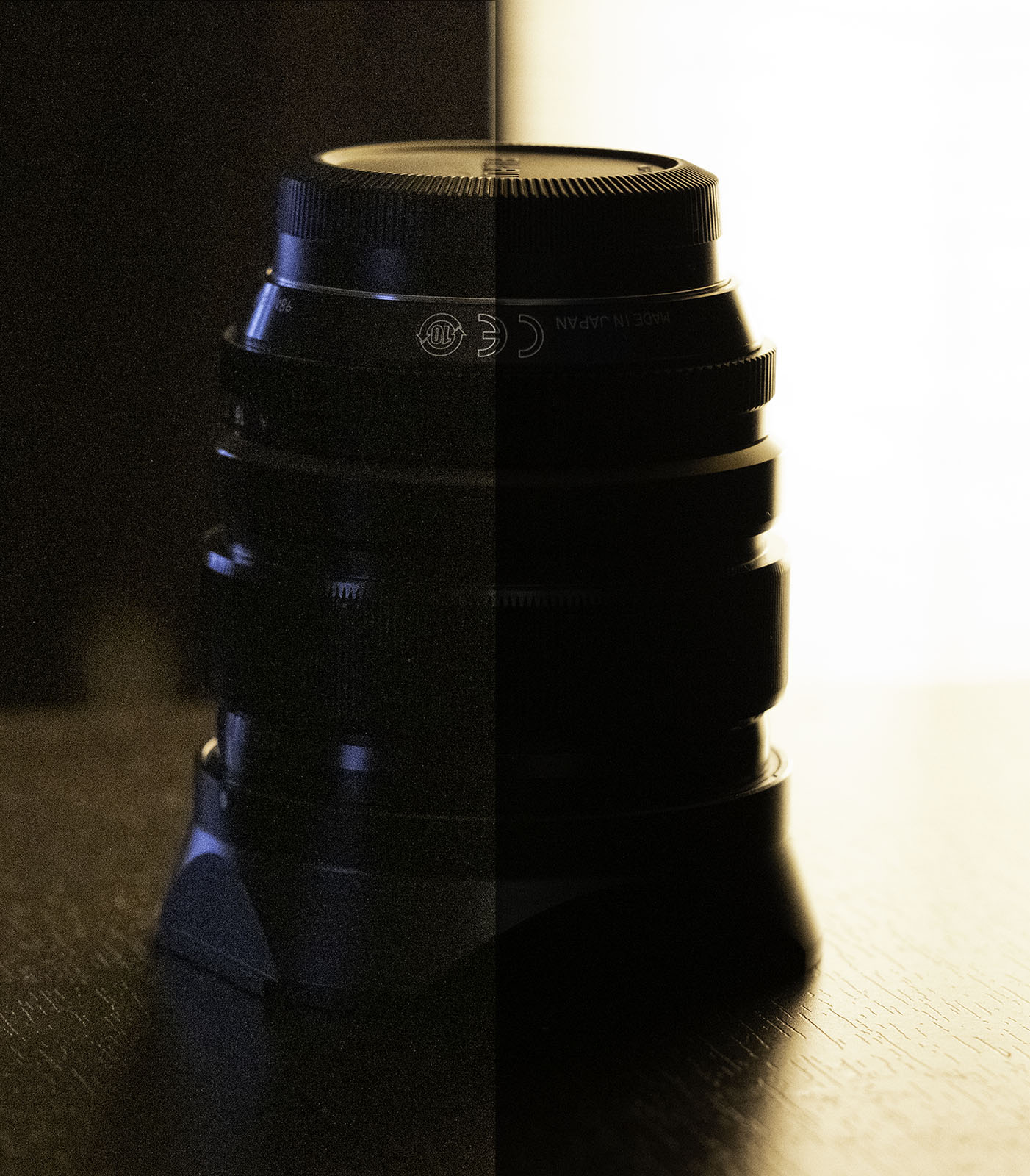
I'm attaching a crop that has been significantly downsized. The left hand side is pulled, the right is original exposure.