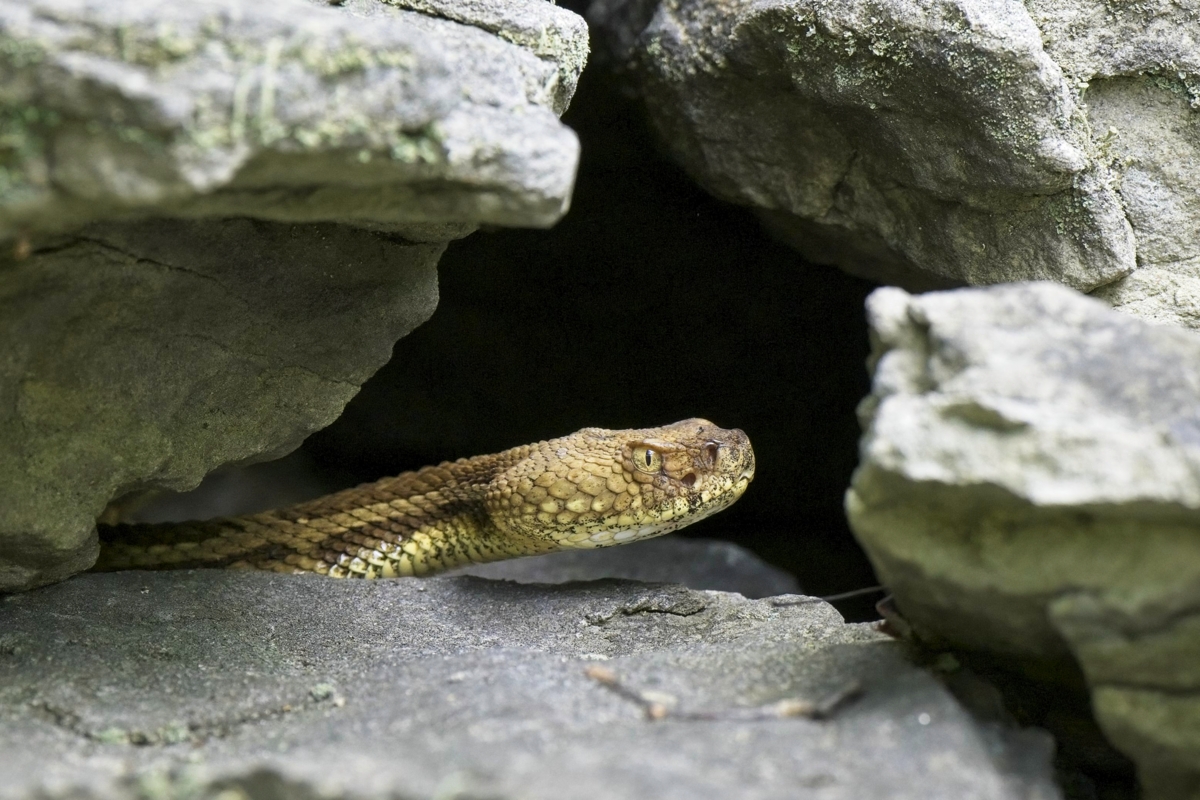
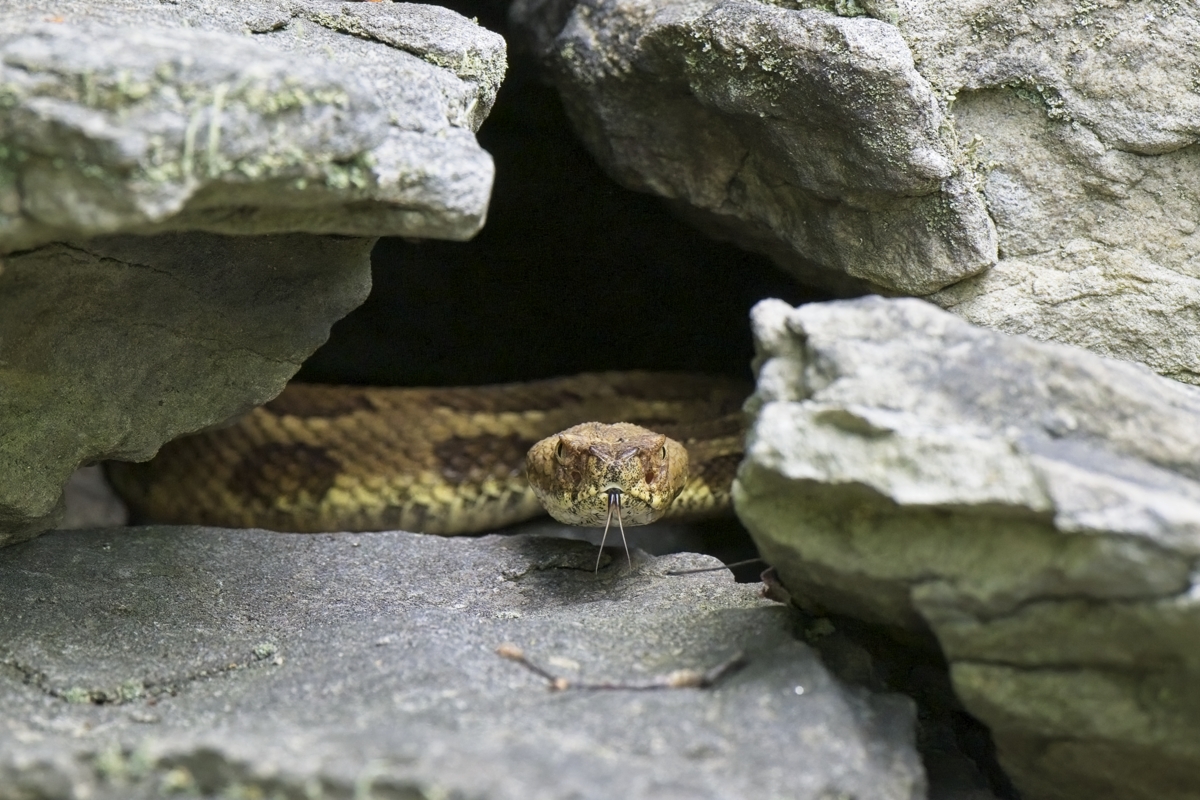
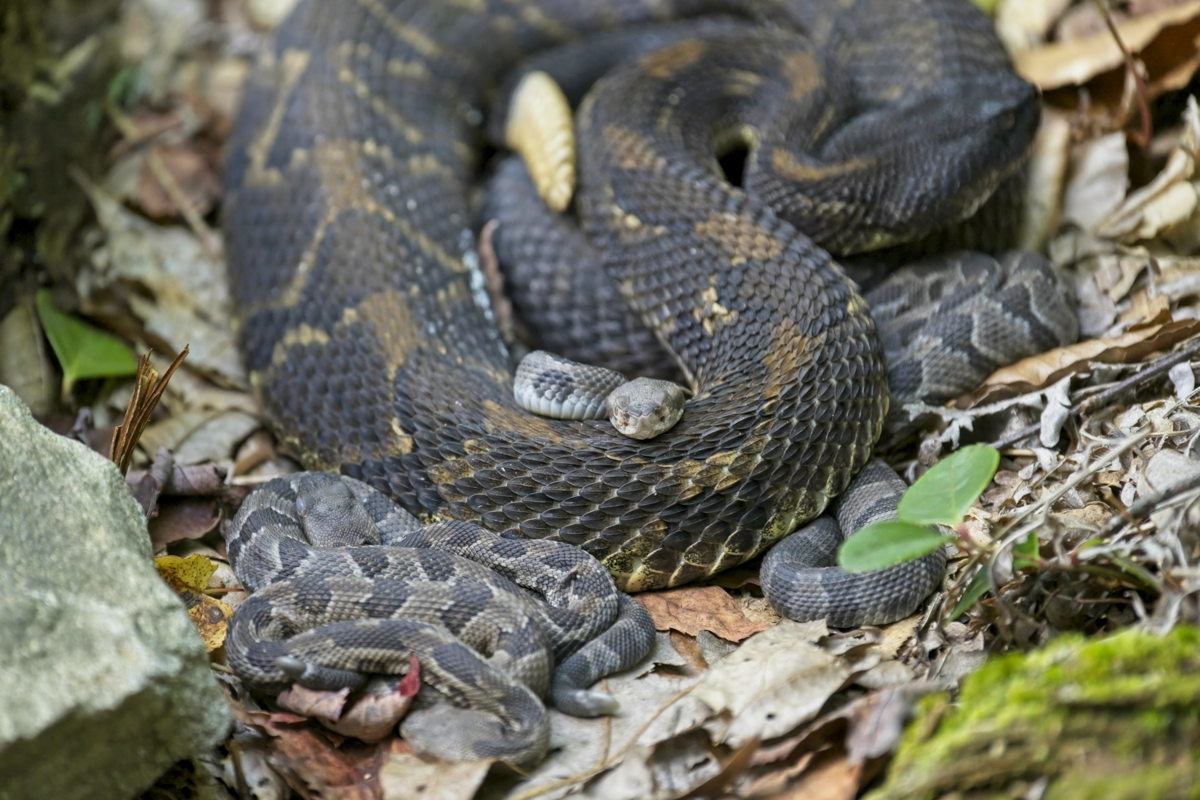
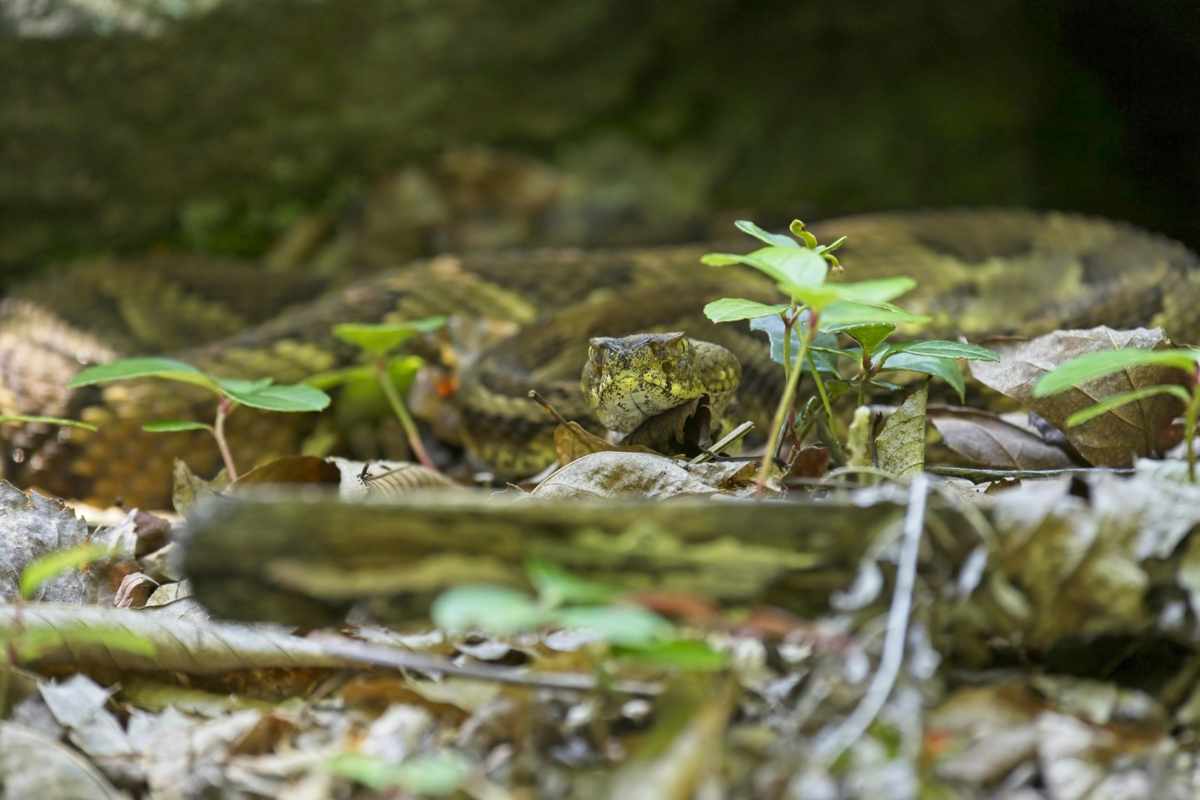
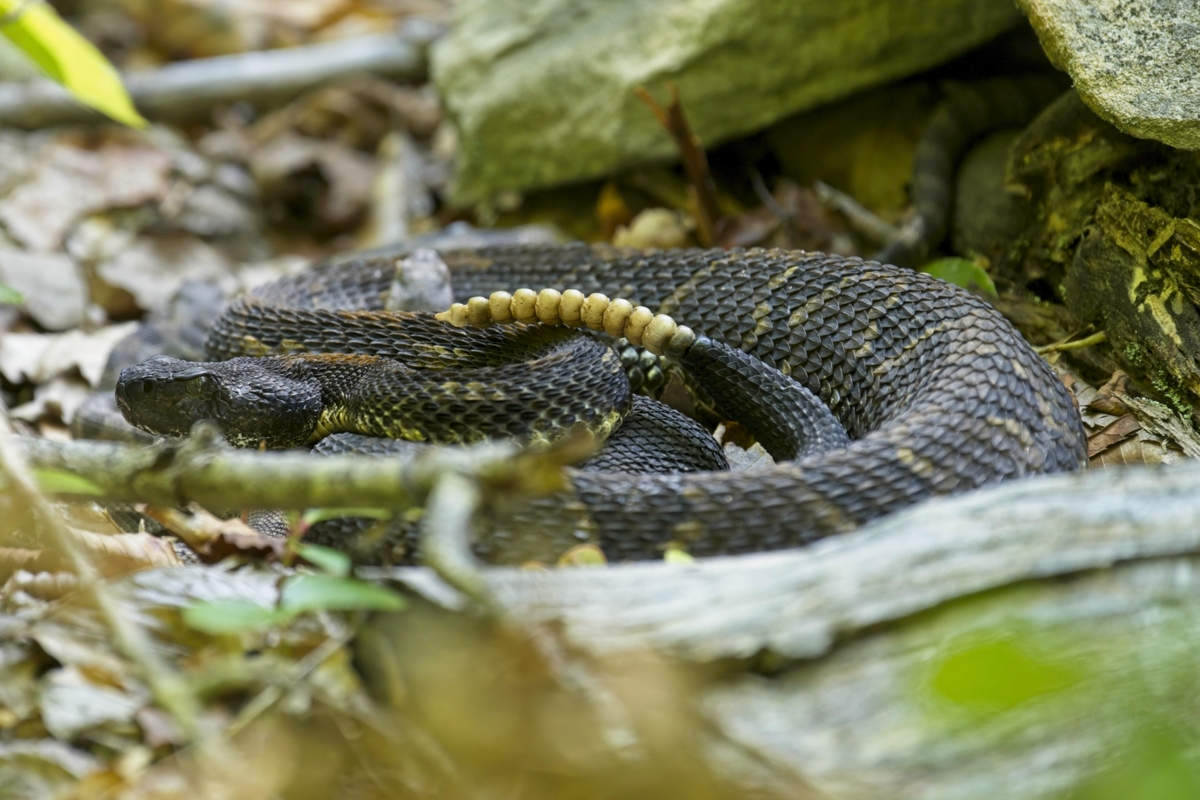
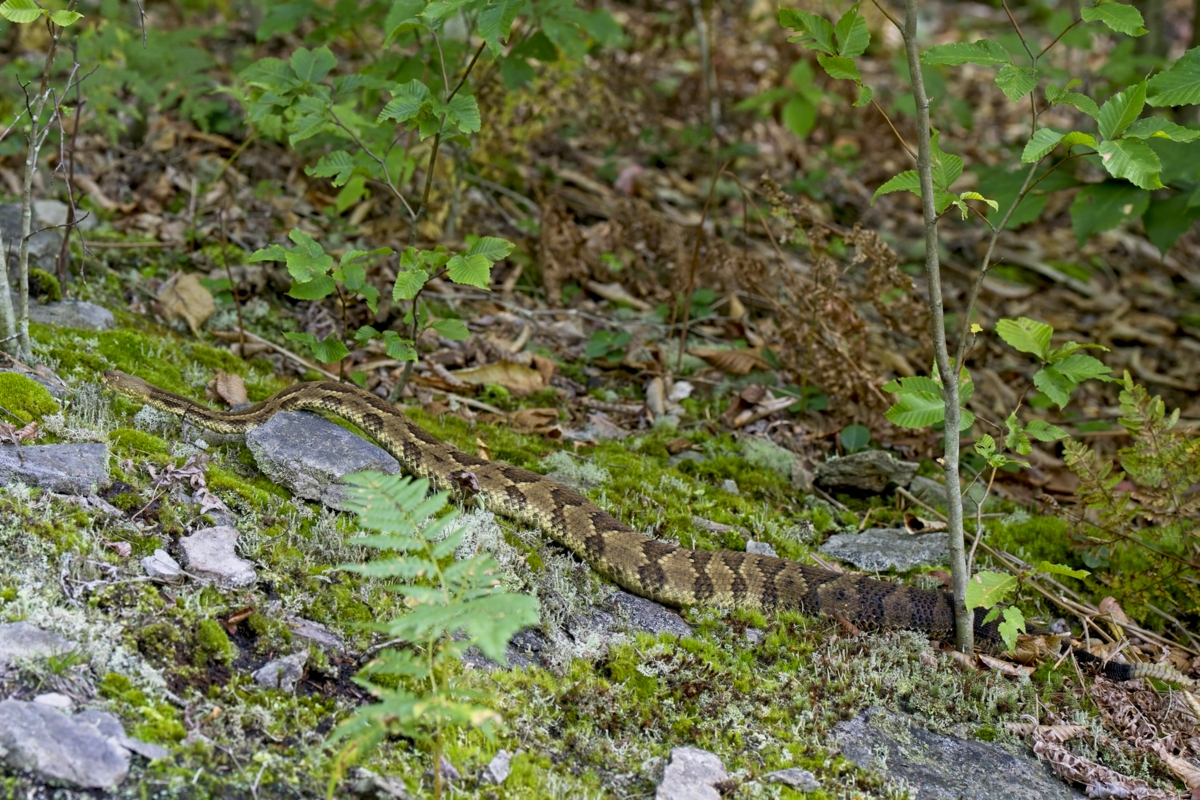
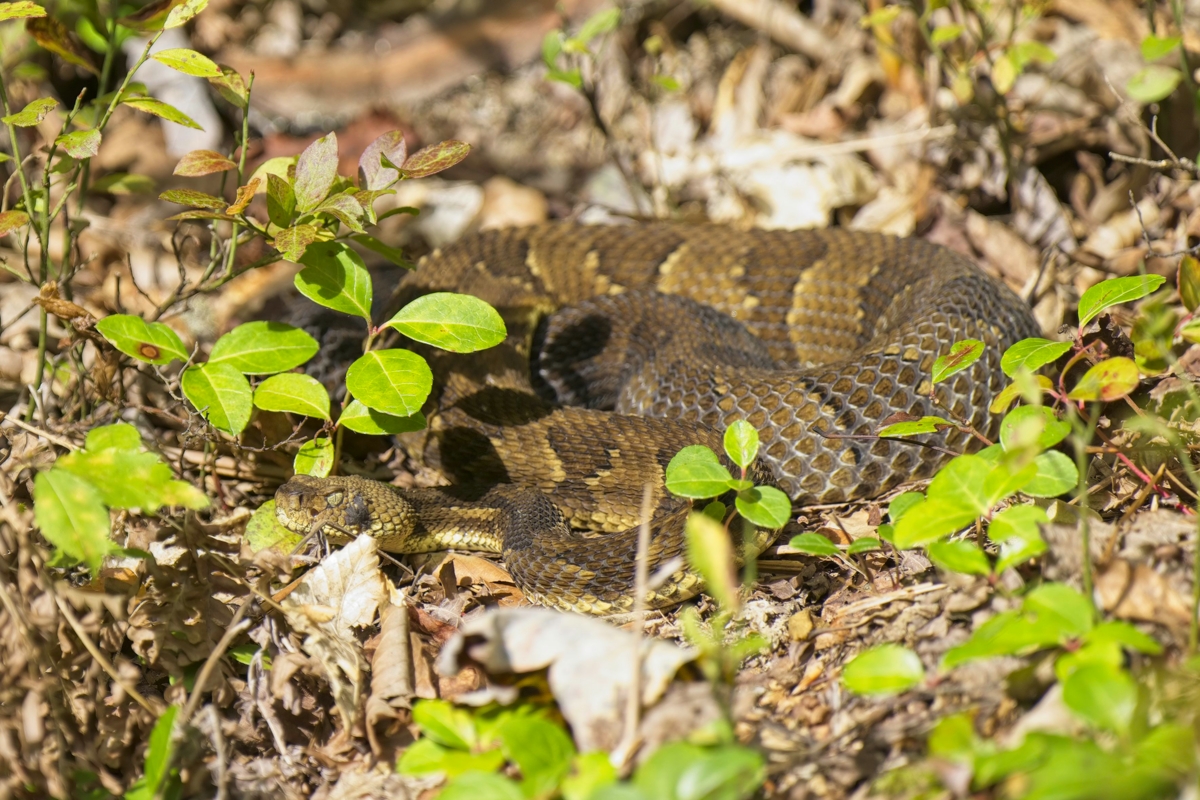
while shooting Elk, I met a man who was passionate about Timber Rattlers and told me where to find a nest. Amazing how they can camouflage and could care less that I was within 6 feet. C and C always appreciated.
1
ILCE-1Sony FE 70-200mm F2.8 GM OSS lens200mmf/5.01/800s2500 ISO0.0 EV
2
ILCE-1Sony FE 70-200mm F2.8 GM OSS lens200mmf/5.01/800s2500 ISO0.0 EV
3
ILCE-1FE 200-600mm F5.6-6.3 G OSS lens600mmf/7.11/400s2500 ISO0.0 EV
amlsml wrote:
while shooting Elk, I met a man who was passionate about Timber Rattlers and told me where to find a nest. Amazing how they can camouflage and could care less that I was within 6 feet. C and C always appreciated.
Hi... and thank you for posting images of this snake species. Very cool images. The snake is at ease with you. I wish I had such a photo opportunity with the Timber Rattler (named Canebrake down south for its habitat choice)
Personally, I would not tell anyone where the nest is. People are unreasonably biased against snakes (the question is...why?), and worse with ones that are poisonous. There are people (thankfully a small %) who will kill those snakes if they know where that den is. And the bias is 100% based on ignorance to the species, fear (understandably) and sadly, even hatred. Fact: There is no aggressive species of snake in the Western Hemisphere.
Some scientists reason that the venom is most likely a highly advanced (evolution) mechanism for capturing prey; i.e. it saves energy. In the following *excellent* reference I found the answer to a question I had related to its reproduction. I still wonder the reason for the young in one of your images. Was the image taken this fall? Much is answered in the attached link.. A lot of net references are much opinion. The Gopher Tortoise Council is top shelf. I may still know a few of these people and am certain that this reference is authoritative on these related species. In the South, they call the Timber Rattler "Canebrake" Rattlers, I think the name is from the Canebrake habitat in which it is most encountered down there.
The Timber Rattler has a benign nature for sure. I was surprised by its behavior when working in wildlife in Georgia. It is so passive when compared to the Eastern Diamondback (as an example). When working I've encountered many EDR's and a few Canebrakes (CB). Every EDR I've encountered has quickly turned into a defensive posture. But they will not strike (defensive not offensive). When I encountered CB's they continued to slowly move in the same direction when I encountered them. . And I watched a young biologist reach up into the framework of a railroad car, grasp the tail section of a Canebrake and slowly pull it out and onto the ground.... all the time this poisonous snake is resisting but did not strike.
It seems the Timber Rattlesnake / Canebrake just does not care.
I would love to see more images of this family that you may have.
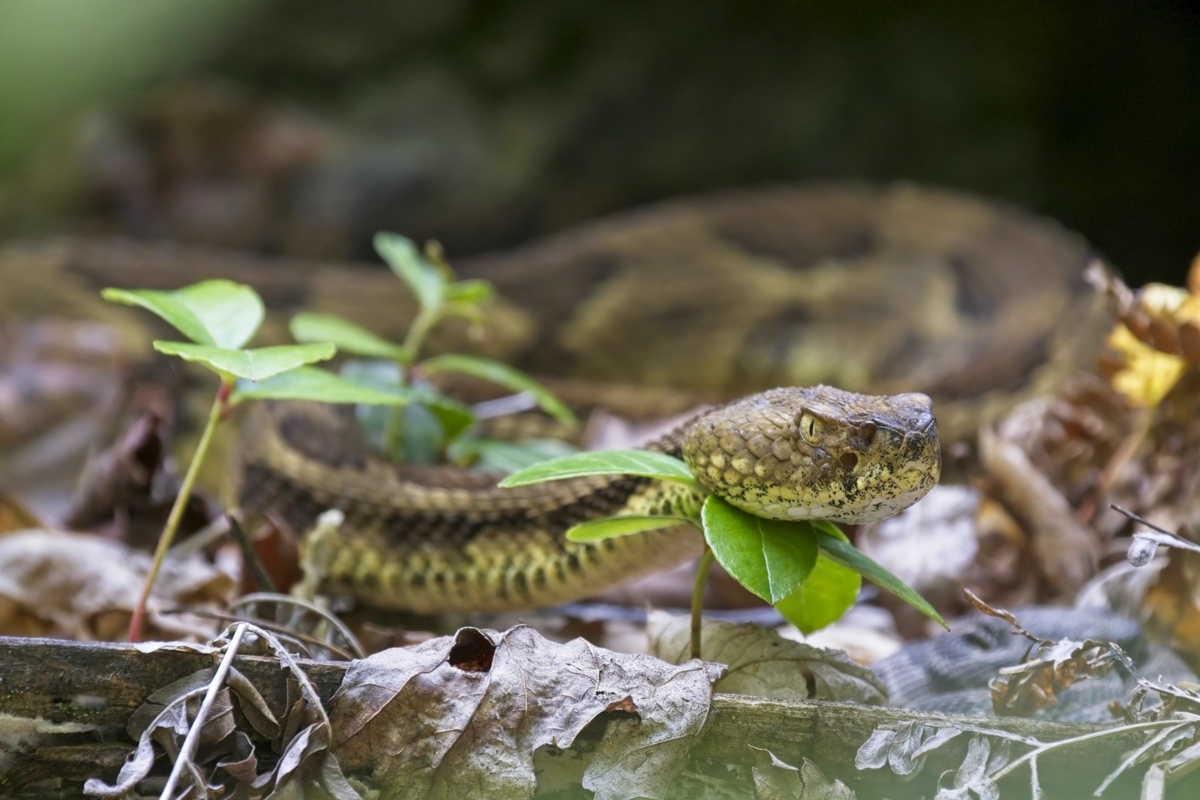
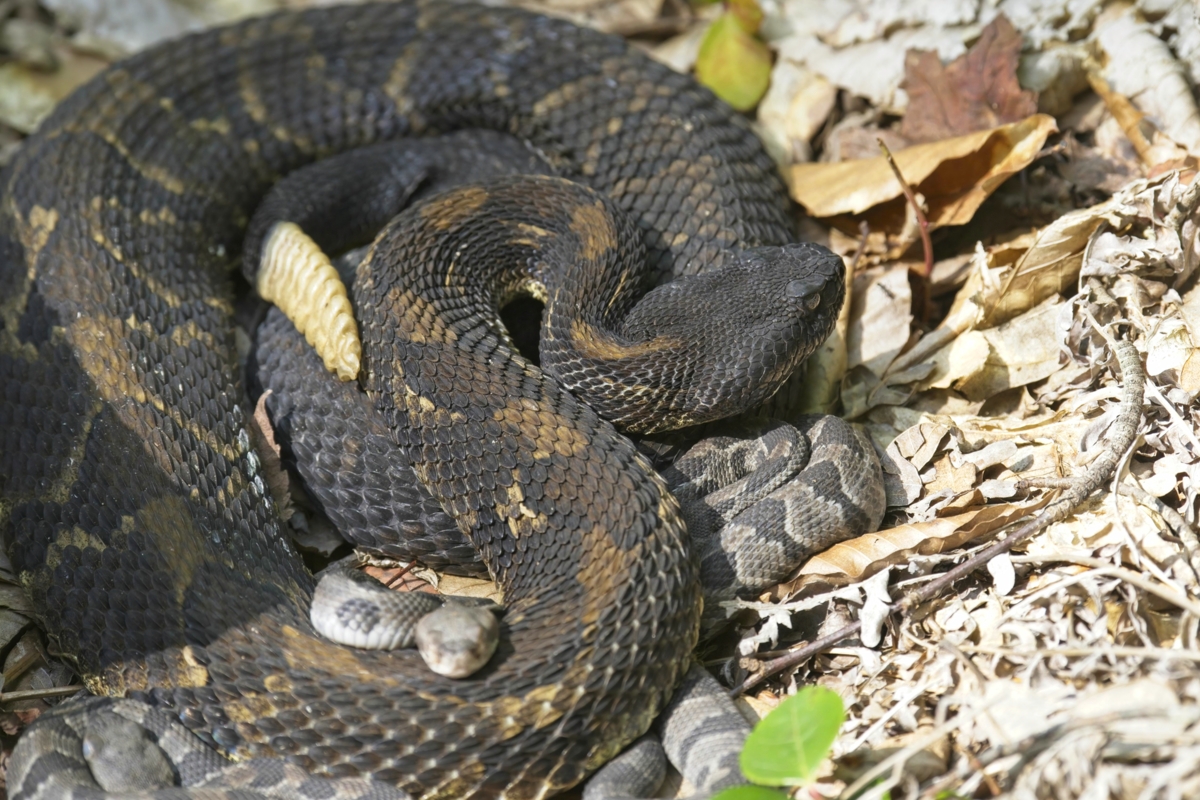
Robert, Thanks for the information, I think they are fascinating. Have no fear I wouldn't disturb them or disclose their location, I understand that there is a hunting season on rattlesnakes and you are allowed to catch/kill 1 per year. The Guy I met makes a portion of his livelihood guiding hunters and now Photographers to Elk and Snakes. These snakes were just born and there was at least 10 baby snakes and 3 adults that we could see. 2 were in the "orange" phase and the third was in the "black Phase". I didn't disturb them and they allowed me to get pretty close, from what I am told, it they are sunning themselves and you don't act like a predator, then they are calm. The black one only buzzed once so I backed off. According to the guide the biggest issue is Hawks and Owls finding the nest. Once the temp drops they will all enter the den and not come out till May/June. He has relocated may snakes that are in the road, or nuisance snakes. I have a few more to share. I will guess the snake was at least 6 feet long.
ILCE-1FE 200-600mm F5.6-6.3 G OSS lens600mmf/6.31/1250s5000 ISO0.0 EV
2
ILCE-1FE 200-600mm F5.6-6.3 G OSS lens600mmf/8.01/800s3200 ISO0.0 EV
3
ILCE-1FE 200-600mm F5.6-6.3 G OSS lens600mmf/8.01/400s2000 ISO0.0 EV
4
ILCE-1Sony FE 70-200mm F2.8 GM OSS lens95mmf/5.01/800s2500 ISO0.0 EV
5
ILCE-1Sony FE 70-200mm F2.8 GM OSS lens200mmf/2.81/800s80 ISO0.0 EV
amlsml wrote:
Robert, Thanks for the information, I think they are fascinating. Have no fear I wouldn't disturb them or disclose their location, I understand that there is a hunting season on rattlesnakes and you are allowed to catch/kill 1 per year. The Guy I met makes a portion of his livelihood guiding hunters and now Photographers to Elk and Snakes. These snakes were just born and there was at least 10 baby snakes and 3 adults that we could see. 2 were in the "orange" phase and the third was in the "black Phase". I didn't disturb them and they allowed me to get pretty close, from what I am told, it they are sunning themselves and you don't act like a predator, then they are calm. The black one only buzzed once so I backed off. According to the guide the biggest issue is Hawks and Owls finding the nest. Once the temp drops they will all enter the den and not come out till May/June. He has relocated may snakes that are in the road, or nuisance snakes. I have a few more to share. I will guess the snake was at least 6 feet long....Show more →
Thank me ?... lol
Thank you. As a boy, I used to catch snakes a lot. So I guess that is how it started with me.
These images are gorgeous! The colors are nice in that light.
I think your guide is knowledgeable and cares He or she is right about the hawks and owls. But that's ok. That's the food web.
I am still confused by one thing. I want to dig up some information and post a response later, to your post.
For now, I want to leave you with this: We used to have Timber Rattlesnakes in the very southern end of Maine. They're gone.
Snakes are poikilothermic. They must move to different locations in their environment in order to maintain a tolerable/comfortable body temperature. So, they love large rock piles, openings in rock/ledges facing south to southwest and cracks in ledges leading deep underground.
You make me work harder toward loading up and heading to AZ/NM or maybe the FL Pan Handle. Dr. Bruce Means is an authority on the Eastern Diamondback, he lives in the FL PanH and he's "up there" now (81 yoa). I have to meet him. Check out this fascinating video of perhaps his last expedition. At about 4:10 he reaches into a terrarium and pulls out his Kingsnake. And then you see him sitting on a log with a snake stick holding up an Eastern Diamondback. You don't just casually pick up an EDR. . And his sitting there proves that EDR's are not aggressive.. They are defensive. Big diff.
Eastern Kingsnakes are super-sought by collectors. If I know where one is I say nothing. They have wiped most of them from the Everglades. My Mother was visiting me in Florida and a large Kingsnake was crossing a dirt road. I stopped the van, jumped out and picked it up before it made it down into habitat. This snake was spectacular! It was most/all of 8 feet in length and almost as thick as my wrist. Yet, it did not bite. Eastern Kingsnakes won't.
Great photos and input from Robert! Snakes are so misunderstood and needlessly persecuted. As Robert said, I would keep the location under wraps. Again, great job on the photos.
Nice series! Always a treat to see herp photography here.
Great to see a bunch of healthy pups with mom. I recently had a litter of Arizona Black Rattlesnakes born. Been busy getting them to feed, hope to get some pics soon.
Thanks for posting these, made my day!
Great photos !!! I know almost nothing about snakes, except. that they scare the crap out of me. When I'm away from home I'm always nervous about coming across one. BS Kite thank you for the info !!
Excellent photos and an interesting discussion.
It would be nice to see more snake photos. There have been some good ones posted but it's pretty rare.
I don't see wild snakes often and they are hard to photograph well. I have a pet snake but that's too easy.
Thanks for posting these and I hope to see more.
Brown County SP in southern Indiana apparently has quite a few TR. I hope to snag a few photos the next time we are there. If I stumble across a nest, I would be delighted, but extra cautious of where I stepped. .
Two quick anecdotes.
Living in NE Indiana, most folks assume that venomous snakes are non-existent in the area. However, Timber and Massasauga are not unheard of around here.
Regarding the Timber, my dad, 60 years ago or so, along with his brothers and neighbor boys, pulled one from under their porch and shot it with their pellet guns. At the time, they only knew it was a snake. They had no idea it was a rattler. It had a small "nub" on its tail, so presumably hadn't shed very many times. He later looked it up and discovered that he had grabbed a timber rattler by the tail. lol. That was the only one he ever saw.
My granddad, my dad's dad, years before this, caught a rattler too. However, he kept it in a box for awhile. There's more to this story, but the most interesting part is that he came home from school one day to discover that the snake was gone.
When he questioned my great-grandmother about it, she said, "Yes, I know where it is! I killed it AND ITS 15 BABIES!!!". .
Magnificent creatures. Had an inadvertent close encounter years ago where I was briefly trapped by the snake's location. Fortunately, they are often rather docile.
Brown County SP in southern Indiana apparently has quite a few TR. I hope to snag a few photos the next time we are there. If I stumble across a nest, I would be delighted, but extra cautious of where I stepped. .
Two quick anecdotes.
Living in NE Indiana, most folks assume that venomous snakes are non-existent in the area. However, Timber and Massasauga are not unheard of around here.
Regarding the Timber, my dad, 60 years ago or so, along with his brothers and neighbor boys, pulled one from under their porch and shot it with their pellet guns. At the time, they only knew it was a snake. They had no idea it was a rattler. It had a small "nub" on its tail, so presumably hadn't shed very many times. He later looked it up and discovered that he had grabbed a timber rattler by the tail. lol. That was the only one he ever saw.
My granddad, my dad's dad, years before this, caught a rattler too. However, he kept it in a box for awhile. There's more to this story, but the most interesting part is that he came home from school one day to discover that the snake was gone.
When he questioned my great-grandmother about it, she said,
Great shots, and beautiful lighting/color!...Show more →
You should take the time to explain the humor in the following:
"Yes, I know where it is! I killed it AND ITS 15 BABIES!!!". .
Afterthought: No need to explain; I think I understand.
bs kite wrote:
You should take the time to explain the humor in the following:
"Yes, I know where it is! I killed it AND ITS 15 BABIES!!!". .
Afterthought: No need to explain; I think I understand.
Only humorous due to the bizarre circumstances. Not funny that they were killed. Sorry for confusion and for unintentionally taking anything away from the amazing photos of the OP.
shredder1656 wrote:
Only humorous due to the bizarre circumstances. Not funny that they were killed. Sorry for confusion and for unintentionally taking anything away from the amazing photos of the OP.
Yes, following my reaction, I looked back and began to see/understand the humor that could be in it. And I think it was the same humor you meant. So, thanks for explaining that.


 . And I watched a young biologist reach up into the framework of a railroad car, grasp the tail section of a Canebrake and slowly pull it out and onto the ground.... all the time this poisonous snake is resisting but did not strike.
 He or she is right about the hawks and owls. But that's ok. That's the food web.