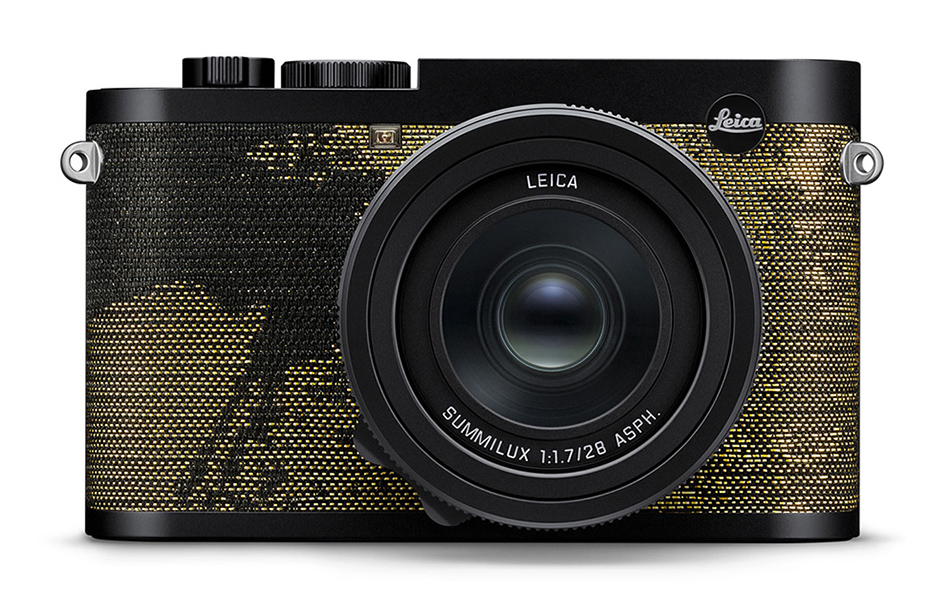
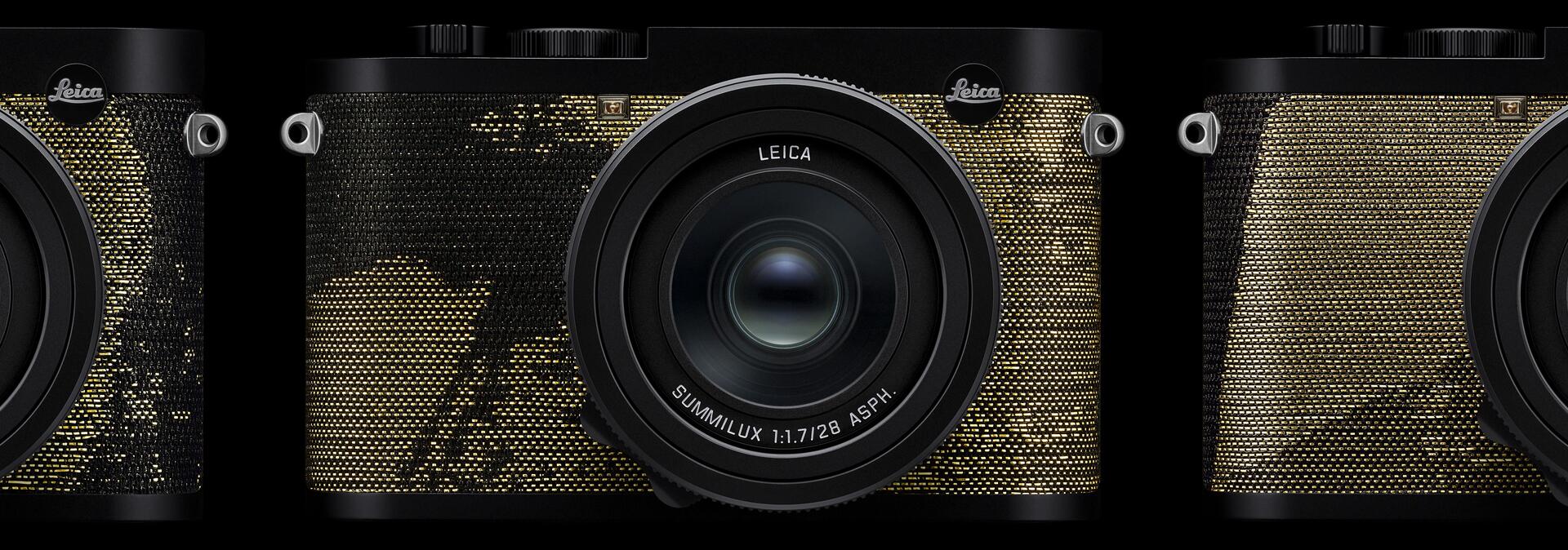
The limited, special edition Leica Q2 “Dawn” by Seal pays tribute to the soulful lyrics of the artist’s songs. The special edition camera set celebrates the human connection in the art of making a photograph, shining light on the subjects of a frame – while the artist visualizes new perspectives behind the lens. The exquisite, Japanese woven fabric covering of the Leica Q2 “Dawn” by Seal, is crafted to ensure each of the 500 cameras in the edition are distinctly unique.
BrandonSi wrote:
hmm.. I'm waiting this out until the Q3.. which, by the introduction of this, hopefully means it's not too far out.
That being said, I love special edition Q's.. but I don't really get this design.
More info about the design choice:
Leica Q2 “Dawn” by Seal – each signature camera is a one of a kind.
It is the elegant cover fabric that makes each Q2 “Dawn” by Seal unique. The particular mood during morning twilight, the interplay of dark and light, is captured in the mysterious, iridescent material. The Japanese term “komorebi” inspired the fabric, describing the transparency and light play, which occurs when sunbeams fall through the tree canopy. Time and time again, the impression created by the Q2 “Dawn” by Seal's shimmering cover surprises and lends the camera its incomparable character. Limited to 500 units, each special edition camera is a one of a kind.
I'm surprised it's only $200 more than the standard Q2. That and the pricing on the Summilux 35 redesign, to me, are a clear indications Leica's marketing department has been taken over by socialists.
Personally, I think the 007-themed Q2 with the green leather has been the best looking of the Q2 SEs, but this one isn't bad. It's certainly prettier than some of the truly awful X2 SEs, like the paint-splattered Gagosian or the tri-colored Paul Smith editions.
freaklikeme wrote:
I'm surprised it's only $200 more than the standard Q2. That and the pricing on the Summilux 35 redesign, to me, are a clear indications Leica's marketing department has been taken over by socialists.
Personally, I think the 007-themed Q2 with the green leather has been the best looking of the Q2 SEs, but this one isn't bad. It's certainly prettier than some of the truly awful X2 SEs, like the paint-splattered Gagosian or the tri-colored Paul Smith editions.
freaklikeme wrote:
Right, but that's more impactful to the individual when deciding where to purchase a new camera, not in how MSRP is set for each currency.
Depends on when orders are placed. The price is set at the factory in euros, then they calculate MSRP for each market based on the rate at time of order for that market.
Desmolicious wrote:
Depends on when orders are placed. The price is set at the factory in euros, then they calculate MSRP for each market based on the rate at time of order for that market.
Unless someone has a better explanation.
That would be true if you only ordered from the country of manufacture and they only advertised in Euro. Leica has a retail presence in the US, along with all the other retailers they've deemed worthy of carrying their products. If it worked the way you're describing, the retail prices of their goods in the US would fluctuate with the value of the dollar, but they don't.
More impactful is the cost to import the products, which you'll see importers use as an excuse to raise prices, but rarely results in a rollback when those costs decrease. Even there, though, there's still no 1:1 relationship between foreign pricing and US pricing once import fees are added. In other words, the pre-VAT price of ordering a "Dawn" Q2 from Leica Frankfurt is slightly less, including US import fees, than purchasing the same camera from Leica SFO, thanks to the current strength of the dollar and the fact that you avoid CA sales tax. Ultimately, local pricing should be close, but even that can vary based on many factors including size of the market, market penetration, cost of marketing, and brand recognition.
freaklikeme wrote:
That would be true if you only ordered from the country of manufacture and they only advertised in Euro. Leica has a retail presence in the US, along with all the other retailers they've deemed worthy of carrying their products. If it worked the way you're describing, the retail prices of their goods in the US would fluctuate with the value of the dollar, but they don't.
.
That's not the case. Leica USA places an order for the year. Price is set at that point depending on the exchange rate. Date of delivery does not determine price as the cameras are being made throughout the year.
As the cameras are made in Germany (or at least that is the final point of departure) everything is based on the Euro and its exchange rate. Now Leica of course can arbitrarily set whatever price they want, but taking advantage of the current exchange rate allows them to make a healthy profit and also benefit the consumer.
The new FLE is basically the same as the old FLE, but selling it at the same price or less incentivizes many to purchase it. Same for the Q2.
Desmolicious wrote:
That's not the case. Leica USA places an order for the year. Price is set at that point depending on the exchange rate. Date of delivery does not determine price as the cameras are being made throughout the year.
As the cameras are made in Germany (or at least that is the final point of departure) everything is based on the Euro and its exchange rate. Now Leica of course can arbitrarily set whatever price they want, but taking advantage of the current exchange rate allows them to make a healthy profit and also benefit the consumer.
The new FLE is basically the same as the old FLE, but selling it at the same price or less incentivizes many to purchase it. Same for the Q2. ...Show more →
Okay. Before I changed professions, I worked in global sales and marketing for a manufacturer of communications equipment, but you appear to know best.
This answers the question I raised in another thread whether Seal still has a relationship with Leica after seemingly going silent for a number of years...
As for pricing... This isn't like oil or some other commodity that constantly fluctuates. Stock that was bought at the older, less favorable exchange rates is likely still in inventory or sitting on store shelves. And might for some time. So I can see why existing products have not dropped in price, though now they're considerably less to buy from the EU. The new 35 FLE is lower in price, in the US, than the previous version, which indicates that Leica USA couldn't entirely ignore the current exchange rate. But it's still less to buy it from the EU if you're US based at about $4700 pre-VAT. Had Leica USA kept it at the same price as the previous version, there would be significant incentive for potential US buyers to import from the EU. They've made the price difference 'only' about $500 higher in the US, which might not be enough of a savings for some to offset the additional hassles of buying from overseas (such as dealing with returns or exchanges, if necessary).
freaklikeme wrote:
Okay. Before I changed professions, I worked in global sales and marketing for a manufacturer of communications equipment, but you appear to know best.
And I worked as an FX options trader.
Thing is, unless someone in the know at Leica tells us, we are all just guessing. But the only logical reason that new 'improved' products come to market, in a time of crazy high inflation, at prices very similar or less than the outgoing models is because of changes in currency exchange rates.
rscheffler wrote:
And the removal of Trump's tariff.
I guess they’re just waiting to clear the inventory of the discontinued Portugal lenses before reducing the prices on everything then? It’s strange to me that Leica and Leica dealers are ok with the old 35 Lux FLE sitting there for sale at $600 higher than the new one — doesn’t matter if it’s because of expired tariffs, strong dollar, or if the new one is less expensive to make. One implication of this pricing: who in their right mind would buy a new 50 Lux right now when we know the new close focus version is imminent and that it will probably cost less? Who would buy any new M lens from the US right now considering that Leica could drop all the prices at any moment? Even the new Q3 could cost less than the Q2 does now.