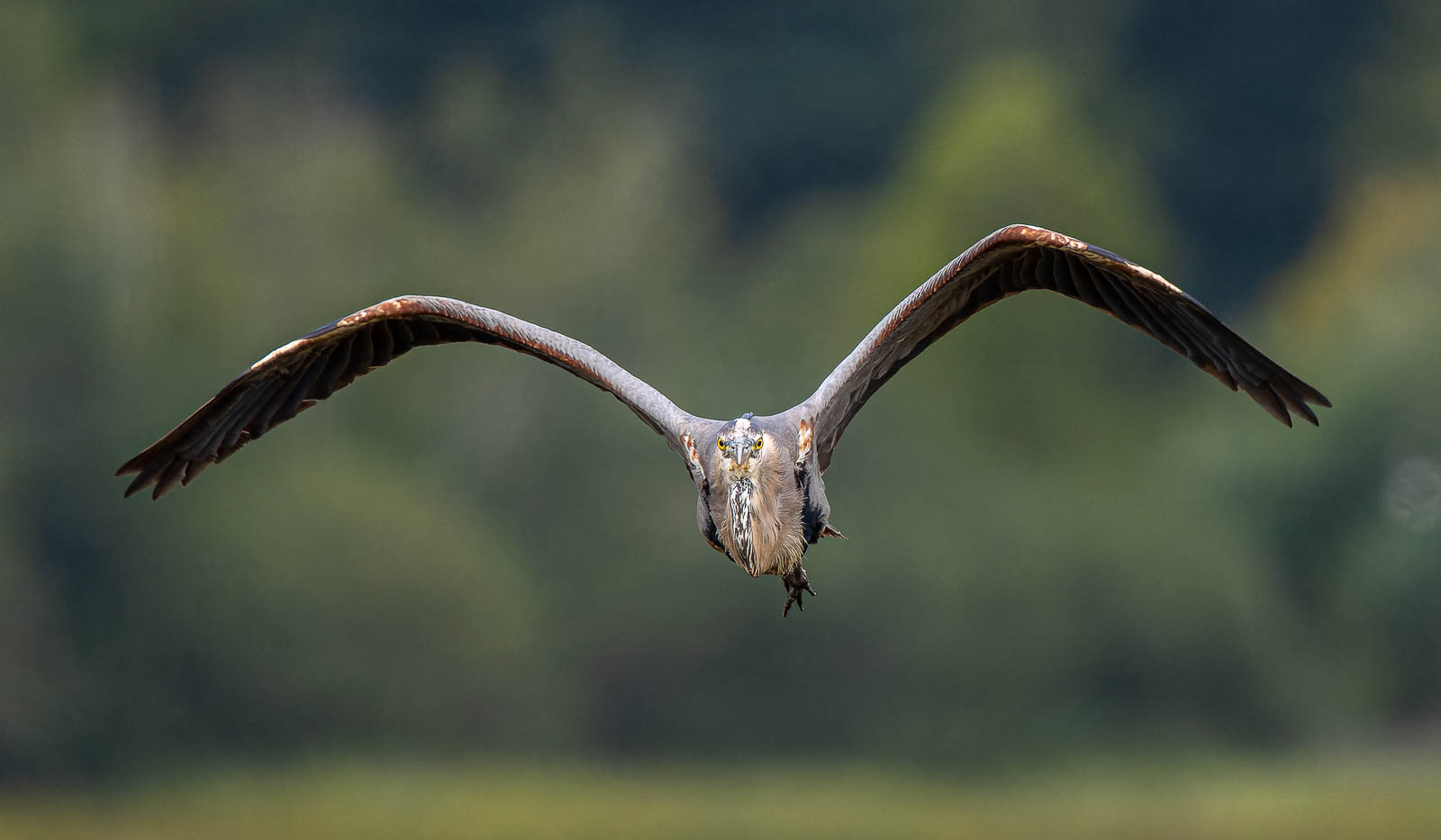
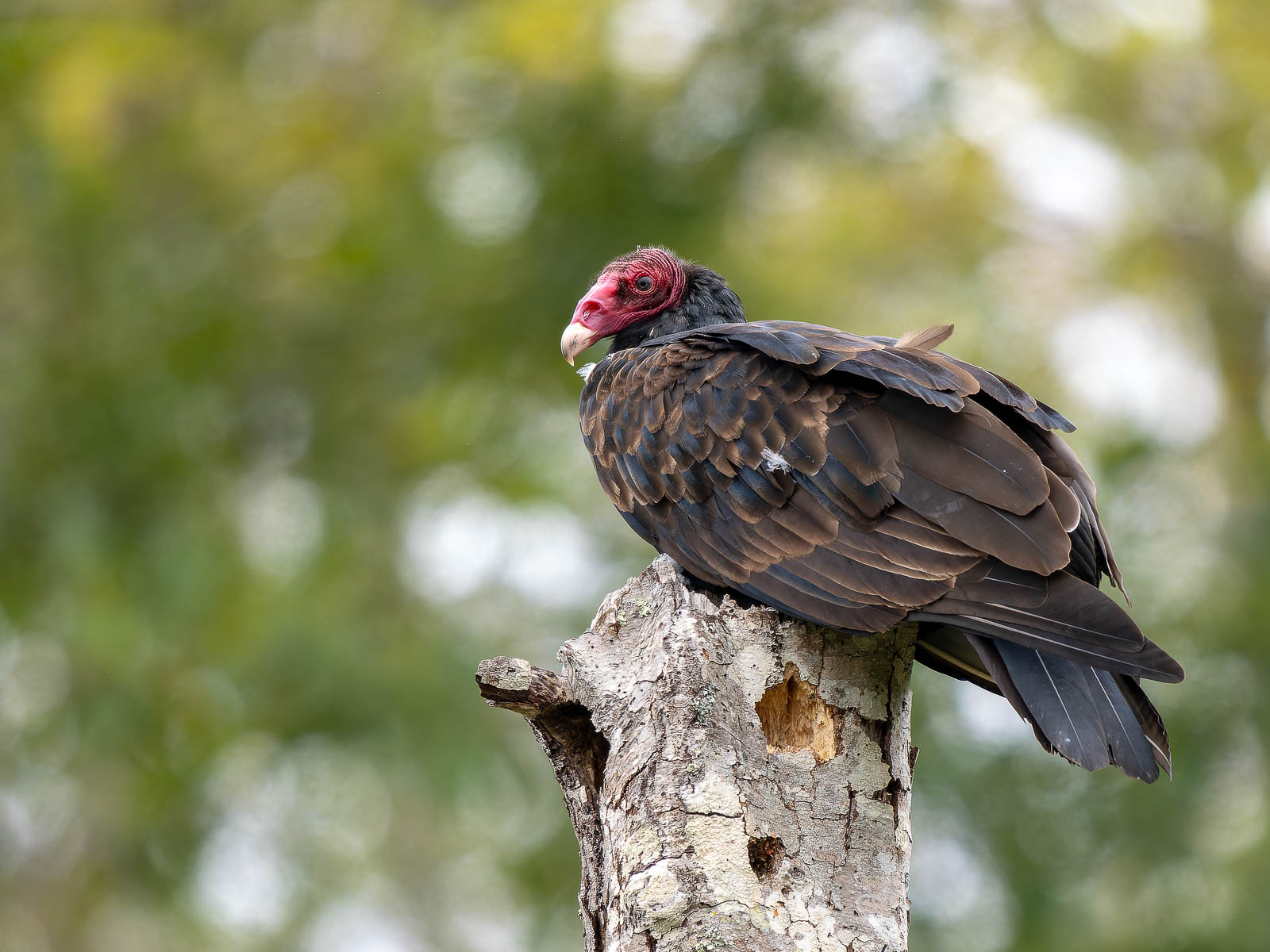
This shot taken with both the internal TC and an external 1.4x TC is a little soft on the bird's head, but I think it was due to the E-M1X slightly missing focus (the branch below the bird is much sharper). I'm hoping the OM-1 will increase the keeper rate for shots like this.
Received my 150-400 last night, took it out this morning for it's first foray with me. I thought the 300 PRO was fabulous, but what a fine piece of glass this is!
One of my primary locations for photography, Sweetwater Wetlands, in Tucson, AZ is being drained for a prescribed burn in the next month. This annual event clears out the reeds and cattails that right now are overrunning the place. The plus side of the low water levels is the fish are concentrated into the little water that remains, which attracts a large number (for Tucson) of herons and egrets. And the shy raccoons venture out early as well to catch easy prey. Here are a few from this morning with the 150-400 with and without the 1.25 converter activated.
I continue to be impressed by the images in this thread. Nice work folks! While I historically have concentrated on landscape rather than wildlife photography, the work displayed in this thread has motivated me to try some wildlife and surfing shots.
Long story short, an opportunity presented itself and I'm expecting a 150-400 to show up at my doorstep this afternoon.
robert_in_ca wrote:
Wait, are you getting back into M43?
It would seem so. Do you still have your m4/3 gear?
It's kind of funny, but one of the things that nudged me back towards the smaller format was deciding to go back to stock photography again... one of the sites (I can't call them "agencies" any more...) doesn't accept files as large as my A7R IV produces, and even if I downsize the files they are often rejected for too much noise or artifacts, while the images I made with Olympus and Panasonic pass inspection every time, even when heavily cropped or shot at high ISOs. Not that it means much in the grand scheme of things, but it's one tangible example of how bigger isn't always better (but I also have my Fuji GFX for times when bigger IS better... )
I watched an evaluator compare the 100-400 against the 150-450 on an OM-1. I was struck by the difference in size. To me, the 150-400 defeats the purpose of the m4/3 line. The OM-1/150-400 did NOT look like a compact, lightweight rig to me and the evaluator made the same point.
The evaluator compared the shots side by side on a large screen. The 150-400 shots were better. Then, the evaluator took essentially the same shots with both lenses and shuffled them. After the shuffle he tried to determine which lens was used for the shot. He was right 75% of the time.
The point that the evaluator was making is that the 150-400 lens is better than the 100-400 BUT NOT BY MUCH.
My only response to the 150-400 vs. 100-400 controversy is that for ME the $6000 difference simply isn't there for ME. I virtually always shoot in good light. 2nd the lowered size to me was one reason I went with an OM-1 sending my R5 packing. The difference in shear sharpness with my copy vs. what I see coming out of a 150-400 isn't even twice the difference. To ME maybe 25% which I can easily overcome in post processing. To some it's the end all be all must have. Everyone needs to assess their needs and what is and is not meeting them. For ME the 100-400 if anything has exceeded what I expected out of it. It's sharp across it's entire range. Can't say that for another zoom I've ever used except perhaps the $3000 Canon RF100-500.
Tom Reynolds wrote:
I watched an evaluator compare the 100-400 against the 150-450 on an OM-1. I was struck by the difference in size. To me, the 150-400 defeats the purpose of the m4/3 line. The OM-1/150-400 did NOT look like a compact, lightweight rig to me and the evaluator made the same point.
The evaluator compared the shots side by side on a large screen. The 150-400 shots were better. Then, the evaluator took essentially the same shots with both lenses and shuffled them. After the shuffle he tried to determine which lens was used for the shot. He was right 75% of the time.
The point that the evaluator was making is that the 150-400 lens is better than the 100-400 BUT NOT BY MUCH.
For m4/3 users, it's a good problem to have - too much choice. The 150-400 is superb, but the Olympus and Panasonic 100-400 zooms are both also very sharp, so there's something to suit everyone's needs. I'm probably going to pick up another Panasonic 100-400 to take when I'm trying to travel light with my medium format gear (although I have a hunch we might see an updated 100-400 zoom and G9 replacement from Panasonic soon...)
molson wrote:
For m4/3 users, it's a good problem to have - too much choice. The 150-400 is superb, but the Olympus and Panasonic 100-400 zooms are both also very sharp, so there's something to suit everyone's needs. I'm probably going to pick up another Panasonic 100-400 to take when I'm trying to travel light with my medium format gear (although I have a hunch we might see an updated 100-400 zoom and G9 replacement from Panasonic soon...)
That would be amazing if Panasonic did update the 100-400 and bring out a new G9. The latter I've heard many speculate but I don't think I've heard anything about the former. What makes you think that? Besides that it seems like a good idea to have a zoom with a functioning zoom ring
novalaker wrote:
That would be amazing if Panasonic did update the 100-400 and bring out a new G9. The latter I've heard many speculate but I don't think I've heard anything about the former. What makes you think that? Besides that it seems like a good idea to have a zoom with a functioning zoom ring
The newer versions of the Panasonic 100-400 have zoom rings that work just fine - it's only older lenses that had issues.
It's just idle speculation (or wishful thinking) on my part, but both the G9 and the Panasonic Leica DG 100-400 are both getting on in years; the G9 is certainly due for an update, and there has been some speculation that Panasonic may break down and use PDAF in a future camera, and that would be a perfect fit for the G9's target market. Likewise, the PL 100-400 could use a refresh, and maybe Panasonic will be emboldened by the success OM Systems is having with their 150-400 f4.5 zoom; heck, I'd be happy with an internal-zooming 100-400 with a constant f5.6 aperture if they could still keep it close to the overall size and weight of the current lens.
To me, the 150-400 defeats the purpose of the m4/3 line.
---to me, and absolutely all of my compatriots who see my images captured with this lens, the 150-400 exemplifies the purpose of the m4/3 line rather well which is, of course, to capture images with the highest possible IQ and not carry around in my purse.
The OM-1/150-400 did NOT look like a compact, lightweight rig to me
---no kidding?!? I'd guess Olympus, and now OMDS, would also agree that the purpose of their cameras is to capture images and in that they offer an great assortment of options (bodies/lenses) to do so. funny not.
The evaluator compared the shots side by side on a large screen. The 150-400 shots were better. Then, the evaluator took essentially the same shots with both lenses and shuffled them. After the shuffle he tried to determine which lens was used for the shot. He was right 75% of the time.
---"on screen" on you-tube. uuhhmmm...being able to successfully decipher which images came from one lens or the other, both of the same focal length, with a 75% accuracy is absolutely huge for the IQ differences of said lenses.
The point that the evaluator was making is that the 150-400 lens is better than the 100-400 BUT NOT BY MUCH.
---if the "evaluator" you are talking about is Mike Lane...one contention to bare in mind...Mike has stated for years that "he" can not see the difference from ISO 200 (base) to about ISO 1600. Therefore, "he" sets/uses his minimum ISO to ISO 1600.
*I will argue that a good number of people can and do appreciate notable IQ differences between base ISO and ISO 1600...but...to each his own.
However, if Mike is using ISO 1600 for static images then I'd surmise, like many of us, he is using much higher ISO's for BIF.
Therefor, Mike is comparing images from each lens captured at ISO 1600 and much higher ISO for BIFs. the IQ hit from using ISO 1600 and higher will make the images seem much more similar in (poorer) IQ.
So...back to your "He was right 75% of the time"...considering the IQ hit from using higher ISOs is absolutely muddying the waters...a super impressive statement in favor for the superior IQ afforded by the vastly more; expensive, bigger, heavier lens.
and, finally, if any person cannot see/capture any IQ differences between a $ 45 000 bird/wildlife rig and a $500 bird/wildlife rig...then all of those people surely ought to be using the $500 rig. what they ought not to be doing is stating to all that there is no, or very little, difference between the two rigs.