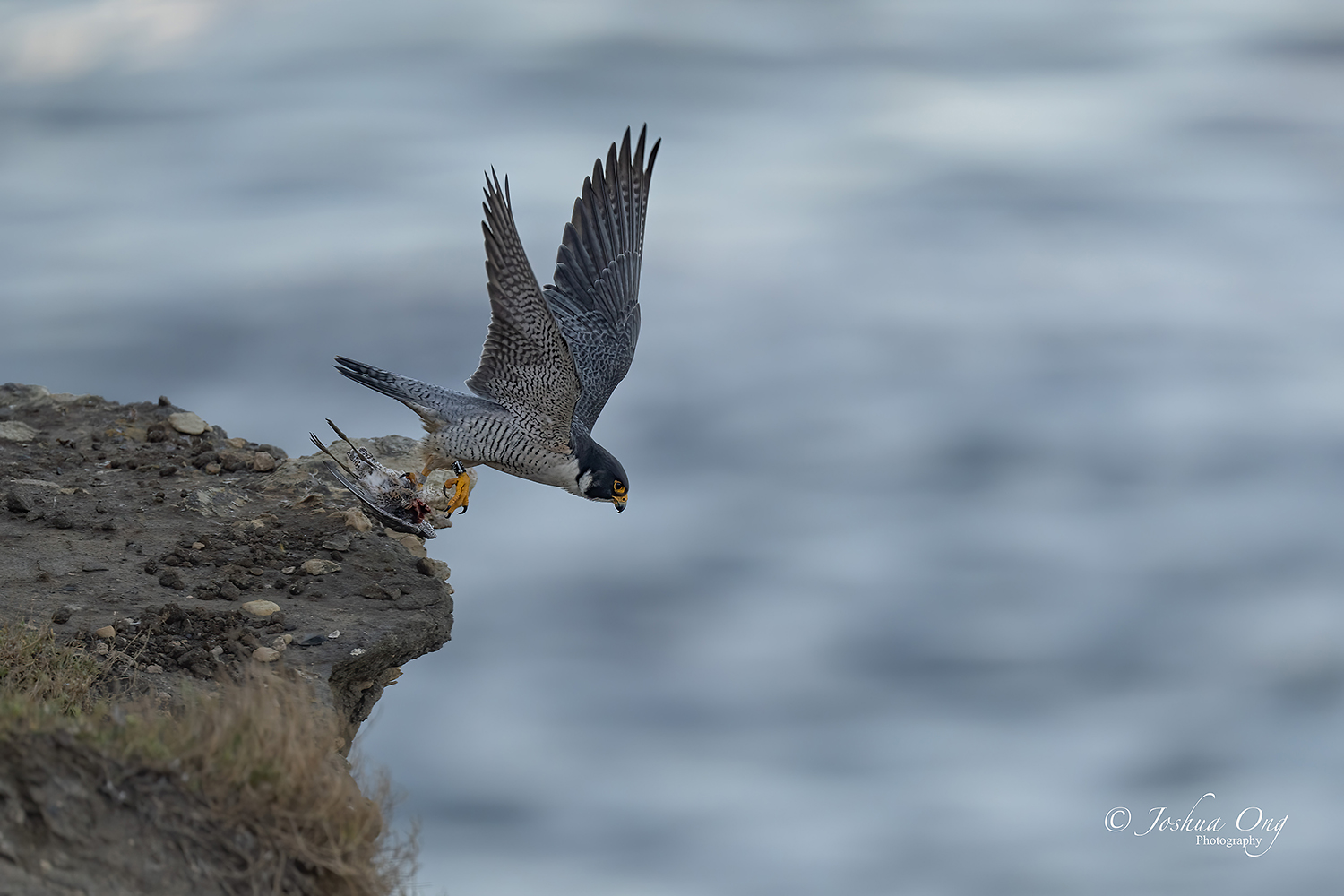
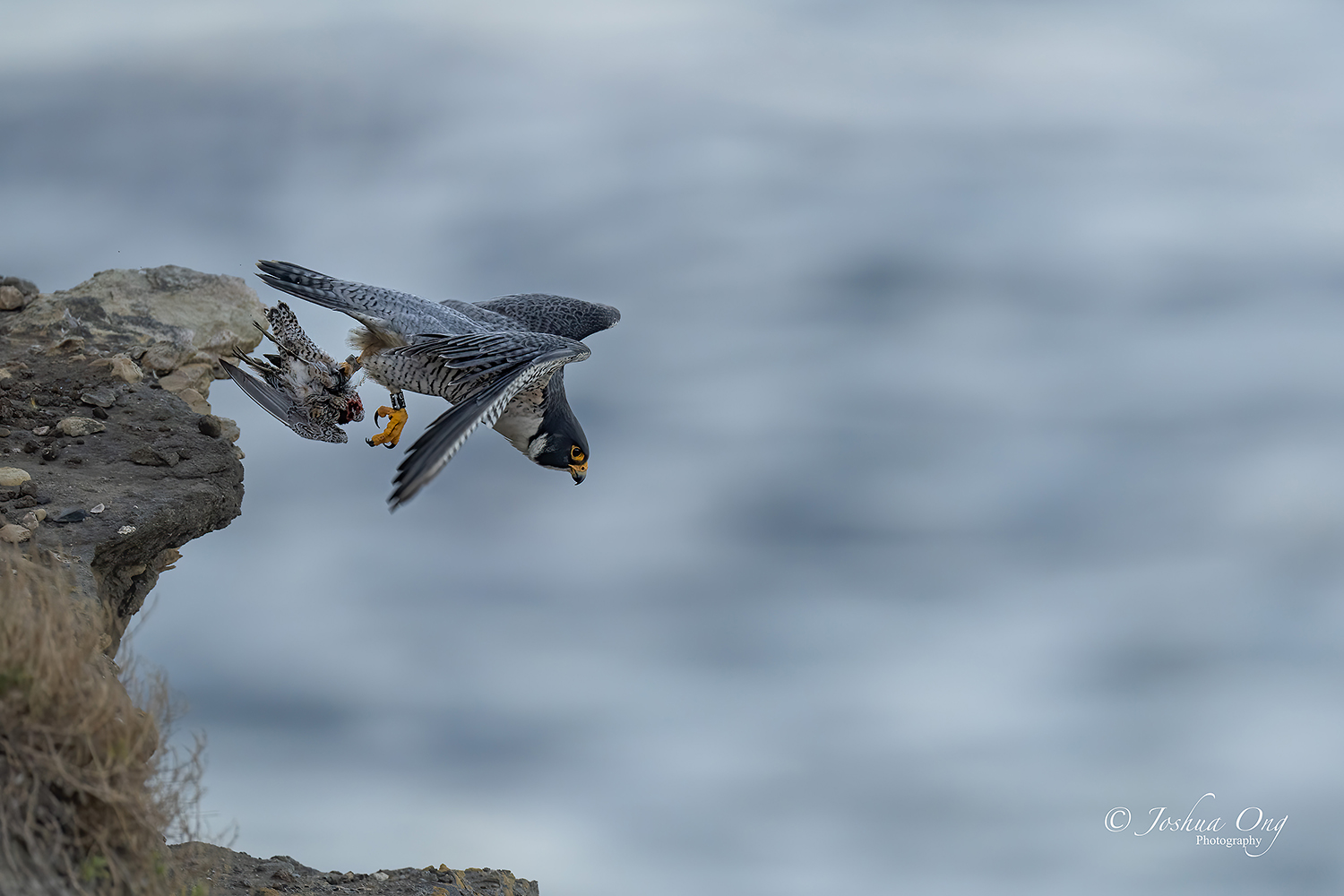
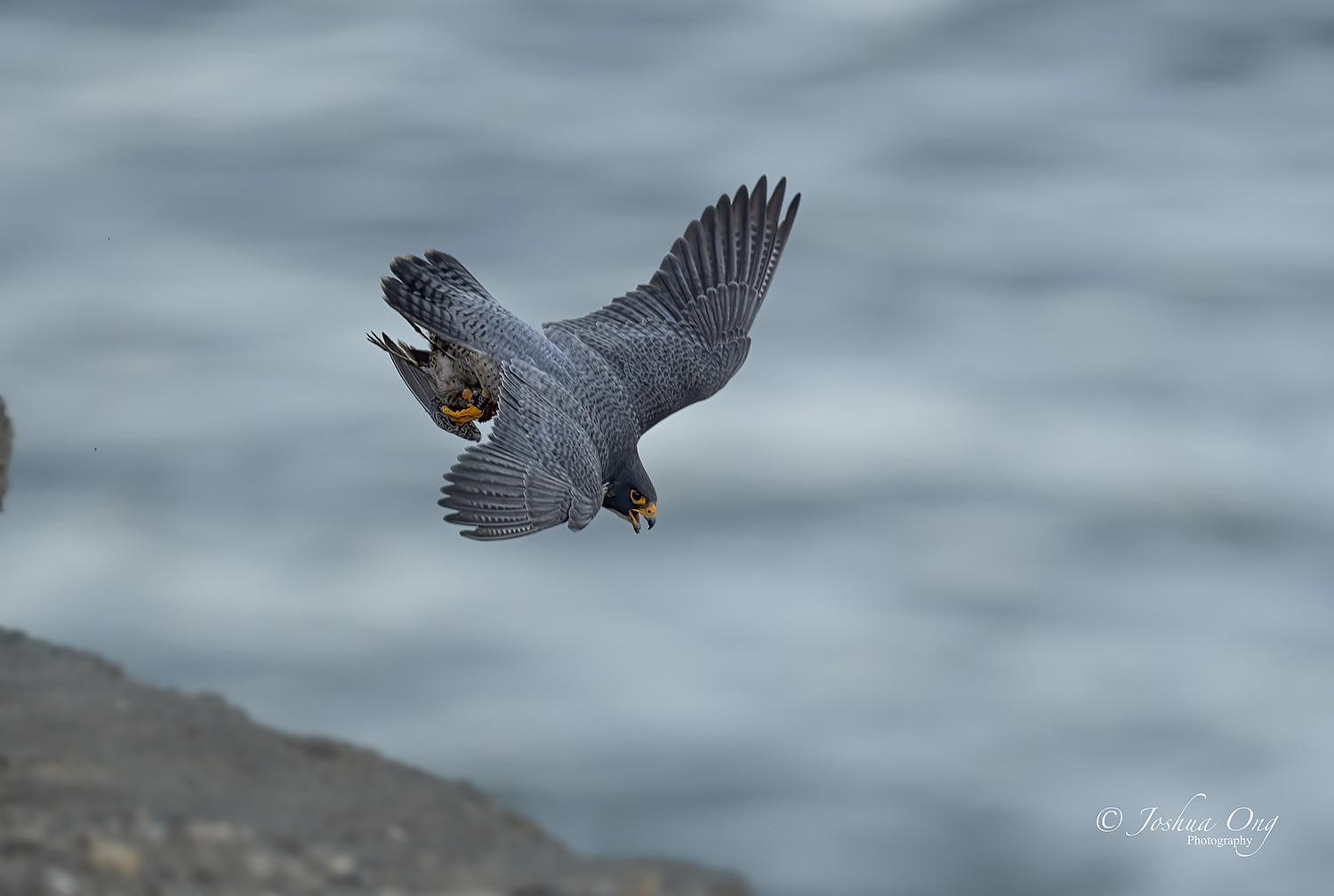
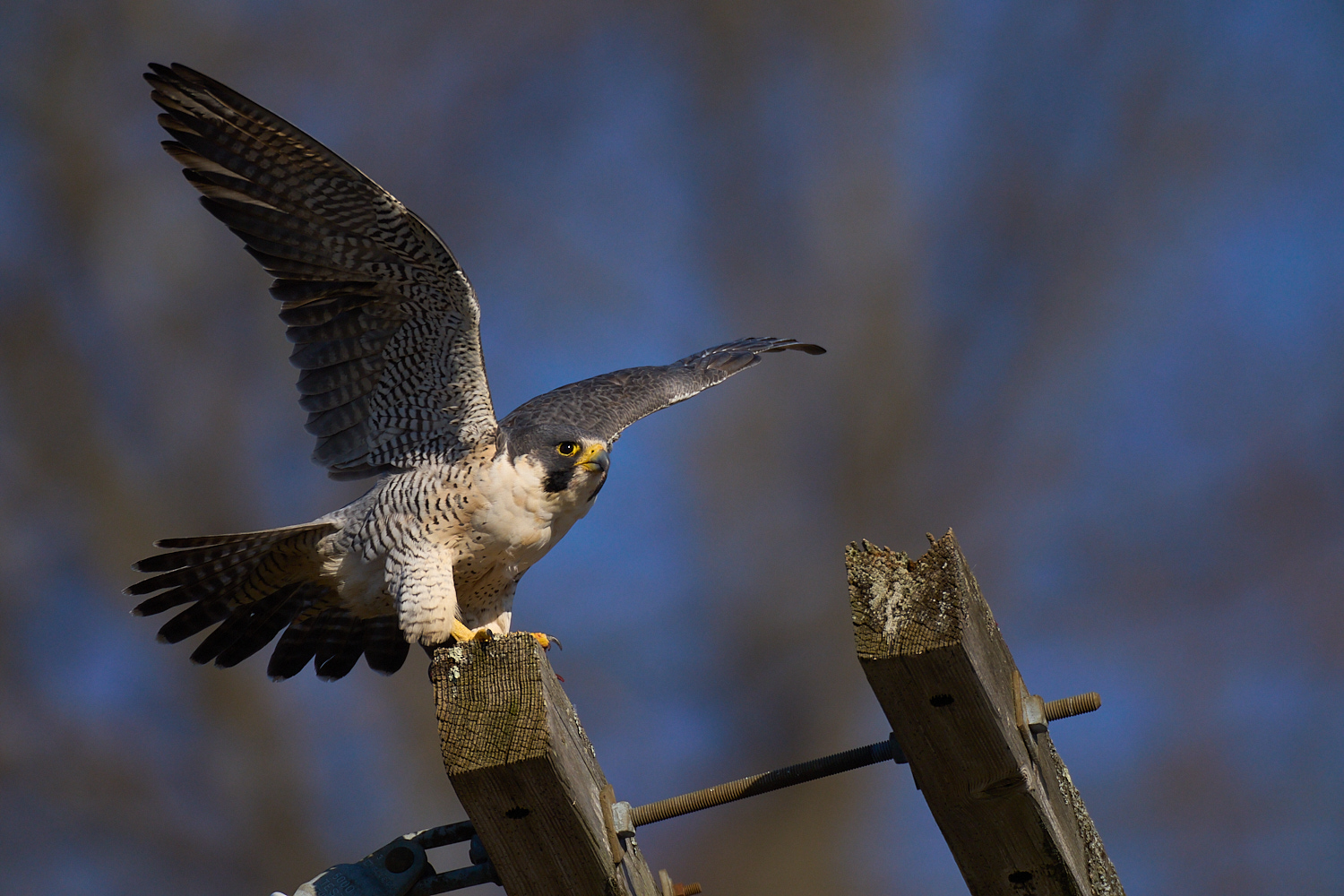
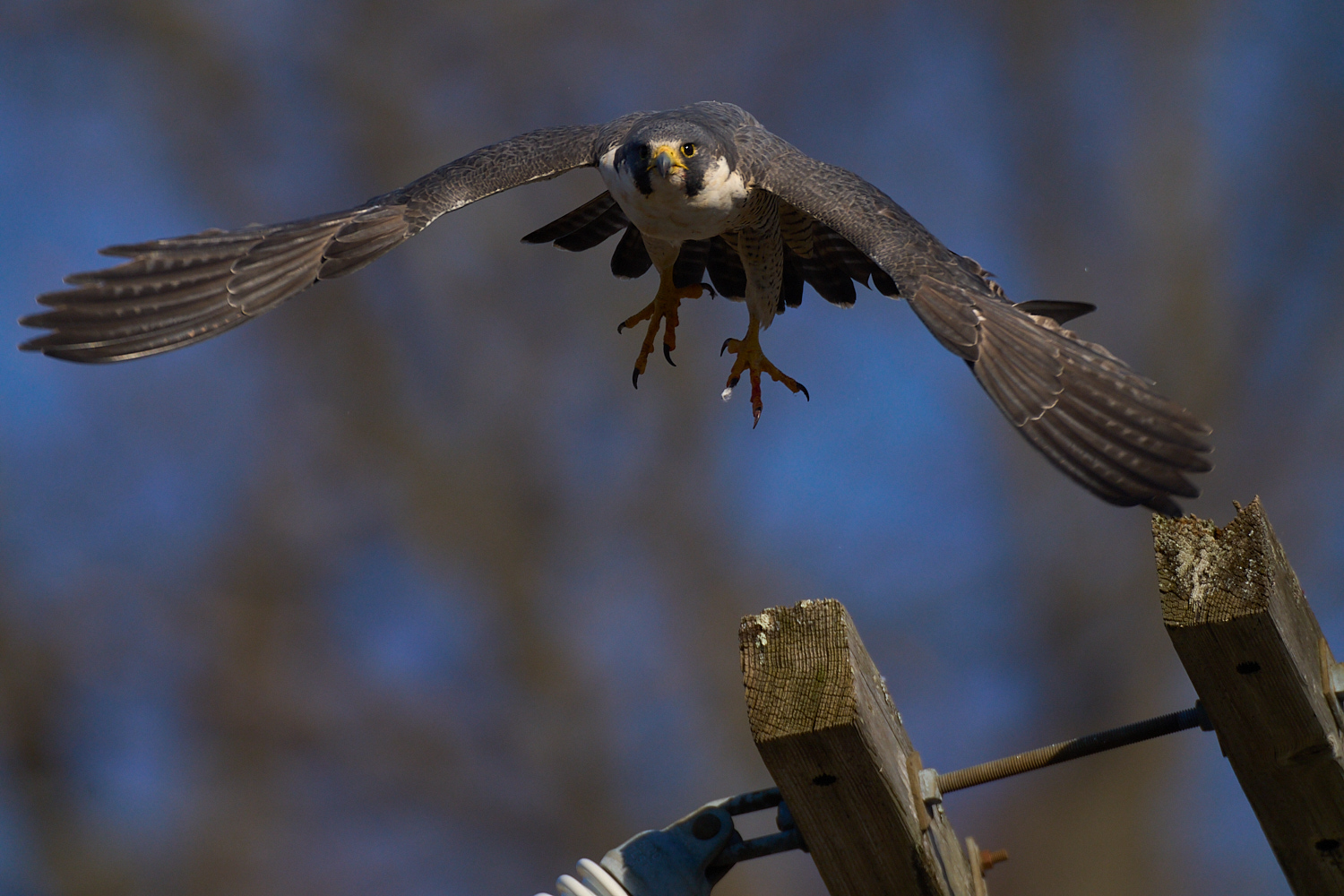
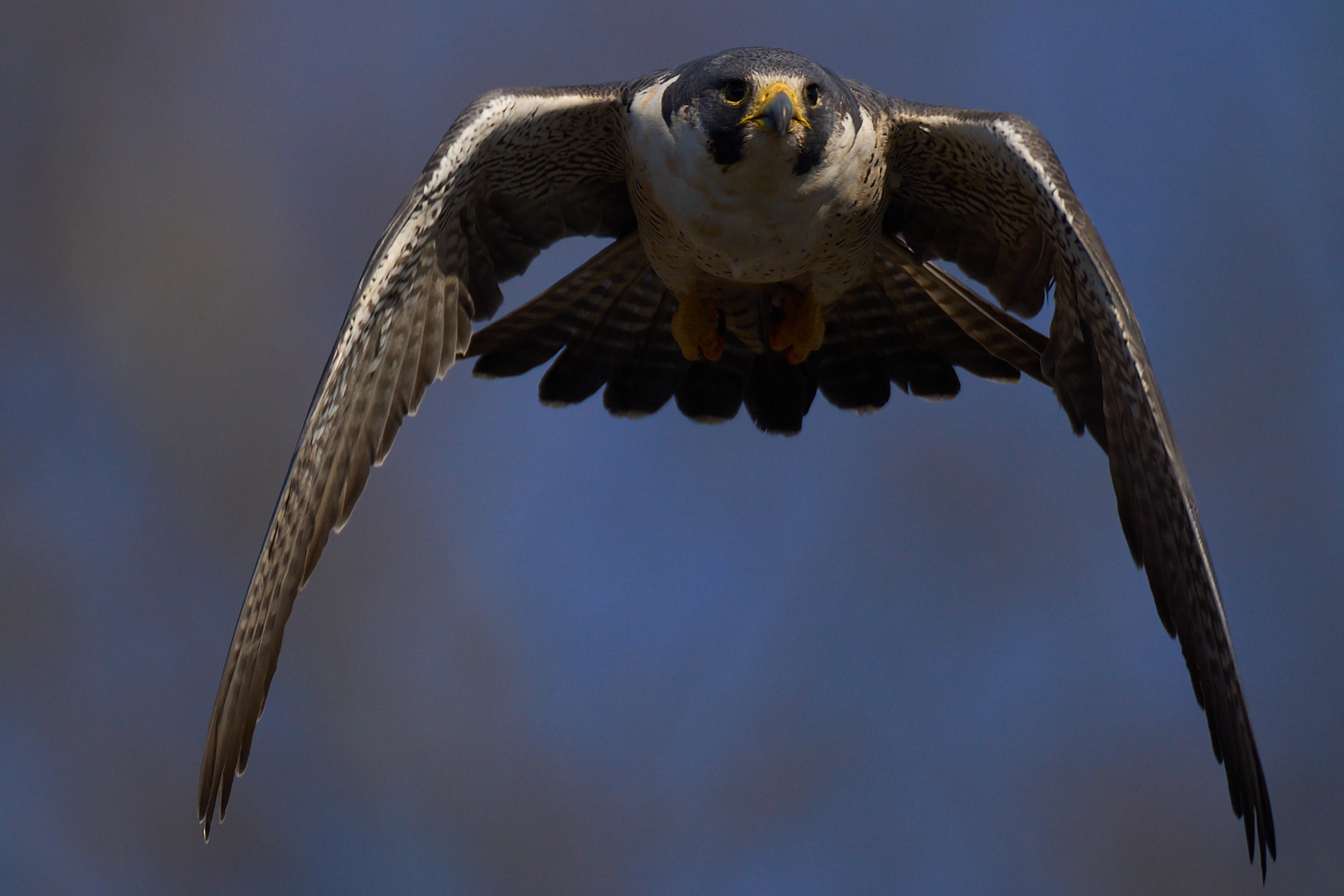
A short sequence of a male peregrine falcon that just killed a prey. It stopped on the ledge for a brief moment and it took off, carrying the prey towards the nest somewhere under the ledge I was standing. The couple is taking turn brooding a clutch of eggs now.
wordfool wrote:
Currently my lower light photos are all wildlife in shady, wooded areas using the 100-400 -- mainly birds, so I have to try and keep the shutter speed as high as possible. For example, I'll often drop the SS down to 1/400 or less (at f/5.6) just to keep the ISO under 10000, but much prefer a SS over 1/640 for birds and even that is often too slow.
So I just went out and spotted a Kestrel. The sun has already set; terrible light.
Settings were 640 SS, F6.3, ISO 12800, 600mm (200-600 G).
I uploaded the RAWs to Dropbox. The "preview" in the Dropbox-Folder doesn't seem to work properly, it looks worse than it actually is.
There definitely is a lot of noise, but I managed to get an acceptable picture by running it through Topaz Labs Denoise AI. The AF worked very good, I shot a series of over 200 pictures under these light conditions and it barely dropped focus. However, it never aquired Bird-Eye-AF (I was far away though).
Not sure if this is what you're looking for, but if I go out again I will post some more.
First chance to shoot the a1, and spent the morning with my son photographing wild Burrowing Owls at a park which has the largest population in the State. Had two quick chances to try BIF, but I wasn’t fast enough or prepared as they were so quick and close. The one series I was able to put the bird in frame the a1 did incredible tracking and focusing. So the subject wasn’t demanding on the gear and the lighting was not great, but regardless the Bird EAF was excellent and the shots were sharp and beautiful. Many thanks to Arbitrage, AGeoJO and the many others for tips and tricks for setting up the gear.
A1 with 200-600, still shots all 1/500 @f8, ISO160-3200, flying shot 1/2000 f7.1 ISO3200.
sold my 85GM since i got the 135GM, and bought the Samyang 75 1.8 for 240 bucks. just a simple test around the house, a little Marc-Andre figurine, since i wont get to shoot NHL hockey again until playoffs.
Yanikku wrote:
So I just went out and spotted a Kestrel. The sun has already set; terrible light.
Settings were 640 SS, F6.3, ISO 12800, 600mm (200-600 G).
I uploaded the RAWs to Dropbox. The "preview" in the Dropbox-Folder doesn't seem to work properly, it looks worse than it actually is.
There definitely is a lot of noise, but I managed to get an acceptable picture by running it through Topaz Labs Denoise AI. The AF worked very good, I shot a series of over 200 pictures under these light conditions and it barely dropped focus. However, it never aquired Bird-Eye-AF (I was far away though).
Not sure if this is what you're looking for, but if I go out again I will post some more.
Thanks for those. I don't have similar scenes to compare at that ISO, but the few 12,800 shots I do still have (mainly mushroom macros), together with a handful of ISO 10,000 bird photos, do suggest the A9 is significantly better at those ISOs than the A1, which is not a huge surprise.
I played around with your examples in DeNoise and TBH could not get anything I'd consider useable from them. The noise just makes any detail unrecoverable. This tells me that I probably wouldn't want to go above 6400 with the A1, whereas I've had a plenty of 10,000 shots from my A9 that I could crop and DeNoise to very nice effect.
Makes me wish Sony had gone with a resolution somewhere in the middle, like 36MP, rather than 50MP. The noise vs resolution is just one more compromise of a "do it all" camera -- High-ish resolution with high-ish noise
wordfool wrote:
Thanks for those. I don't have similar scenes to compare at that ISO, but the few 12,800 shots I do still have (mainly mushroom macros), together with a handful of ISO 10,000 bird photos, do suggest the A9 is significantly better at those ISOs than the A1, which is not a huge surprise.
I played around with your examples in DeNoise and TBH could not get anything I'd consider useable from them. The noise just makes any detail unrecoverable. This tells me that I probably wouldn't want to go above 6400 with the A1, whereas I've had a plenty of 10,000 shots from my A9 that I could crop and DeNoise to very nice effect. ...Show more →
The physics of twice the pixels means only half the photons per pixel. At very low ISOs this is practically impossible to compensate as read noise is the main source of noise, twice the total noise per image. For lower ISOs, the increasing photon noise overwhelms the read noise and therefor diminishes the relative noise. So at lower ISOs (higher photon counts) there is less and less difference in the noise between low and high resolution cameras. Some specialized cameras (cooled, non-bayer) can combine the pixels before reading them, deliberately giving up resolution in order to reduce the read noise.
Makes me wish Sony had gone with a resolution somewhere in the middle, like 36MP, rather than 50MP. The noise vs resolution is just one more compromise of a "do it all" camera -- High-ish resolution with high-ish noise
At its price point the A1 would have been a much worse deal for "normal" birding. I would not have sprung the cash.
Excellent sequence ! You get some great angles .
I can't wait to get to the cliffs again and watch them, get some top view shots .
For now I make do with the local ones around the churches and old mills
A short sequence of a male peregrine falcon that just killed a prey. It stopped on the ledge for a brief moment and it took off, carrying the prey towards the nest somewhere under the ledge I was standing. The couple is taking turn brooding a clutch of eggs now.
I'm going to say that I can actually see a difference in detail in A1 vs A9 images.
I'm desperately trying to save our business from upgrading 3 A9 bodies to A1's and it's difficult given the clear (to me, perhaps I've got rose coloured glasses) bump in detail and all the other improved functionality.
Am I seeing things or do the A1 files look noticeably better than the already spectacular A9?
Bob_S wrote:
I'm going to say that I can actually see a difference in detail in A1 vs A9 images.
I'm desperately trying to save our business from upgrading 3 A9 bodies to A1's and it's difficult given the clear (to me, perhaps I've got rose coloured glasses) bump in detail and all the other improved functionality.
Am I seeing things or do the A1 files look noticeably better than the already spectacular A9?
They are better only iff you crop the images. Which is almost always for birds in flight. What business are you in that you would frequently crop, if I may ask?
Daran wrote:
The physics of twice the pixels means only half the photons per pixel. At very low ISOs this is practically impossible to compensate as read noise is the main source of noise, twice the total noise per image. For lower ISOs, the increasing photon noise overwhelms the read noise and therefor diminishes the relative noise. So at lower ISOs (higher photon counts) there is less and less difference in the noise between low and high resolution cameras. Some specialized cameras (cooled, non-bayer) can combine the pixels before reading them, deliberately giving up resolution in order to reduce the read noise.
Daran wrote:
They are better only iff you crop the images. Which is almost always for birds in flight. What business are you in that you would frequently crop, if I may ask?
We do zero birding, but I find we're cropping 99% of images, usually only 5-10% of the frame is culled, but sometimes up to 50%.
Most of the cropping are people shots, usually because we've not got enough focal length available, or we've changed our minds about the composition.
I have to say the ability to shoot 8K video and 4K120p is a major drawcard.
Daran wrote:
At its price point the A1 would have been a much worse deal for "normal" birding. I would not have sprung the cash.
I haven’t sprung the cash yet (plenty of time to cancel my order considering no current availability), but I think a lot of people might dispute the idea that the A1 is not a good deal for birding. “Deal” of course is subjective, but faster AF (incl. Bird Eye AF) and much higher resolution for cropping are both big selling points.
wordfool wrote:
I haven’t sprung the cash yet (plenty of time to cancel my order considering no current availability), but I think a lot of people might dispute the idea that the A1 is not a good deal for birding. “Deal” of course is subjective, but faster AF (incl. Bird Eye AF) and much higher resolution for cropping are both big selling points.
Relative to my A9 the main reason to upgrade to the A1 is more pixels.
The other improvements are welcome but by themselves would not be enough for me to upgrade.
Only the A1 EVF/eye sensor issue is keeping me from ordering the camera right now.
I don’t want to play the role of a beta tester anymore.
k-h.a.w wrote:
Relative to my A9 the main reason to upgrade to the A1 is more pixels.
The other improvements are welcome but by themselves would not be enough for me to upgrade.
Only the A1 EVF/eye sensor issue is keeping me from ordering the camera right now.
I don’t want to play the role of a beta tester anymore.
K-H.
The increase in resolution was the exact reason for me of getting the A1; I felt pixel-starved with the A9 II for shooting wildlife/birds.
I have not encountered any issues with the sensor of the EVF, not even a single incident. I am not sure what I did... right .
k-h.a.w wrote:
Great image Joshua of a unique structure.
I recognized the building immediately as I have have visited that place in the past.
Thanks, K-H.
Thank you very much, K-H.! You are correct, the structure is unique.



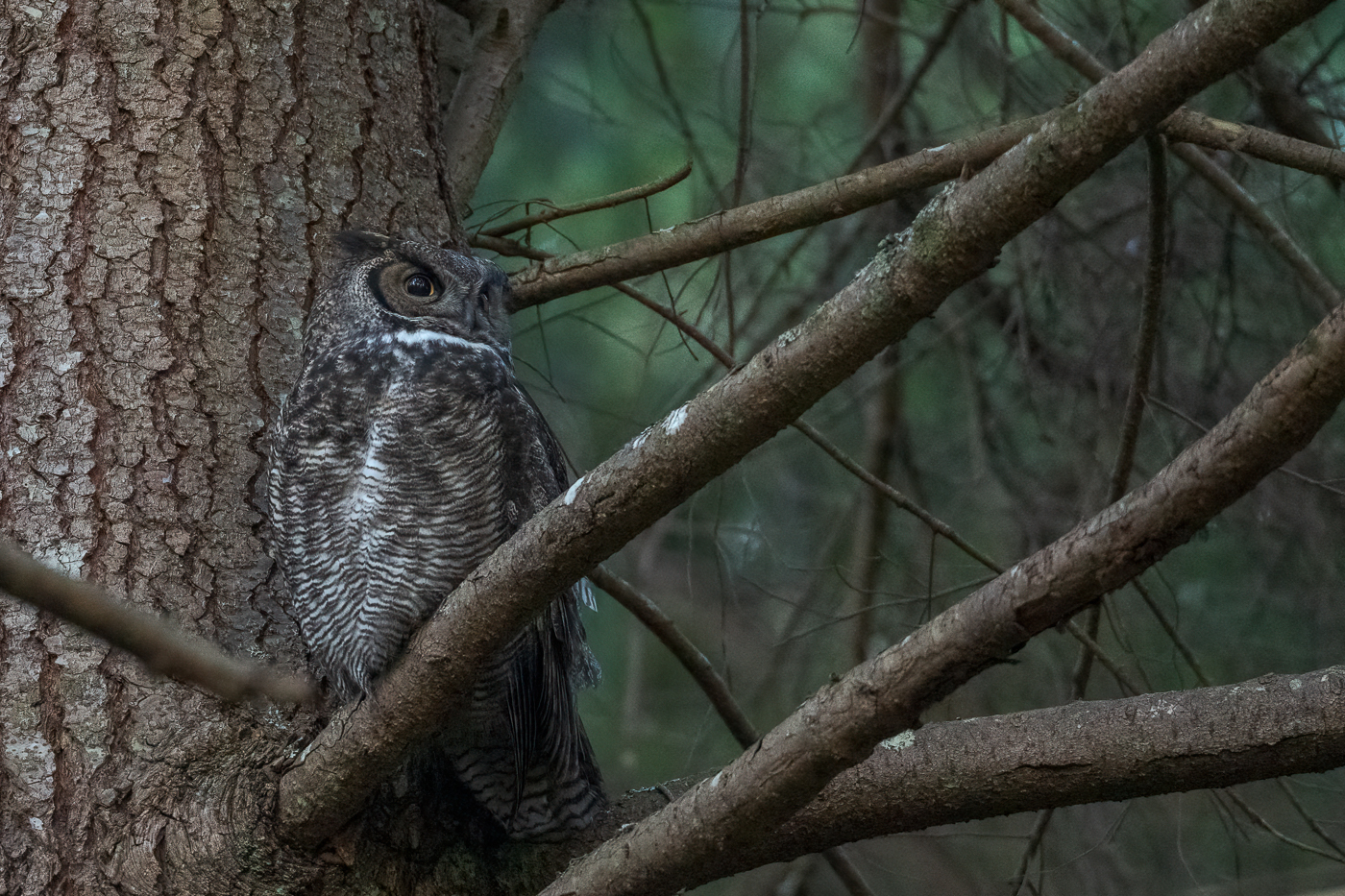
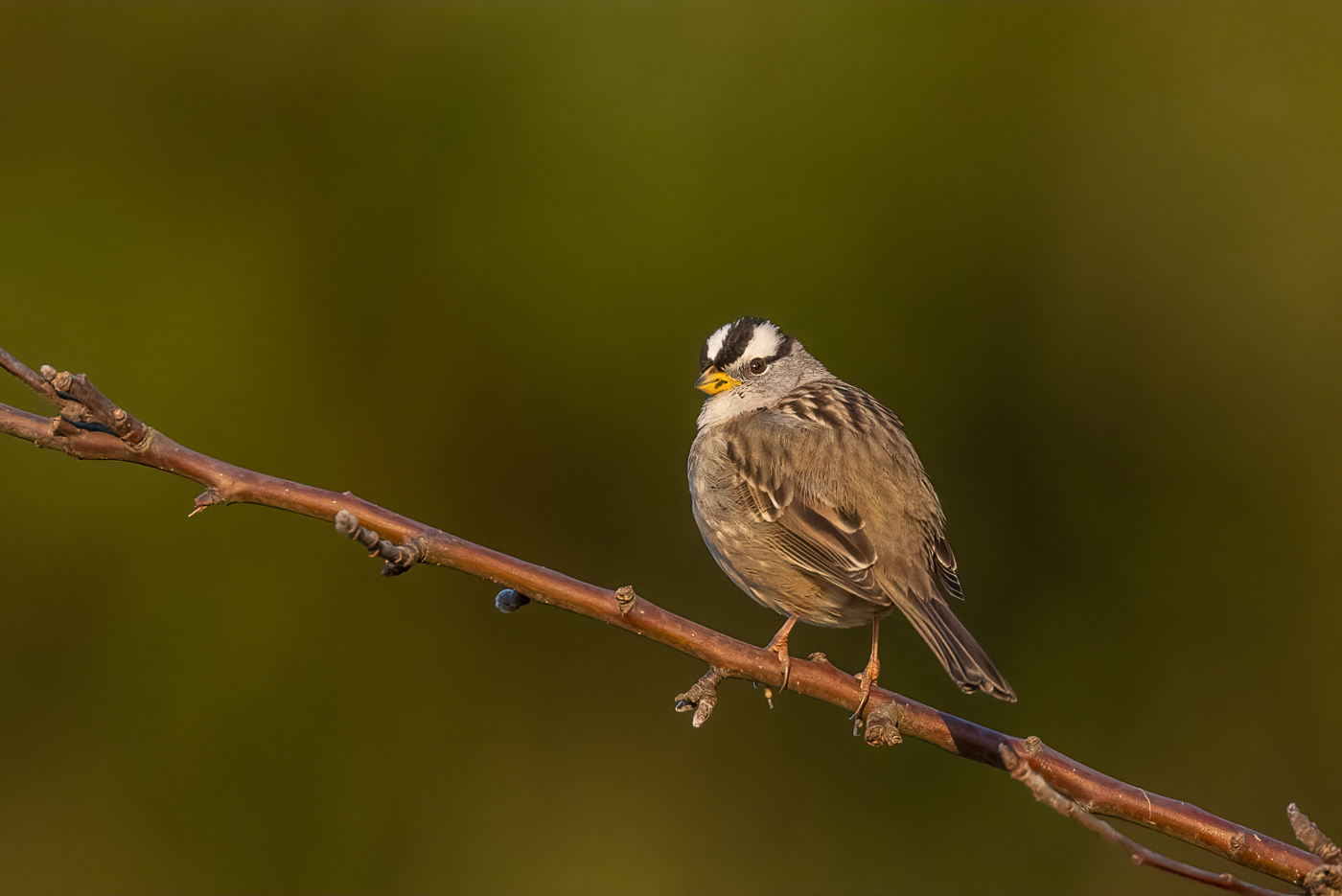
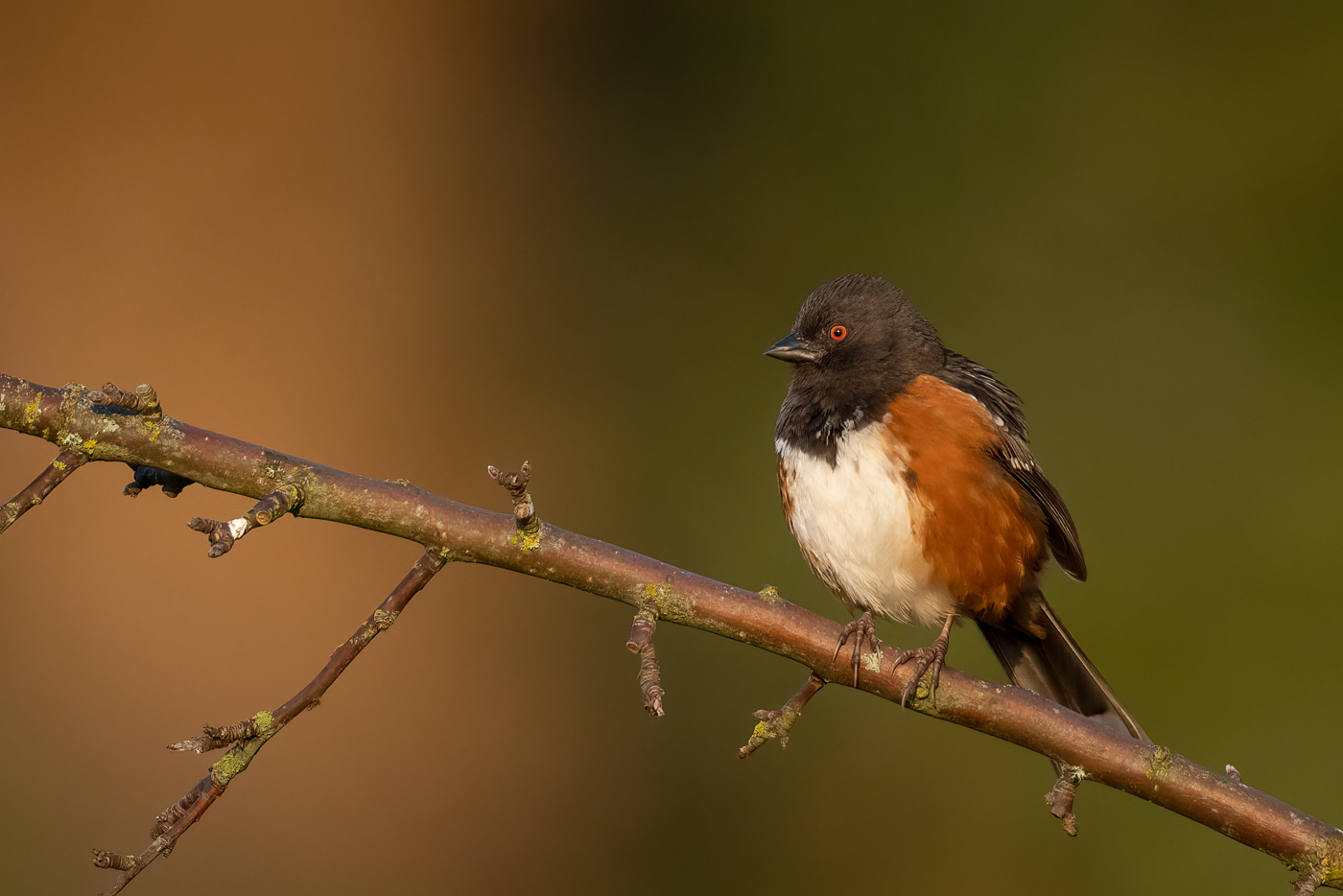
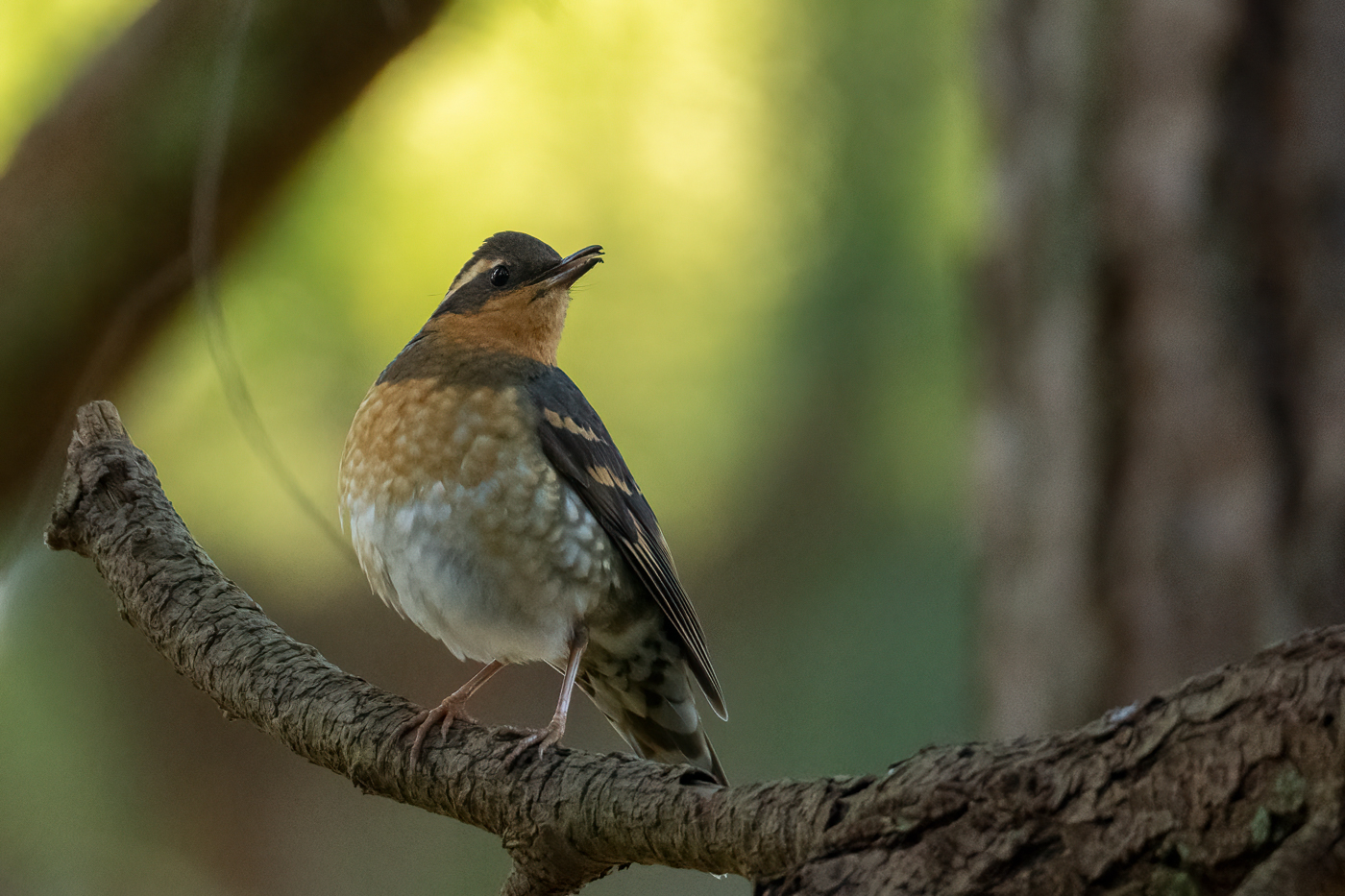



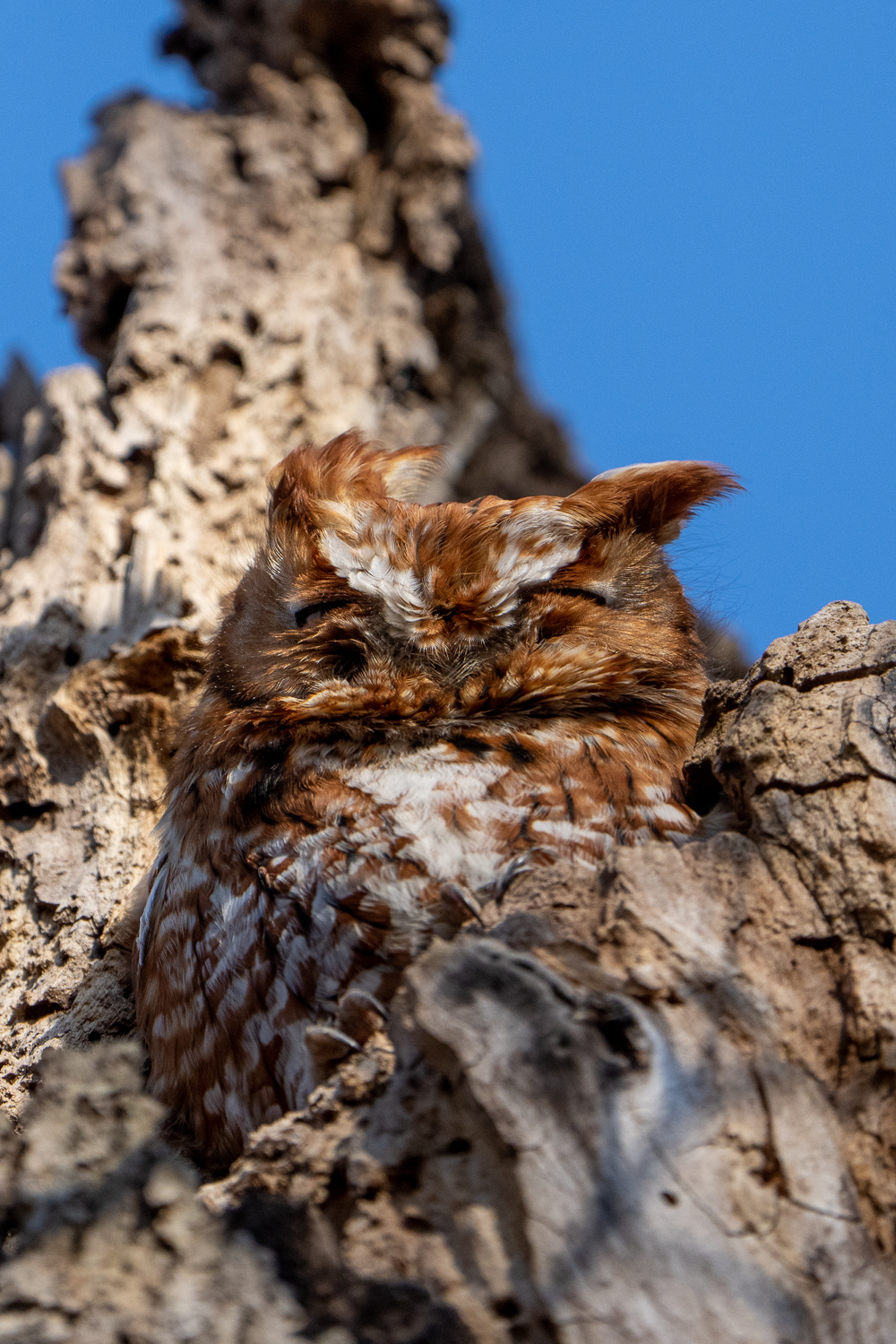
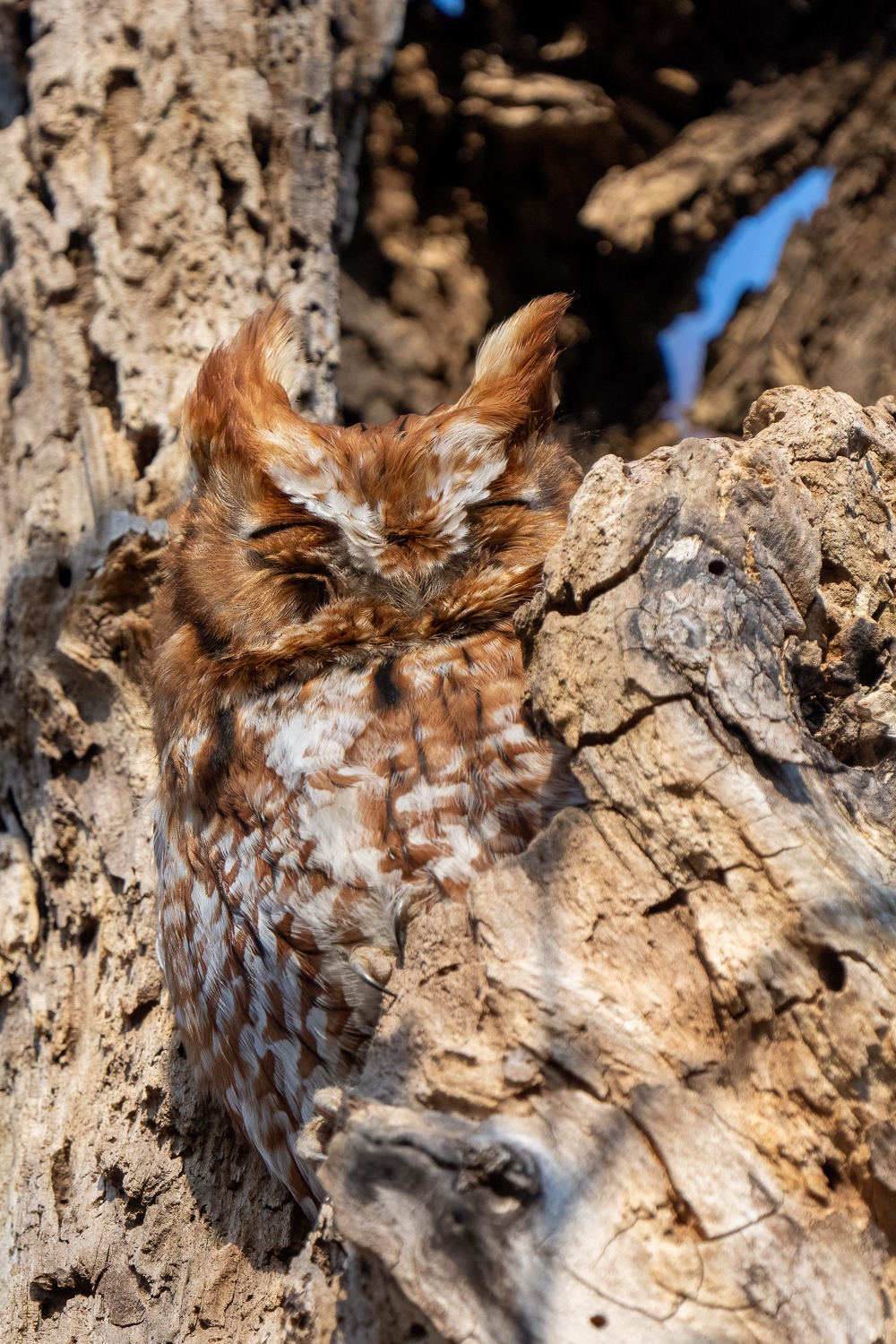
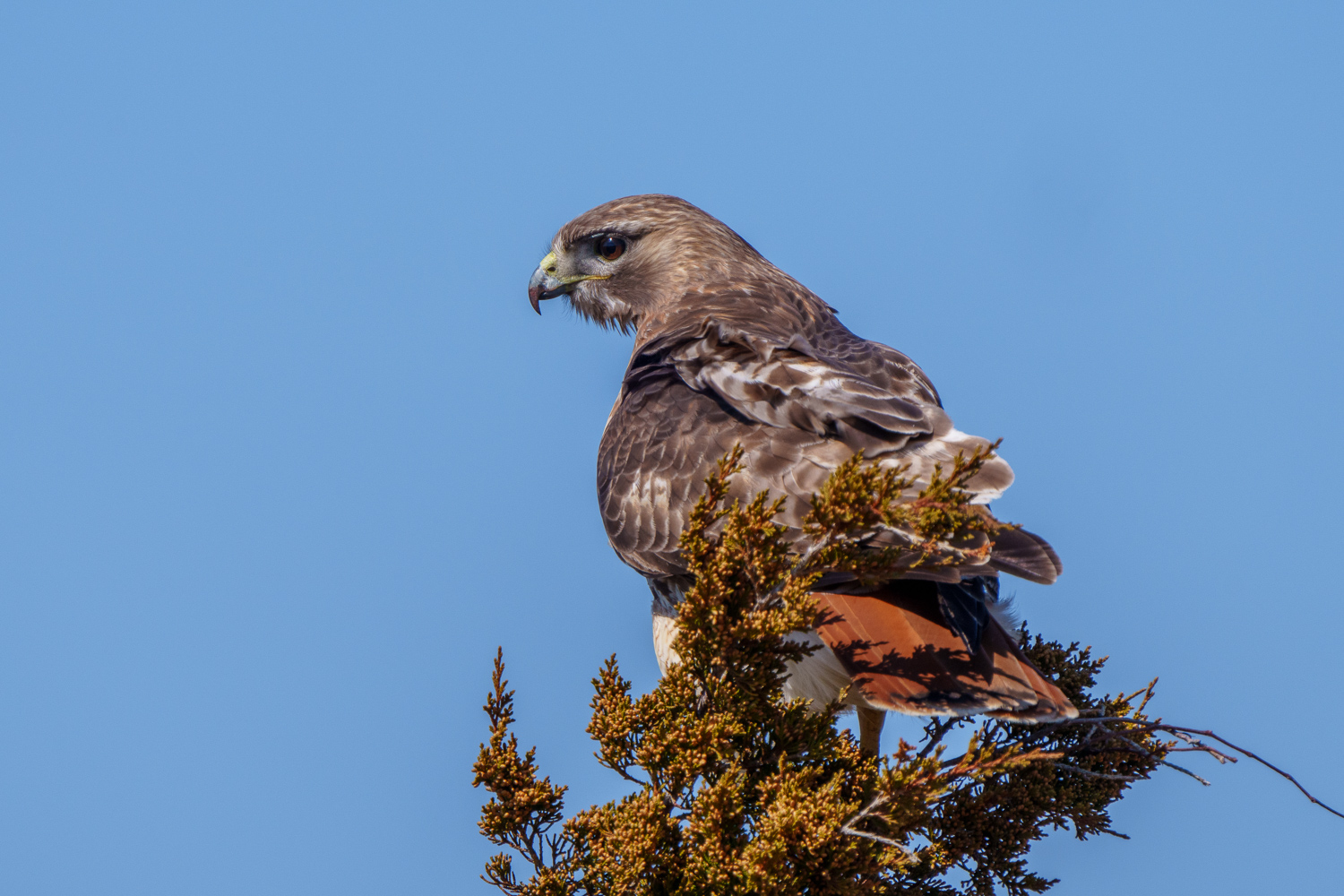


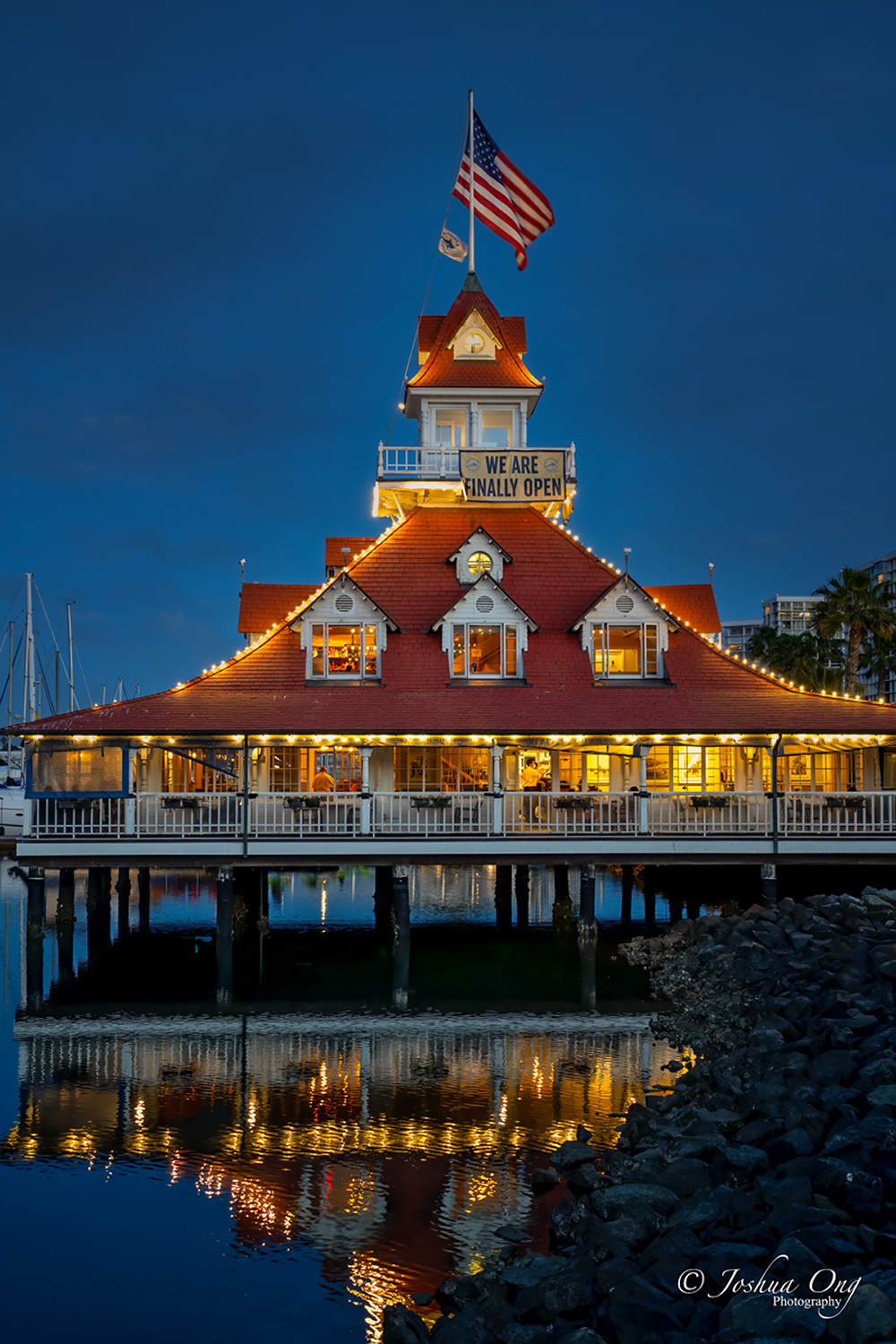
 .
.