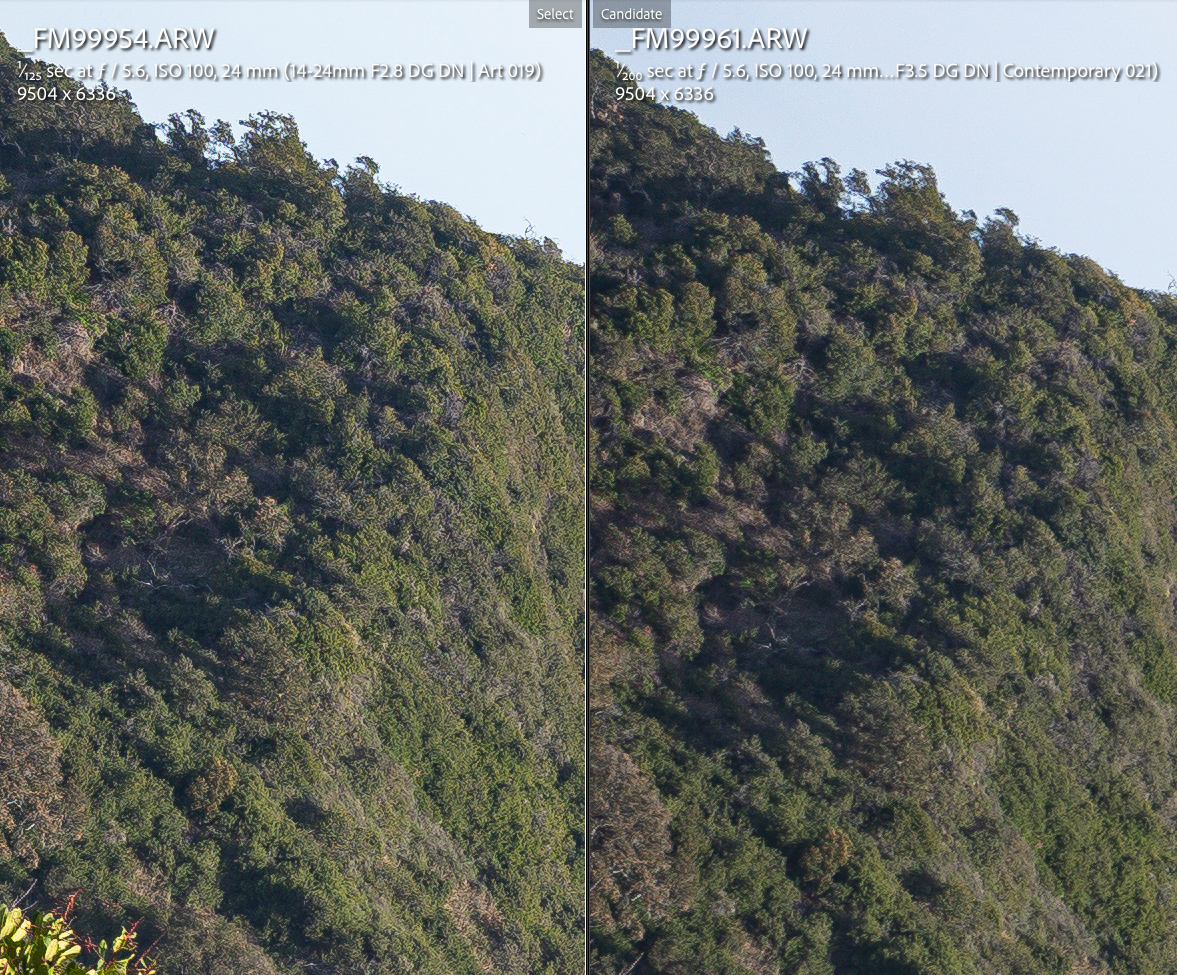
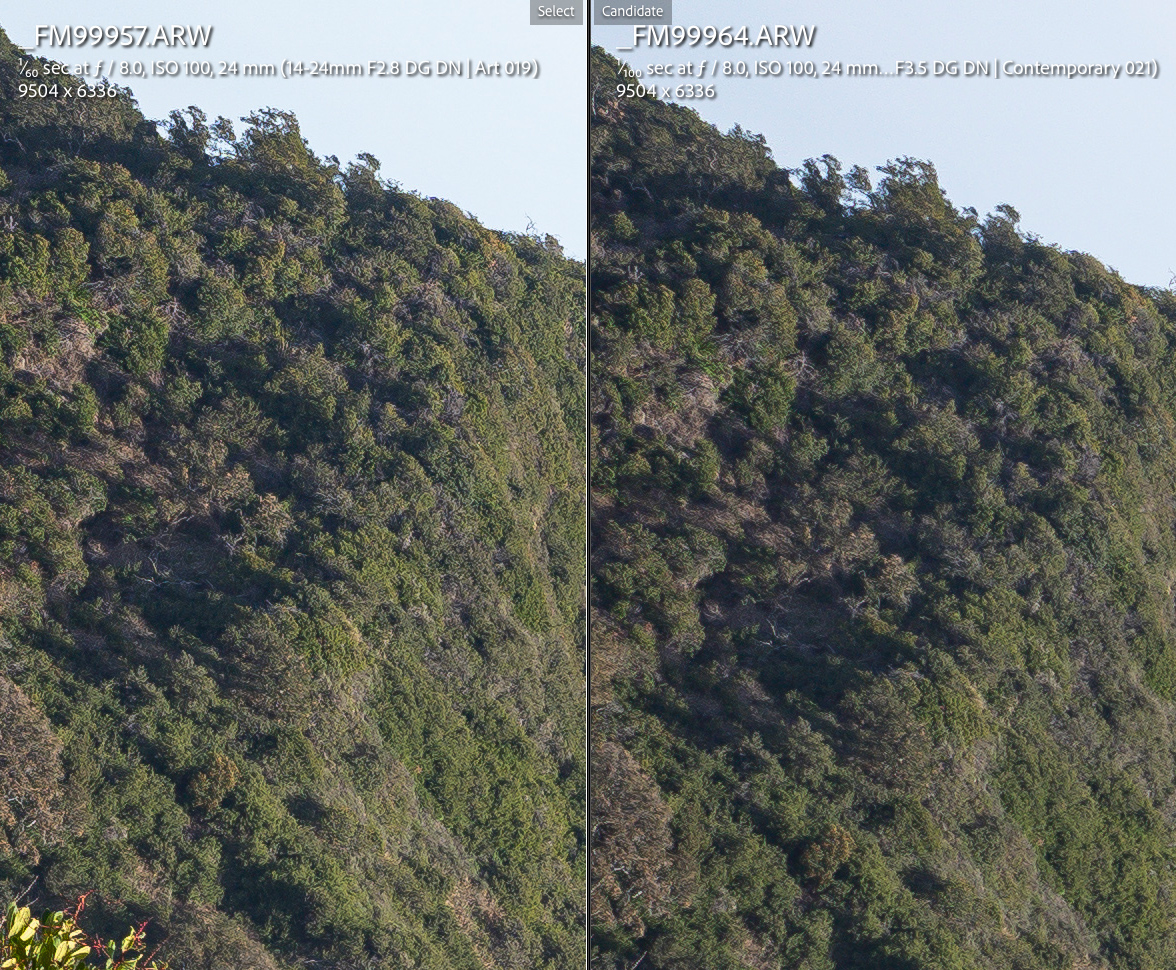
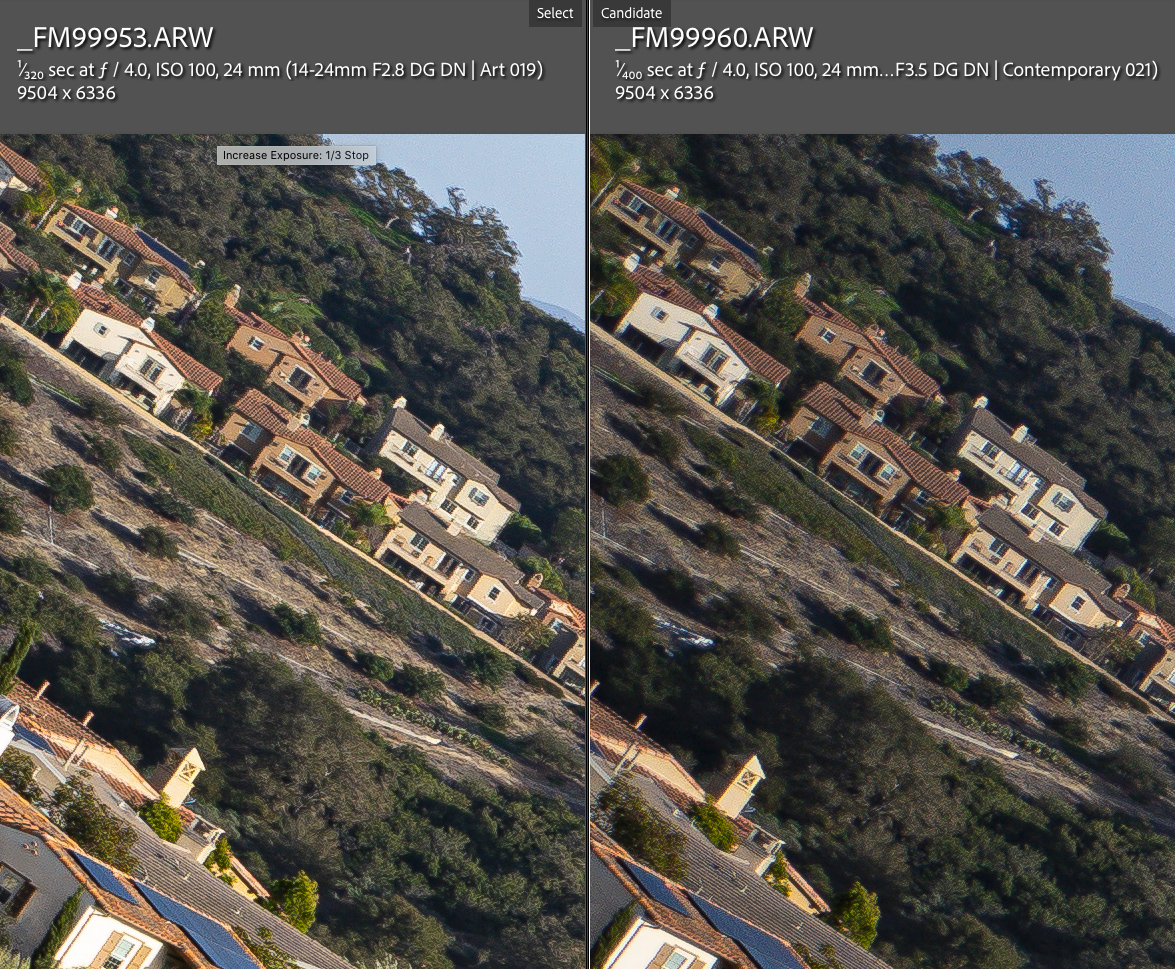
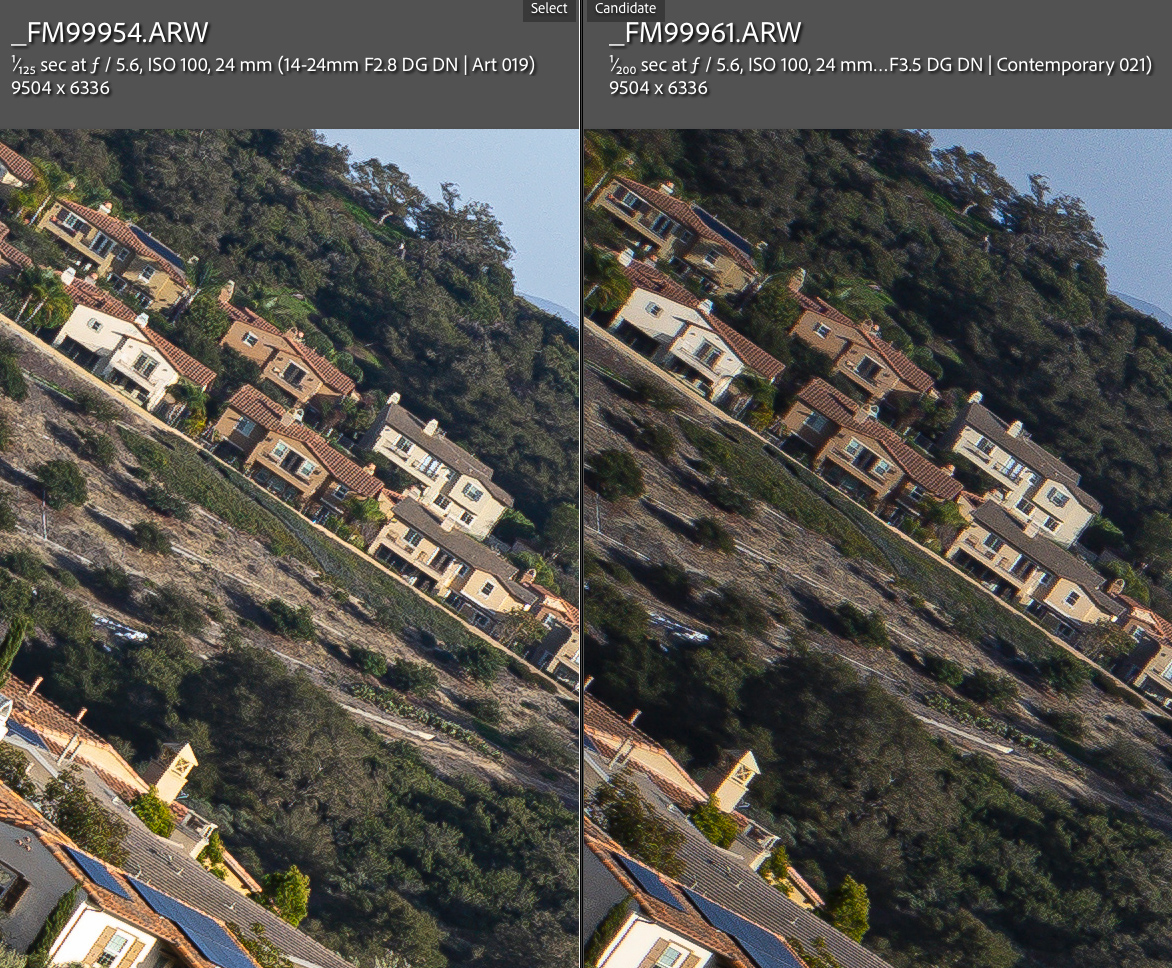
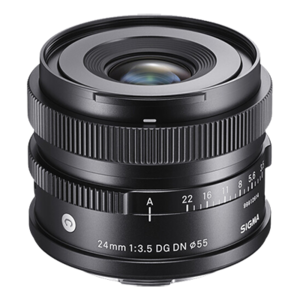
The Sigma 24/3.5 DG DN Contemporary is part of the Sigma I series of compact, high-performance and excellent build quality lenses. It features a premium all-metal weather-sealed construction including a metal hood and magnetic front cap. Together with the Sigma 35mm f/2 and 65mm f/2 DG DN lenses, they join the existing 45mm f/2.8 DG DN reviewed here.
It features 10 elements in 8 groups, with one special low dispersion (SLD) element to reduce CA and 3 aspherical elements to minimize distortion and spherical aberrations (SA). The Sigma 24mm f/3.5 DG DN's mount has a dust-and splash-proof weather rubber strip, super multi-layer coating and a minimum focusing distance of 10.8cm. (maximum magnification: 0.5x or 1:2 macro)
Being able to shoot 1:2 macro with a 24mm lens is one of this lens' main features, however, working distance is somewhat restricted to about 1 inch from the front of the lens to subject.
It has a rounded 7-blade diaphragm which translates to sunstars with 14-points and it has an internal focusing mechanism which means the lens barrel size does not change in size when focusing the lens.
There is a stepping motor that is quite fast and almost silent and from my initial tests, AF seems quick and precise in both AF-S contrast detect and AF-C phase detect modes. The focusing ring has perfect resistance and provides 360 degrees of focus throw for fine-tuning as well as a linear response. A traditional aperture ring runs from f/3.5 to f/22 in third-stop increments with an Auto setting also available for camera-based aperture selection.
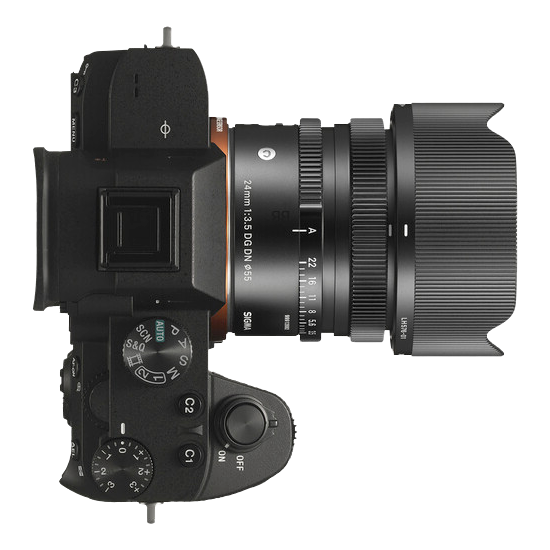
The lens itself weighs a mere 228g (measured) without caps but the all-metal hood adds another 44 grams and extra bulk which negates the compact design when attached. There is also a MF/AF button. The craftsmanship and low tolerance production is impressive, especially for a lens at this price point.
Lens construction: 10 elements in 8 groups, with 1 SLD glass and 3 aspherical elements
The Sigma 24mm f/3.5 DG DN performs well on the Sony A7R IV camera (61MP). I was not expecting it to break any resolution records but I'm seen many 24/25mm lenses (including zooms) performing better in terms of resolution and contrast.
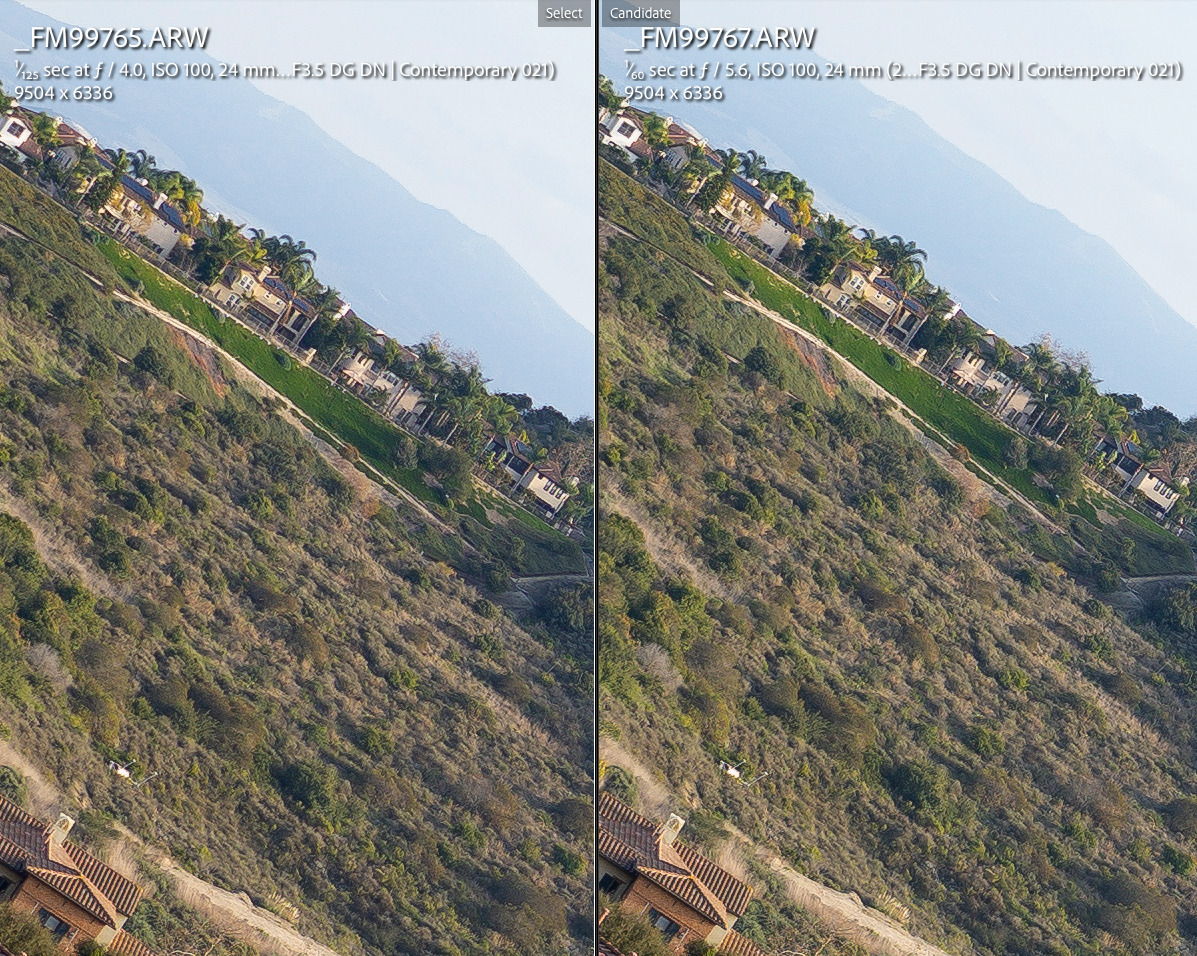
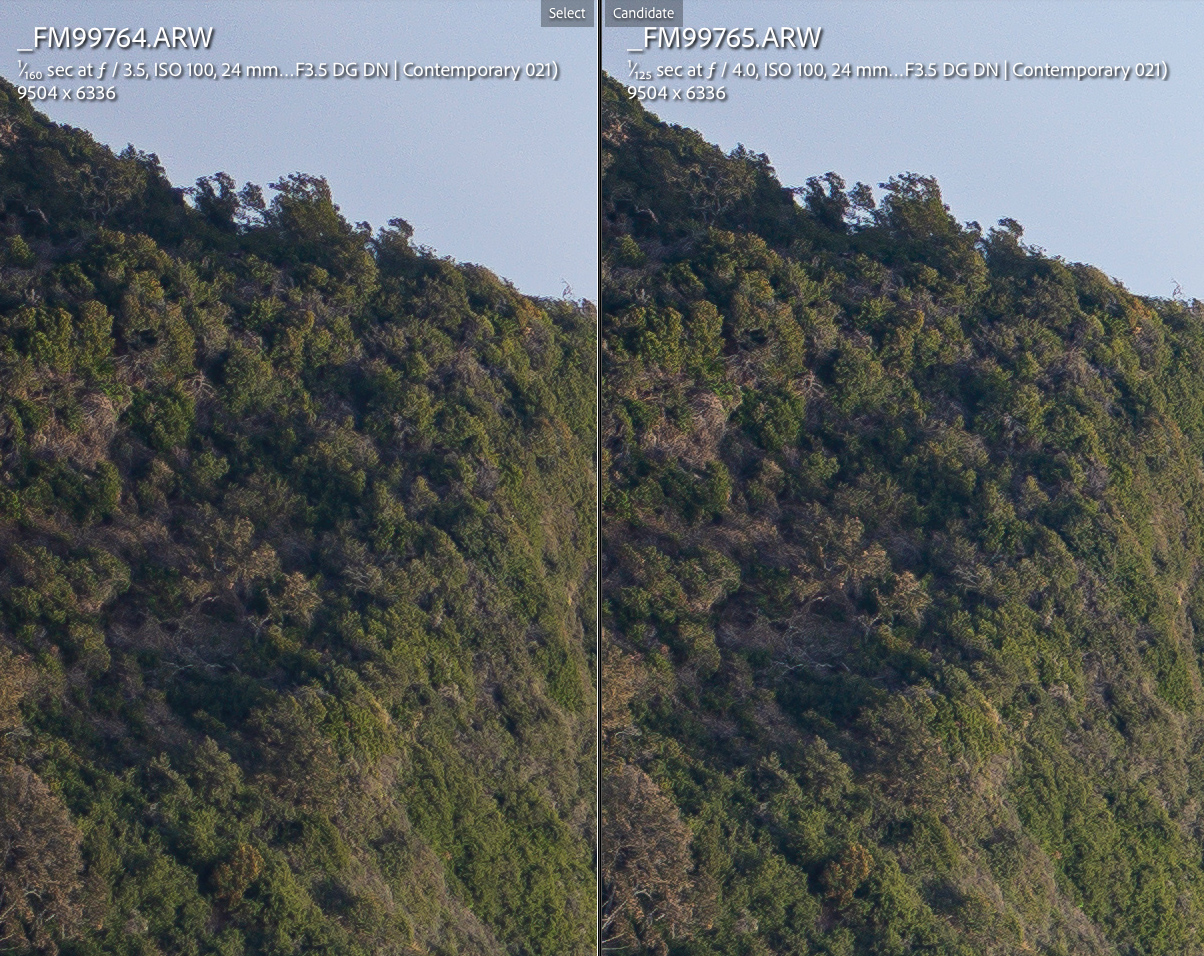
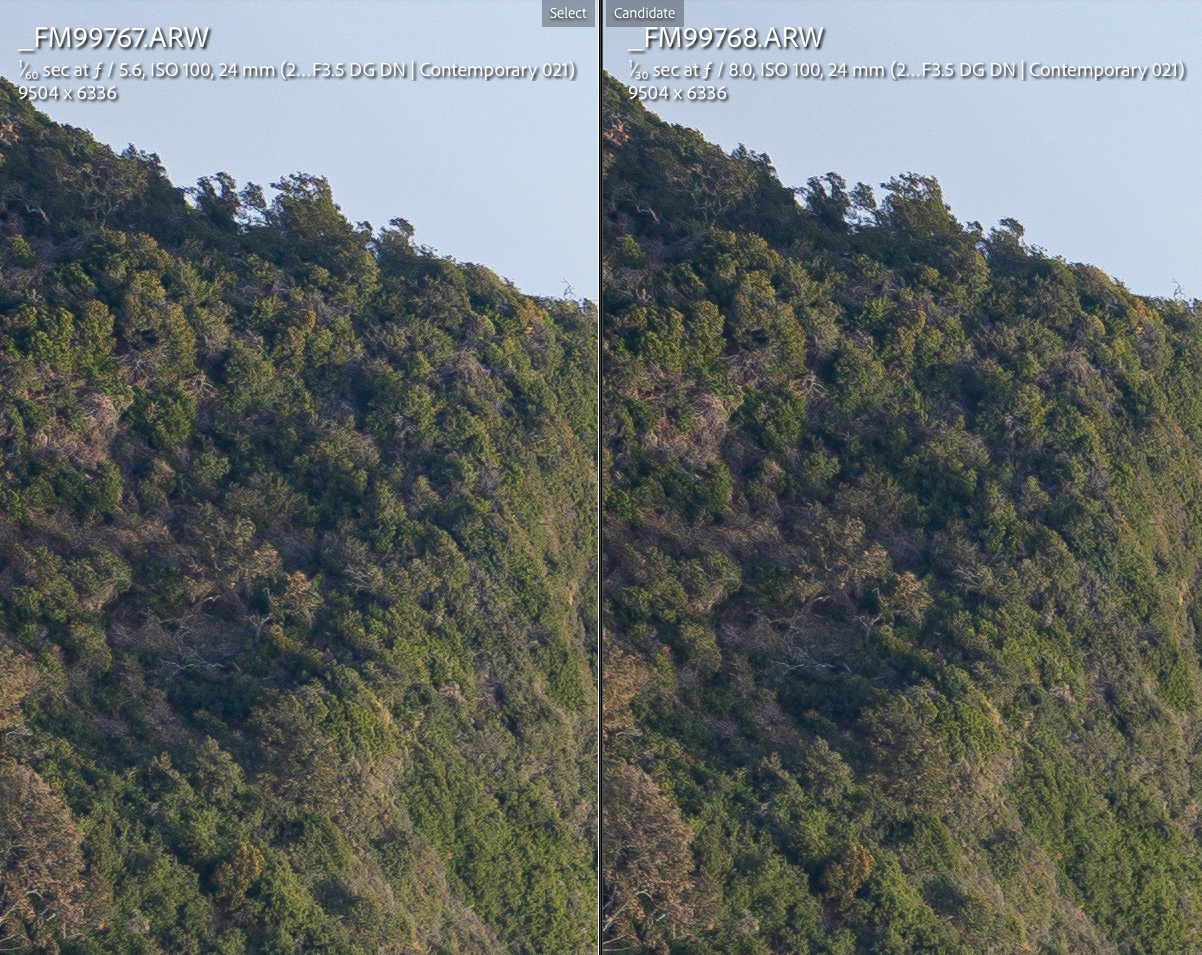
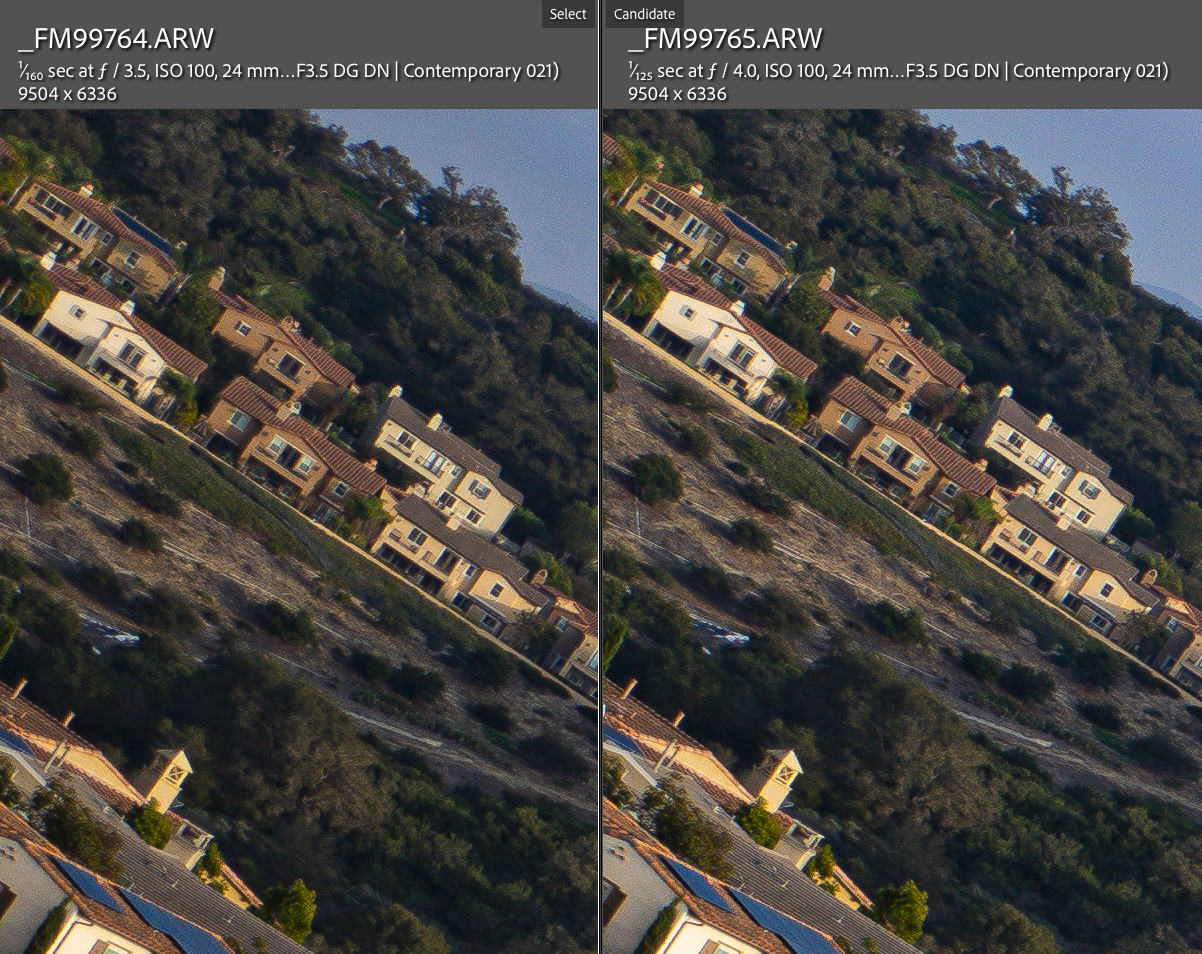
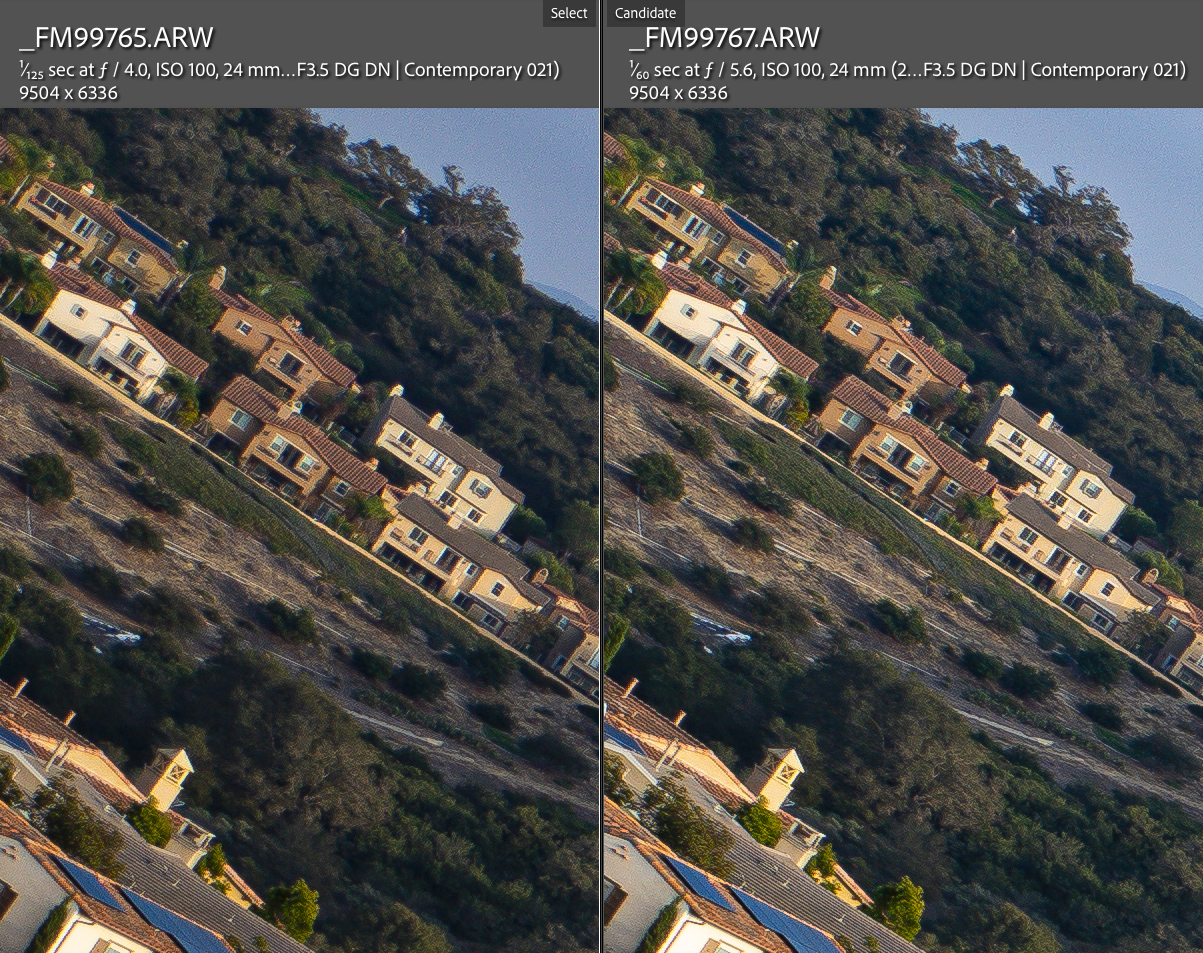
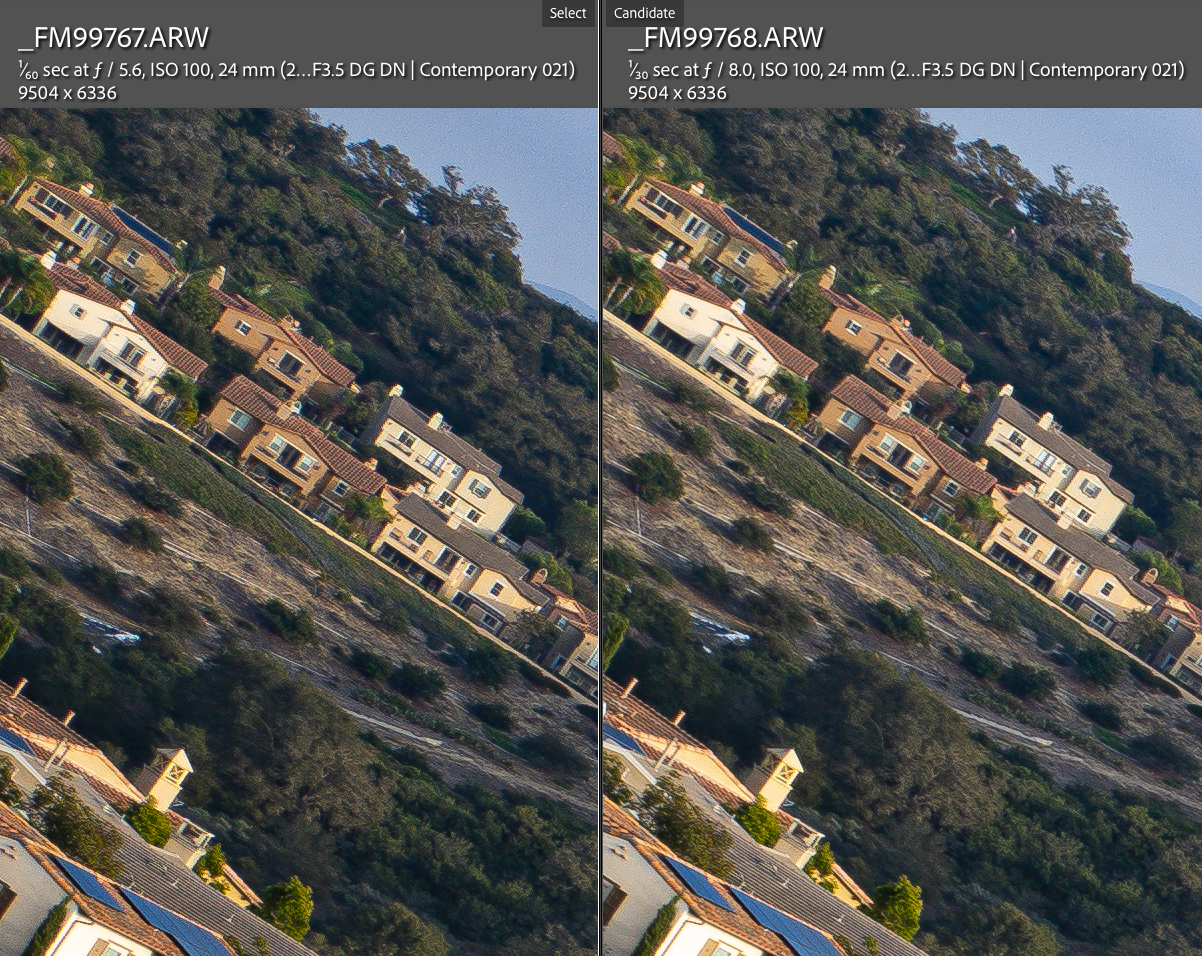
Center resolution and contrast are already very good from wide open and improve very slightly stopped down to f/4.
At mid-zone, the 24/3,5 DG DN performs great at f/3.5 and optimal at f/4.
The extreme corners follow the same trend are already optimal from wide open to f4.
So, to recap the optimal apertures for each area:
Center (f/4), Mid-zone (f/4), Corners (f/4). This means, the Sigma 24mm f/3.5 DG DN is already optimal from f/3.5 to f/4. (very small difference in resolution and contrast)
Here is the full image thumbnail showing the areas demonstrated at 1:1 magnification.
Similar to the new Sigma 35mm f/2 DG DN (Review), I'm happy to report that the Sigma 24mm f/3.5 DG DN is virtually a flat-field lens with low field curvature making it an ideal landscape lens.
Crops showing the extreme corner area:
(Left crop focused at center and right crop focused at the extreme corner)
Fred, the infinity crops you posted on this page https://www.fredmiranda.com/forum/topic/1674681/57 were much worse for mid-frame and corner? Was that because your first copy turned out to be decentered?
If doing other photography than sharpness testing, it is worth noting that Sigma has af Maybe Sigma 24mm is better compared to Batis 25.
I doubt anything will better Loxia in sunstars. Loxia 25 is also brighter than this Sigma, and Batis has even better specs - not to mention 24mm GM.
TakenWild wrote:
Very impressive. Especially being flat field. I’d love to compare it to my Loxia 25. It certainly has the weight benefit over the Loxia.
The questions are: Sunstar performance, vignetting, and flare resistance.
The loxia also has some of the best flare control of any wide angle. AF matters very little to me in a lens that is f3.5 and wide. Corner sharpness matters a lot more.
The Batis and the Sony 24/1.4 are inferior to the Loxia for landscape in just about every way. Astrophotography is the only area in landscape where the Loxia is worse than those.
tuomkok wrote:
If doing other photography than sharpness testing, it is worth noting that Sigma has af Maybe Sigma 24mm is better compared to Batis 25.
I doubt anything will better Loxia in sunstars. Loxia 25 is also brighter than this Sigma, and Batis has even better specs - not to mention 24mm GM.
So exciting to have a compact lens of premium quality that’s flat field and optimum at F4.0! Thanks Fred.
This new series of Sigma lenses seems to, finally, fulfill the promise of smaller/lighter/cheaper lenses for mirrorless use while Sigma super speed lenses remain large/heavy/expensive-even when designed specifically for mirrorless use (35mm F 1.2).
I have the lens for a week now. My initial impressions from very limited time i had with it:
- Flare control is pretty good. Not quite Loxia/Voigt level, but not too far off. I was surprised to see that. Will test further to verify.
- Sunstars: Nothing to write home about, below average for me. Probably due to only 7 rounded blades. For reasonable definition one needs to stop down to f/16 and further and it is still just "meh" (to my eyes). Here I'm talking specifically about the sunstars, other light sources (street lights) present themselves a bit better.
- Vignetting: Significant. But for landscapes adds to the quality of the image, again to my eyes. It is relatively easily corrected, so for landscapers I wouldn't call it a negative. Other users/other uses might find it problematic.
One more thing, there is some pincushion distortion present, not relevant for landscapers but might be for serious architecture.
Overall this lens is one hell of a package. Small, light, sharp from wide open, CA is very well controlled. Full metal build, haptics are great - the aperture ring is superbly damped, on pair with Voigt APO 50 (which I have) an significantly better then Sigma's own 35 f/1.2 (which I had). Lens is a joy to use. But man those sunstars. Might be a deal breaker for me.
I have samples, but will wait until Fred does his review to post them.
@Fred - main photo in the opening post is of Sigma 35 DG DN not the 24 DG DN, just a heads up.
TakenWild wrote:
Very impressive. Especially being flat field. I’d love to compare it to my Loxia 25. It certainly has the weight benefit over the Loxia.
The questions are: Sunstar performance, vignetting, and flare resistance.
Petegh wrote:
Fred, the infinity crops you posted on this page https://www.fredmiranda.com/forum/topic/1674681/57 were much worse for mid-frame and corner? Was that because your first copy turned out to be decentered?
Yes, that was my previous copy which was not perfectly centered. Disregard those crops.
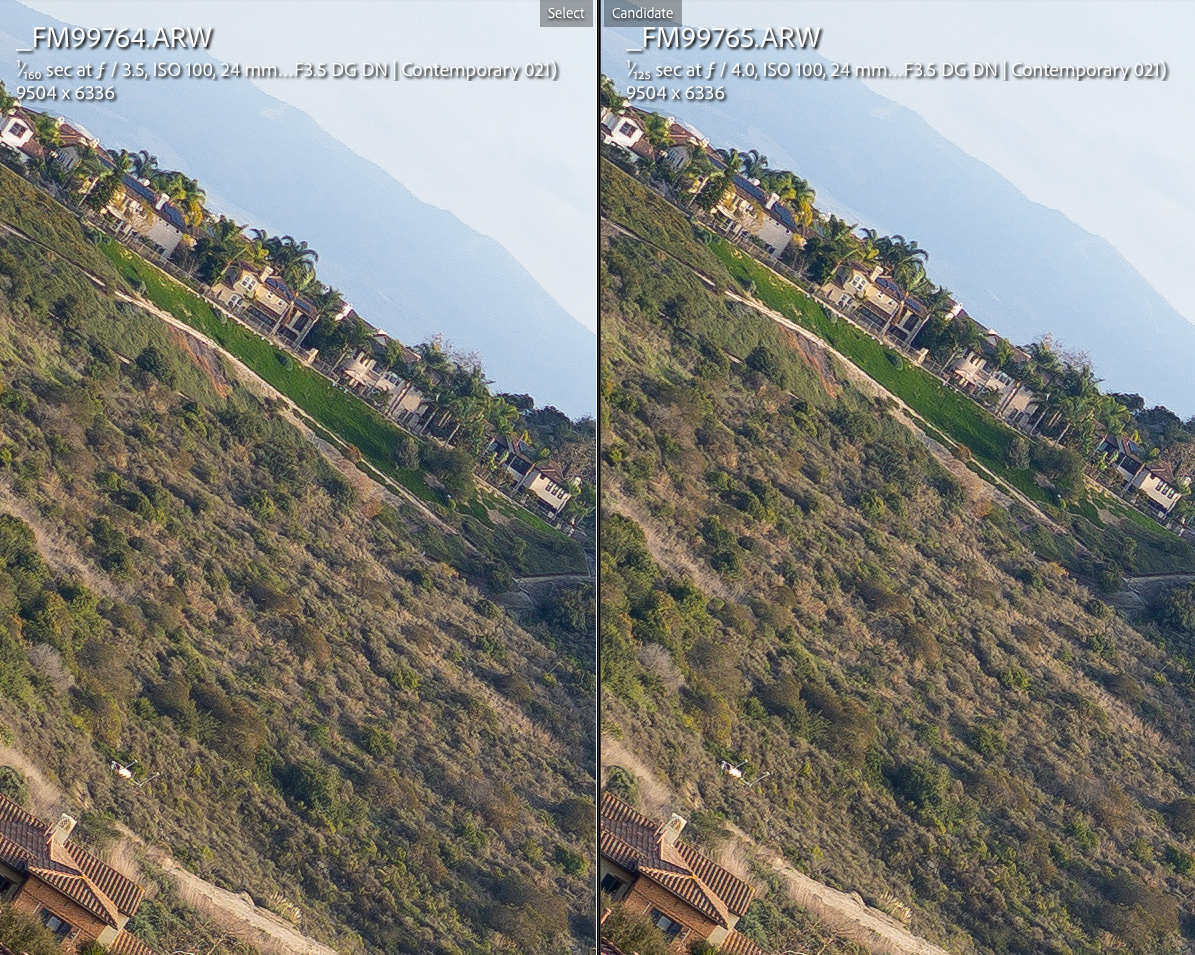
The Sigma 24mm f/3.5 performs well at MFD wide open and its optimal at f/5.6. There is noticeable residual SA wide open at MFD but it's pretty much gone at f/4.5-5.6. There is no focus shift detected at this distance.
To achieve 1:2 macro, the lens front element is very close to the subject (~1 inch) but there is a lot of blur from this distance even though it's a slow prime. I find the 0.5x magnification at MFD one of the main features of this lens as it allows the possibly of creative shots not possible with most 24mm lenses.
Here are resized images shot at f/3.5, f/4 and f/5.6 at MFD:
My biggest disappointment so far. I've tried capturing well-defined sunstars with the 24/3.5 DG DN but the curved 7-blade aperture mechanism does not deliver great results. (Similar to 45/2.8 Contemporary)
It looks best at f/22 but still not well defined compared to many other 24/25mm lenses. Definitely a negative for those shooting landscapes.
It renders 14-point sunstars and here is how it performs from f/11, f/16 and f/22:
f/11 vs f/16: Underwhelming and fuzzy sunrays
f/16 to f/22: It's best at f/22 but still fuzzy and not ideal compared to other 24mm options
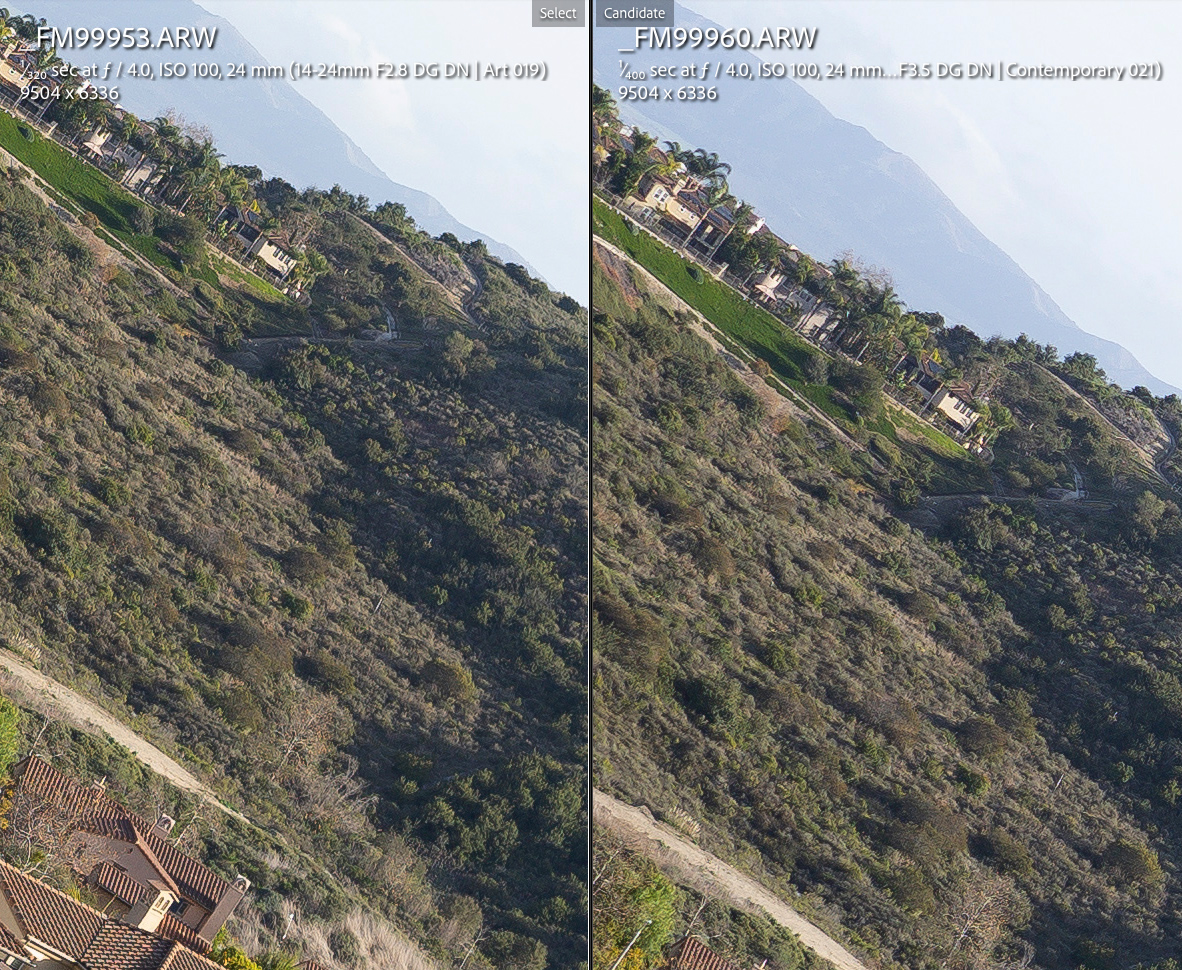
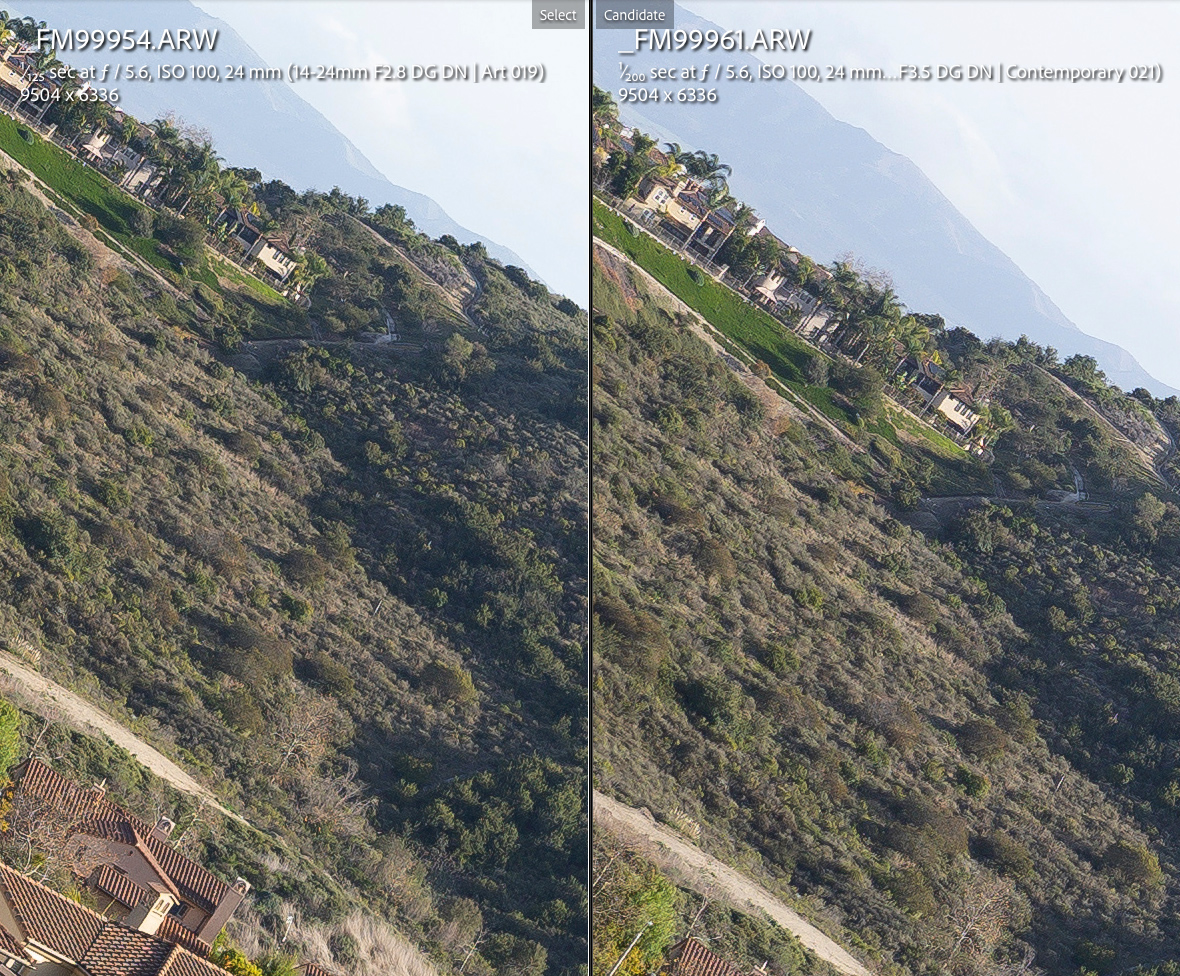
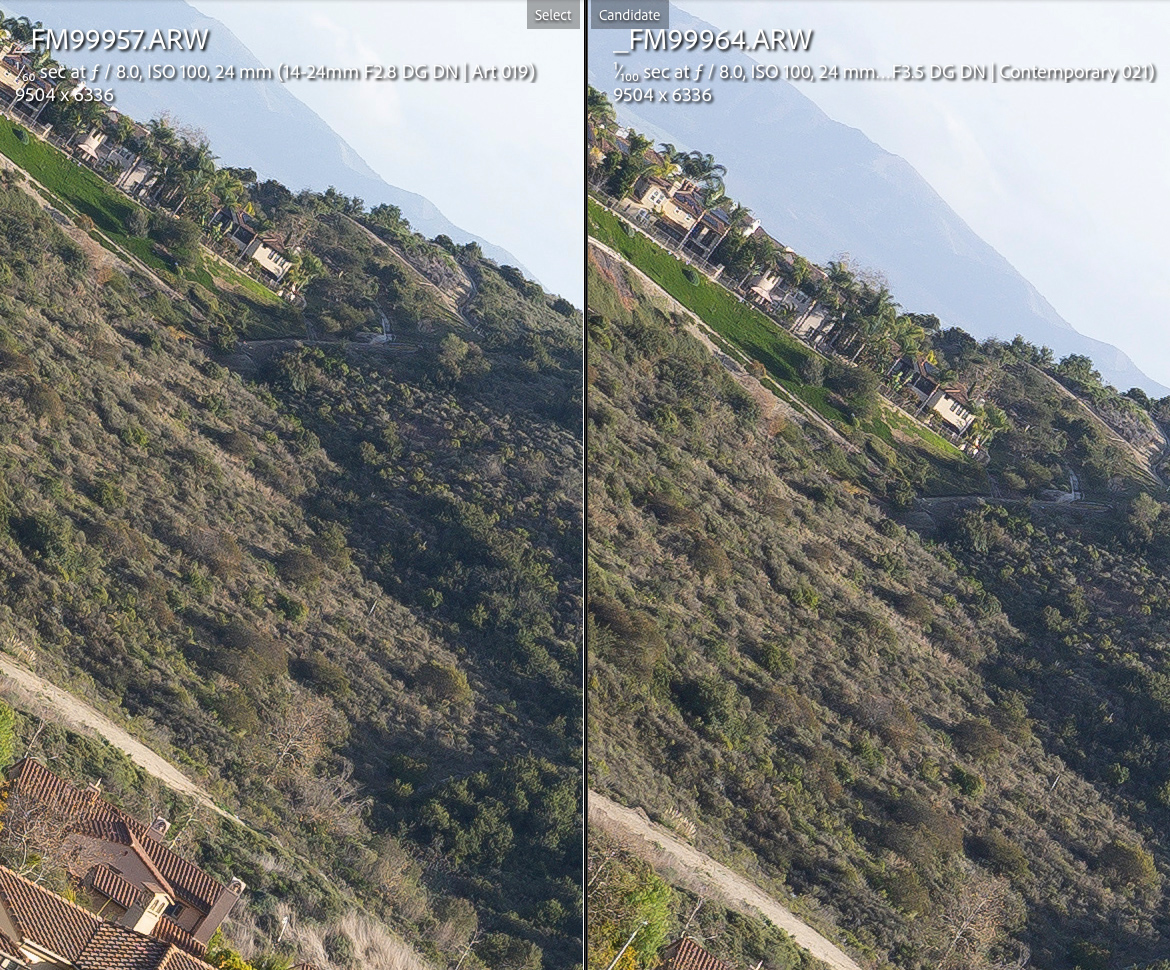
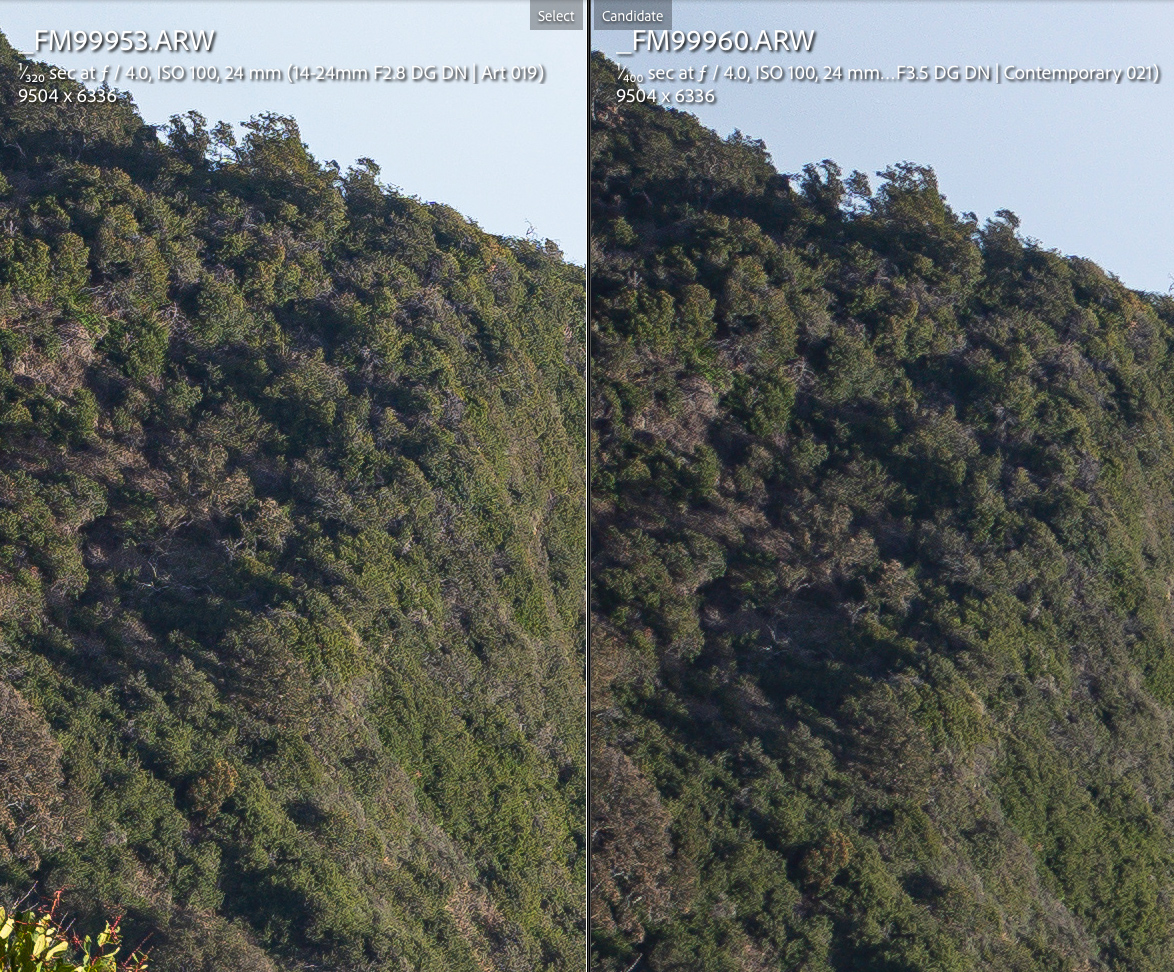
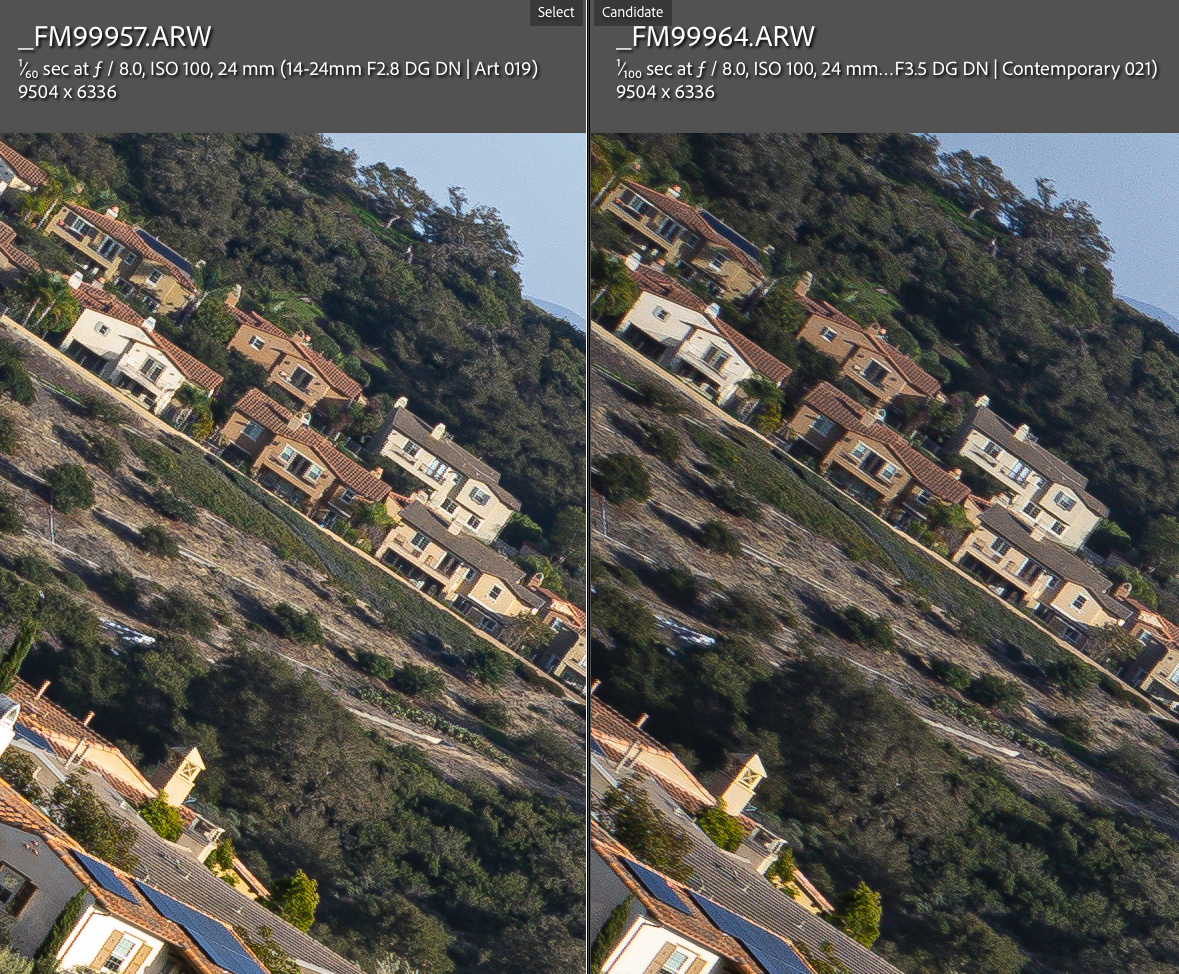
Infinity Performance compared to Sigma 14-24mm f/2.8 DG DN @24mm:
Although 24mm is the zoom's weakest focal length, to my surprise, it performed slightly better than the Sigma 24mm f/3.5 DG DN prime. They are similar in resolution and contrast across the field from f/4 until f/8 but the zoom captures higher frequency detail across the field and has much lower vignetting. Also, as you can see from the crops, the prime has a narrower field of view when both are at 24mm and infinity.
Here is the full image thumbnail showing the areas demonstrated at 1:1 magnification.
Wasn't all that impressed with the 24mm's corners in the OP crops but wasn't sure if I was being too picky. After seeing it compared next to the 14-24mm I think my original opinion was fair - its corners aren't all that great.
snapsy wrote:
Wasn't all that impressed with the 24mm's corners in the OP crops but wasn't sure if I was being too picky. After seeing it compared next to the 14-24mm I think my original opinion was fair - its corners aren't all that great.
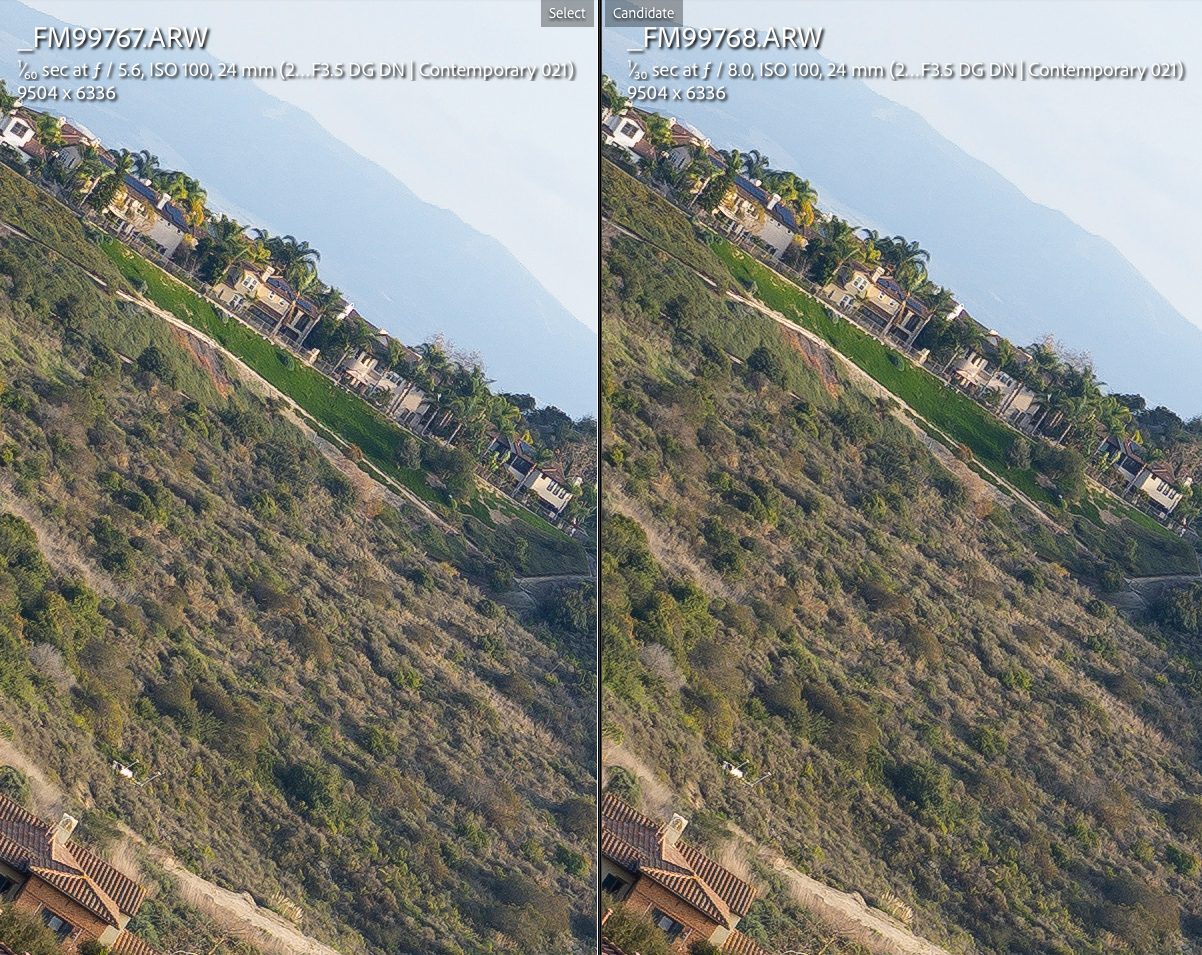
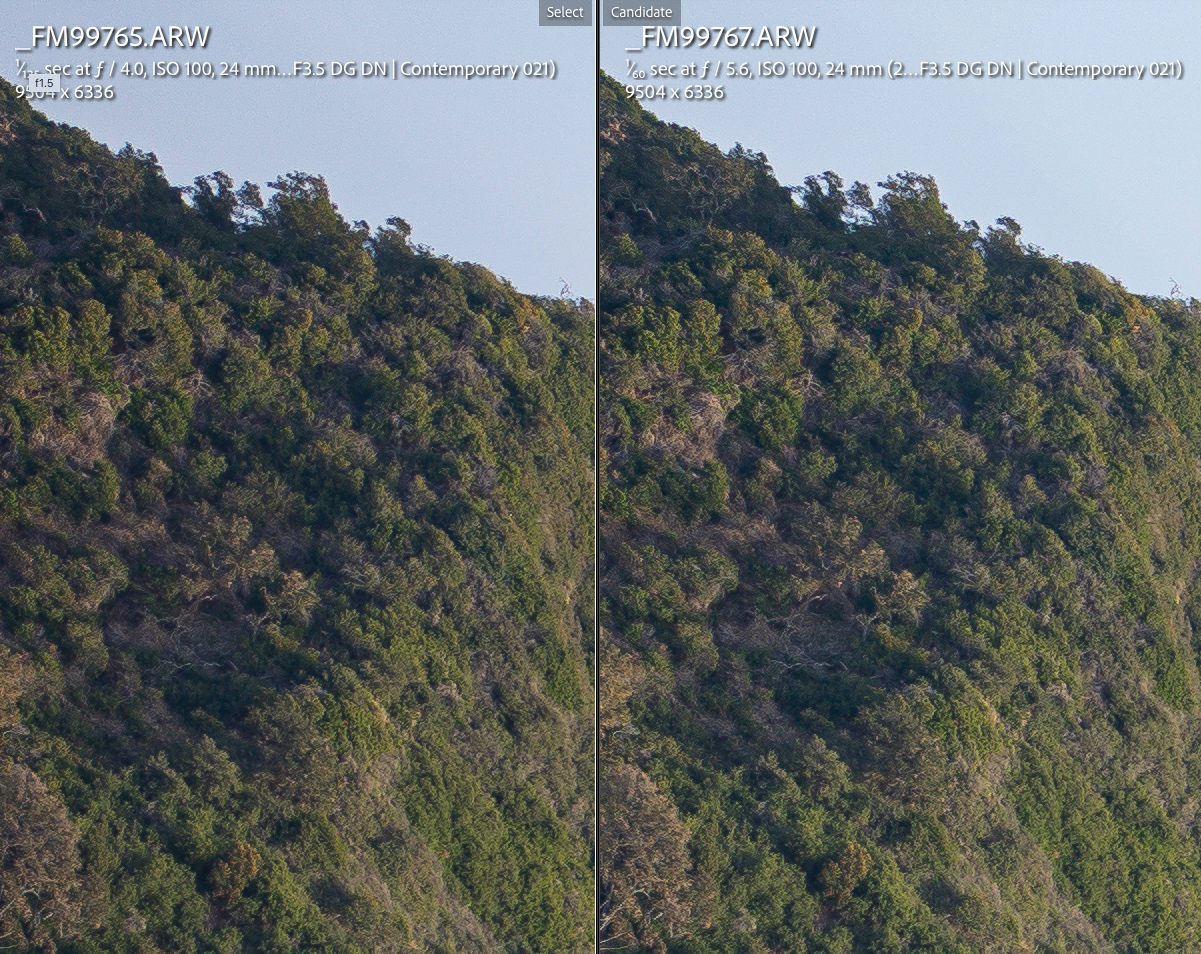
My first 24mm f/3.5 DG DN copy performed slightly worse. This copy is centered on my A7R IV and although similar in performance to the Sigma 14-24/2.8 zoom at 24mm, it's still not as good. The Sigma 24mm f/3.5 DG DN performs well across the field at f/4 but it does not improve much at f/5.6. By f/8, diffraction becomes noticeable so it never gets to outstanding level.



 Maybe Sigma 24mm is better compared to Batis 25.