Voigtlander 75mm f/1.5 Nokton Review

p.8 #1Voigtlander 75mm f/1.5 Nokton Review
naturephoto1 wrote:
Just chatted with David and Bastian and we were actually wondering if Zeiss still has a photo department. Last Loxia was 18 months ago. Batis 40 was anything but a successful release and it seems likely to me that it was developed by Tamron.Well, they did come out with the Otus 100 last year that is a very high performing lens, which you would expect. What I am not sure at all about, however, is whether they are doing any separate development of stills lenses at Zeiss itself, and that may have been true for a long time. As I understand it from David, the Loxia lenses were developed for industrial purposes first and simply modified for stills. The Milvus and Otus lenses one could make a case were developed for video and modified for stills. As you say, it seems the Batis lenses were developed by Tamron. You really have to go back to the ZM 35 and the Otus 55 (and maybe the Otus 85), to find lenses that look like they were developed by Zeiss primarily for stills. I wonder if in the last 5 years they have decided that they will develop lenses for stills only when they are taking up designs that have been developed for other purposes. And this maybe why Cosina has gone all in with their development of their Voigtlander lenses. They may have known that Zeiss isn't going to be offering really any new lenses and they thought they would fill the gap. If so, they have done so very nicely.With the ongoing collapse in camera sales, it's not a surprise that some companies are not devoting resources to a market that is imploding.It may not be a surprise that some companies are devoting less resources to the photography market, but it is a surprise to me that Zeiss would be doing so, if they indeed are for a couple of reasons. First, Zeiss is one of the oldest photography companies. It is what has put them on the map and they have stuck to the business through all kinds of ups and downs over the years. Second, they target the high end of the market which has not imploded nearly as much as the low end of the market.
For these reasons I don't think Zeiss will get totally out of the photography business, but I do think they have already focussed more on video and other optical endeavors and photography is more of an afterthought.Hi Steve,
I am sorry, but I may differ with you. What really put Zeiss on the map originally was their Microscopes. Even Ernst Leitz worked for Zeiss for Microscopes. Both companies went on from there. Ernst Leitz of course founded Leitz that origninally made Leitz Microscopes and then Cameras. Both companies made cameras and lenses.
Rich
I don't disagree Rich. Microscopes were first, but cameras have been a big and long tradition and foundational part of both companies for a long time. Because of that I would be surprised if Zeiss got totally out of the photography business. Still I think we are already seeing that it has become less of a central part of their business, or at least it looks that way to me.
Steve Spencer wrote
rattymouse wrote
Steve Spencer wrote
Phillip Reeve wrote
genji wrote
Hardly recently! The ZM 35/1.4 was officially announced at Photokina in September 2014, for release later that year. So no new or updated ZM lenses in the past five years. I have seven ZM lenses including the 35/1.4 but the only way Zeiss could redeem themselves with me is to release a Distagon ZM 28/1.4, which they’ll never do because Voigtlander will beat them to it with a Nokton 28/1.4.For these reasons I don't think Zeiss will get totally out of the photography business, but I do think they have already focussed more on video and other optical endeavors and photography is more of an afterthought.
I am sorry, but I may differ with you. What really put Zeiss on the map originally was their Microscopes. Even Ernst Leitz worked for Zeiss for Microscopes. Both companies went on from there. Ernst Leitz of course founded Leitz that origninally made Leitz Microscopes and then Cameras. Both companies made cameras and lenses.
Rich
I don't disagree Rich. Microscopes were first, but cameras have been a big and long tradition and foundational part of both companies for a long time. Because of that I would be surprised if Zeiss got totally out of the photography business. Still I think we are already seeing that it has become less of a central part of their business, or at least it looks that way to me.
Aug 18, 2019 at 09:29 AM
p.8 #2Voigtlander 75mm f/1.5 Nokton Review
What I think is the case is they got out of production completely and just doing the design than give it to third party to build for them. A lot of companies are in the business still but don't produce anything except design. Farm everything else out
Aug 18, 2019 at 09:29 AM
p.8 #3Voigtlander 75mm f/1.5 Nokton Review
Both companies are into Sport Scopes, Binoculars , microscopes and lenses. Plus other things
Aug 18, 2019 at 09:31 AM
p.8 #4Voigtlander 75mm f/1.5 Nokton Review
As I said that I got this email
Here is the link. Big Zeiss sale
https://www.bhphotovideo.com/c/buy/zeiss-batis-lenses/ci/43354
Here is the link. Big Zeiss sale
https://www.bhphotovideo.com/c/buy/zeiss-batis-lenses/ci/43354
Aug 18, 2019 at 09:32 AM
p.8 #5Voigtlander 75mm f/1.5 Nokton Review
So the best deal is 716 savings a Batis 25/85
https://www.bhphotovideo.com/c/product/1454253-REG/zeiss_batis_25mm_and_85mm.html
This increasingly the alarming trend I see with Zeiss pricing. Pay a fortune than lose s fortune on resale because of these sales
I lost my underwear on the Batis 135. Not that I care but most folks would
https://www.bhphotovideo.com/c/product/1454253-REG/zeiss_batis_25mm_and_85mm.html
This increasingly the alarming trend I see with Zeiss pricing. Pay a fortune than lose s fortune on resale because of these sales
I lost my underwear on the Batis 135. Not that I care but most folks would
Aug 18, 2019 at 09:34 AM
p.8 #6Voigtlander 75mm f/1.5 Nokton Review
GMPhotography wrote:
Both companies are into Sport Scopes, Binoculars , microscopes and lenses. Plus other things
Hi Guy,
But, in the case of Leica which is now the name of the company and Logo, it is now broken up into 3 separate companies. 2 are public and/or part of other companies. One is the Microsystems that makes optical microscopes and such; the second public company makes surveying equipment and other equipment. Leica Camera is private and 45% is owned by the Blackstone Group. Leica Camera licenses the Leica name from Leica Microsystems and the Leica name is shared by all 3 companies. Leica Camera makes cameras, binoculars, spotting scopes, rifle scopes, etc. Wikipedia indicates that they make microscopes which I question since Leica Microsystems makes some of the worlds best optical microscopes as does Zeiss.
Rich
Aug 18, 2019 at 09:43 AM
p.8 #7Voigtlander 75mm f/1.5 Nokton Review
Yes Leica diversified some from when I hanged out with them. I remember micro systems was big for them.
Aug 18, 2019 at 09:46 AM
p.8 #8Voigtlander 75mm f/1.5 Nokton Review
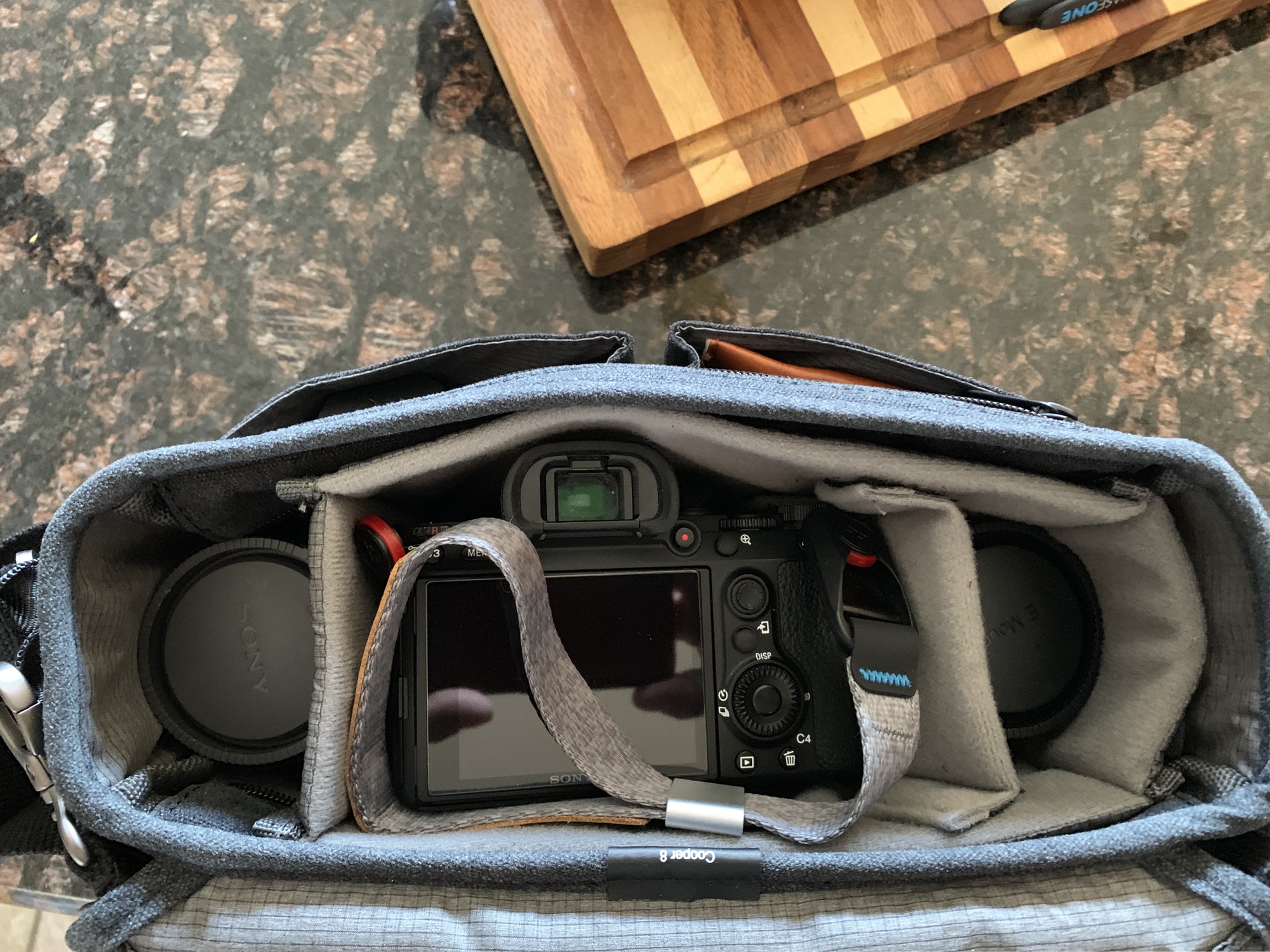
OT again update Tenba Cooper 8
Will fit only 3 lenses and body
Lenses 21 1.4 , 50 1.2 and 75 1.5
These are bigger CV lenses but if you had the smaller lenses you can stack for 4
I like it because a lot of pockets which the Turnstyle does not have
Will fit only 3 lenses and body
Lenses 21 1.4 , 50 1.2 and 75 1.5
These are bigger CV lenses but if you had the smaller lenses you can stack for 4
I like it because a lot of pockets which the Turnstyle does not have
Aug 18, 2019 at 09:51 AM
p.8 #9Voigtlander 75mm f/1.5 Nokton Review
Steve Spencer wrote:
I’d suggest that fast but CV-sized (i.e. not overly heavy or bulky) is the antithesis of Zeiss’s current philosophy of lens design. Not only are they now imprisoned by that belief system but they are not sufficiently nimble nor do they have the resources to implement such a radical shift within a reasonable timeframe.I agree on the first point on lens design. But Zeiss did recently release the ZM 35 1.4, which is large by m-mount standards but small overall and especially for how well corrected it is. And the ZM line is still in production even if most of the lenses are a gen behind. They just need updating.
Either way, I sadly don’t think Zeiss cares.Hardly recently! The ZM 35/1.4 was officially announced at Photokina in September 2014, for release later that year. So no new or updated ZM lenses in the past five years. I have seven ZM lenses including the 35/1.4 but the only way Zeiss could redeem themselves with me is to release a Distagon ZM 28/1.4, which they’ll never do because Voigtlander will beat them to it with a Nokton 28/1.4.Just chatted with David and Bastian and we were actually wondering if Zeiss still has a photo department. Last Loxia was 18 months ago. Batis 40 was anything but a successful release and it seems likely to me that it was developed by Tamron.Well, they did come out with the Otus 100 last year that is a very high performing lens, which you would expect. What I am not sure at all about, however, is whether they are doing any separate development of stills lenses at Zeiss itself, and that may have been true for a long time. As I understand it from David, the Loxia lenses were developed for industrial purposes first and simply modified for stills. The Milvus and Otus lenses one could make a case were developed for video and modified for stills. As you say, it seems the...Show more →
In other words, I believe we can reasonably conclude that:
* any new Milvus designs are unlikely given the terminal decline of the DSLR market;
* similarly new Otus lenses are unlikely—why pay for an Otus when Sigma’s latest designs offer equal or better quality plus AF at a fraction of the Otus price?
* any new Loxia lens will depend upon the demand for a new industrial design;
* based on five years of inactivity the ZM line is finished.
Really, all that’s left for Zeiss is the Tamron (sorry, Batis) line, once they have papered over the Batis 40 fiasco. Though there’s still the ZX1; or is that already dead on arrival? Honestly, who amongst the Zeiss aficionados on the Alt and Sony forums would have dreamed five years ago that the Zeiss whose lens designs we loved and admired would be first supplanted then surpassed by Cosina, Sigma, and Sony?
Phillip Reeve wrote
genji wrote
nehemiahphoto wrote
genji wrote
nehemiahphoto wrote
Entirely agree. I’d like Zeiss to not make them overly heavy or bulky like the Loxia and Batis line. Keep them CV size.Either way, I sadly don’t think Zeiss cares.
In other words, I believe we can reasonably conclude that:
* any new Milvus designs are unlikely given the terminal decline of the DSLR market;
* similarly new Otus lenses are unlikely—why pay for an Otus when Sigma’s latest designs offer equal or better quality plus AF at a fraction of the Otus price?
* any new Loxia lens will depend upon the demand for a new industrial design;
* based on five years of inactivity the ZM line is finished.
Really, all that’s left for Zeiss is the Tamron (sorry, Batis) line, once they have papered over the Batis 40 fiasco. Though there’s still the ZX1; or is that already dead on arrival? Honestly, who amongst the Zeiss aficionados on the Alt and Sony forums would have dreamed five years ago that the Zeiss whose lens designs we loved and admired would be first supplanted then surpassed by Cosina, Sigma, and Sony?
Aug 18, 2019 at 06:09 PM
p.8 #10Voigtlander 75mm f/1.5 Nokton Review
genji wrote:
I agree on the first point on lens design. But Zeiss did recently release the ZM 35 1.4, which is large by m-mount standards but small overall and especially for how well corrected it is. And the ZM line is still in production even if most of the lenses are a gen behind. They just need updating.
Either way, I sadly don’t think Zeiss cares.Hardly recently! The ZM 35/1.4 was officially announced at Photokina in September 2014, for release later that year. So no new or updated ZM lenses in the past five years. I have seven ZM lenses including the 35/1.4 but the only way Zeiss could redeem themselves with me is to release a Distagon ZM 28/1.4, which they’ll never do because Voigtlander will beat them to it with a Nokton 28/1.4.Just chatted with David and Bastian and we were actually wondering if Zeiss still has a photo department. Last Loxia was 18 months ago. Batis 40 was anything but a successful release and it seems likely to me that it was developed by Tamron.Well, they did come out with the Otus 100 last year that is a very high performing lens, which you would expect. What I am not sure at all about, however, is whether they are doing any separate development of stills lenses at Zeiss itself, and that may have been true for a long time. As I understand it from David, the Loxia lenses were developed for industrial purposes first and simply modified for stills. The Milvus and Otus lenses one could make a case were developed for video and modified for stills. As you say, it seems the Batis lenses were developed by Tamron. You really have to go back to the ZM 35 and the Otus 55 (and maybe the Otus 85), to find lenses that look like they were developed by Zeiss primarily for stills. I wonder if in the last 5 years they have decided that they will develop lenses for stills only when they are taking up designs that have been developed for other purposes. And this maybe why Cosina has gone all in with their development of their Voigtlander lenses. They may have known that Zeiss isn't going to be offering really any new lenses and they thought they would fill the gap. If so, they have done so very nicely.In other words, I believe we can reasonably conclude that:
* any new Milvus designs are unlikely given the terminal decline of the DSLR market;
* similarly new Otus lenses are unlikely—why pay for an Otus when Sigma’s latest designs offer equal or better quality plus AF at a fraction of the Otus price?
* any new Loxia lens will depend upon the demand for a new industrial design;
* based on five years of inactivity the ZM line is finished.
Really, all that’s left for Zeiss is the Tamron (sorry, Batis) line, once they have papered over the Batis 40 fiasco. Though there’s still...Show more →
My Milvus lenses work very well on the Z series. Why would Zeiss not produce Milvus for mirrorless cameras? I also think the work of optical redesigning is not that overwhelming once you know how to source different glass reliably, manufacture it, produce advanced coatings etc.
Steve Spencer wrote
Phillip Reeve wrote
genji wrote
nehemiahphoto wrote
genji wrote
I’d suggest that fast but CV-sized (i.e. not overly heavy or bulky) is the antithesis of Zeiss’s current philosophy of lens design. Not only are they now imprisoned by that belief system but they are not sufficiently nimble nor do they have the resources to implement such a radical shift within a reasonable timeframe.Either way, I sadly don’t think Zeiss cares.
* any new Milvus designs are unlikely given the terminal decline of the DSLR market;
* similarly new Otus lenses are unlikely—why pay for an Otus when Sigma’s latest designs offer equal or better quality plus AF at a fraction of the Otus price?
* any new Loxia lens will depend upon the demand for a new industrial design;
* based on five years of inactivity the ZM line is finished.
Really, all that’s left for Zeiss is the Tamron (sorry, Batis) line, once they have papered over the Batis 40 fiasco. Though there’s still...Show more →
My Milvus lenses work very well on the Z series. Why would Zeiss not produce Milvus for mirrorless cameras? I also think the work of optical redesigning is not that overwhelming once you know how to source different glass reliably, manufacture it, produce advanced coatings etc.
Aug 18, 2019 at 06:37 PM
|
p.8 #11Voigtlander 75mm f/1.5 Nokton Review
GMPhotography wrote:
OT again update Tenba Cooper 8
Will fit only 3 lenses and body
Lenses 21 1.4 , 50 1.2 and 75 1.5
These are bigger CV lenses but if you had the smaller lenses you can stack for 4
I like it because a lot of pockets which the Turnstyle does not have
Thanks for the pic! So is it bigger/smaller/same size as the PD 5L?
Aug 18, 2019 at 07:01 PM
p.8 #12Voigtlander 75mm f/1.5 Nokton Review
AcuteShadows wrote:
Either way, I sadly don’t think Zeiss cares.Hardly recently! The ZM 35/1.4 was officially announced at Photokina in September 2014, for release later that year. So no new or updated ZM lenses in the past five years. I have seven ZM lenses including the 35/1.4 but the only way Zeiss could redeem themselves with me is to release a Distagon ZM 28/1.4, which they’ll never do because Voigtlander will beat them to it with a Nokton 28/1.4.Just chatted with David and Bastian and we were actually wondering if Zeiss still has a photo department. Last Loxia was 18 months ago. Batis 40 was anything but a successful release and it seems likely to me that it was developed by Tamron.Well, they did come out with the Otus 100 last year that is a very high performing lens, which you would expect. What I am not sure at all about, however, is whether they are doing any separate development of stills lenses at Zeiss itself, and that may have been true for a long time. As I understand it from David, the Loxia lenses were developed for industrial purposes first and simply modified for stills. The Milvus and Otus lenses one could make a case were developed for video and modified for stills. As you say, it seems the Batis lenses were developed by Tamron. You really have to go back to the ZM 35 and the Otus 55 (and maybe the Otus 85), to find lenses that look like they were developed by Zeiss primarily for stills. I wonder if in the last 5 years they have decided that they will develop lenses for stills only when they are taking up designs that have been developed for other purposes. And this maybe why Cosina has gone all in with their development of their Voigtlander lenses. They may have known that Zeiss isn't going to be offering really any new lenses and they thought they would fill the gap. If so, they have done so very nicely.In other words, I believe we can reasonably conclude that:
* any new Milvus designs are unlikely given the terminal decline of the DSLR market;
* similarly new Otus lenses are unlikely—why pay for an Otus when Sigma’s latest designs offer equal or better quality plus AF at a fraction of the Otus price?
* any new Loxia lens will depend upon the demand for a new industrial design;
* based on five years of inactivity the ZM line is finished.
Really, all that’s left for Zeiss is the Tamron (sorry, Batis) line, once they have papered over the Batis 40 fiasco. Though there’s still the ZX1; or is that already dead on arrival? Honestly, who amongst the Zeiss aficionados on the Alt and Sony forums would have dreamed five years ago that the Zeiss whose lens designs we loved and admired would be first supplanted then surpassed by Cosina, Sigma, and Sony?My Milvus lenses work very well on the Z series. Why would Zeiss not produce Milvus for mirrorless cameras? I also think the work of optical redesigning is not that overwhelming once you know how to source different glass reliably, manufacture it, produce advanced coatings etc.
There would be no reason at all for Zeiss not to produce Milvus lenses for mirrorless cameras. But that wasn't my point, which is that new Milvus designs are unlikely. Warmed-up versions of existing designs totally exemplify what the current "it's all about the marketing because we're coasting on the fumes of our once great reputation" Zeiss has been reduced to.
genji wrote
Steve Spencer wrote
Phillip Reeve wrote
genji wrote
nehemiahphoto wrote
I agree on the first point on lens design. But Zeiss did recently release the ZM 35 1.4, which is large by m-mount standards but small overall and especially for how well corrected it is. And the ZM line is still in production even if most of the lenses are a gen behind. They just need updating.Either way, I sadly don’t think Zeiss cares.
* any new Milvus designs are unlikely given the terminal decline of the DSLR market;
* similarly new Otus lenses are unlikely—why pay for an Otus when Sigma’s latest designs offer equal or better quality plus AF at a fraction of the Otus price?
* any new Loxia lens will depend upon the demand for a new industrial design;
* based on five years of inactivity the ZM line is finished.
Really, all that’s left for Zeiss is the Tamron (sorry, Batis) line, once they have papered over the Batis 40 fiasco. Though there’s still the ZX1; or is that already dead on arrival? Honestly, who amongst the Zeiss aficionados on the Alt and Sony forums would have dreamed five years ago that the Zeiss whose lens designs we loved and admired would be first supplanted then surpassed by Cosina, Sigma, and Sony?
There would be no reason at all for Zeiss not to produce Milvus lenses for mirrorless cameras. But that wasn't my point, which is that new Milvus designs are unlikely. Warmed-up versions of existing designs totally exemplify what the current "it's all about the marketing because we're coasting on the fumes of our once great reputation" Zeiss has been reduced to.
Aug 18, 2019 at 07:15 PM
p.8 #13Voigtlander 75mm f/1.5 Nokton Review
mudlake wrote:
Will fit only 3 lenses and body
Lenses 21 1.4 , 50 1.2 and 75 1.5
These are bigger CV lenses but if you had the smaller lenses you can stack for 4
I like it because a lot of pockets which the Turnstyle does not haveThanks for the pic! So is it bigger/smaller/same size as the PD 5L?
It’s bigger because it’s a rectangle instead the tear drop shape of the Turnstyle.
GMPhotography wrote
OT again update Tenba Cooper 8Will fit only 3 lenses and body
Lenses 21 1.4 , 50 1.2 and 75 1.5
These are bigger CV lenses but if you had the smaller lenses you can stack for 4
I like it because a lot of pockets which the Turnstyle does not have
It’s bigger because it’s a rectangle instead the tear drop shape of the Turnstyle.
Aug 18, 2019 at 07:28 PM
p.8 #14Voigtlander 75mm f/1.5 Nokton Review
mudlake wrote:
Will fit only 3 lenses and body
Lenses 21 1.4 , 50 1.2 and 75 1.5
These are bigger CV lenses but if you had the smaller lenses you can stack for 4
I like it because a lot of pockets which the Turnstyle does not haveThanks for the pic! So is it bigger/smaller/same size as the PD 5L?
It has to big longer because you can't have the Riii with room for a lens on each side.
GMPhotography wrote
OT again update Tenba Cooper 8Will fit only 3 lenses and body
Lenses 21 1.4 , 50 1.2 and 75 1.5
These are bigger CV lenses but if you had the smaller lenses you can stack for 4
I like it because a lot of pockets which the Turnstyle does not have
It has to big longer because you can't have the Riii with room for a lens on each side.
Aug 18, 2019 at 07:34 PM
p.8 #15Voigtlander 75mm f/1.5 Nokton Review
mudlake wrote:
Will fit only 3 lenses and body
Lenses 21 1.4 , 50 1.2 and 75 1.5
These are bigger CV lenses but if you had the smaller lenses you can stack for 4
I like it because a lot of pockets which the Turnstyle does not haveThanks for the pic! So is it bigger/smaller/same size as the PD 5L?
It has to big longer because you can't have the Riii with room for a lens on each side.
GMPhotography wrote
OT again update Tenba Cooper 8Will fit only 3 lenses and body
Lenses 21 1.4 , 50 1.2 and 75 1.5
These are bigger CV lenses but if you had the smaller lenses you can stack for 4
I like it because a lot of pockets which the Turnstyle does not have
It has to big longer because you can't have the Riii with room for a lens on each side.
Aug 18, 2019 at 07:36 PM
p.8 #16Voigtlander 75mm f/1.5 Nokton Review
genji wrote:
Just chatted with David and Bastian and we were actually wondering if Zeiss still has a photo department. Last Loxia was 18 months ago. Batis 40 was anything but a successful release and it seems likely to me that it was developed by Tamron.Well, they did come out with the Otus 100 last year that is a very high performing lens, which you would expect. What I am not sure at all about, however, is whether they are doing any separate development of stills lenses at Zeiss itself, and that may have been true for a long time. As I understand it from David, the Loxia lenses were developed for industrial purposes first and simply modified for stills. The Milvus and Otus lenses one could make a case were developed for video and modified for stills. As you say, it seems the Batis lenses were developed by Tamron. You really have to go back to the ZM 35 and the Otus 55 (and maybe the Otus 85), to find lenses that look like they were developed by Zeiss primarily for stills. I wonder if in the last 5 years they have decided that they will develop lenses for stills only when they are taking up designs that have been developed for other purposes. And this maybe why Cosina has gone all in with their development of their Voigtlander lenses. They may have known that Zeiss isn't going to be offering really any new lenses and they thought they would fill the gap. If so, they have done so very nicely.In other words, I believe we can reasonably conclude that:
* any new Milvus designs are unlikely given the terminal decline of the DSLR market;
* similarly new Otus lenses are unlikely—why pay for an Otus when Sigma’s latest designs offer equal or better quality plus AF at a fraction of the Otus price?
* any new Loxia lens will depend upon the demand for a new industrial design;
* based on five years of inactivity the ZM line is finished.
Really, all that’s left for Zeiss is the Tamron (sorry, Batis) line, once they have papered over the Batis 40 fiasco. Though there’s still the ZX1; or is that already dead on arrival? Honestly, who amongst the Zeiss aficionados on the Alt and Sony forums would have dreamed five years ago that the Zeiss whose lens designs we loved and admired would be first supplanted then surpassed by Cosina, Sigma, and Sony?My Milvus lenses work very well on the Z series. Why would Zeiss not produce Milvus for mirrorless cameras? I also think the work of optical redesigning is not that overwhelming once you know how to source different glass reliably, manufacture it, produce advanced coatings etc.There would be no reason at all for Zeiss not to produce Milvus lenses for mirrorless cameras. But that wasn't my point, which is that new Milvus designs are unlikely. Warmed-up versions of existing designs totally exemplify what the current "it's all about the marketing because we're coasting on the fumes of our once great reputation" Zeiss has been reduced to.
The Milvus lenses, especially those with new optical formulae, are a huge improvement over the Zeiss Classic lenses. Why would Zeiss be unable to make new designs and further improvements? In particular, past designs were limited by unsophisticated coating (limiting number and arrangement of lenses), lack of efficient aspherical lens manufacturing capabilities and mount distance and diameter. So there is a lot of room for improment in the future.
AcuteShadows wrote
genji wrote
Steve Spencer wrote
Phillip Reeve wrote
genji wrote
Hardly recently! The ZM 35/1.4 was officially announced at Photokina in September 2014, for release later that year. So no new or updated ZM lenses in the past five years. I have seven ZM lenses including the 35/1.4 but the only way Zeiss could redeem themselves with me is to release a Distagon ZM 28/1.4, which they’ll never do because Voigtlander will beat them to it with a Nokton 28/1.4.* any new Milvus designs are unlikely given the terminal decline of the DSLR market;
* similarly new Otus lenses are unlikely—why pay for an Otus when Sigma’s latest designs offer equal or better quality plus AF at a fraction of the Otus price?
* any new Loxia lens will depend upon the demand for a new industrial design;
* based on five years of inactivity the ZM line is finished.
Really, all that’s left for Zeiss is the Tamron (sorry, Batis) line, once they have papered over the Batis 40 fiasco. Though there’s still the ZX1; or is that already dead on arrival? Honestly, who amongst the Zeiss aficionados on the Alt and Sony forums would have dreamed five years ago that the Zeiss whose lens designs we loved and admired would be first supplanted then surpassed by Cosina, Sigma, and Sony?
The Milvus lenses, especially those with new optical formulae, are a huge improvement over the Zeiss Classic lenses. Why would Zeiss be unable to make new designs and further improvements? In particular, past designs were limited by unsophisticated coating (limiting number and arrangement of lenses), lack of efficient aspherical lens manufacturing capabilities and mount distance and diameter. So there is a lot of room for improment in the future.
Aug 18, 2019 at 08:00 PM
p.8 #17Voigtlander 75mm f/1.5 Nokton Review
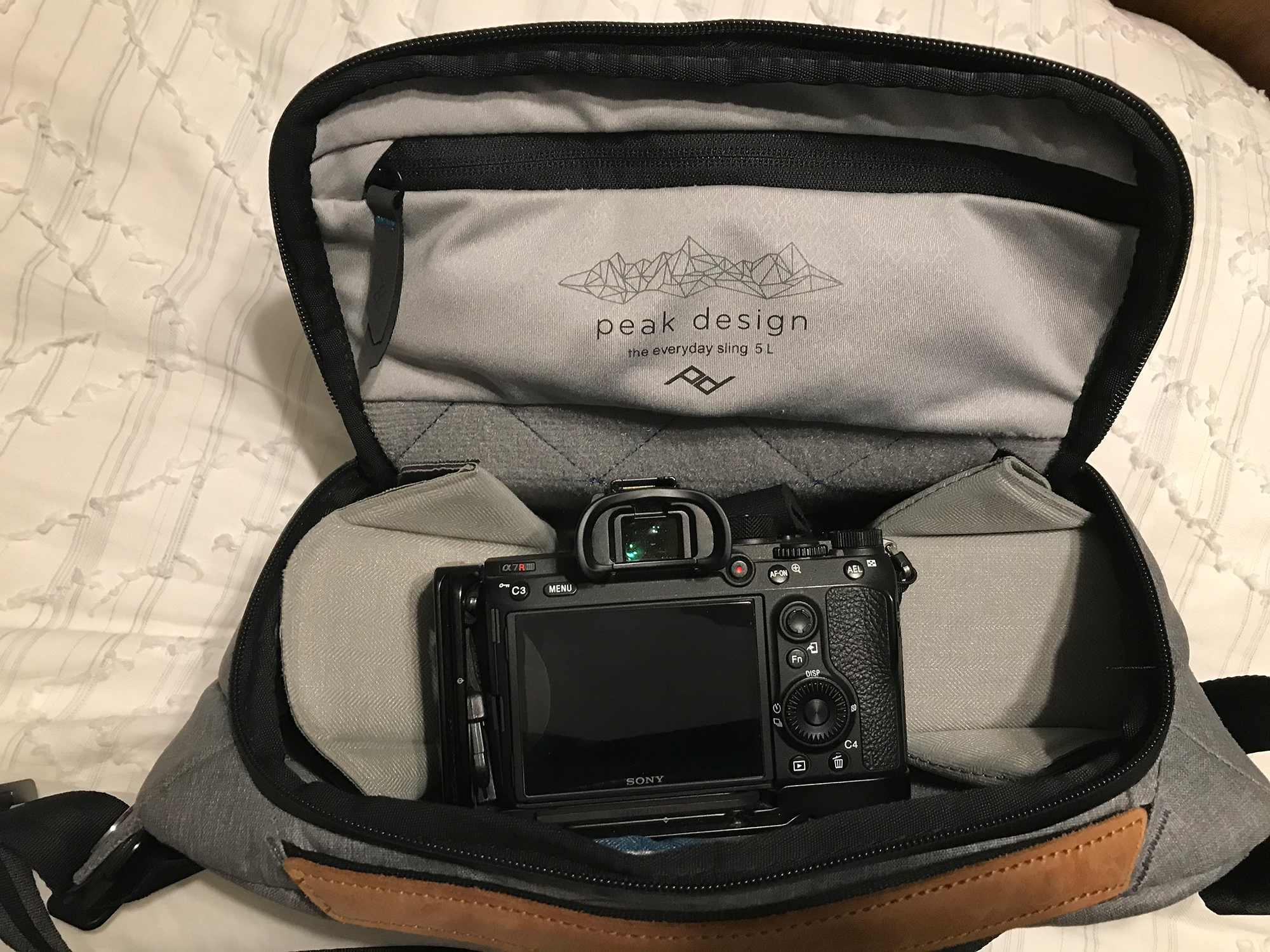
I can fit 3 lenses plus A7RIII in my PD 5L if the lenses are the right size. Below I have the CV 40 on the camera with the CV 21/3.5 and CV 10 on the sides. I would like to fit the CV 40, 24GM, and CV 10 in the 5L, but it's just too tight and is hard when switching lenses to get the right fit. It looks like the Cooper 8 may have a little more room. Sorry this is off topic but it is helpful!
Aug 18, 2019 at 08:07 PM
p.8 #18Voigtlander 75mm f/1.5 Nokton Review
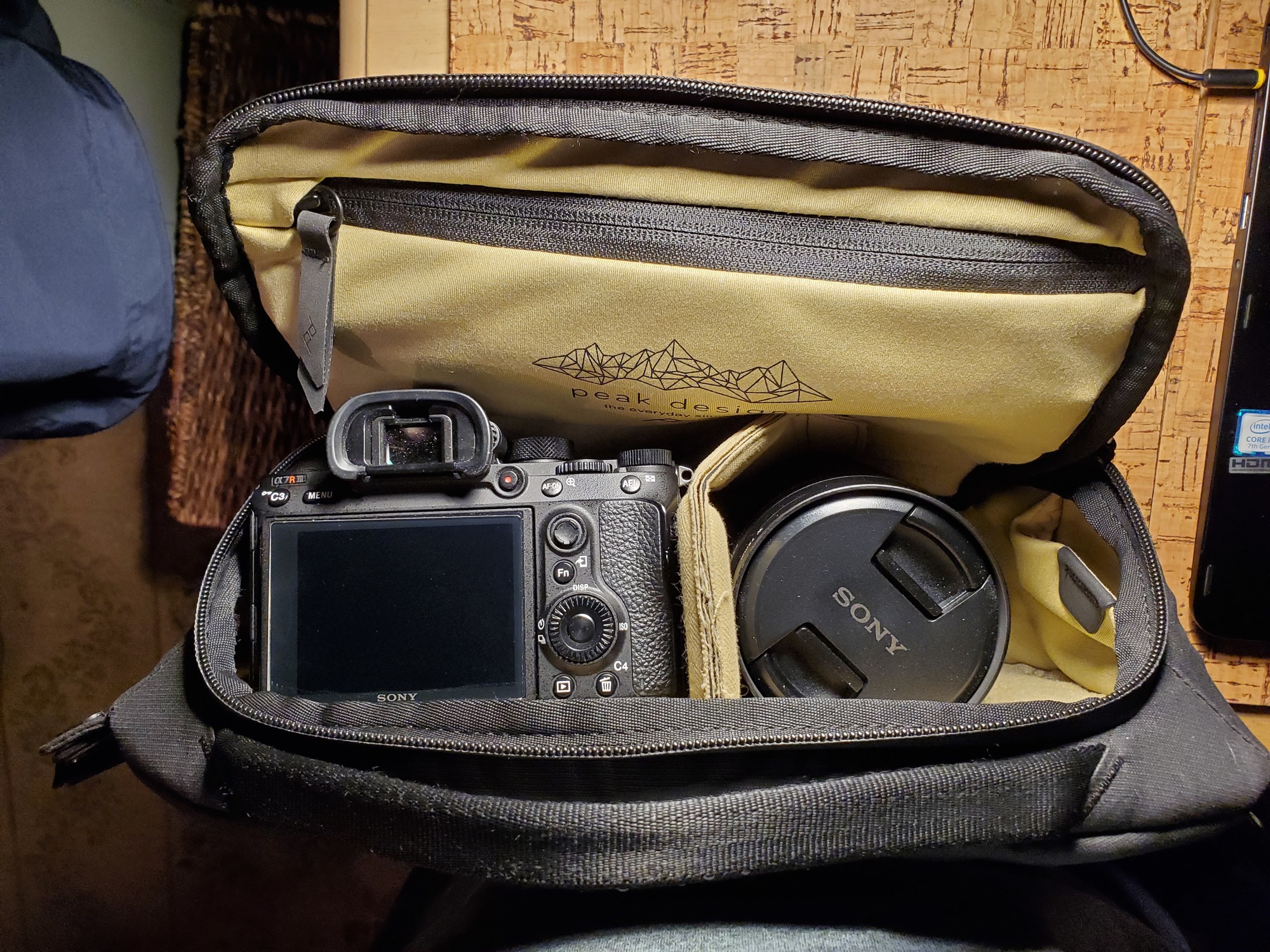
Yea the PD 5 is a three lens bag but small lenses. Like the CV 15,21 3.5, Loxia 21,35 and lenses these kinds of sizes. Turnstyle 5 is a little bigger but still hard with my glass like the 21 1.4,50 1.2 and the 75 1.5. Now if you jump to the Turnstlye 10 you can get my collection plus a 12 or 15
The Tenba Cooper 8 I just got I can fit my 21,50,75 plus you get some extra room for filters , batteries , your phone. I removed the pad from the shoulder strap. Removed a divider and the stacking dividers. Slide the insert to one side leaving a blank space for a lens. Look at that photo again. I may pull that one divider and replace with a thinner one. I also took off my extension grip. Now I’m figuring once I get the A7rIV I may not need that extension grip as it looks like the IV I may not need it. I’m planning ahead.
I can also get my little RRS table top in the Tenba . I feel it is the better travel bag. Maybe not the best bag to shoot from but what bag is . Plus it’s really nice looking so you don’t look like a bum.
Kidding
Aug 18, 2019 at 08:21 PM
p.8 #19Voigtlander 75mm f/1.5 Nokton Review
There is also a loop on one end. I could put my 12 in a small pouch and attach it .
I’m thinking on more photo trips than I could go to the Turnstyle 10 for 4 lenses with a lot of room or throw in a AF lens like my 24
I know this is way off topic but frankly to me it’s right on topic. You need to know how these type of lenses fit in bags. I’ll buy lenses just for bag size. I walk a lot in NY and LA areas for stock shooting. I don’t want to stand out but look normal . The Tenba is actually understated
Aug 18, 2019 at 08:26 PM
p.8 #20Voigtlander 75mm f/1.5 Nokton Review
AcuteShadows wrote:
Well, they did come out with the Otus 100 last year that is a very high performing lens, which you would expect. What I am not sure at all about, however, is whether they are doing any separate development of stills lenses at Zeiss itself, and that may have been true for a long time. As I understand it from David, the Loxia lenses were developed for industrial purposes first and simply modified for stills. The Milvus and Otus lenses one could make a case were developed for video and modified for stills. As you say, it seems the Batis lenses were developed by Tamron. You really have to go back to the ZM 35 and the Otus 55 (and maybe the Otus 85), to find lenses that look like they were developed by Zeiss primarily for stills. I wonder if in the last 5 years they have decided that they will develop lenses for stills only when they are taking up designs that have been developed for other purposes. And this maybe why Cosina has gone all in with their development of their Voigtlander lenses. They may have known that Zeiss isn't going to be offering really any new lenses and they thought they would fill the gap. If so, they have done so very nicely.In other words, I believe we can reasonably conclude that:
* any new Milvus designs are unlikely given the terminal decline of the DSLR market;
* similarly new Otus lenses are unlikely—why pay for an Otus when Sigma’s latest designs offer equal or better quality plus AF at a fraction of the Otus price?
* any new Loxia lens will depend upon the demand for a new industrial design;
* based on five years of inactivity the ZM line is finished.
Really, all that’s left for Zeiss is the Tamron (sorry, Batis) line, once they have papered over the Batis 40 fiasco. Though there’s still the ZX1; or is that already dead on arrival? Honestly, who amongst the Zeiss aficionados on the Alt and Sony forums would have dreamed five years ago that the Zeiss whose lens designs we loved and admired would be first supplanted then surpassed by Cosina, Sigma, and Sony?My Milvus lenses work very well on the Z series. Why would Zeiss not produce Milvus for mirrorless cameras? I also think the work of optical redesigning is not that overwhelming once you know how to source different glass reliably, manufacture it, produce advanced coatings etc.There would be no reason at all for Zeiss not to produce Milvus lenses for mirrorless cameras. But that wasn't my point, which is that new Milvus designs are unlikely. Warmed-up versions of existing designs totally exemplify what the current "it's all about the marketing because we're coasting on the fumes of our once great reputation" Zeiss has been reduced to.The Milvus lenses, especially those with new optical formulae, are a huge improvement over the Zeiss Classic lenses. Why would Zeiss be unable to make new designs and further improvements? In particular, past designs were limited by unsophisticated coating (limiting number and arrangement of lenses), lack of efficient aspherical lens manufacturing capabilities and mount distance and diameter. So there is a lot of room for improment in the future.
Perhaps best that we agree to disagree. You may well be correct though I believe that Zeiss has neither the resources for nor the commitment to making still camera lenses that would be required to do what you suggest. But time will tell.
genji wrote
AcuteShadows wrote
genji wrote
Steve Spencer wrote
Phillip Reeve wrote
Just chatted with David and Bastian and we were actually wondering if Zeiss still has a photo department. Last Loxia was 18 months ago. Batis 40 was anything but a successful release and it seems likely to me that it was developed by Tamron.* any new Milvus designs are unlikely given the terminal decline of the DSLR market;
* similarly new Otus lenses are unlikely—why pay for an Otus when Sigma’s latest designs offer equal or better quality plus AF at a fraction of the Otus price?
* any new Loxia lens will depend upon the demand for a new industrial design;
* based on five years of inactivity the ZM line is finished.
Really, all that’s left for Zeiss is the Tamron (sorry, Batis) line, once they have papered over the Batis 40 fiasco. Though there’s still the ZX1; or is that already dead on arrival? Honestly, who amongst the Zeiss aficionados on the Alt and Sony forums would have dreamed five years ago that the Zeiss whose lens designs we loved and admired would be first supplanted then surpassed by Cosina, Sigma, and Sony?
Perhaps best that we agree to disagree. You may well be correct though I believe that Zeiss has neither the resources for nor the commitment to making still camera lenses that would be required to do what you suggest. But time will tell.
Aug 18, 2019 at 09:11 PM