p.3 #1 · which lens for Art reproduction photography
If there is any texture in the painting, a soft box may not give you what you want. Try using different lights to model the work and depth will be perceived. Macros have a very flat curvature and are all very sharp at close range but on full frame, I would not go past f8.
p.3 #2 · which lens for Art reproduction photography
mogul wrote:
If there is any texture in the painting, a soft box may not give you what you want. Try using different lights to model the work and depth will be perceived. Macros have a very flat curvature and are all very sharp at close range but on full frame, I would not go past f8.
I tried different angles with two softboxes, texture was oke.
To get equality divided light on the artwork was more difficult, and to avoid hard shadows.
p.3 #3 · which lens for Art reproduction photography
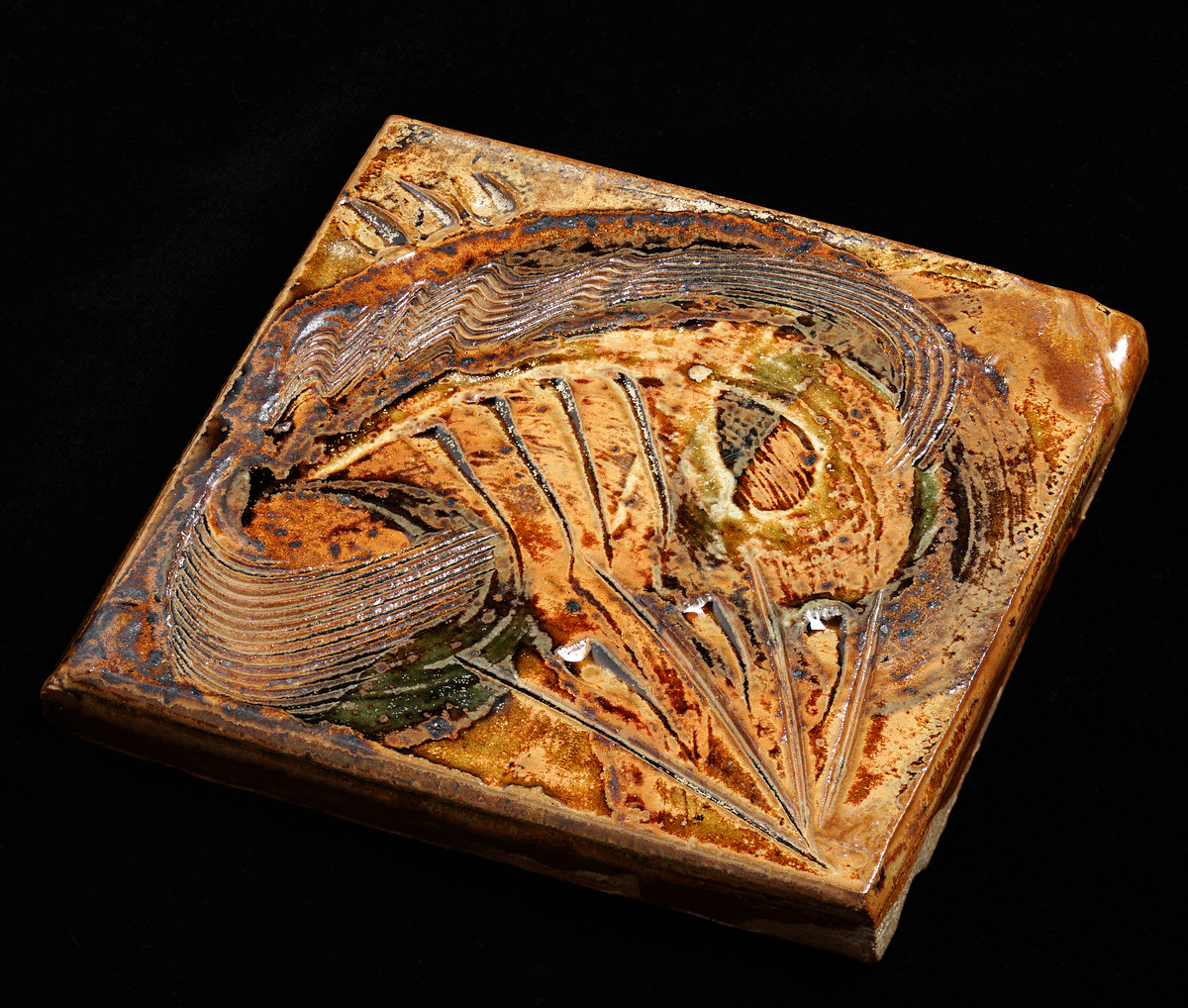
A large source is necessary to capture paint contours: family of angles and all that jolly rot. A point source is too much of a good thing, and will generate very little in the way of speculars and be exceedingly high in contrast. At the other extreme is a light tent that has no directionality and will make any subject look dead. I use a single diffusion panel for key, and the entire studio (a white box) as ambient fill. I might use a fill card for extra zing. Longer lenses tend to be better corrected, and have less vignetting. They also ensure you and the rig aren't casting shadows and strange colors onto the subject. Field curvature can be solved by stopping down, but low linear distortion is highly desirable for copy work. Example of flat art, this time from an angle. I opted to boost specularity to accentuate the grooved surface:
For mine next shoot I will not going narrower than f8
Sorry for the misunderstanding. That lens you show is the newest offering, and is an auto focus Zeiss/Sony, and has an outstanding reputation, and a price tag to match, but I've not seen it promoted as a flat field lens with close-up capabilities. If I am mistaken, I apologize.
I was referring particularly to the manual focus Contax 50/1.4 (which is outstanding as a general lens) and Zeiss ZE/ZF 50/1.4 (which has terrible focus shift as well as some field curvature). Even the ZE/ZF 50/2 Macro has terrible FC.
I saw you mention the Nikon 60/2.8D Micro lens, and if you shoot it via adapter in manual focus mode, it is an outstanding macro lens for your type of project. I'm only aware of the Commlite Pro with electrical contacts for exif, but it doesn't support AF-D functioning (only "G" lenses get AF). Still, you will probably be best off with manual focusing and perhaps focus stacking. You can also just use a "dumb" adapter and get great results.
p.3 #7 · which lens for Art reproduction photography
RCicala wrote:
With all respect, what you are missing is System MTF = Lens MTF X camera MTF. (You can substitute resolution or sharpness for MTF if you like.) The key thing it's multiplicative. Basically unless you use a bottle for a lens or a 2 Megapixel camera, where one or the other is near zero, there is no "outresolve".
You can measure them scientifically (a made-up 'megapixels of resolution number' is not science, it's marketing). So if camera measures 0.6 and lens 0.8, then system measures 0.48, which would be reasonable. Make the camera 0.9 or 0.4 and system measures 0.54 or 0.24. There is no point where the lens 'outresolves' the sensor.
Similarly, if you keep the same camera and put on a better lens the numbers change but there's no point (in the range of anything reasonable) where one stops having any effect on the other.
What it does tell you is your improvement is greatest when you improve the weaker point, camera or lens. Also tells you that improving your camera makes every one of your lenses better, even your 'not best' lenses. (That doesn't mean you need a new camera; that decision is more about how you print and what you shoot.)
There may be some cheap kit zooms or decentered lenses out there that are bad enough to not show improvement with a better camera, but nothing short of that would meet the 'can't notice change in your images' criteria. Similarly, unless you're literally down around 12 megapixel full-frame cameras, a better lens will be noticeably better in your images.
Always a pleasure when you reply and set things straight, Roger!
I was merely trying to suggest that I don't think the Sony FE 90mm Macro is the issue (unless it is defect). I would assume that the 24 MP sensor is more likely to be the limiting factor resolution wise than the lens in this particular setup (Lens MTF greater than Camera MTF), but I get your point.
p.3 #8 · which lens for Art reproduction photography
I run 4 repro studios so hope I can help.
The Voigtlander 65mm Macro lens is probably the best lens you can have for your Sony. Period. Manual focusing an AF lens this precisely is not fun. Instead this lens, especially due to its biting sharpness wide open, is a joy to focus precisely before closing down for the exposure. The focal length gives a good working distance and is our best lens in the studio for sharpness and colour. Incidentally on a sensor like that, you want to be shooting at f5.6 due to diffraction (it's plenty DOF for flat art work!) and this lens can handle it beautifully all the way out to the edges. Ours is currently relegated to 'special projects only' status at present. We're a very busy operation and you can't ignore the speed and convenience of using AF.
Another option we're very happy with is the Sigma 70mm ART Macro. Not quite as sharp at the Voigt and the colour isn't quite as good but it's a great workhorse. We have 3 of them running all day long at present and will buy a fourth when we finally convert one of the studios from Nikon to Sony. Just waiting for that 60 megapixel A7r4 I've been dreaming of.
Lighting is a whole other story. We've actually got some new LED lights arriving tomorrow which I'm keen to test out. We're in the process of changing over from flash to LED currently. Knowing lighting and how it works is critical, precise angling is super critical and repro lighting in general is very very difficult to get perfect. Our requirements of under <0.1 stop variation across the entire frame without any reflections or hot spots (specular highlights) including when under glass all while not compromising on good contrast is an art form in of itself. Add the requirement of brush stroke 3 dimensionality and yeah, good repro photographers are worth their price and should be excused all and any language used while setting up!
Repro photography is not product photography. You're trying to create a faithful reproduction of the original, not a cool photo of it. Big difference.
Quick tip when using AF lenses on your sony for repro. Zoom into the live view all the way and only then focus. Considerably more accurate than focusing regularly. We've assigned the C2 button for zoom and C1 for focus specifically to take advantage of this.
p.3 #9 · which lens for Art reproduction photography
I should add that although we have two copies of the Sigma 50mm 1.4 ART it is not a lens designed for or optimal for copy work. Neither it seems are most 50mm lenses including the Macro options. We were not impressed with the FE 50mm Macro, albeit we only tested one copy.
Someone mentioned the Nikkor 60mm Micro. Excellent copy lens. Been using it for years on our Nikon D8** cameras. Make sure you get a good copy. One of ours is superlative. The others MA is so far out that we can't get the AF accurate on 3 bodies. Works fine with MF but then the focus ring is horrible to use. We use them on the Sony (sometimes) using an adaptor which allows aperture adjustment. Can't remember the model (*edit* it's the Fotodiox with the orange ring).
A really nice and super cheap MF Macro lens option is the Mamiya 80mm f4 Macro lens. Our new Sigma 70mm Arts just edge it out at the corners at f8, I prefer the colour from the Mamiya and that 30 year old Mamiya lens cost us just $200 shipped. Very impressive lens for copy work and I'm told the Mamiya 120mm Macro of the same vintage is just as good. Ours is still working all day every day in our main studio, bolted onto a D810.
p.3 #12 · which lens for Art reproduction photography
Beni wrote:
I run 4 repro studios so hope I can help.
The Voigtlander 65mm Macro lens is probably the best lens you can have for your Sony. Period. Manual focusing an AF lens this precisely is not fun. Instead this lens, especially due to its biting sharpness wide open, is a joy to focus precisely before closing down for the exposure. The focal length gives a good working distance and is our best lens in the studio for sharpness and colour. Incidentally on a sensor like that, you want to be shooting at f5.6 due to diffraction (it's plenty DOF for flat art work!) and this lens can handle it beautifully all the way out to the edges. Ours is currently relegated to 'special projects only' status at present. We're a very busy operation and you can't ignore the speed and convenience of using AF.
Another option we're very happy with is the Sigma 70mm ART Macro. Not quite as sharp at the Voigt and the colour isn't quite as good but it's a great workhorse. We have 3 of them running all day long at present and will buy a fourth when we finally convert one of the studios from Nikon to Sony. Just waiting for that 60 megapixel A7r4 I've been dreaming of.
Lighting is a whole other story. We've actually got some new LED lights arriving tomorrow which I'm keen to test out. We're in the process of changing over from flash to LED currently. Knowing lighting and how it works is critical, precise angling is super critical and repro lighting in general is very very difficult to get perfect. Our requirements of under <0.1 stop variation across the entire frame without any reflections or hot spots (specular highlights) including when under glass all while not compromising on good contrast is an art form in of itself. Add the requirement of brush stroke 3 dimensionality and yeah, good repro photographers are worth their price and should be excused all and any language used while setting up!
Repro photography is not product photography. You're trying to create a faithful reproduction of the original, not a cool photo of it. Big difference.
Quick tip when using AF lenses on your sony for repro. Zoom into the live view all the way and only then focus. Considerably more accurate than focusing regularly. We've assigned the C2 button for zoom and C1 for focus specifically to take advantage of this....Show more →
Lots of good information, very useful! do you use the Voigtlander 65mm Macro on a A7III or RIII
The focal length look spot on for me. I'll search for a demo Voigtlander 65mm (its not for rent) to try.
Enough to learn for me on lighting… I always start with two big softboxes and experiment a bit, if you have a tip for learn repro lighting from the internet that would be great
as a starting point.
Can you tell a little of your procedure from start with focusing (have read your tip) and how setting flash settings on the A7III, it's me to do the basics well and make solid build work flow. I mainly shoot art paintings and drawings on the wall.
Love to see some of your work with the Voigtlander 65mm!
p.3 #13 · which lens for Art reproduction photography
A note on the system sharpness issue. Important to note the the numbers involved are less than 1, i.e. you are multiplying fractions. Both the lens and the sensor are less than perfection (perfection = 1). That is why the product of the two is worse than the sum of the parts. The value of "1" is perfection so both the lens value is <1 and the sensor value is <1. Multiplying the two fractional values will always produce a result worse than either of its components. In other words, any lens makes any sensor worse than it could be and vice versa.
If you have a razor like the Sony 90 and still want sharper images, then renting an A7rIII should yield more than swapping lenses (unless you had a bad sample, poor alignment, etc.).
For focusing, you already have a geared head. Perhaps a bidirectional geared focusing rail would help as well. And, of course, using the focusing magnifier on the camera.
p.3 #14 · which lens for Art reproduction photography
Arty73 wrote:
Lots of good information, very useful! do you use the Voigtlander 65mm Macro on a A7III or RIII
The focal length look spot on for me. I'll search for a demo Voigtlander 65mm (its not for rent) to try.
Enough to learn for me on lighting… I always start with two big softboxes and experiment a bit, if you have a tip for learn repro lighting from the internet that would be great
as a starting point.
Can you tell a little of your procedure from start with focusing (have read your tip) and how setting flash settings on the A7III, it's me to do the basics well and make solid build work flow. I mainly shoot art paintings and drawings on the wall.
Love to see some of your work with the Voigtlander 65mm!...Show more →
I can't show much I'm afraid, we work for libraries and can't publicise our stuff without their OK. In any case you can't really tell the difference except at 100% (if that) with any good repro lens. Especially if you ICC profile each lens and lighting setup like we do.
We're using A7rIII's as well as Nikon D800e's and a D810. We used to have a Mamiya DF with a Leaf Aptus-8 Digital Back.
Big softboxes are not a good idea. You need to control that light not shoot it everywhere if you want decent contrast. Big softboxes equal flat contrast. Think of covering the size of your object with light to have an even spread. But no more. We use bare lights on most of our stations, albeit it gives us a reduced even coverage of the frame so we stitch larger stuff. We're working on solutions for larger stuff right now.
Here is a good Kaiser copy setup that we're currently using in two of the studio's, albeit with a larger base board. As you can see the lighting is far from large. Even so it's large enough in comparison to our flash heads that we're getting substantially reduced contrast.
I don't know of any good repro resources online to be honest. I wish there were some, we learnt it all the hard way and I'd like more experience myself with perfect lighting for very large originals.
A tip I would share is to try and understand why 45 degrees lighting to the artwork is necessary. Basically it is the best compromise between even coverage and sufficient contrast. The most even lighting is created from the camera angle. However the contrast is the worst at that point, ditto reflections. The highest contrast and least reflections is with the lighting at 90 degrees to the artwork but then even lighting is problematic. The 'correct' compromise is 45 degrees however we cheat a bit and use 35 degrees for higher contrast and sufficiently even coverage. Another trick is that the further away your lighting the better the contrast while still maintaining the correct angle. There are some other tricks like having each light point not to the centre of the artwork but the centre of the far side of the artwork.
I'll try and get some images to share tomorrow. They won't look exciting though, they'll just look accurate to the original which is the point.
p.3 #16 · which lens for Art reproduction photography
Here's an example picture shot with the (big) Kaiser stand shown in the pic above and the LED lighting from the Kaiser catalogue link above. It is a damaged 4X3ft (ish) 141 year old Marriage Contract from somewhere in the Middle East though I can't quite translate the name of the city in the text, I do the photography and leave the history stuff to people who have degrees in that kind of thing. (*Edit* It's somewhere in Persia apparently)
We flat stitched it and the resulting image is 162 megapixels. Oh and the artwork really is that squint The document was covered in loose and wavy plastic wrap that we were not allowed to remove and could not appear in the image, it was a tough job! we had some 200+ of these to do with a tight time frame.
Shot with the A7rIII and Sigma 70mm Art. We originally attempted it with the Sigma Art 35mm trying for less frames and I realised, again, why we don't try stitching flat images with a wide angle! Often the most important lessons need to be learnt again and again.
p.3 #17 · which lens for Art reproduction photography
Another tip. You really, really need to have the camera perfectly straight. Not easy at all. The Sony electronic level freezes up with the camera pointed directly down on our two newer mkIII's, the first one with the original firmware works fine. Weird. A hotshoe spirit level is useless unless you're sure it's sitting perfectly straight in the hotshoe! Not easy with the electronic contacts at the end of the Sony hotshoe. But yeah, you need the camera straight for flat focus across the frame and not to spend hours doing keystone correction cause who has time for that when the clock is ticking? We use the grid in Capture One's Live View (you can customise it how you like) to ensure our camera is perfectly squared up at the beginning of the day.
p.3 #18 · which lens for Art reproduction photography
I always use my Zeiss Otus 55mm for art reproduction, and importantly always use natural light.
For the lens you probably want as close to perfect MTF as possible (hence APO designs like the Otus would fare well), or else avoid positioning any of the artwork near the borders of the image.
I don't trust artificial light sources to preserve the spectrum characteristics of the paint. Even with color checker calibration per shot, my results with daylight (sometimes requires moving the paintings) are always better and closer to the originals after adjustment.
p.3 #19 · which lens for Art reproduction photography
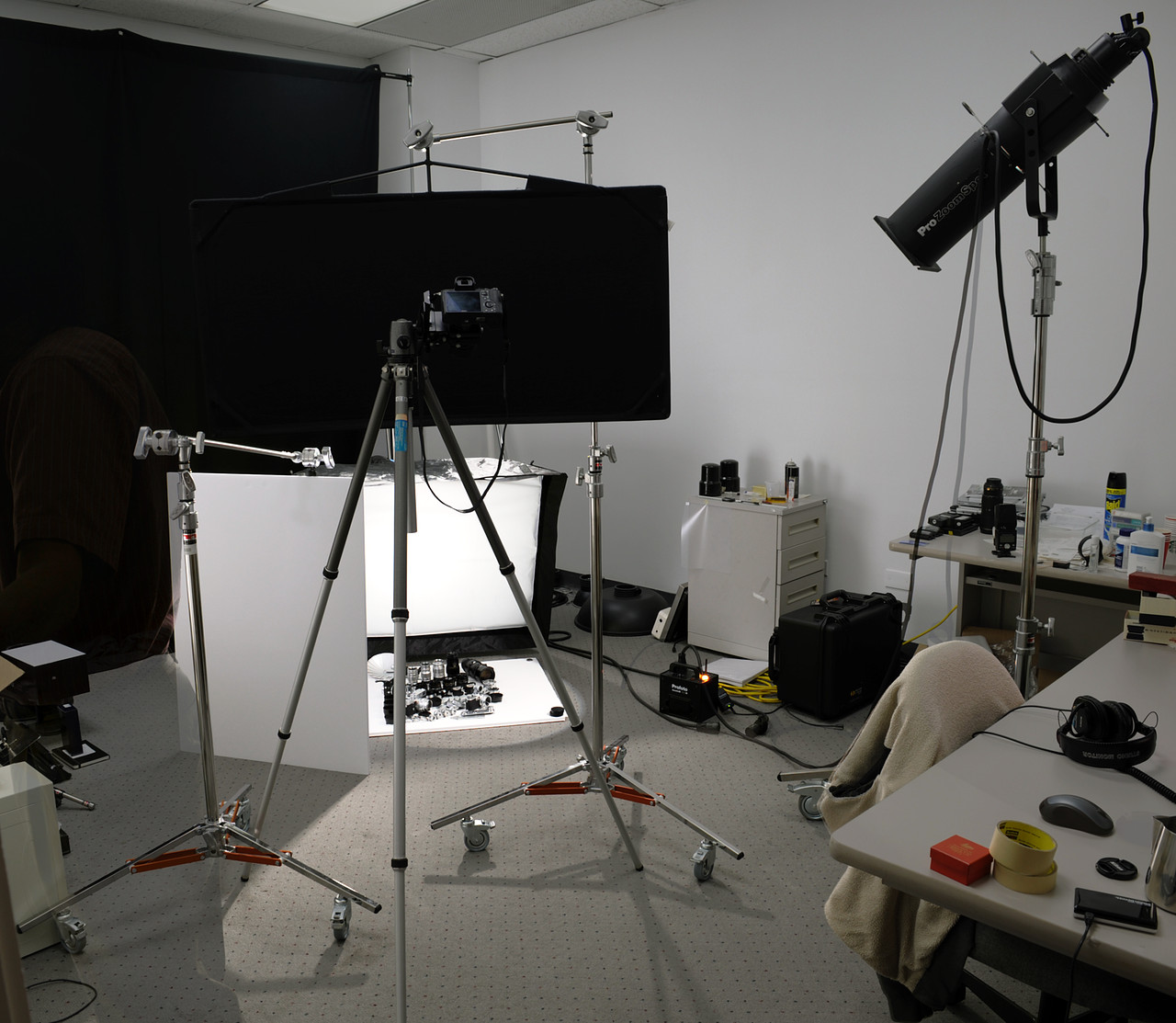
For even illumination and full spectrum, two great light sources are right overhead: sunlight and overcast. They're also free as in beer. Unfortunately, Beni and I are studio mavens so that light has to be created, and it's none too easy. My best fixture for the purpose is a xenon flash followspot that generally costs a fortune:
Distance from the subject must be maintained so incident angles are roughly equal across the workspace, otherwise a contrast and texture gradient can develop.
p.3 #20 · which lens for Art reproduction photography
Another tip. Reproduction photography should give you photographically what the image would look like if it was from a scan of the artwork. That's what we're trying to achieve. Most scanners are too small and too slow and putting delicate art face down on glass is a bad idea. Otherwise it is a far easier way to achieve reproduction perfection than photography with its inherent complications of lighting, lenses, etc.



 We're a very busy operation and you can't ignore the speed and convenience of using AF.