JR Photo wrote:
What a sweet image. The extreme Kayakers must have just the icing on the cake.
J. R.
Thank you so much!
Where they get into problems is under the falls. They can get stuck in there easily. I know some have died here because of that. Not the sheer height. There is a thundering amount of water in the small looking waterfall on the left. It is huge!
dbehrens wrote:
Nice capture of Spirit Falls. It's on my list just have not been there yet. But now this talk about 32-bit Smart Objects and BETA RGB - I just don't know. Dave
Dave you rock! Thank you very much for your constant encouragement! It means more than I can express here in words. All the best to you and yours. I hope to drop by later this year near Bend for a visit and maybe even a philosophical / theological discussion!
why do you use input sharpening vs output sharpening for large prints? i was under the impression that targeted output sharpening for example the NIK tools output sharpener -> inkjet is a better choice for large format printing.
why do you use input sharpening vs output sharpening for large prints? i was under the impression that targeted output sharpening for example the NIK tools output sharpener -> inkjet is a better choice for large format printing.
Thank you very much!!!
Very wonderful but complicated question!
Master printer Robert Park (Nevada Art Printers / Lumachrome HD) and I devote a lot of time to this subject of mastering sharpening for fine art enlargements in our 2-day "Mastering Fine Art Print Making" workshop at Nevada Art Printers in Las Vegas (July 21-22). Books have been written about it (I literally wore out Bruce Frasers "Real World Image Sharpening" many years ago). But today, the gist is that:
The correct Input, Capture, Pre-sharpening (all the same thing) when done with the right algorithm, and done with the right amount, in the right places, before the upsize, done very carefully or even masterfully in the detailed areas of an image, locally at 100% viewing distance and NOT on a 4 or 5K monitor, can bring out upwards of 5-10% more quality detail in an enlargement!
Then if you use the very best upsizing algorithm(s) for detailed areas (and soft/smooth areas) and then you master custom output sharpening and grain simulation (for more detail - not graininess or artistic film grain effects)... You can get the best of the best technology offers us today. Done carefully or even masterfully, this can produce at least, an easy 20-30% more quality to the detail in an enlargement.
I personally would never use Nik. Some very advanced Highpass techniques (few know about) for certain types of detail can produce the best sharpening you have ever seen. But having said that, actually different images and different areas within the same image ultimately can be very best approached with a number of different techniques. Not one type of sharpening does it all...
Again, a wonderful yet complex topic I absolutely LOVE to teach all year around to Skype online students and with Robert B Park who is IMO maybe the most incredible sharpening Guru on the planet today.
1st thank you for your answer. i am developing my workflow for large format printing. ATPIT i use DxO PhotoLab for most of my output workflow and Canon's DPP4 for RAW conversion input workflow. i currently print on a Canon Pro 4000. i may have to take you up on your class for mastering sharpening for fine art enlargements.
where can i acquire more information on your class? duuuhhhh, that's what the www button is for lol.
R.H. Johnson wrote:
1st thank you for your answer. i am developing my workflow for large format printing. ATPIT i use DxO PhotoLab for most of my output workflow and Canon's DPP4 for RAW conversion input workflow. i currently print on a Canon Pro 4000. i may have to take you up on your class for .
where can i acquire more information on your class? duuuhhhh, that's what the www button is for lol.
It would be awesome to have you. I believe this is the best fine art printing workshop in the industry. The curriculum is exhaustive (complete) as we say "Not one stone will be left unturned and not one question will go unanswered" in terms of totally mastering every step in the processing chain from raw capture to master print. The last one we did was in Jan and we overbooked over 20 people and everyone raved to us about it. About 1/2 said they wanted to do it a second time! We give all the teaching (copywritten) as MP4 Video downloads. We even had bare-bones beginners in the class who, even though at times did not understand everything, they said they benefitted tremendously and that they can go back and review the videos and keep learning or just implement as much or as little of the class into their workflow as they want. We even had very advanced printers in the class that have their own labs! I can say with certainty that nothing is missed, in terms of the absolute best way for every step in the long chain of making perfected prints. It is my strong opinion that (FM member) Robert Park who owns the custom lab Nevada Art Printers and who innovated the new best super gloss paper in the world (beats Fuji Flex hand down) is likely the GURU of Gurus in the world today for print mastery/knowledge. To team up with him is an absolute privilege. His knowledge is off the charts.
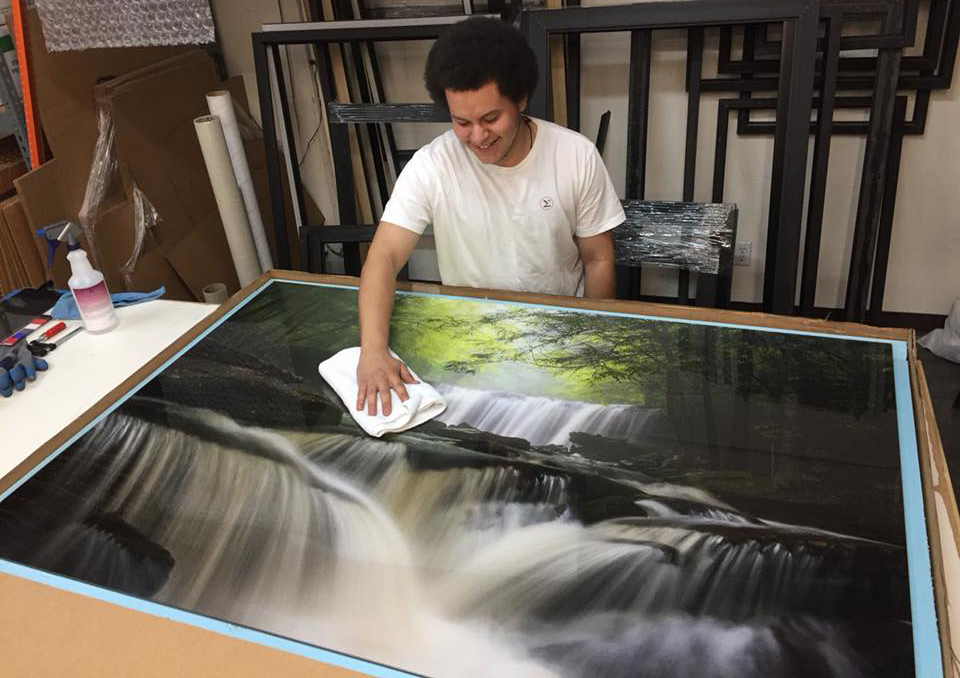
Also, here is a 60" Lumachrome HD image that a more beginner/intermediate attendee, Vananda Bajikar, made right after the workshop. Robert said it turned out exquisite. Jpeg compression is clobbering this image, but the print is immaculate even nose to the print.


 Dave
Dave