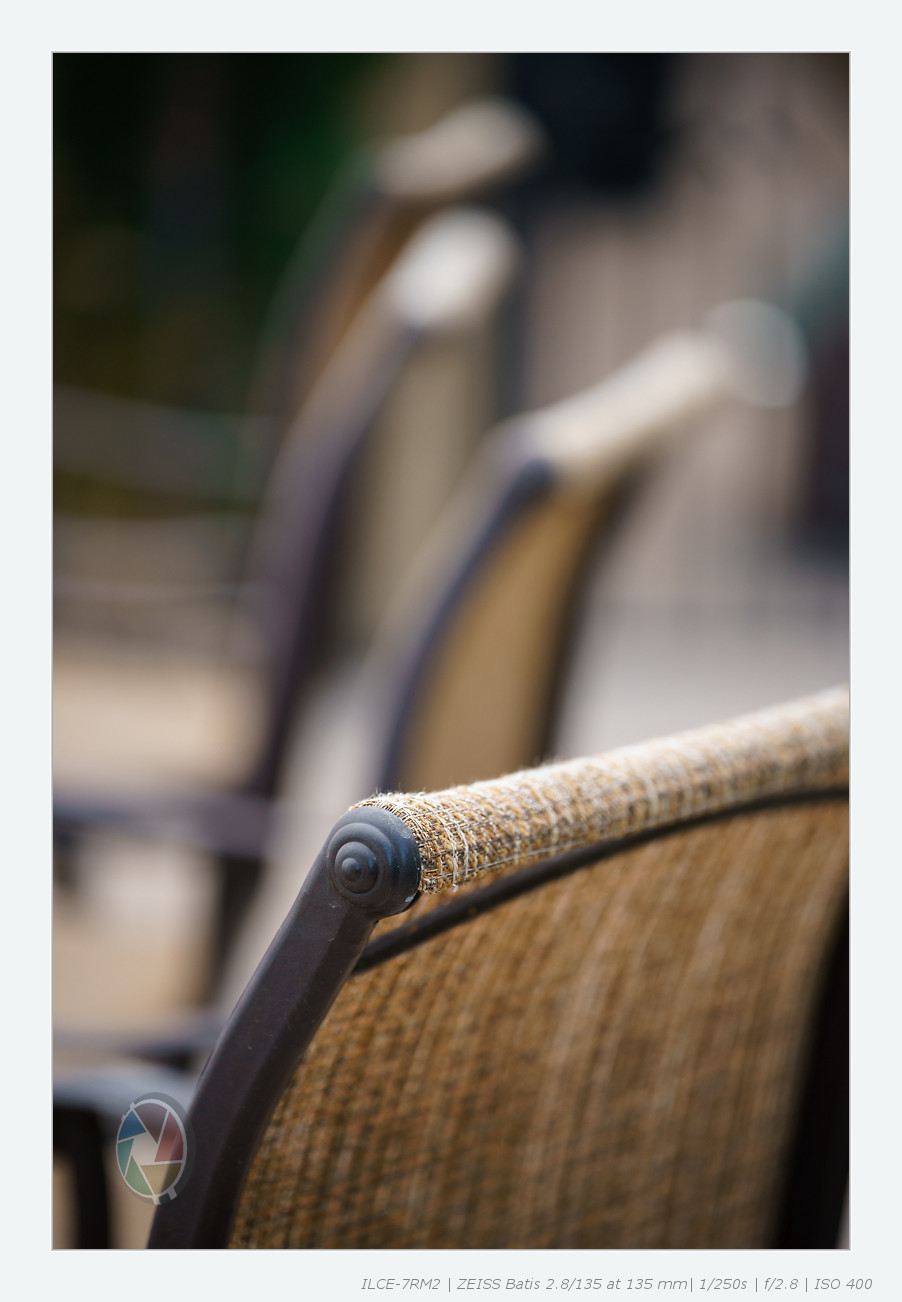
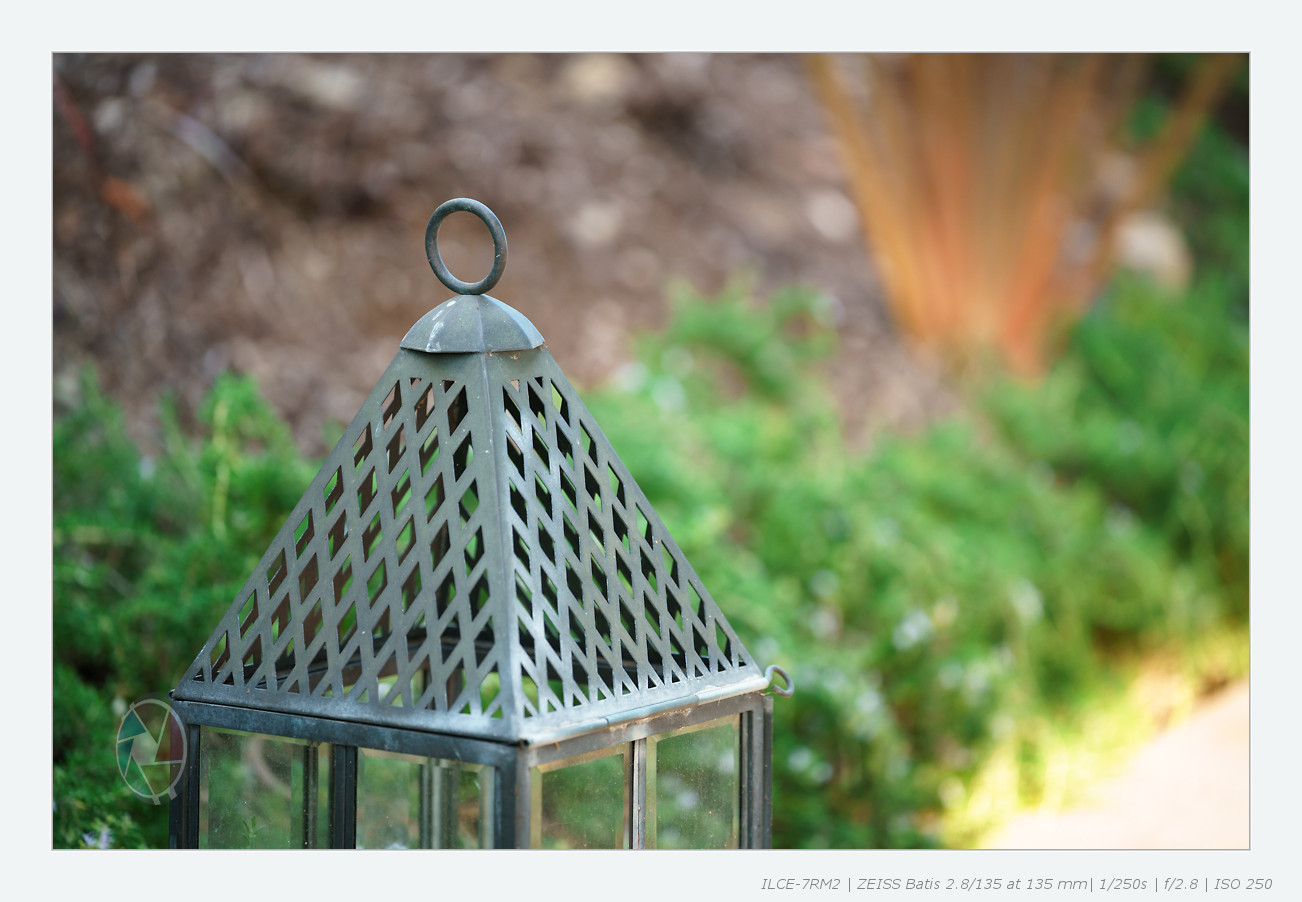
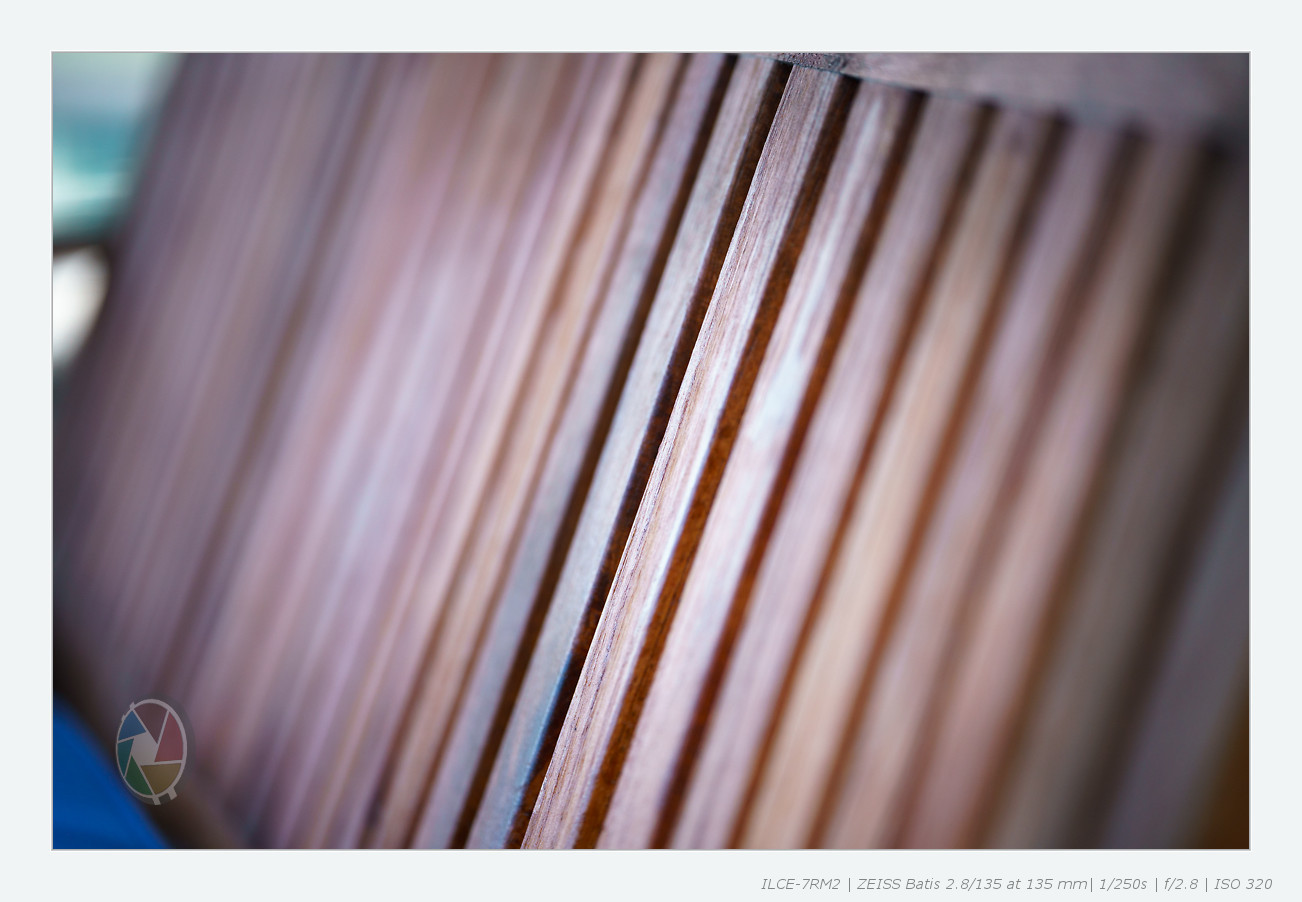
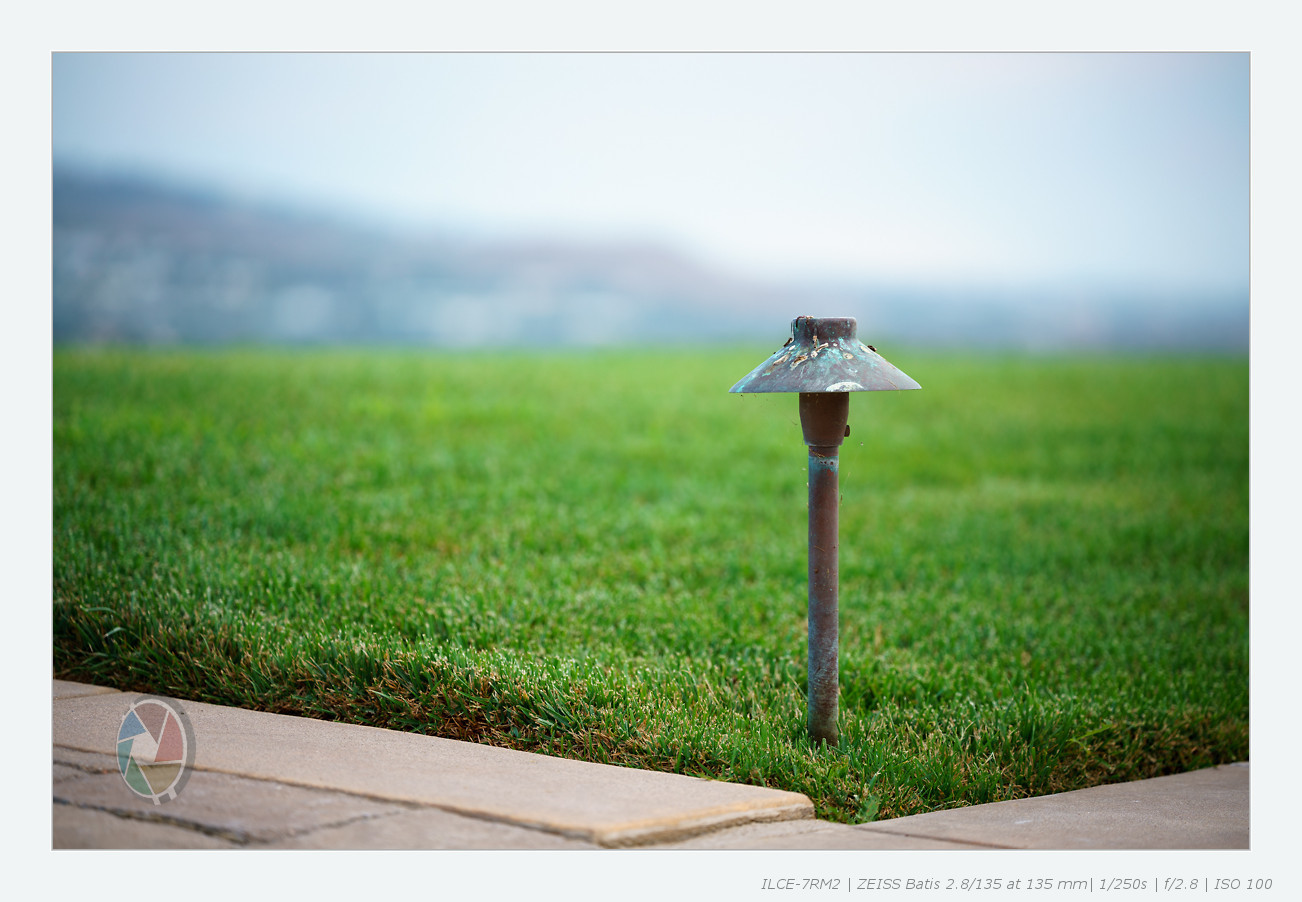
It sounds like a return that wound up in the used dept. at B&H . Maybe why it was returned in the first place. Put the extra money out and get a new one. It's worth it
Hello everyone, thanks for all the great info on this lens. I'm new to the forum so please forgive me if I'm posting in error.
I am strongly considering getting this lens especially because of it's magnification ration. In my mind, one way to justify the price for me is if I can use it for close up work and landscape. After reading David's review on www.phillipreeve.com I am very curious.
"A very useful magnification ratio; 1:4 would be even better, but you can get a very close face crop, and at 0.87 metres you can get close enough for lots of work that you might otherwise use a macro lens for. Performance seems unaffected by the close focus. This is remarkable performance; just as sharp at close distance as at infinity. It suggests that use of extension tubes to get a useful semi macro with a longer focal length than most macro lenses might give good results, but I have not formally tested this."
Has anyone here used this lens with extension tubes?
Thanks everyone
Bvendley wrote:
Hello everyone, thanks for all the great info on this lens. I'm new to the forum so please forgive me if I'm posting in error.
I am strongly considering getting this lens especially because of it's magnification ration. In my mind, one way to justify the price for me is if I can use it for close up work and landscape. After reading David's review on www.phillipreeve.com I am very curious.
"A very useful magnification ratio; 1:4 would be even better, but you can get a very close face crop, and at 0.87 metres you can get close enough for lots of work that you might otherwise use a macro lens for. Performance seems unaffected by the close focus. This is remarkable performance; just as sharp at close distance as at infinity. It suggests that use of extension tubes to get a useful semi macro with a longer focal length than most macro lenses might give good results, but I have not formally tested this."
Has anyone here used this lens with extension tubes?
Thanks everyone...Show more →
Welcome to FM!
Extension tubes are not as very useful on telephoto lenses. (They work better in the 35-85mm range). The wider the lens the more magnification they provide.
I believe the point David was making was in regards to native magnification compared to other lenses. (Correct me if I'm wrong @DavidBM)
For instance, the Zeiss 135/2 APO has a reproduction ratio of 1:4 whereas the Batis 135/2.8 is about 1:5 (Same as Sigma 135/1.8)
To my calculations putting at 26mm tube on the Batis 135/2.8 would make the new magnification be 0.38X.
For the Zeiss 135/2 APO, it would be 0.44x.
Extension tubes are not as very useful on telephoto lenses. (They work better in the 35-85mm range). The wider the lens the more magnification they provide.
I believe the point David was making was in regards to native magnification compared to other lenses. (Correct me if I'm wrong @DavidBM@)
For instance, the Zeiss 135/2 APO has a reproduction ratio of 1:4 whereas the Batis 135/2.8 is about 1:5 (Same as Sigma 135/1.8)
That's largely right, Fred, but I was also suggesting that there would be good quality with modest increases in extension.
Of course tubes don't get you *much* closer on a 135, but I have used them to get a tighter crop, and there seems to be no discernible loss of quality, so it might be a better solution than just cropping in post. Though more hassle.
This beauty gets you really close with really surprising quality. On an even longer llens like the APO-Lanthar 180 it gives you lifesize! And quality so good I have no temptation to get a 180mm class macro lens, even though I do a lot of macro.
DavidBM wrote:
That's largely right, Fred, but I was also suggesting that there would be good quality with modest increases in extension.
Of course tubes don't get you *much* closer on a 135, but I have used them to get a tighter crop, and there seems to be no discernible loss of quality, so it might be a better solution than just cropping in post. Though more hassle.
This beauty gets you really close with really surprising quality. On an even longer llens like the APO-Lanthar 180 it gives you lifesize! And quality so good I have no temptation to get a 180mm class macro lens, even though I do a lot of macro....Show more →
Before anyone gets those Raynox diopters and complains about the corners I should qualify and say that when I say they are astonishingly good, I mean on axis. Maybe they are in the outer field too, but although I've used them a lot I've not tested the results in the corner. Macronimages aren't like that, on the whole. The invention of the scanner has replaced the need for flat field macros with super sharp corners
Fred, Having a little trouble putting the Batis 135 down He, he, he. Bring on the Bokeh--these are great samples ! Thanks for the diversion. With Irma breathing down my neck all day ( she finally arrived) purusing the forums has been a great diversion from the wind noise.
@Fred Miranda, I see you have or had the Leica M Apo Telyt 3.4/135.
How does it compare against the Batis?
I recall seeing tests by Jim Kasson against the ZF.2 2/135 Apo Sonnar in which the Zeiss came out better at all shared apertures, but close enough so that when e.g. handholding you would be unlikely to tell the difference.
If the Apo Telyt is near enough stopped down, it might be a good hiking tele for someone with more spare cash than me...
DavidBM wrote:
@Fred Miranda@, I see you have or had the Leica M Apo Telyt 3.4/135.
How does it compare against the Batis?
I recall seeing tests by Jim Kasson against the ZF.2 2/135 Apo Sonnar in which the Zeiss came out better at all shared apertures, but close enough so that when e.g. handholding you would be unlikely to tell the difference.
If the Apo Telyt is near enough stopped down, it might be a good hiking tele for someone with more spare cash than me...
David,
I didn't warm up to the Telyt-M 135/3.4. My copy was well centered and sharp at close distances. However, at infinity distance, it could not keep up with my Vario-Sonnar 100-300 and that surprised me. Only at diffraction territory apertures they looked somewhat similar.
I saw some CA and that was disappointing as well. However, since I only tested ONE copy, I can't say that's how it really performs... Honestly, I didn't think it was worth its price and very much doubt it's comparable to the Batis 135/2.8.
Fred Miranda wrote:
David,
I didn't warm up to the Telyt-M 135/3.4. My copy was well centered and sharp at close distances. However, at infinity distance, it could not keep up with my Vario-Sonnar 100-300 and that surprised me. Only at diffraction territory apertures they looked somewhat similar.
I saw some CA and that was disappointing as well. However, since I only tested ONE copy, I can't say that's how it really performs... Honestly, I didn't think it was worth its price and very much doubt it's comparable to the Batis 135/2.8.
Thanks Fred; I suspected as much. Apart from anything else it's hard to imagine that at the time of its design something that small and less than a stop slower than the B135 could keep up, no matter how premium it was then...
The much older design, Tele-Elmar 135/4, though not Apo, is optically excellent and well suited for hiking.
On the subject of hiking there was a Leica RF tele lens referred to as the "Berg Elmar" or mountain Elmar in English, suited for hiking, you guess where.
Do you guys think a client would be able to tell the difference between this Batis and an older Canon FD 135mm F2.8 after a couple minutes in lightroom?
Everythingis1 wrote:
Do you guys think a client would be able to tell the difference between this Batis and an older Canon FD 135mm F2.8 after a couple minutes in lightroom?
I think it depends on the scene, the size of the output, the shooting conditions, and the post processing skills of the photographer. I hate cleaning up CA and it takes me a lot longer than a couple of minutes to clean it much of the time, but that is just me. The difference in CA is an obvious one. There is also a difference in micro contrast especially anywhere near wide open, but the extent that is noticeable will depend on the size of the output. Other things like the number of aperture blades will affect sunstars and out of focus highlights as well. So, I wouldn't expect them to be identical, but depending on what you shoot and how you process images it may not matter to you.
Okay maybe not but some clients may so never take the risks. Seriously always earn your money be it they realize it or not. It's good for you more than anything else.
Okay let me get away from the I'm being cheap comments here. You want the best 135 than get the Batis or the Sigma 135 1.8. One thing to think budget but another to deliver the best possible. Yea I had the Canon it's a nice lens but it's a old dog now and it's been surpassed in lens coating and optical elements.
Everythingis1 wrote:
Do you guys think a client would be able to tell the difference between this Batis and an older Canon FD 135mm F2.8 after a couple minutes in lightroom?
Depends on what you are shooting. I'm sure you would have way more keepers with the Batis when shooting something that moves. Same applies to a lesser degree when compared to adapted 'AF' lenses.
Professionals just don't have to luxury to miss the 'money shot'!
Everythingis1 wrote:
Interesting. Do you think you guys would have bought it at $3000 and F4?
A bit sarcastic?
Ok, I see your point though. The Canon FD 135/2.8 is over 30 years old and costs about $50. Why spend $2,000 on something with identical focal length and aperture? After all, it's not just a bit cheaper.. it's 40 times cheaper!!
What are you getting for the absurd price difference?
1) It's a brand new native lens against a 30-year-old adapted lens
2) Fast and accurate silent AF
3) EXIF reporting, Auto-Magn. MF and Auto-IBIS
4) High resistance to veiling and ghosting flare
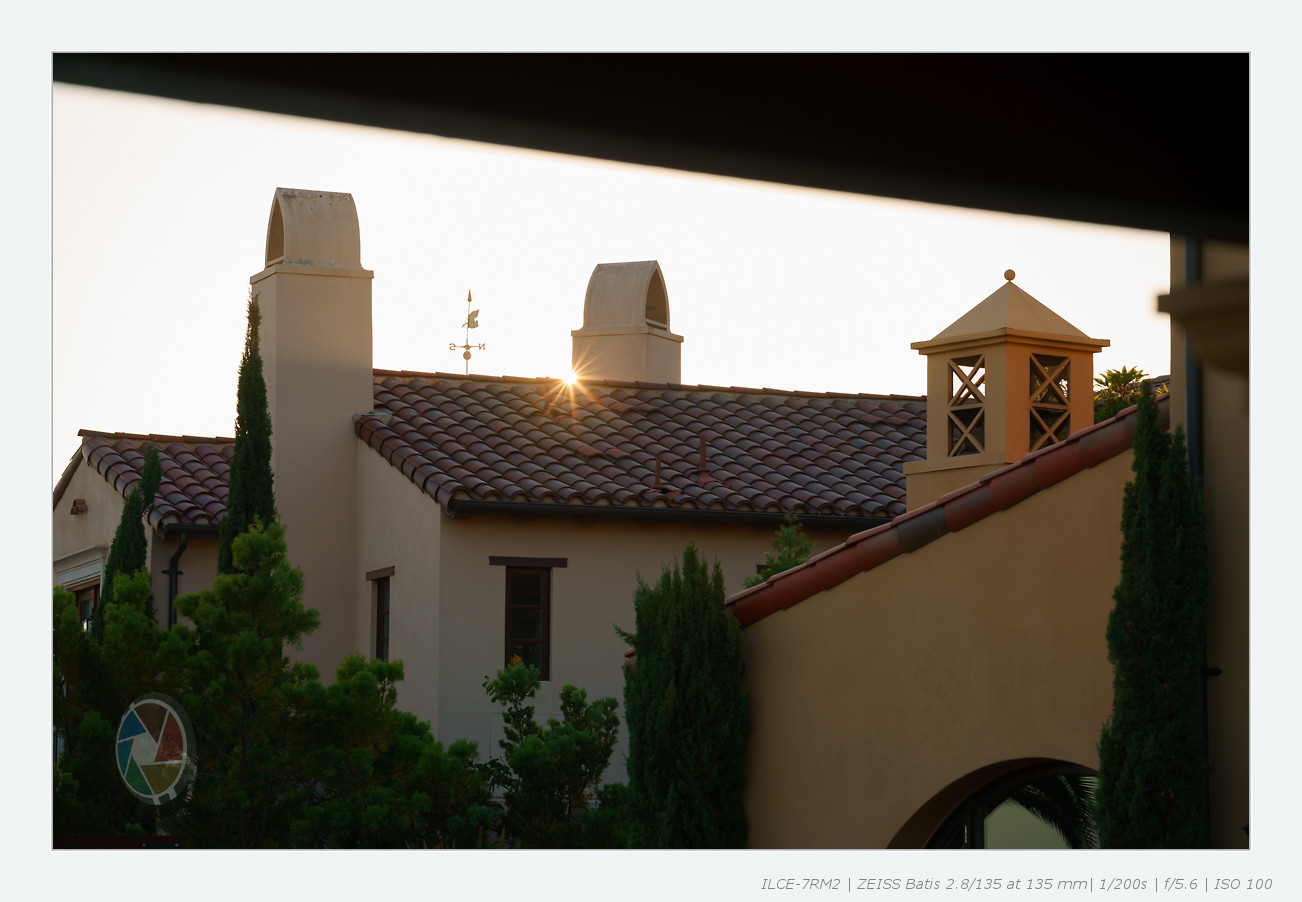
5) Attractive 18-point sunstar (starting at f/5.6)
6) High color aberration correction with its APO design
7) Extremely high resolution to the very corners at f/2.8.
8) Low astigmatism and coma.
9) High contrast and micro-contrast
10) A lens with probably much less dust inside.
If none of the above is important for your photography business, you are in luck because you can have a $50 30-year-old lens and save the remaining $1950 for other glass!
Since you asked, who is your client? Wedding? Portraits? Events? Sports?
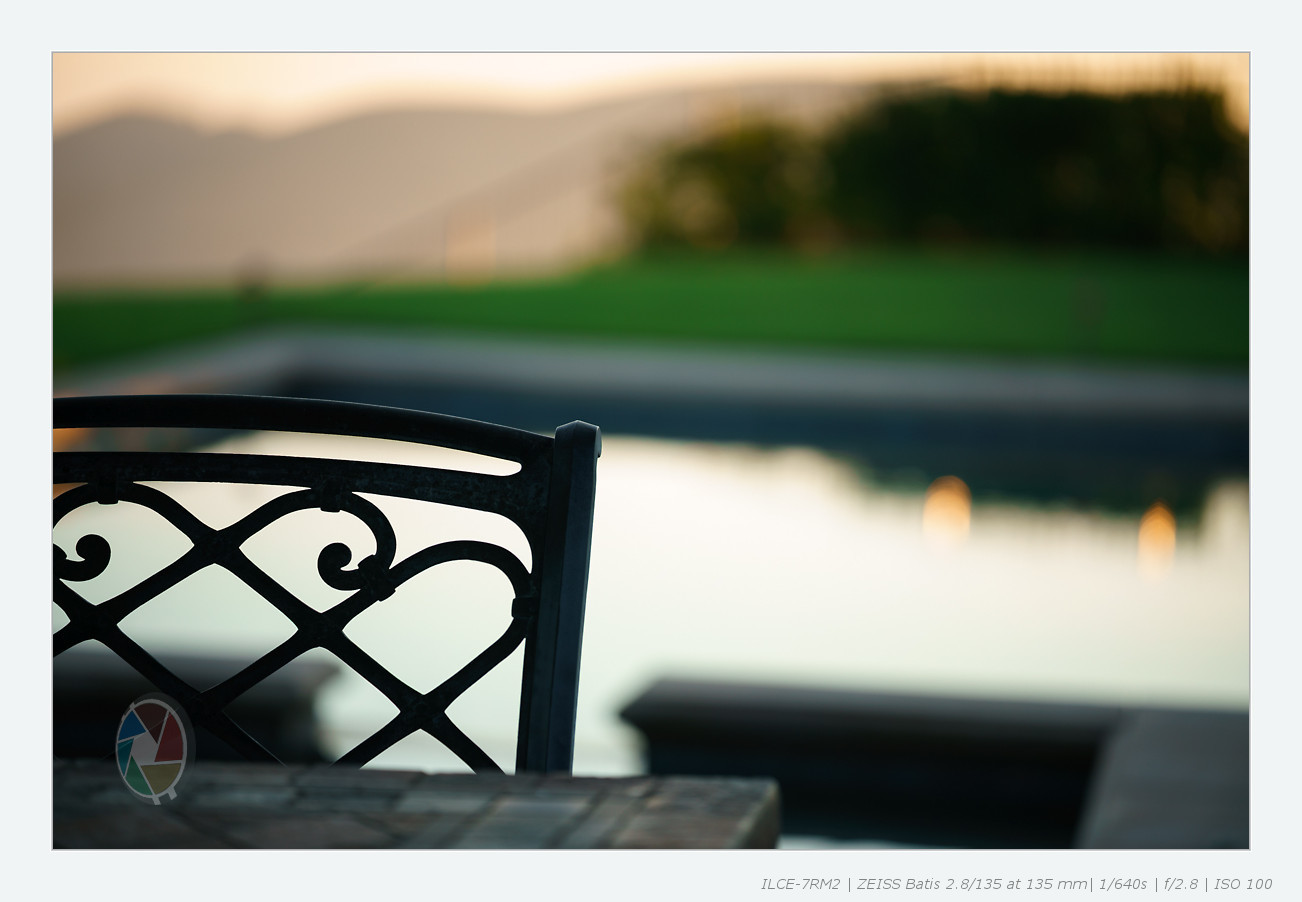
BTW: I've tried the FD 135/2.8 and it has very nice bokeh!