Creative Edge wrote:
Ketan, how do you like the Laowa 15mm? The copy I had was really soft, ended up sending it back and never tried another copy.
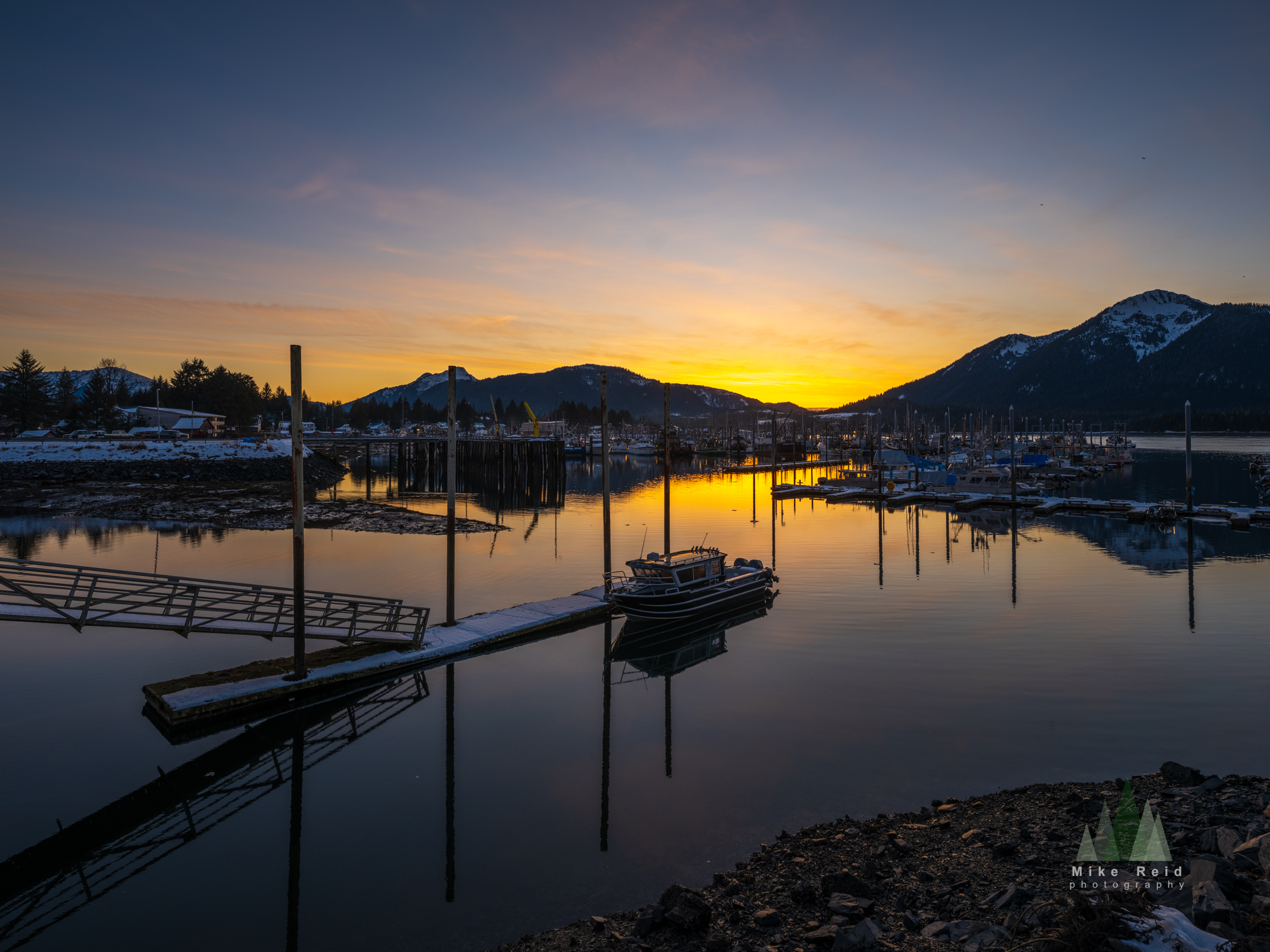
Two ways to describe it. Ultimately, I don't know of any other shift or tilt-shift like it, so I've gotten shots like the one above and the one below where I was at my limit for taking steps back and therefore couldn't otherwise get the shot. I also like that it is small and light and has nice sunstars and I find the shift control more intuitive than and superior to my Canon TS-Es and GF 30mm. Image quality wise, it's adequate but weaker than my my other shift lenses (Laowa 20mm, GF 30mm, Canon TS-E 50mm). It's not super sharp anywhere and gets softer in the shifted corners. For the shot above, I found that rather than putting the top of the building at the top of the frame (with max vertical shift), I got a better result tilting the camera back to put the top of the building lower in the frame, then generating some additional blank sky and using perspective correction in PS to counteract that tilt. This avoided the additional softening at the extreme edge of the image circle. The reason I think it is adequate is that I have 100 megapixels and the softness doesn't have a nervous quality, meaning it responds well to processing. I believe you have the 17mm and expect that is probably sharper, right?
ketang wrote:
Two ways to describe it. Ultimately, I don't know of any other shift or tilt-shift like it, so I've gotten shots like the one above and the one below where I was at my limit for taking steps back and therefore couldn't otherwise get the shot. I also like that it is small and light and has nice sunstars and I find the shift control more intuitive than and superior to my Canon TS-Es and GF 30mm. Image quality wise, it's adequate but weaker than my my other shift lenses (Laowa 20mm, GF 30mm, Canon TS-E 50mm). It's not super sharp anywhere and gets softer in the shifted corners. For the shot above, I found that rather than putting the top of the building at the top of the frame (with max vertical shift), I got a better result tilting the camera back to put the top of the building lower in the frame, then generating some additional blank sky and using perspective correction in PS to counteract that tilt. This avoided the additional softening at the extreme edge of the image circle. The reason I think it is adequate is that I have 100 megapixels and the softness doesn't have a nervous quality, meaning it responds well to processing. I believe you have the 17mm and expect that is probably sharper, right?
Everything you said makes a lot of sense. I have the 17mm TSE and do find it much sharper edge to edge unshifted than the Laowa 15 I had. Shifted about 6mm it still holds up very well at the extreme corners, shifting past that the edges soften up. I love extreme wide angle shots and the 17 is one of my most used lenses when I travel. I like how you handle the soft edges, I am going to start doing the same as it makes a lot of sense.
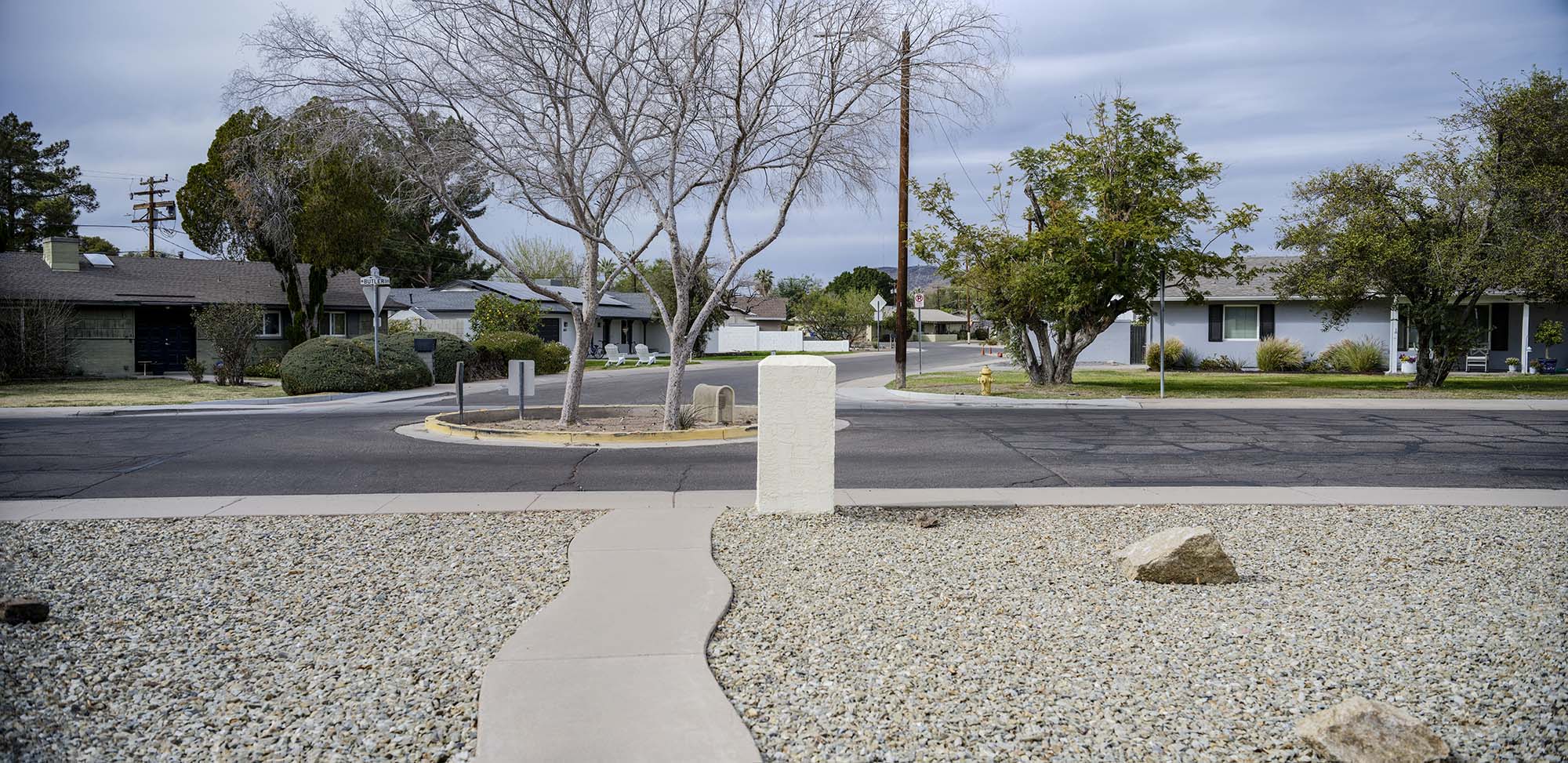
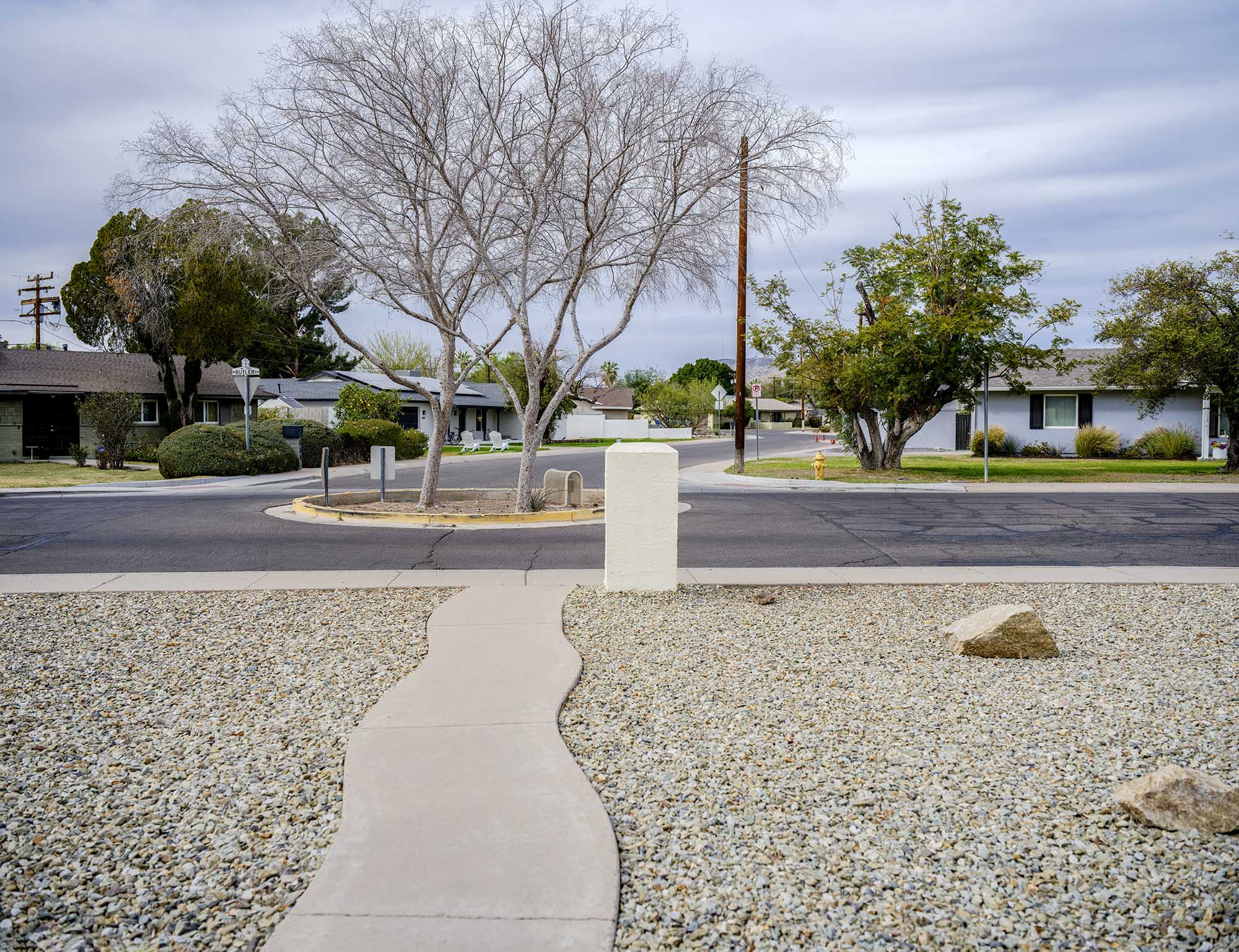
I still have a Canon 50mm TS-E lens and a fringer adapter, and I shot a couple panos with them on the front walk this aft.. I've shot multiframe panos with many of my lenses recently with my readoption of my old GFX100S; ALL those I've tried with rotated frames and PSCC's Photomerge have resulted in technical excellence; with this TS-E, the technical excellence is there but I'm left unfullfilled..
The big reason for that is that the TS-E's 24mm of gross shift is not enough to produce a wide composite image.. Lesson learned today is 'don't keep the 50TS-E to create shifted panos'.
Here are uncropped reductions of the two pics.. First is 5 horizontal images; 2nd is 3 vertical images.
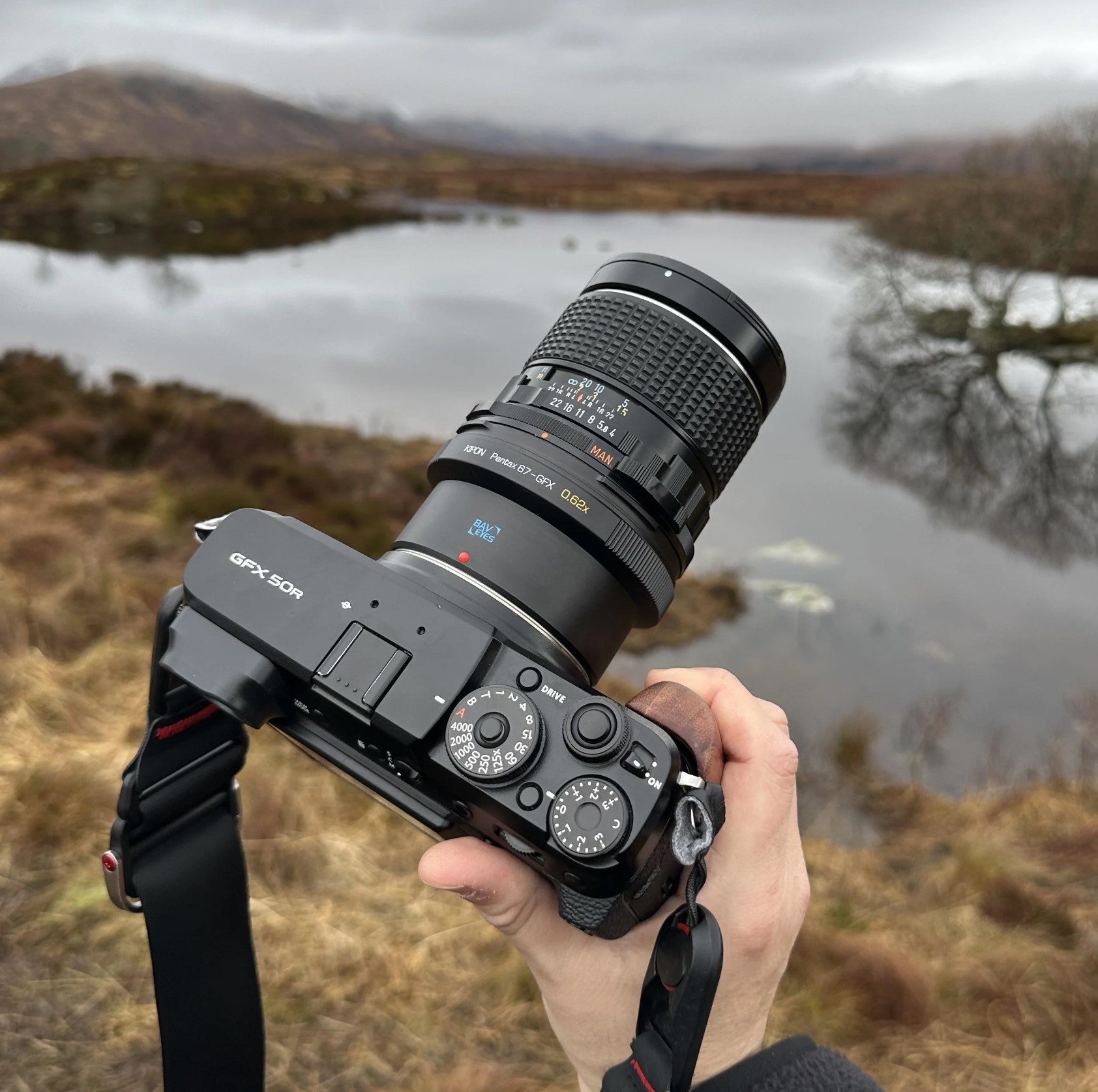
I recently heard the release of Kipon P67 to GFX 0.62x focal reducer adapter and is really interested in having one. I'm curious has anyone used it recently and have something to say about this adapter? I have several 67 lens that I would like to use on GFX. Thanks!
"As someone who shoots 99% Pentax 67, my GFX was collecting dust. I can tell you - the Kipon 0.62x is a game-changer, for the first time ever I can replicate 1:1 what my Pentax 67 was able to deliver for me. I've only shot it for 1 week in the Scottish Highlands, and these are the results. Blown Away".
Are there any recommendations of Canon EF mount macro lenses that can 1) achieve 1:1 magnification ratio and 2) can cover the GFX's medium format image circle?
jamie3000 wrote:
Are there any recommendations of Canon EF mount macro lenses that can 1) achieve 1:1 magnification ratio and 2) can cover the GFX's medium format image circle?
Try the Canon TS-E 50mm 2.8, 90mm 2.8 and 135mm 4.0. Brillant lenses on the GFX.
jamie3000 wrote:
Are there any recommendations of Canon EF mount macro lenses that can 1) achieve 1:1 magnification ratio and 2) can cover the GFX's medium format image circle?
I might add you could consider the new Laowa 55 and 100 TSE lenses that achieve 1:1 macro unlike the Canon lenses that "only" go 1:2. You can get the Laowa lenses in either EF mount and adapt them or in GF mount so they wouldn't be adapter.
And if you are willing to consider non-EF mount lenses, I would very much recommend the Contax 645 Zeiss 120 f/4 APO Macro for the GFX. That is my favorite macro lens ever and works brilliantly on the GFX with the Fringer adapter.
I adapted the P645 45mm f2.8 that lives on my 100s 50% of the time and also the mamiya 80mm f1.9. Probably the closest thing I've been able to find to a pseudo-film camera (although the adapters make it rather unwieldy)
This 'Contax 645 Zeiss 120 f/4 APO Macro' brought back memories of a guy we used to have here, very serious and very knowledgeable, called theSuede. He thought the Mamiya 645 120/4 was one of the very few medium format lenses that delivered on the new Sony sensors back them in the early teen decade. I found a good video showcasing the M645 lens line people might find interesting. Some great movies used some of them.
..