Both are continuously following what is discovered in this thread.
[Examples of making PCX filters]
Distagon T* 1.4/35 ZM49-55mm step up ring
Blank 55mm filter
5m PCX bare lens (Optosigma SLB-50-5000PM) Thin rubber gasket
55mm Retaining ring comes from disassembled Leica Elpro3 (16543) or Elpro4 (16544)
(Optional) To use original food, just add 49mm blank filter at first. Filter look Test shots
Biogon T* 2.8/25 ZM46-55mm step up ring
Blank 55mm filter
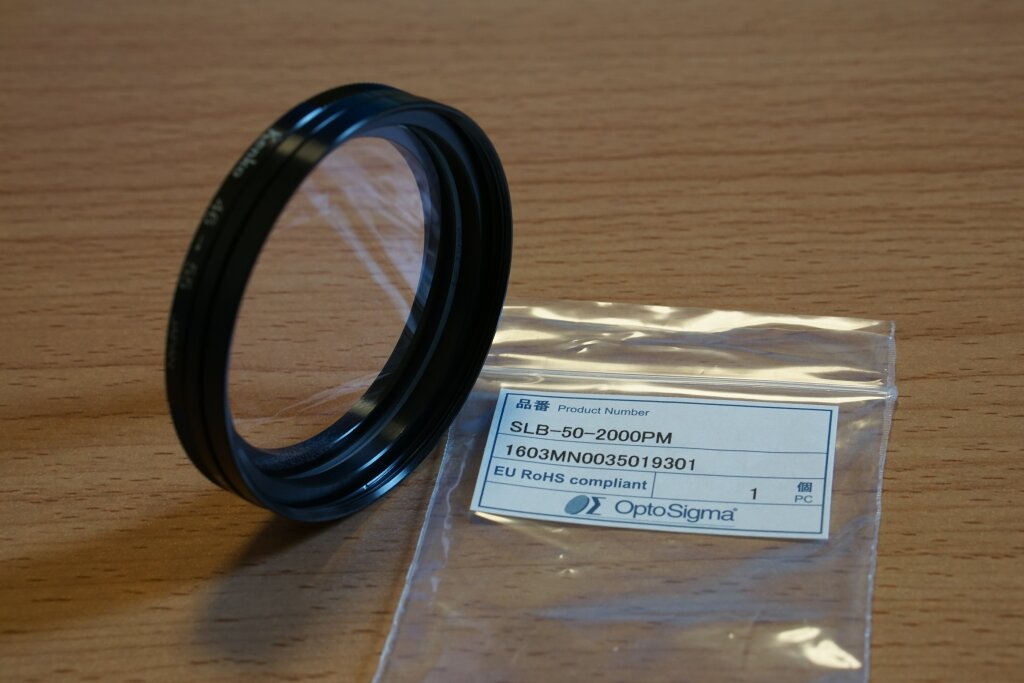
2.5m PCX bare lens (Optosigma SLB-50-2500PM)
The Rubber gasket
The 55mm retaining ring Test shots
Thank you all for your contribution to this topic!
Recently I found a plano-convex lens placed in front of the WA RF lens improves corner smearing.
In this thread, let's talk about the new "Front-End Filter Solution" to get corner-to-corner sharpness.
Basically I talk about SONY A7 series, but the same solution can be applied to ANY digital bodies including Leica!
Please also check my flickr. You can download unresized test images.
Here I repost my previous report.
---
While Kolari mod is great solution for wide-angle rangefinder lens users,
personally I still hesitate to modify my A7 because such unofficial mod voids Sony's warranty.
Here I would like to introduce another solution to fix corner smearing issue.
I believe Astigmatism is the principal cause of corner smearing.
[Update Dec.19] In some lenses like ZM35/1.4, field curvature is severer than astigmatism. The PCX solution improves both astigmatism and field curvature significantly.
I tried some optical simulations and found that a plano-convex lens placed in front of the WA RF lens can control astigmatism.
I use OSLO free edition: http://www.lambdares.com/oslo-university-program
For simplicity, simulation use perfect lens instead of complicated actual lens design.
I think symmetrical lens design such as Biogon matches this simplified simulation, but retrofocus design does not.
[Update Oct. 5] Now my model can also handle retrofocus-type (asymmetric design) lens.
Astigmatism at Extreme Corner:
21mm f2.8 with 1.8mm thick cover glass (Original A7): 0.6mm.
21mm f2.8 with 0.8mm thick cover glass (Kolari/Leica): 0.25mm.
1.5m plano-convex in front of 2.8/21 with 1.8mm glass: 0.14mm.
28mm f2.8 with 1.8mm thick cover glass (Original A7): 0.4mm.
28mm f2.8 with 0.8mm thick cover glass (Kolari/Leica): 0.18mm.
2m plano-convex in front of 2.8/28 with 1.8mm glass: 0.07mm.
So theoretically, this front-end filter solution outperforms Kolari/Leica in terms of astigmatism!
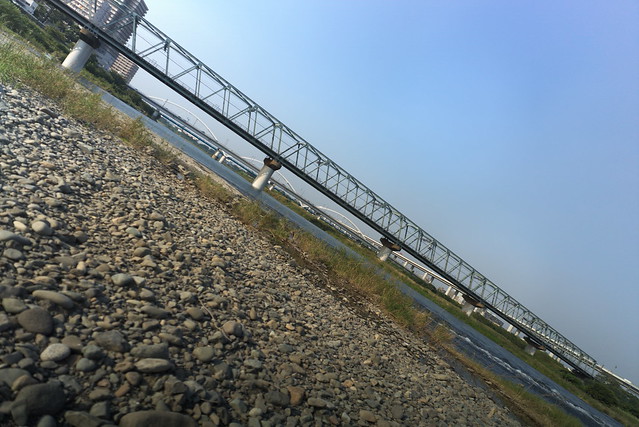
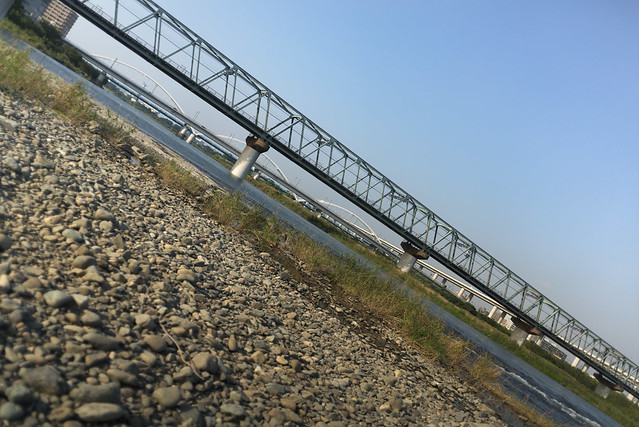
Here are test images taken by original (no kolari mod) A7.
Manually focused at the center of truss bridge.
Processed by Rawtherapee from ARW file.
Flat field calibration is applied to fix color cast and vignetting.
No noise reduction, No sharpening.
Shots at wide-open:
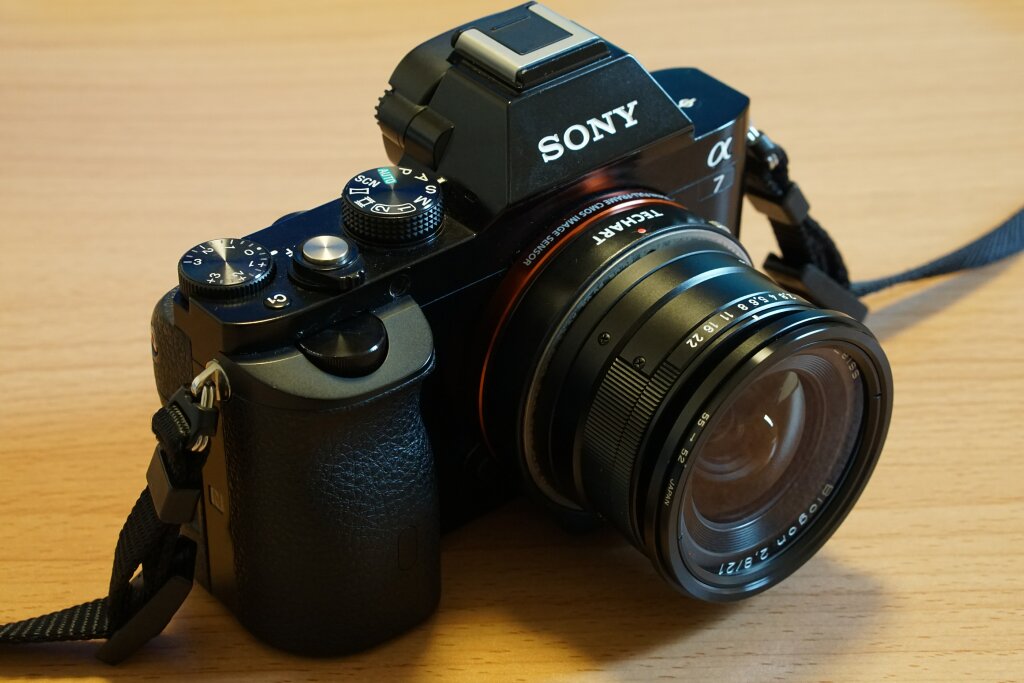
2.8/21 original
2.8/21 modified
2.8/21 original: upper-left corner 100% crop
2.8/21 modified: upper-left corner 100% crop
2.8/28 original
2.8/28 modified
2.8/28 original: lower-right corner 100% crop
2.8/28 modified: lower-right corner 100% crop
I also uploaded stopping-down results in my flickr(f4/5.6/8/11).
One more thing, for those who have Kolari/Leica body.
Simulation shows that combination of thin cover glass and plano-convex method would get even better result!
Astigmatism at Extreme Corner:
3m plano-convex "SLB-50-3000PM" in front of 21mm with 0.8mm cover glass: 0.11mm.
Thanks for the excellent work you've done! I'm not sure how these plano-convex lenses do their job optically, but maybe you can help with this question. Does the distance of the PC lens from the front element and/or imaging sensor have an effect on the performance? I wonder if one could optimize the performance by varying this distance with step-rings.
Thank you for asking many questions in the previous thread.
Here are my thoughts.
mdemeyer wrote:
What is the primary lens attribute that determines the optimal Plano-convex filter choice?
As hiepphotog wrote, I also think focal length and exit pupil distance of the primary lens should define optimal focal length of the P-C filter.
At perfect lens, focal length = exit pupil distance.
My simulation results will be accurate in this condition.
At actual lenses, focal length may not equal to exit pupil distance.
Currently I have no idea how to simulate this case.
So maybe quicker way is just purchasing various focal length filters and trying them.
Nanh wrote:
How do you know which glass type to choose for different lenses and cover glass thickness? By trying?
Simply by changing radius of the filter in the simulator. I also tried concave and meniscus lens but plano-convex seems to be the best.
Nanh wrote:
Is it possible to figure out what's the approximate best glass type to use for ZM 35mm 1.4 even though it's not a perfect symmetric design?
In case of 35mm perfect lens and 1.8mm thick cover glass, 3m filter will be good.
I don't know how long ZM35's exit pupil distance is, but if it is larger than 35mm, longer focal length (perhaps 4m or 5m) would be better.
Nanh wrote:
Would the result be different if the cover glass is placed at a constant distance to the sensor,
and the point where light first touches the cover glass is shifted back by the reduced amount?
About the cover glass, only thickness seems to be important.
Simulation shows the distance between cover glass and the sensor doesn't affect any aberration.
Nanh wrote:
Are there any other effects generated by the filter glass? Distortion? CA? Focal length changes?
Yes. Most visible effect is Distortion. 21mm simulation shows +2% Distortion at the extreme corner.
You may also notice distortion changes by comparing my flickr sample photos.
CA and Focal length change are also available but seems to be quite small.
Nanh wrote:
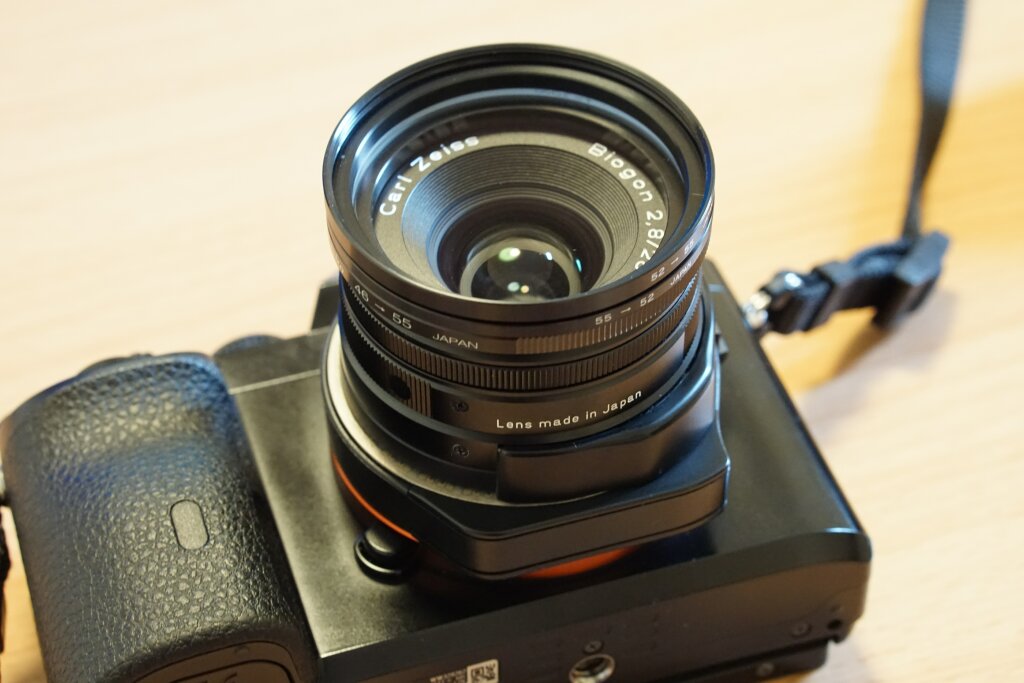
Would the 50mm filter glass fit in arbitrary 52mm filter rings? Any special techniques to fix the glass?
Does the 55 to 52mm step down ring + 52mm filter setup induce any mechanical vignetting on the Contax G 21?
Yes there is small gap between 52mm thread and the filter.
I've just put the filter carefully to the center, but this may cause decentering.
I think I can wrap adhesive tape or something around the filter to fit 52mm thread, but I haven't tried yet.
I know the filter's diameter 50mm may be bit too small for the G 21.
Some light fall off may occur, but in my eyes, vignetting looks similar to the one without the filter.
nehemiahphoto wrote:
1) If you're using the G21 with a techart adapter, will AF (the lens fluctuating in distance from the senor) hurt IQ?
2) I can't tell tell how good the IQ on the Biogon 21...with the P-C (plano convex) mod, is it excellent?
3) Can we expect better performance with the a7rII than the a7 or a7r?
1)
My techart works just fine after modification. I don't think it hurts IQ.
Actually my test samples were shot by MF adapter. Techart is not suitable for serious focusing.
I posted that setup just because I like the styling. MF adapter looks tacky IMO.
2)
Even with a optimal P-C lens, still I can't expect the Biogon 21's overall IQ outperform latest FE lenses.
There are heavy vignetting and color cast. RAW correction can fix them but also suffer dynamic range.
Also the P-C lens degrades contrast as hiepphotog pointed out.
3)
I expect this P-C filter method can be applied to all a7 series and gives similar improvement of astigmatism.
I've heard that a7rII's BSI sensor improves the vignetting and color cast. So overall IQ will be better at a7rII.
hiepphotog wrote:
In practice, how big of a difference between 0.11mm vs. 0.14mm? I don't imagine that much.
Here are spot diagrams. The left one has 0.14mm astigmatism, and the right has 0.11mm.
A7 has 24MP = 166 px/mm = 8 lines / 0.1mm resolving power.
Especially at 35deg, I expect Kolari + P-C 3m will have visible improvement over Original A7 + P-C 1.5m.
(Updated Oct.7: Screenshot is deleted because old simulation is not accurate. See my latest post.)
uscmatt99 wrote:
Does the distance of the PC lens from the front element and/or imaging sensor have an effect on the performance? I wonder if one could optimize the performance by varying this distance with step-rings.
According to my 21mm simulation, it seems that the distance between PC lens and the front element has quite small effect on astigmatism, though shorter distance is slightly better.
Distortion is also better when the distance is shorter.
Wonder if this would work on the ZM 35 1.4 . Be interesting to get corners better before F8. But I wonder if it would lose its look shooting more wide open
HaruhikoT wrote:
As hiepphotog wrote, I also think focal length and exit pupil distance of the primary lens should define optimal focal length of the P-C filter.
At perfect lens, focal length = exit pupil distance. My simulation results will be accurate in this condition. At actual lenses, focal length may not equal to exit pupil distance. Currently I have no idea how to simulate this case.
Zeiss pdf files for G and C/Y lenses are easily available on the Net.
Unfortunately, it isn’t so for current production series (ZM, ZF/ZE etc. )
Some relevant data for the Biogon-G 28/2.8 :
Focal length 28.5 mm
Exit pupil Position : 13.5 mm in front of the last lens vertex - Diameter 9.5 mm
Position of principal planes :
H: 13.5 mm behind the first lens vertex - H' : 15.4 mm in front of the last lens vertex
Back focal distance 13.1 mm
I may be wrong, but my guess is that exit pupil distance = BFD (back focal dist.) + EPP (exit pupil position)
For the Biogon G28 we have 13.5+13.1=26.6mm -close the nominal 28.5 focal length.
- In the case of the BiogonG 21/2.8 BFD+ EPP= 22.8mm. Also not far the nominal 21.5mm.
- Instead for the Planar G 35/2 BFD+EPP= 50.3mm. but, of course, a Planar design is quite different from the more symmetrical Biogon.
artur5 wrote:
Zeiss pdf files for G and C/Y lenses are easily available on the Net.
Unfortunately, it isn’t so for current production series (ZM, ZF/ZE etc. )
Some relevant data for the Biogon-G 28/2.8 :
Focal length 28.5 mm
Exit pupil Position : 13.5 mm in front of the last lens vertex - Diameter 9.5 mm
Position of principal planes :
H: 13.5 mm behind the first lens vertex - H' : 15.4 mm in front of the last lens vertex
Back focal distance 13.1 mm
I may be wrong, but my guess is that exit pupil distance = BFD (back focal dist.) + EPP (exit pupil position)
For the Biogon G28 we have 13.5+13.1=26.6mm -close the nominal 28.5 focal length.
- In the case of the BiogonG 21/2.8 BFD+ EPP= 22.8mm. Also not far the nominal 21.5mm.
- Instead for the Planar G 35/2 BFD+EPP= 50.3mm. but, of course, a Planar design is quite different from the more symmetrical Biogon.
Which coincides with the fact that the G35 has less problems in the corner than G21 and G28. My guess is that the zm 35 has an exit pupil distance somewhere between the G28 and the G35. It should also be a little more retro-focal than the symmetric biogons, e.g. ~40mm
HaruhikoT, How much difference does it make when you use the f = 1.5m filter and the f = 2m filter? e.g. if you used 1.5m on the G28 and the 2m on G21? How about in theory(for both cover glass thickness)? The filter is still quite expensive and I'd rather not buy more than a few.
Looking at the examples on flickr there is a quite big difference in sharpness in the center. It's as if the filter acts as a strong anti-aliasing filter. But nothing a little of unsharp mask can't heal, so I am still very enthusiastic about this solution.
Also, the distortion added seems to be of the pincushion type. So it may counteract the slight barrel distortion of the G21.
GMPhotography wrote:
Wonder if this would work on the ZM 35 1.4 . Be interesting to get corners better before F8. But I wonder if it would lose its look shooting more wide open
The nice thing about this approach is that if it does loose its wide open look, you can just taken it off!
Heck, I still have a G 21 or ZM 35, I would do this myself. But to buy these back just to experiment is a no go for me. So I'm waiting for either Fred or Guy taking the plunge. Heck, I can share the cost of the filters as well (yes, filters, experiment away to get your optimal focal length).
I contacted Edmund Optics today and they said they would do custom order and MOQ is only 25-50. So if this things pans out, we can actually get custom size glass instead of being stuck with either 50mm or 75mm.
hiepphotog wrote:
I contacted Edmund Optics today and they said they would do custom order and MOQ is only 25-50. So if this things pans out, we can actually get custom size glass instead of being stuck with either 50mm or 75mm.
i'm down to experiment with this. my only truly troublesome lens is the g28, but i'd be curious to see how much impact these could have on my g35, g45, and 35 lux pre-asph...
This is really interesting. Someone try out M-mount 21mm Biogon f/4.5? It is about perfect 21mm lens with zero distortion. However it has that rather absurd corner color issue.
MJKoski wrote:
This is really interesting. Someone try out M-mount 21mm Biogon f/4.5? It is about perfect 21mm lens with zero distortion. However it has that rather absurd corner color issue.
I think the G 21 would rival even that one and it is fine on the A7RII and the A7s. In this regard, Sony cam is better than Leica (something that Leica shooters can't stand....)
---------------------------------------------
brendans wrote:
Is it coated? Could it be? Perhaps that would help a bit with the reduction in contrast...
The OP said his filter is AR coated. Putting another element in front of a lens would certainly reduce contrast. Without a direct comparison, I don't think most would recognize the mild loss in contrast.
It will take time but, hopefully, with the priceless help of some pioneers here ( guy, fred, sebboh.. ) we'll get a good idea of how this 'front-mod' helps with the smearing issue.
Maybe it will be also possible to sort out a mathematical formula for calculating with reasonable accuracy the focal length of the PC "filter" suited to every lens. I suspect though, for what HaruhikoT said, that it has more to do with the exit pupil distance than with the nominal focal length. So, for most lenses with no technical data published, probably it will be just a matter of trial and error. That is, unless Leica, Zeiss and Cosina oblige, making available the required information (which is very unlikely, if you ask me )







 ) we'll get a good idea of how this 'front-mod' helps with the smearing issue.
 )
)