It's hard to tell. Looks like natural blur/OOF wings and not rolling shutter. Rolling shutter has a more funky/unnatural look to it. The above examples of the hummer look normal/natural to me.
Kit Laughlin wrote:
k-h.a.w wrote:
No, IMHO not a fast enough shutter speed to get only a single image of the wings. I believe you are seeing the end positions of a complete wing movement (the wings come to a very short dead stop at each end of the range of movement).
To test this, try shooting on both the mechanical shutter at 1,000th/sec, and electronic shutter at same speed—if rolling shutter is distorting the image, should be visible.
No, IMHO not a fast enough shutter speed to get only a single image of the wings. I believe you are seeing the end positions of a complete wing movement (the wings come to a very short dead stop at each end of the range of movement).
To test this, try shooting on both the mechanical shutter at 1,000th/sec, and electronic shutter at same speed—if rolling shutter is distorting the image, should be visible.
What do others think?
Thanks Kit. How about the hummer in https://www.fredmiranda.com/forum/topic/1429904/106#14012813.
That certainly looks rather funky to me. Most Hummingbird shots seem to look just fine. However, whenever the camera accidentally catches them in an ultra fast turn then I have my doubts. But I hear you. Thanks again.
bobbytan wrote:
It's hard to tell. Looks like natural blur/OOF wings and not rolling shutter. Rolling shutter has a more funky/unnatural look to it. The above examples of the hummer look normal/natural to me.
Thanks Bobby. Same reply to you as to Kit above. I hope you guys are correct.
BTW I tried C-AF without and with tracking, using all the focus points.
With tracking was terrible, without tracking lots of sharp images.
I think I am done with focus tracking of the E-M1.2.
Please try shooting with both types of shutter set to same speed; you used 1/1,000th above, but just to test the thesis, use 1/2,000th on both, too.
If the images at the faster speed show only one set of wings, then SS is involved.
If the images at 1/1,000th on the two different shutters look different, then some of the effect must be due to the way electronic shutters read out. Worth testing, I think.
Rolling shutter usually is only visible on straight lines, too (recall that golf club pair of images used in Olympus advertising). Unless the distortion of shapes we need to see preserved in a way we see them is significant, in my experience rolling shutter is more an internet problem. In the hummer images we are discussing, the wings are still wing shaped, not curved.
I've tried C-AF with tracking with the E-M1 and that was bad too, if not worse - as most of the time it's trying to lock focus on the most contrasty part of the bird i.e. not on the eyes!
k-h.a.w wrote:
Thanks Bobby. Same reply to you as to Kit above. I hope you guys are correct.
BTW I tried C-AF without and with tracking, using all the focus points.
With tracking was terrible, without tracking lots of sharp images.
I think I am done with focus tracking of the E-M1.2.
mitesh wrote:
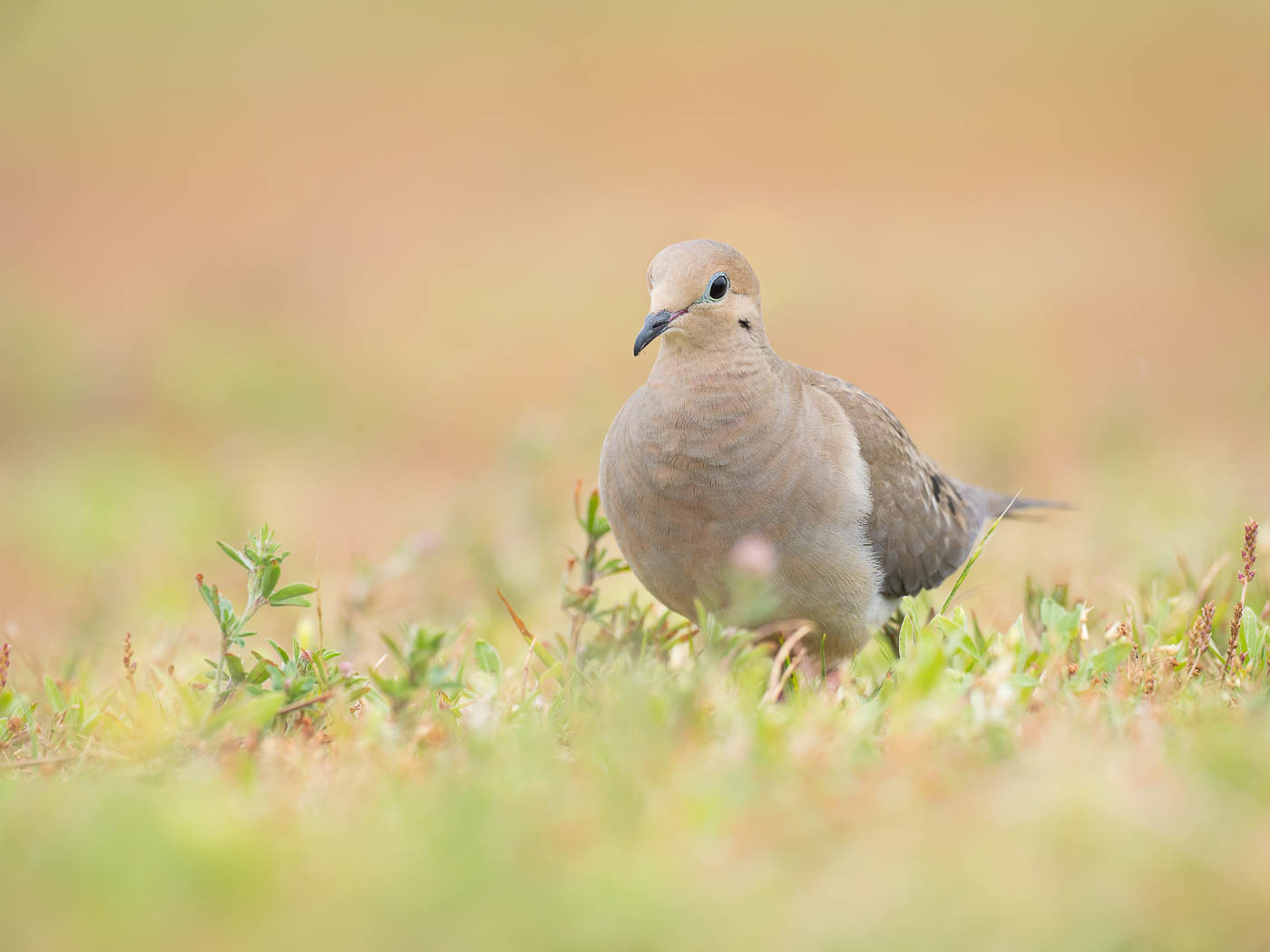
Thanks, Bobby! It may not show on the web-sized image, but the focus is slightly off from the eye. The beak is in sharper focus than the eye. Also, the bird is a bit too far to the right in the frame, IMO. I was actually lying prone on a grassy median between the sidewalk and the parking lot. I got more than a few funny looks my way .
Here's one with the chicks taking shelter from the wind under their mother.
Phenomenal capture.
johnvanr wrote:
How do you get those clean backgrounds with the Olympus 300/4?
Hi John,
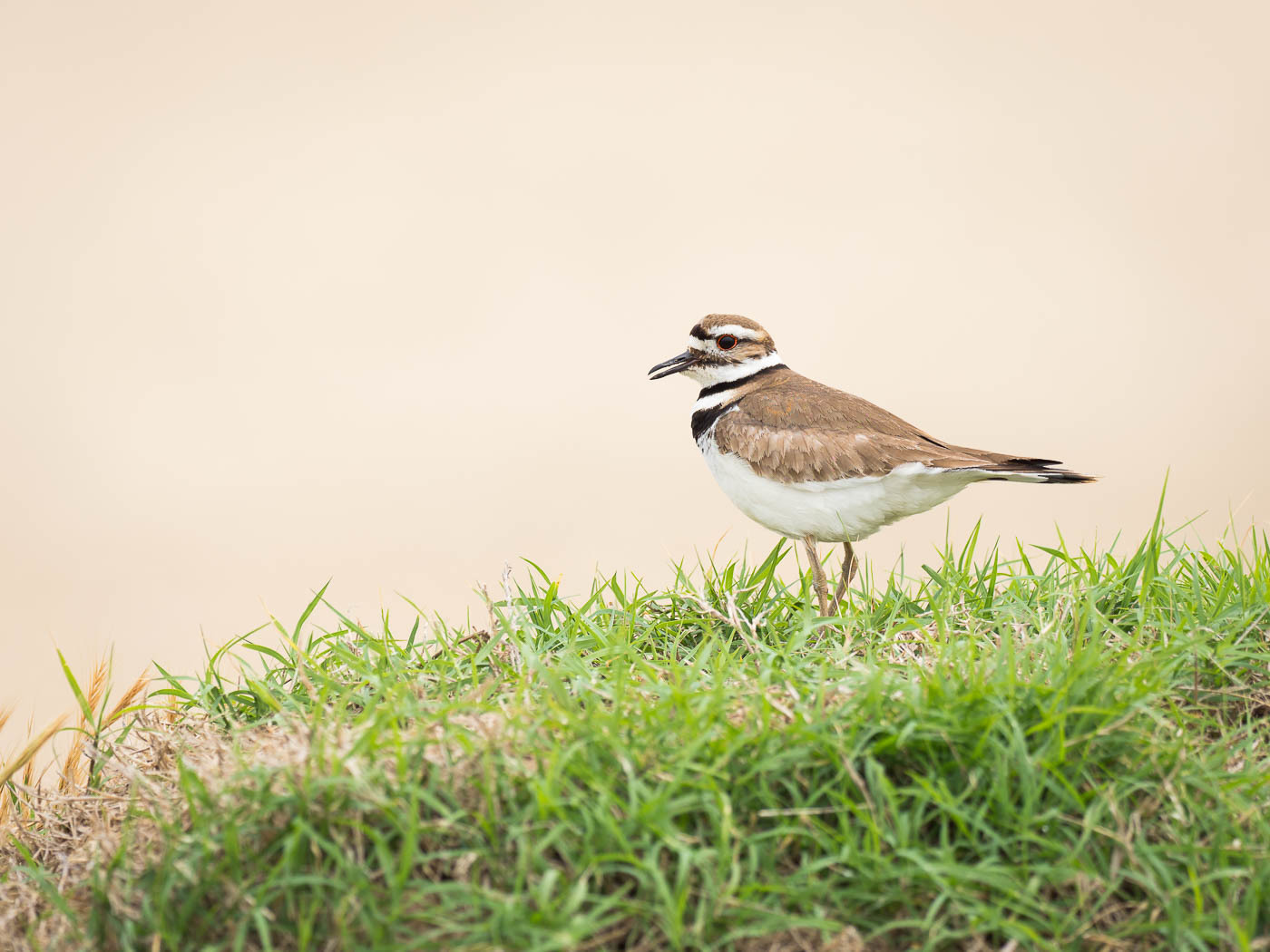
I really don't approach it any differently than I did with, say, a Canon DSLR + 800mm lens. It's mostly understanding the geometry of the scene and the quality of light. Here's what I look for:
1. Subject that I can approach closely and that is situated such that I can position myself in between the source of light and subject, and with a distant background (subject to background distance at least 3-4 times the distance from camera to subject);
2. Background free of distractions such as highlights, shadows, large tonal differences, large contrast, irregular shapes, etc. Keep in mind that with telephoto lenses and their narrow FOV, a small change in your shooting angle can dramatically change the background in your image, so make sure to look not just inside your viewfinder, but outside as well.
3. An overcast day like this can give backgrounds with a softer or smoother look due to the lower contrast. As Bobby called it, a "pastel" look.
Hope that's of some help, even though I know it's all fairly common knowledge. These last four images that I've posted were shot in a beachfront city park. I'll try to go back and take a snapshot of the area I was working so you can see that it hardly looks like it would yield good backgrounds. But, you can pick and choose the spots that will work.
Mitesh, thanks for the info, I love your backgrounds and wondered the same thing! FWIW, I find the boquet from the 300f4 and MC14 a bit harsh so obviously I need to work on my technique!
I really don't approach it any differently than I did with, say, a Canon DSLR + 800mm lens. It's mostly understanding the geometry of the scene and the quality of light. Here's what I look for:
1. Subject that I can approach closely and that is situated such that I can position myself in between the source of light and subject, and with a distant background (subject to background distance at least 3-4 times the distance from camera to subject);
2. Background free of distractions such as highlights, shadows, large tonal differences, large contrast, irregular shapes, etc. Keep in mind that with telephoto lenses and their narrow FOV, a small change in your shooting angle can dramatically change the background in your image, so make sure to look not just inside your viewfinder, but outside as well.
3. An overcast day like this can give backgrounds with a softer or smoother look due to the lower contrast. As Bobby called it, a "pastel" look.
Hope that's of some help, even though I know it's all fairly common knowledge. These last four images that I've posted were shot in a beachfront city park. I'll try to go back and take a snapshot of the area I was working so you can see that it hardly looks like it would yield good backgrounds. But, you can pick and choose the spots that will work....Show more →
Thanks. I wish I had that kind of leeway where I shot owls this winter. The somewhat lower tracking capabilities of the Olympus vs my 1DX cost me some shots, but what bugged me most was the busy background of the 300mm compared to the Canon 500mm.
johnvanr wrote:
Thanks. I wish I had that kind of leeway where I shot owls this winter. The somewhat lower tracking capabilities of the Olympus vs my 1DX cost me some shots, but what bugged me most was the busy background of the 300mm compared to the Canon 500mm.
I agree that branchy, grassy backgrounds generally are difficult to smooth out. In those instances, I'd either opt for a tight composition that eliminates as much of that as possible, or go for a wider composition that actually puts them in focus, thereby negating any "busy" or "nervous" bokeh.
Here are a couple of examples to illustrate. Both are uncropped original images. First one shows how even a Canon 800mm can show an unpleasant rendering of OOF branches. Second image shows the effect of atmospheric distortion on the background, and how it can exacerbate that "nervous" bokeh.
Thanks for this illustration, Mitesh! The "nervous bokeh" is there alright. So the problem is not unique to Olympus or m43 lenses. Makes me feel a lot better about my 300/4 and 40-150 PRO lenses. The problem is exacerbated with m43 lenses because of the extra DOF, but bad or nervous bokeh can be avoided or minimized with greater awareness of the problem .... and good technique.
mitesh wrote:
I agree that branchy, grassy backgrounds generally are difficult to smooth out. In those instances, I'd either opt for a tight composition that eliminates as much of that as possible, or go for a wider composition that actually puts them in focus, thereby negating any "busy" or "nervous" bokeh.
Here are a couple of examples to illustrate. Both are uncropped original images. First one shows how even a Canon 800mm can show an unpleasant rendering of OOF branches. Second image shows the effect of atmospheric distortion on the background, and how it can exacerbate that "nervous" bokeh.
maf
I went to Calcutta to study music (raagsangit), every winter from 1979 til 1985. After my Guru died I started going to Bombay. Haven't been back for a long time now....


 .
.