dgdg wrote:
The flocking material appears to be the sames as the Edmunds flocking. I would be surprised if the T version caused an issue. Wouldn't the flocking affect all lenses and we'd have heard by now?
I dont own Canon TSE's nor the adapters so I am going to be hypothesizing willy-nilly. If Canon TSE's retrofocus and you shift you might hit the flocking (or get some of the flocking on the optical path) with them and not with other lenses. Obviously when you use the lens in the Canon you dont have the problem. I would suspect the adapter, maybe there is a small protrusion or unevenness somewhere that tilt the lens and prevent it from sitting happy. The tilt could be in the lens to adapter or in the adapter to body.
Mkosky's case seems spokier since he doesnt need to shift to have problems. Maybe his adapter is all over the place.
BTW, Sigma MC11 adapter seems to have a wider rectangle than the metabones. Maybe that one will work better
Javier Munoz wrote:
I dont own Canon TSE's nor the adapters so I am going to be hypothesizing willy-nilly. If Canon TSE's retrofocus and you shift you might hit the flocking (or get some of the flocking on the optical path) with them and not with other lenses. Obviously when you use the lens in the Canon you dont have the problem. I would suspect the adapter, maybe there is a small protrusion or unevenness somewhere that tilt the lens and prevent it from sitting happy. The tilt could be in the lens to adapter or in the adapter to body.
Mkosky's case seems spokier since he doesnt need to shift to have problems. Maybe his adapter is all over the place.
BTW, Sigma MC11 adapter seems to have a wider rectangle than the metabones. Maybe that one will work better...Show more →
I'm thinking Sigma's hard edges of the baffling on the lens mount side will interfere with shifts, but I also don't think it was designed to be compatible with Canon's lenses.
I also don't think this has anything to do with the baffling. If it were interfering, it would cause a hard, dark edge on the photo, not a loss of resolution.
All this got me retesting, and yes I in my case it is the difference between adapters rather than baffling. I'll likely removed the baffling anyway, sanding and painting is working better for other reasons.
My 24mm TSE does seem far worse in the 8-12mm horizontal shifts compared to my 17mm TSE (although the 17mm is still not that great), after testing with multiple adapters (no matter if baffled or painted).
My best guess is it can't hit focus in the extreme corners. I don't know what is preventing this, it does seem worse in some adapters, but that could be something separate. We might even be dealing with a compound set of issues, with different people having worse problems than others.
Anyways, whatever the case is I've found a work around to get sharp corners at 8-12mm shifts with my A7rII and 24mm TSE II. If I know I'm doing a horizontal panorama, I tilt horizontally 1-1.5 degrees (depending on the adapter) away with each extreme shift (so one for each pano edge). Doing this the 8-12mm shift corners actually come into sharp focus if you are precise.
This *may* create some headaches in post with pano alignments (but really these are nothing compared to stitching with non shift lenses. It's a work around that will keep me happy with TSE's on my Sonys for the fine art landscape work I do.
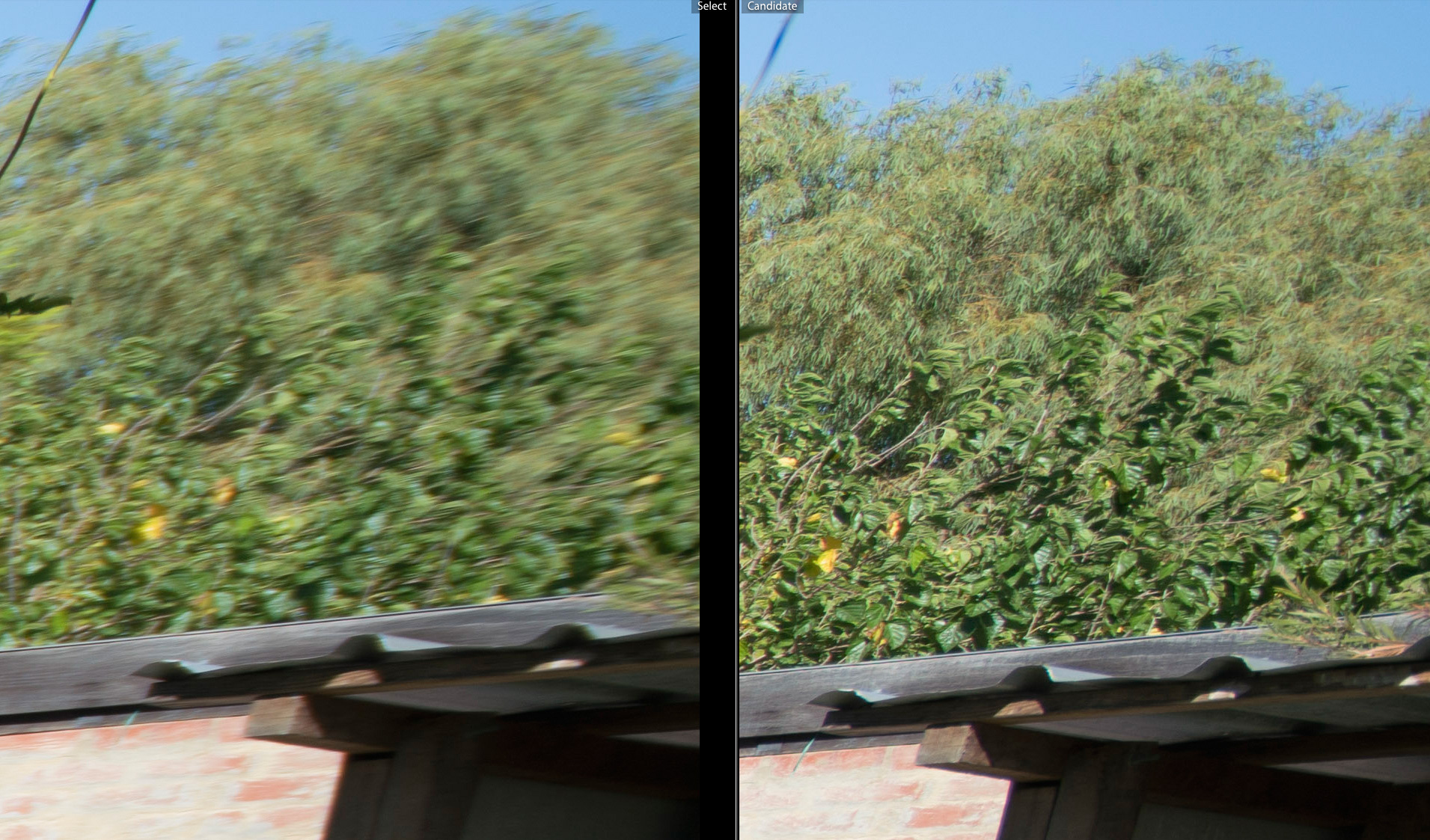
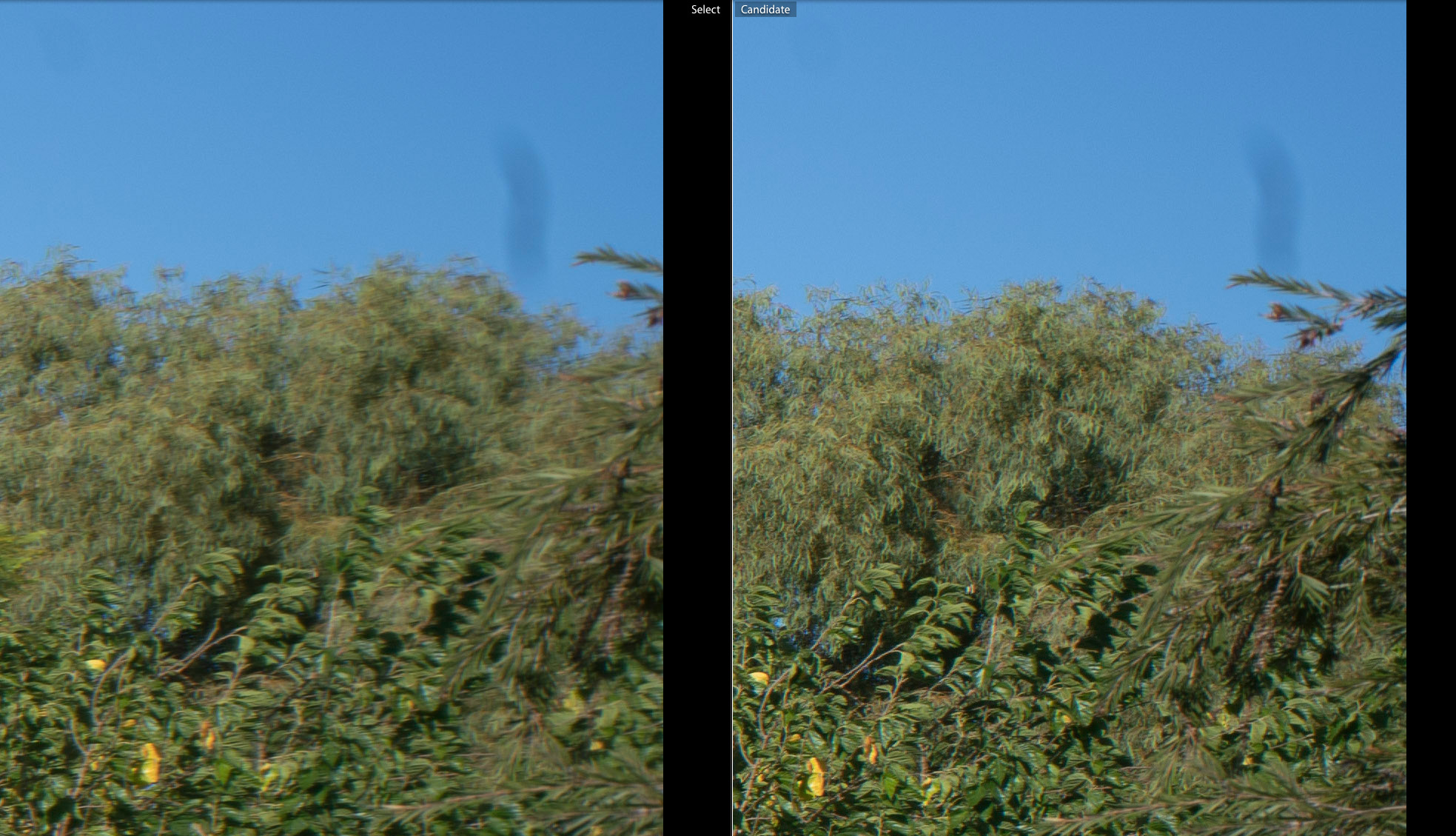
Below is a 1:1 comparison with two shots both taken with a Canon 17mm TSE and a Sony A7R2. Both are at the extreme edge of a 12mm shift (the left being the edge). The first has no tilting and the second has 1.5 degrees of horizontal tilt towards the left. No adjustments applied.
To my eyes, the right image is very useable, when you remember this is the extreme shifted edge at 1:1. The right side side will be in the next post..
Screen Shot 17mm TSE @ f8 with 12mm horizontal shift
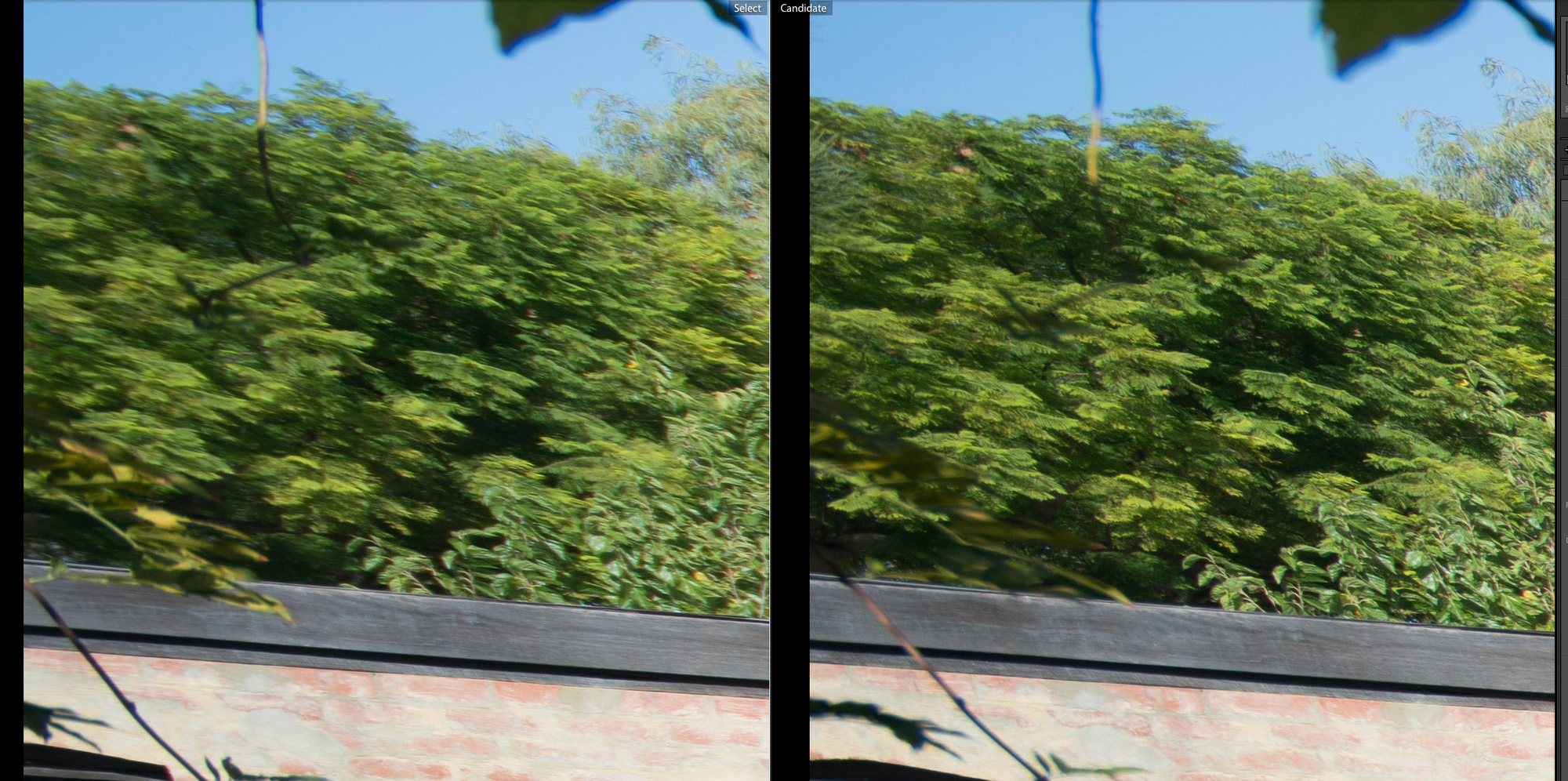
Below is a 1:1 comparison with two shots both taken with a Canon 24mm TSE and a Sony A7R2. Both are at the extreme edge of a 12mm shift (the left being the edge). The first has 1.5 degrees of horizontal tilt towards the left, the second none. No adjustments applied.
As with the 17mm, the right side side will be in the next post..
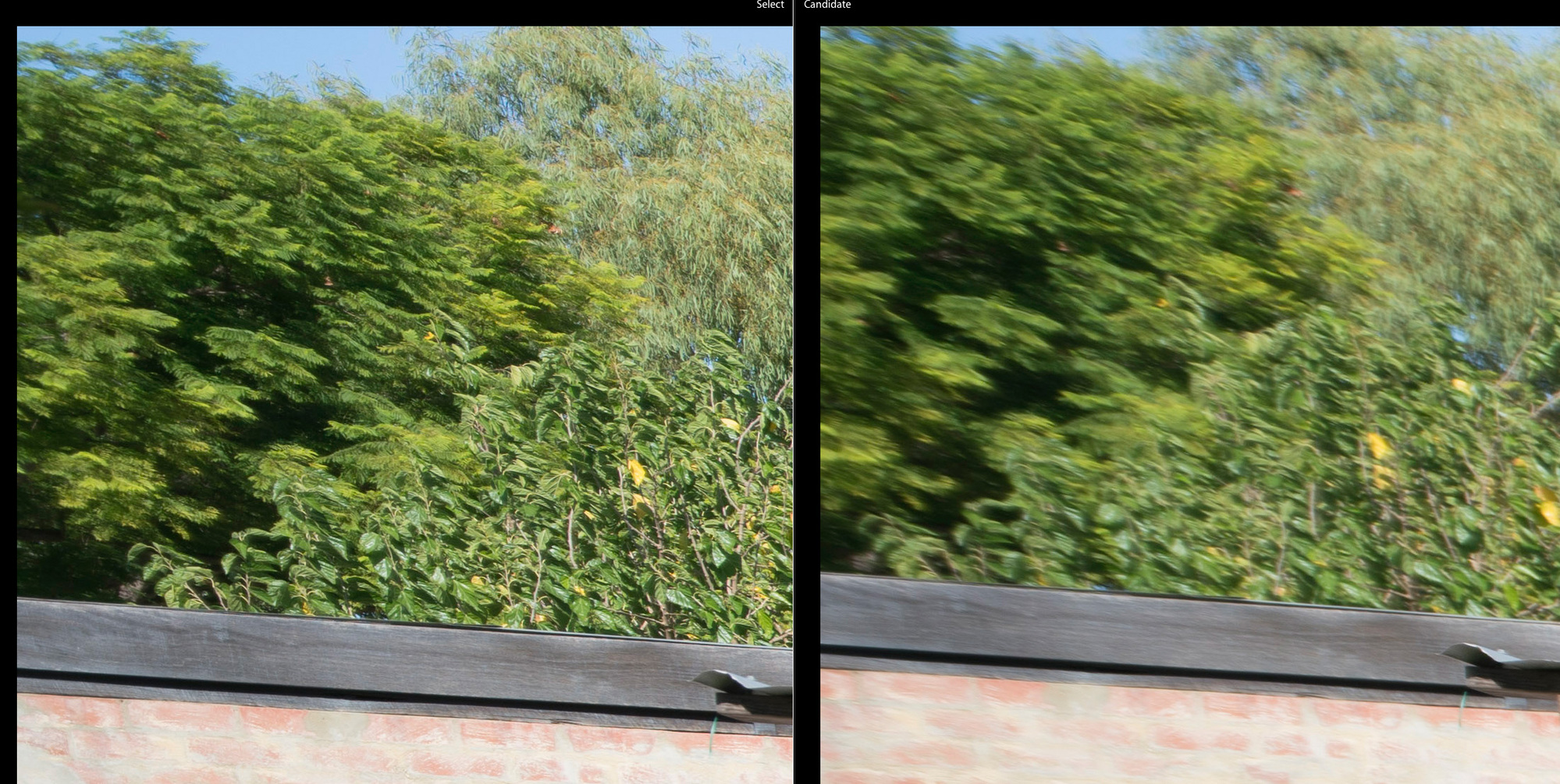
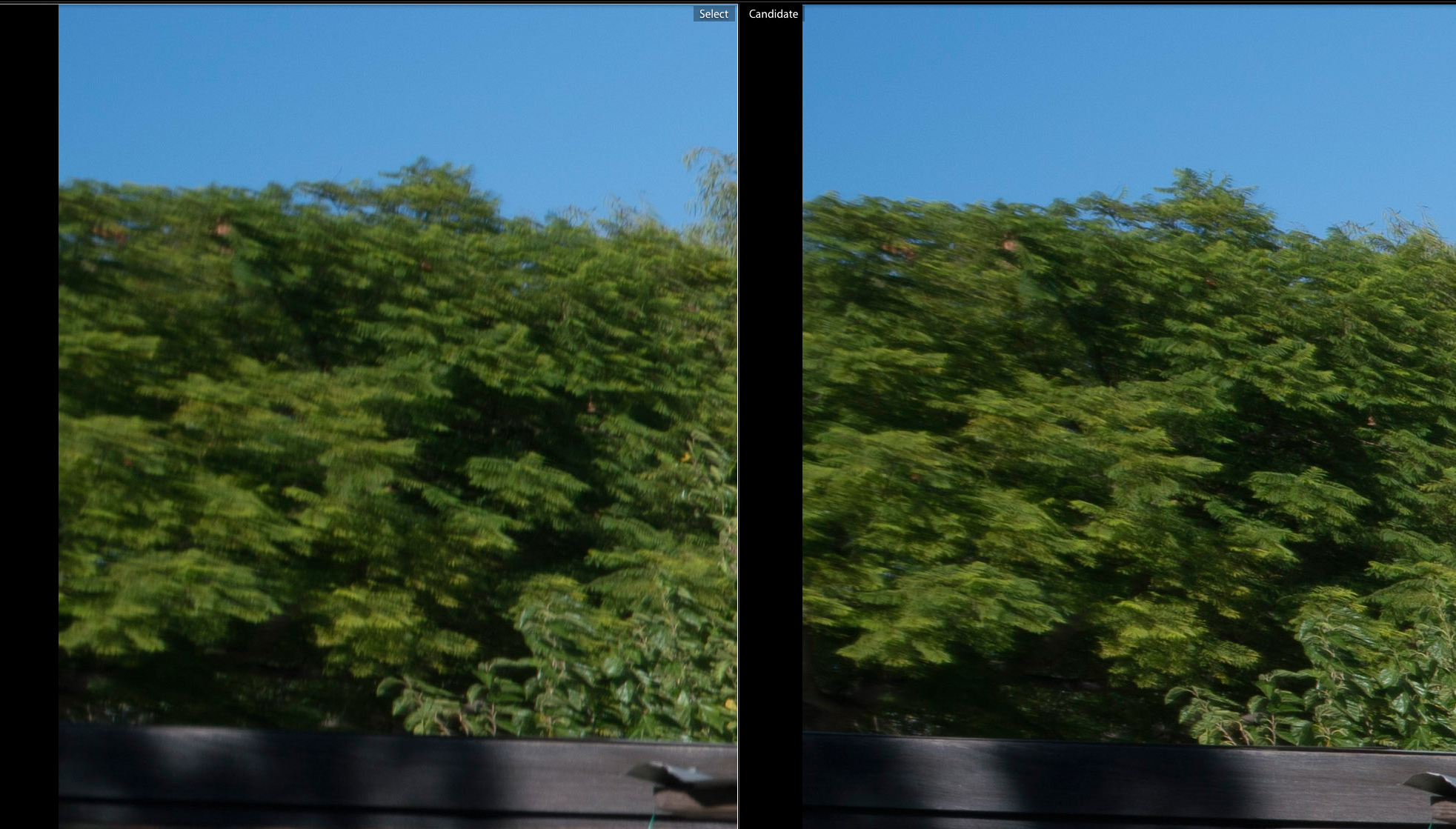
Below is a 1:1 comparison with two shots both taken with a Canon 24mm TSE and a Sony A7R2. Both are at the extreme edge of a 12mm shift (the right being the edge). The first has 1.5 degrees of horizontal tilt towards the right, the second none. No adjustments applied.
I finally post two more posts (this time with different metabones adapter, which I've filed and painted rather than baffled. I thought I'd post it to illustrate, differences between adapters QC do make differences, but more is going on. Which explains part of the reason why there is such differences between people results. Stopping down to f11 evens out all these results to a degree as well, which is why I shot @ f8.
1:1 comparison with two shots both taken with a Canon 24mm TSE and a Sony A7R2. Both are at the extreme edge of a 12mm shift (the right being the edge). The first has no tilt, the second has 1.5 degrees of horizontal tilt towards the right. No adjustments applied.
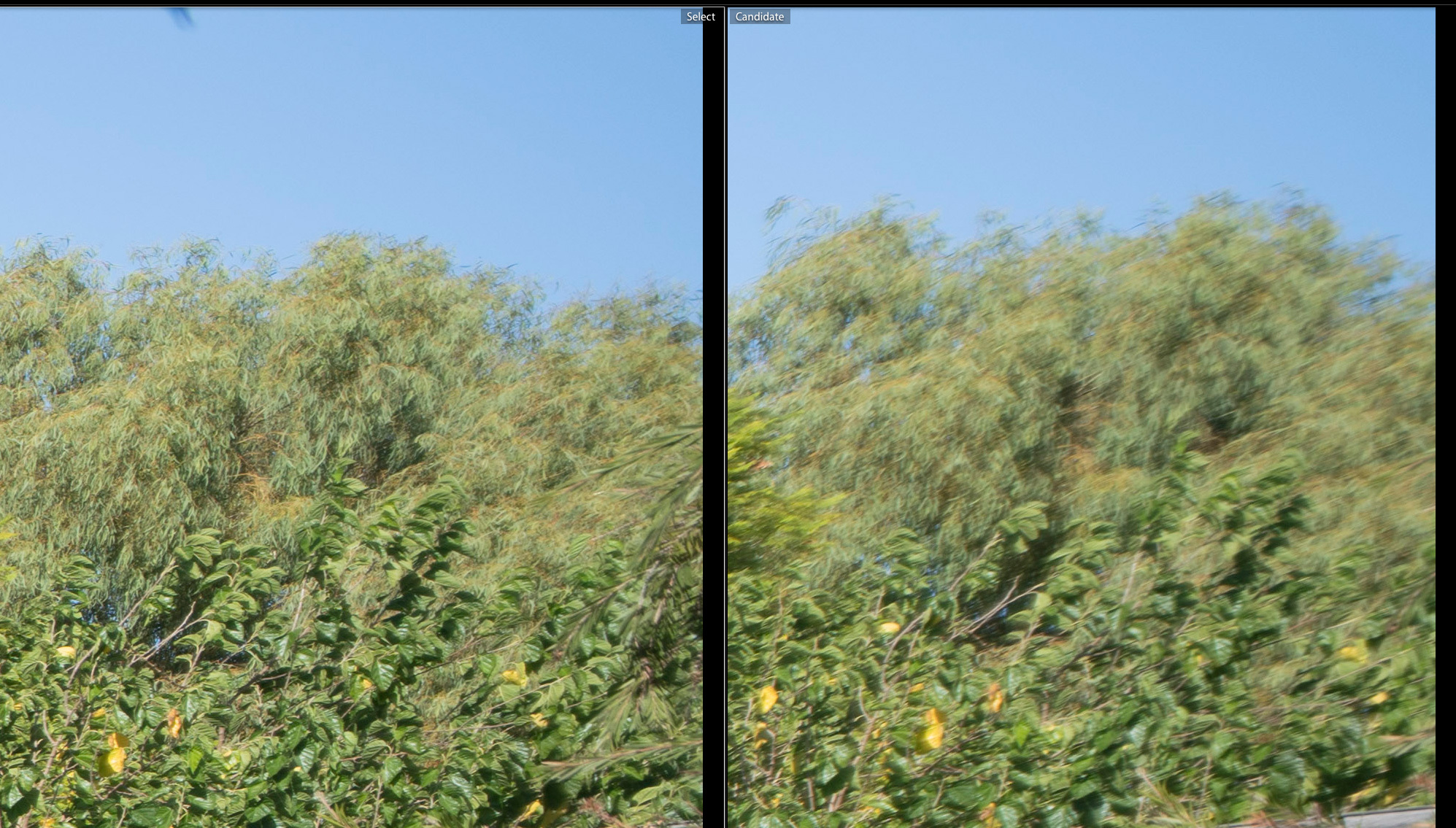
Following on from my last post with different metabones adapter (no baffling). This time the left corner.
1:1 comparison with two shots both taken with a Canon 24mm TSE and a Sony A7R2. Both are at the extreme edge of a 12mm shift (the left being the edge). The first has no tilt, the second has 1.5 degrees of horizontal tilt towards the left. No adjustments applied.
Smearing in the extreme corners looks just like lens field curvature rather than a problem lens. Shooting at f8 on the Canon and shifting to the extreme corners is never going to look great due to field curvature. If I was shifting as much as this and needed better sharpness across the entire frame I would stop down to f16 and sharpen up in post.
This thread is so far away from the point I raised in my OP. My issue is with unshifted shots with ibis off. Has anyone looked at the raws I posted in the first post? Does the tse 24 shot look correct to anyone? The IQ is terrible compared to the other two raws I posted from other lenses.
Xpfloyd, I'd try putting the 24mm TSE on your canon 5d3, then holding down the depth of field preview to keep it at f8. Then adapt it to a completely manual adapter with your Sony (baffling the adapter). Maybe the adapter is triggering ibis or is a dud. Or test it on someone else's A7R.
You say it works fine on your canon, so it must be either adapter or your testing methods.
Test with silent mode with a cable release. Also are you attaching your adapter to the tripod or your camera (centre of gravity is important for these heavy lenses). Also have you locked in your movements, so they can't happen even by tiny amounts.
This whole thing seems really odd, because others don't have the same issue.
I had exactly the same problem a while back when the lens was performing very poorly in the corners. The problem is the infinity adjustment of the Canon to Sony adaptor.
The point where infinity is indicated on the lens barrel will be slightly different on the Canon vs Sony. This does not matter with lenses with no floating elements but is a real issue with the Canon TS24 II and I also had similar issues with a Zeiss 21/2.8 lens.
Make a note of where infinity is reached when your lens is mounted on the Canon and then shim the adaptor until infinity is reached at the same point as your Canon.
This resolved the issue for me and the lens performs perfectly now - you can use self adhesive copper foil for the shims.