p.22 #1 · A thinner sensor stack may be possible after all!
Thanks Charlie
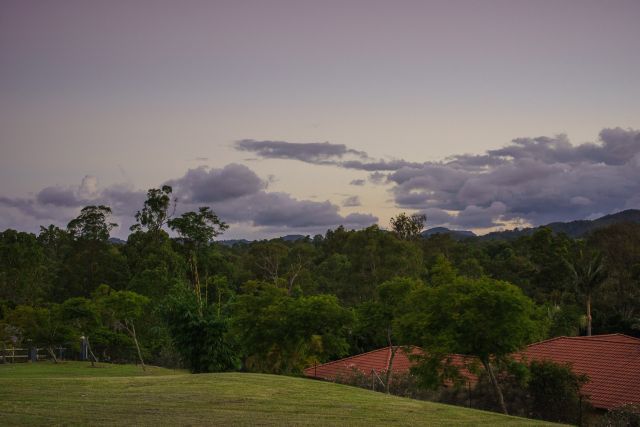
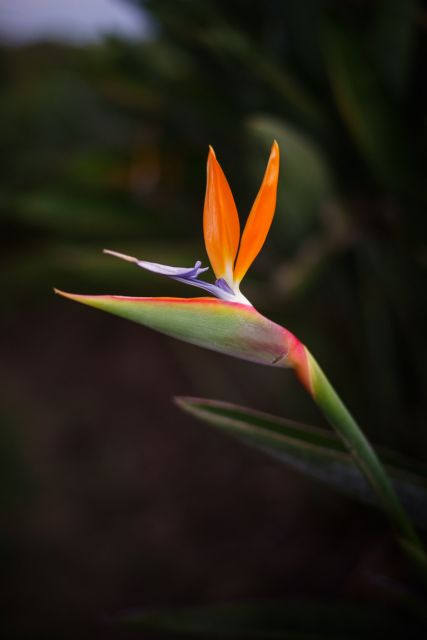
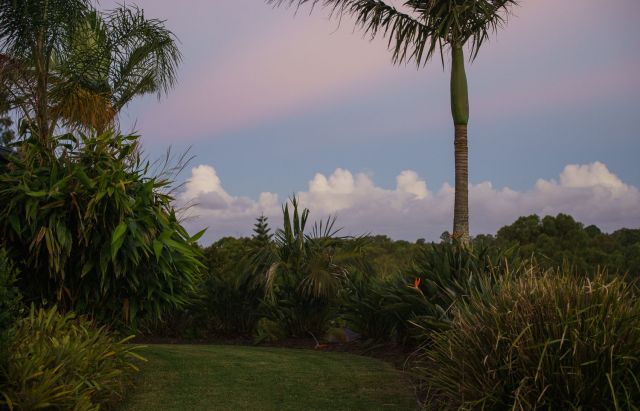
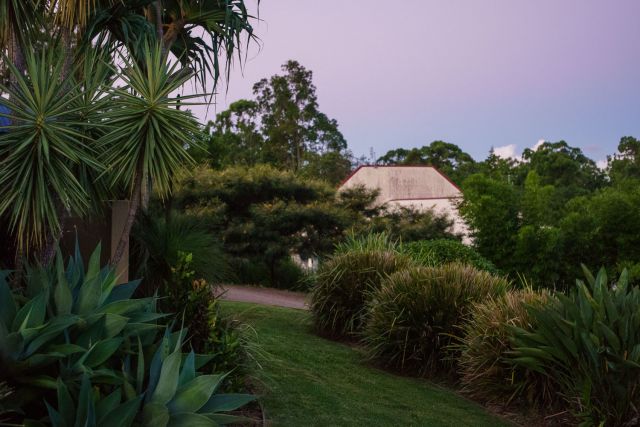
Some more shots later this evening.
First shot at f/5.6 and the last three shots at f/1.4
My immediate observations is that the 50 Lux Asph behaves very differently than with the A7r stock. Personally I am thrilled that the 50 Lux Asph works so with well with the A7rMod. More testing is needed
p.22 #3 · A thinner sensor stack may be possible after all!
mdemeyer wrote:
The M9 was Schott S8612. I don't know exactly what glass type the filter M8 was but, as it did not exhibit sensitivity to humidity as does the M9, I believe it was a different glass in addition to being thinner.
..
A coated glass would avoid the glass corrosion issue. But colored glass is often harder to coat.
Or use a colored glass with better chemical resistance.
mdemeyer wrote:
...
If anyone would like to study this more, the Schott glass transmission curves are all in their technical data section. You will see that the IR blockage of the various Blue-Green (BG prefix) glasses used by virtually all manufacturers vary by several orders of magnitude and the sharpness of their cut-offs similarly vary widely. Reducing the thickness by half effects it only by a factor of 2.
As to why not use interference filters, which are surface coatings and unaffected by glass thickness, they have (as mentioned above) issues with large ray angles, so are not a good solution for this application... ...Show more →
Coating experts work on coatings for wide ray incidend angles. Here for example a paper from 2012 about an AR coating for 60° incident angle (this is measured from normal). http://www.ep.liu.se/wcc/002/048/wcc12002048.pdf
Leica Camera is a project partner here!
Mr. Kaiser said on a coating workshop I attended that Leica Camera is very much into coating technology.
For the colored glass transmission curves one should look at the tolerance definitions!
The actual glass melt you get may very much from the transmission curve in the datasheet.
That much that the differences can be seen without experience.
p.22 #4 · A thinner sensor stack may be possible after all!
Received my A7R back today and as promised tested the Zeiss 25/2.8ZM straight away.
Only managed to grab a couple of images in between rushing to meetings at work. The link contains the original and flatfield corrected DNGs and the JPGs with Lightroom corrections applied.
Please observe the top left hand corner in the second image. It is almost as sharp as I remember it on my Leica M240, hope to have time to test further at the weekend.
The lens has been stopped down to f5.6
Very very happy with the conversion even the VC21/4 is acceptable.
p.22 #5 · A thinner sensor stack may be possible after all!
nicoimages wrote:
Received my A7R back today and as promised tested the Zeiss 25/2.8ZM straight away.
Only managed to grab a couple of images in between rushing to meetings at work. The link contains the original and flatfield corrected DNGs and the JPGs with Lightroom corrections applied.
Please observe the top left hand corner in the second image. It is almost as sharp as I remember it on my Leica M240, hope to have time to test further at the weekend.
Very very happy with the conversion even the VC21/4 is acceptable.
p.22 #6 · A thinner sensor stack may be possible after all!
hiepphotog wrote:
Thank you, Nico! Are these f/8 or WO?
Sorry have updated the original post - these are at f5.6 which is the sharpest aperture on the M240 - I suspect that it will get even sharper at f8 in the corners but diffraction will start becoming an issue after that
p.22 #7 · A thinner sensor stack may be possible after all!
Thanks Nico!
A slightly off-topic question - how much color cast do you get with the Elmarit-M 28/2.8 ASPH on the A7?
I had the Elmarit 28 with my Nex-7 and had a bit of color cast, and then "upgraded" to the Summicron-M 28, which had less cast. I now am using the 'cron on the A7 and for some reason am thinking that I just like the Elmarit's look better, but I don't want more color cast than the 'cron already has (which is pretty slight) on the A7.
p.22 #8 · A thinner sensor stack may be possible after all!
Taylor Sherman wrote:
Thanks Nico!
A slightly off-topic question - how much color cast do you get with the Elmarit-M 28/2.8 ASPH on the A7?
I had the Elmarit 28 with my Nex-7 and had a bit of color cast, and then "upgraded" to the Summicron-M 28, which had less cast. I now am using the 'cron on the A7 and for some reason am thinking that I just like the Elmarit's look better, but I don't want more color cast than the 'cron already has (which is pretty slight) on the A7.
I have the A7R and the colour cast with the Elmarit 28/2.8 ASPH is quiet strong but it can be corrected fairly easily and quickly in Lightroom with the Flat Field plugin. I did some testing tonight with this lens and it is very sharp from f5.6 onwards.
Compared to the Leica M240 it appears that most of my Leica M mount lenses just need an extra stop to reach similar levels of sharpness on the A7R. However if you downres the A7R images to Leica M240 size the difference is even less apparent.
The A7 is less susceptible to colour casts though but I suspect that it will still be an issue with the Elmarit.
p.22 #10 · A thinner sensor stack may be possible after all!
With the a7rM - Is there any change to the performance of DSLR lenses - in particular the TSE-24 II? I just want to be sure before taking the plunge and couldn't find any comment beyond one post on the FE lenses. Thanks.
p.22 #11 · A thinner sensor stack may be possible after all!
coogee wrote:
With the a7rM - Is there any change to the performance of DSLR lenses - in particular the TSE-24 II? I just want to be sure before taking the plunge and couldn't find any comment beyond one post on the FE lenses. Thanks.
Have not seen any tests of the 24mm TS II yet. I believe it was introduced in 2009, so it's hard to know if it's optimised for film or Canon digital with some kind of filter stack.
That said, with an 86mm exit pupil distance and f3.5 aperture, I would not expect it to be affected either way.
p.22 #12 · A thinner sensor stack may be possible after all!
Thanks - that's my thought too - hard to see why it should - I just want to be certain as it's such a key lens (to me) on a7r. Though after spoiling myself with Leicas and Zeisses, using the (relatively) tiny throw of its (relatively) crappy plastic focus ring doesn't bring enjoyment anymore, at least the results still do!
p.22 #15 · A thinner sensor stack may be possible after all!
mdemeyer wrote:
Have not seen any tests of the 24mm TS II yet. I believe it was introduced in 2009, so it's hard to know if it's optimised for film or Canon digital with some kind of filter stack.
That said, with an 86mm exit pupil distance and f3.5 aperture, I would not expect it to be affected either way.
I'd bet a dinner "no change".
Michael
Have that lens and just tested it quickly this morning on the modified A7R. No change I could notice. Will post some proper test images once it stops raining!
p.22 #16 · A thinner sensor stack may be possible after all!
Anyone have the 17mm TSE to test? I think Fred reported some worse corners until stopped down on the A7r. I have one but have not used it at infinity on the A7r yet (which I think is where the problem appeared).
p.22 #17 · A thinner sensor stack may be possible after all!
Hi Nico and Charles,
Thanks for running the tests.
Nico,
Please do not forget to check the Minolta CLE 28mm f2.8 lens particularly on the modified A7r. I know that several of us are interested for both cameras including Derek and myself.
Charles,
Looking forward to any tests with the WATE as that is my only WA Leica M lens. I just received an M 90mm f2.5 Summarit as my only other Leica M lens, but I do not expect any or very little improvement for the Summarit.
p.22 #19 · A thinner sensor stack may be possible after all!
AhamB wrote:
Very nice. I didn't know the 50 Lux Asph could be so swirly though.
Yes, the 50 Lux ASPH can be swirly. It depends a lot on camera to subject to background distances/ratio. I find it becomes more noticeable at farther subject distances and when there is less background separation.
For typical portrait and bokeh-type shots, you're not going to run into this, which is why you probably don't see it so often on the forums.
Great to see all these images and updates. Sounds very promising. What kind of turnaround time is Kolari averaging?
p.22 #20 · A thinner sensor stack may be possible after all!
Some very very unscientific tests from the M-Rokkor 28 and VC21/4 taken out of a closed window. Had to rush these as it has been raining again all day and had to go to work.
The M-Rokkor works extremely well, I have a good sample with no white spots - there is some colour shading but it is minimal but would need correction with blue skies for example. The two sample images are from the uncorrected version straight from the raw file to demonstrate how subtle it is. Very sharp across the frame at f8 - it does focus shift slightly (same on M240) so best to focus it at the taking aperture rather than wide open. Second image demonstrates sharpness at the left top corner.
VC21/4 performs well too but with significant colour shading that can be corrected in lightroom easily however this can increase noise in the corners if the image is taken at a high iso already and shading correction is selected. Very usable at f8 - I do have a rather good sample of the lens though.