I never said there is inbuilt mojo in MF lenses. I said if you like the look you get using MF lenses, you can still get (a major portion) of that on FF without having to buy an entire MF system by using them on FF.
I never said there is inbuilt mojo in MF lenses. I said if you like the look you get using MF lenses, you can still get (a major portion) of that on FF without having to buy an entire MF system by using them on FF.
The 35mm FF lenses will normally be sharper with better contrast and quite possibly have lower amounts of abberations.
naturephoto1 wrote:
The 35mm FF lenses will normally be sharper with better contrast and quite possibly have lower amounts of abberations.
Rich
While I disagree that the FF lens will necessarily be better corrected, I will agree that it may (assuming were talking good stuff on both ends) appear sharper with more contrast. That is the inverse of smoother transitions @ more rapid transitions from the shorter projection. Part of the "look" at MF glass is its smoother transitions.
My point has always been that if you like the MF look for its smoother transitions, you can still get that on FF by using MF glass on FF.
Sharper, less SA. Vignetting will be lower with the MF lens though, and bokeh will be more uniform towards the borders. Though, the 105/2.5 already has a fairly large image circle with nice rendering across the frame.
I'm not trying to bash your opinion here, but I think you have got it all wrong. A lens that gives a larger image circle doesn't fair better on a smaller format. Rather the opposite, except for the corners. The medium format look has nothing with lens design to do, but with good local contrast and smooth bokeh at a given DOF. Which is possible due to slow lenses and long focal lengths for a given AOV.
It's much easier to make a lens with low aberrations at f/2.4 than at f/1.2. So a 105/2.4 on 6x7 will give a very different look than a 50/1.2 on FF, even if DOF is sort of the same. Putting the 105/2.4 on FF is most likely not gonna give anything better than a similar lens with a smaller image circle. Except that you trade local contrast for smoother corner bokeh and more even illumination across the frame.
The Nikkor 105/2.5 is already there. It could probably fill 44x33 without any issues. And therefore it remains very smooth to the very corners, but doesn't give the bite that some other similar lenses do.
Makten wrote:
I suggest you try it out for yourself. If I had a P67 adapter I'd compare the 105/2.4 to the Nikkor 105/2.5, and I'm sure the Nikkor would perform better because of the smaller image circle.
We are very close to agreeing here ... I'd change "perform better" to "perform different". The same point that you have just made regarding the smaller image circle is the exact same point that I've been saying (inversely) about the use of a larger image circle.
RustyBug wrote:
And aren't these part of "the look" that you get on MF ... now achieving them also on FF (albeit cropped)?
Definitely not, in my opinion. Because if that, the MF look would not be present on MF, since you then use the full image circle and get the usual harsher bokeh in the corners, and so forth.
I don't have any adapters for using my MF lenses (P67 and Hassy) on my Nikon, but it would be very interesting to do a comparison. I've actually thought about trying the 75/4.5 on my D700 since it's so insanely sharp on 6x7, but I doubt it will fare well compared to anything of the same FL made for 24x36.
If you have some MF lenses that corresponds to FF lenses with the same FL, I suggest that you make some controlled tests. I might be wrong, but I believe that you will find the FF lenses better. Especially at the same f-stop.
Makten wrote:
Definitely not, in my opinion. Because if that, the MF look would not be present on MF, since you then use the full image circle and get the usual harsher bokeh in the corners, and so forth.
I don't have any adapters for using my MF lenses (P67 and Hassy) on my Nikon, but it would be very interesting to do a comparison. I've actually thought about trying the 75/4.5 on my D700 since it's so insanely sharp on 6x7, but I doubt it will fare well compared to anything of the same FL made for 24x36.
If you have some MF lenses that corresponds to FF lenses with the same FL, I suggest that you make some controlled tests. I might be wrong, but I believe that you will find the FF lenses better. Especially at the same f-stop....Show more →
The term "better" (whose definition) is not the issue here for me. The issue is "more MF-like" or different, more uniform, less vignetting, etc. ... it may not compare identically to the same FL made for 24x36 ... I would certainly hope not ... that's the entire point !!!. This is still the "Alt Gear Forum" isn't it?
I'm not saying it replaces MF format, I'm saying there is MF-like goodness to be harnessed for those who are open minded and willing to explore and you can get some (even if not all) of that goodness while you're still on the FF platform by capturing the projected image from MF glass.
RustyBug wrote:
The term "better" is not the issue here for me. The issue is "more MF-like" or different ... it may not compare identically to the same FL made for 24x36 ... I would certainly hope not ... that's the entire point !!!. This is still the "Alt Gear Forum" isn't it?
I'm not saying it replaces MF format, I'm saying there is MF-like goodness to be harnessed for those who are open minded and willing to explore and you can get some of that goodness while you're still on the FF platform by using MF glass.
The sensor size (and software) or film size is largely responsible for the MF look. Do not expect that you will get the kind of look of MF with a MF lens on a FF 35mm sensor camera as you would on a MF sensor camera.
naturephoto1 wrote:
The sensor size (and software) or film size is largely responsible for the MF look. Do not expect that you will get the kind of look of MF with a MF lens on a FF 35mm sensor camera as you would on a MF sensor camera.
Tonality is another part of using MF glass instead of FF glass (i.e. its not all about dof only). Imo, some subjects warrant the tones that MF glass renders.
Some stuff from a variety of FM'ers shooting MF glass for reference in the links below.
Some MF glass on MF, some MF glass on FF, some MF on APS-C ... you can make your own assessment regarding how much of it is due to the sensor size, or due to the glass being used.
These are a few of mine shot with MF glass shot on FF. These represent some of what I do expect to get out of MF glass on FF, with a "look" that I don't find in FF glass.
Do you have to get an MF back to enjoy the imagery MF glass projects? Does using a larger format lens on a cropped format "ruin" it?
Obviously, I've plead my case that says I don't think so. But in the end, we'll all make our own assessments and choices. So, even if you don't believe what I've been saying ... I hope you might at least enjoy them.
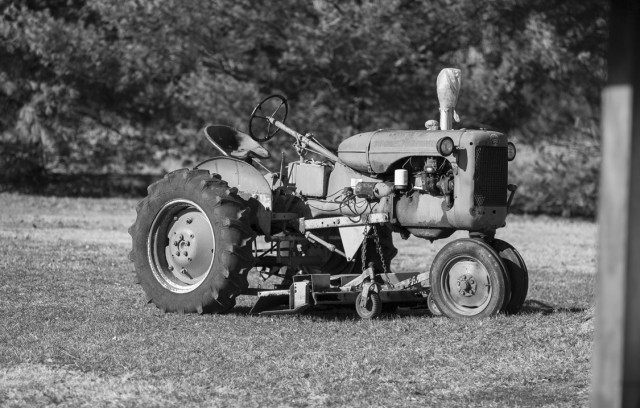
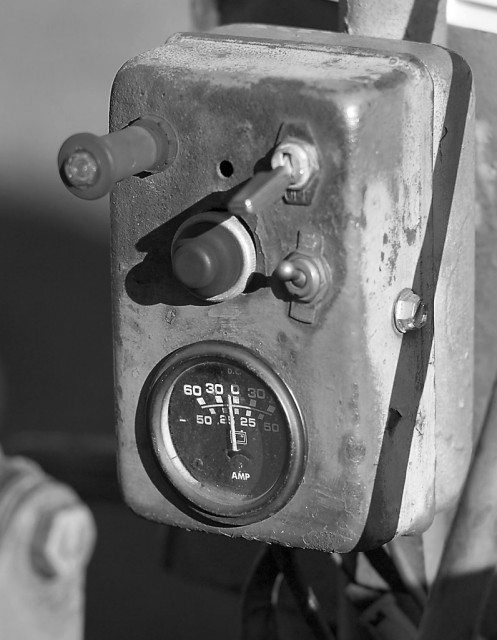
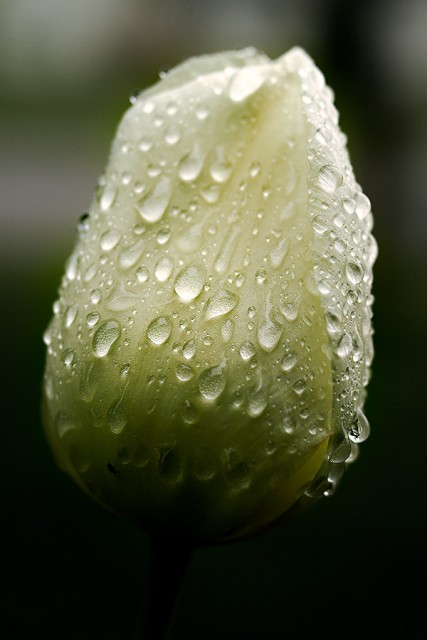
M645 150/2.8 A
M645 150/2.8 A (some additional crop)
M645 80/4
mawz wrote:
The Phase backs are certainly still serviceable, ditto the Leaf & Mamiya backs, although I'd stay away from the Mamiya backs which aren't simply rebranded, they were rife with issues.
Leaf serviceable.... depends how much BS you are prepaired to put up with... see this thread:
Putting a FF sensor or a Nex & behind a good MF lens and use stitching and the results are phenomenal... blow away single captures on medium format digital cameras.
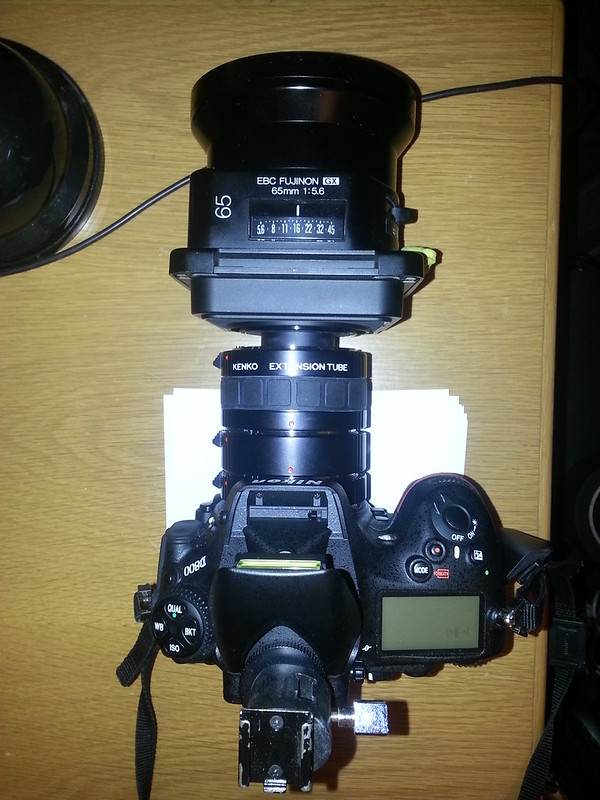
Personally I am building a custom camera using Fuji gx680 lenses that will let me do rectalinaer stitching (like the Rhinocam), but with a Nikon D800. As well as stitching I will also be able to use tilt shift.
To me, there's three sides to the digital medium format look. The colors, the smooth tonal transition, and the resolution. Of the three, I have not seen the colors replicated from FF 35mm output. A lot of people have struggled and tried, but I have yet seen it duplicated. Part of it is the CCD look, which I much prefer to the CMOS look. The other might be the color profile that the medium format makers are using. However, seeing that these companies are tiny compared to Canon and Nikon, I do not believe they have the resources to have engineered the color output they are producing so I think most of the color difference is due to the CCD. Back when Canon and Nikon used CCD, the color difference was noticeable when they changed to CMOS.
About a month ago, I went out to shoot with my Hasselblad and D800E to decide whether I should keep them. The color difference was quite startling, but in the end, I decided to get rid of the Hassy because of size and weight. A digital Hassy with 80mm is about 5lbs. I would assume P1 + Camera is about the same size and weight. That was my lightest Hassy lens. I came to the same conclusion that MingThien came to recently when he tried out the Hassy. The images just comes out looking great with little need for much post processing but the ergonomics just wore me down.
RustyBug wrote:
Tonality is another part of using MF glass instead of FF glass (i.e. its not all about dof only). Imo, some subjects warrant the tones that MF glass renders.
I don't see anything special in those pictures. Have you done A/B testing? Why would "tonality" (whatever that is) differ just because the image circle is larger? Really, I think you see something that isn't there because you have totally misunderstand the benefits of MF. It's not about the lenses.
sflxn wrote:
To me, there's three sides to the digital medium format look. The colors, the smooth tonal transition, and the resolution. Of the three, I have not seen the colors replicated from FF 35mm output. A lot of people have struggled and tried, but I have yet seen it duplicated. Part of it is the CCD look, which I much prefer to the CMOS look. The other might be the color profile that the medium format makers are using. However, seeing that these companies are tiny compared to Canon and Nikon, I do not believe they have the resources to have engineered the color output they are producing so I think most of the color difference is due to the CCD. Back when Canon and Nikon used CCD, the color difference was noticeable when they changed to CMOS.
I know no technical reason why colors should be directly related to CCD or CMOS. Manufacturers change color filters all the time. In the transition from CCD to CMOS, they also changed the color filters.
The benefits you mention of medium format look can be realised in 35 mm FF if the manufacturers give up the high ISO performance race. The filter packs can be made with priority on color fidelity over transmission. The sensor can be made with priority on full well capacity over sensitivity. Full well capacity is paramount for smooth tonal transitions. The resolution can be increased to 100MP+ and still be utilized with a lot of lenses.
There have been so many complaints about the megapixel race in FF digital, from people not needing high resolution. I wonder if it is possible to sell a specialized high resolution , ISO 25, high color fidelity FF camera. I would definitely want one.
alundeb wrote:
I know no technical reason why colors should be directly related to CCD or CMOS. Manufacturers change color filters all the time. In the transition from CCD to CMOS, they also changed the color filters.
The benefits you mention of medium format look can be realised in 35 mm FF if the manufacturers give up the high ISO performance race. The filter packs can be made with priority on color fidelity over transmission. The sensor can be made with priority on full well capacity over sensitivity. Full well capacity is paramount for smooth tonal transitions. The resolution can be increased to 100MP+ and still be utilized with a lot of lenses.
There have been so many complaints about the megapixel race in FF digital, from people not needing high resolution. I wonder if it is possible to sell a specialized high resolution , ISO 25, high color fidelity FF camera. I would definitely want one. ...Show more →
I don't know what it is about CCD, but the colors are more pleasing to my eyes than what I see from CMOS sensors. I could be the color filters favor slightly different wavelengths. I wouldn't call it more color accurate. Sony cameras are actually measured to be more color accurate than any cameras out there, including medium format, but I wouldn't say they have the best colors. The Foveon sensor has a unique color look that is clearly not accurate, but many people, including myself, love some sample of their images. The colors from my Hassy was extremely pleasing to look at, even shots taken at ISO 400. Images I know I cannot get with a Nikon. The colors tend to be more supple and smoother and cooler in temperature. The D800 may have more dynamic range than these medium format cameras, but most of that range is tucked in the shadows and requires a great deal of post processing to pull it. I think these camera makers need to put more focus on the colors they output. It's not enough to have high ISO and high DR if the default output requires a lot of PP. Fuji seems to be the only one who is focused on the default color output of their images in the 35mm space, but then, they probably know more about color science than any other company now that Kodak has all but lost their photographic roots. I really don't care about high color fidelity as much as pleasing colors. Film was never that accurate.
Still, color difference is not enough for me to keep so much money locked up in a system. It's quite a different mentality when you move up into this level. Once you buy in, then you gotta spend more on everything to optimize the IQ, and I don't think I had anything near optimal. My last purchase for my medium format system was a ballhead that cost more than most people's DSLRs. I was looking to get a $6k HTS for tilt and shift. It never stops, and in the end, I felt this style of shooting didn't fit me well. The ergonomics didn't fit me well. I'm in the process of selling it all off, but I'm keeping the ballhead . It'll look good with my little NEX that is 1/5 the size on top of it . If I ever get back into MF, it will be a digital back with an Alpa TC. With live view, it's pretty much a mirrorless MF system.
I will also add that I am glad I got out. If you look at the for sale forums on getdpi or LuLa, you can smell the desparation. H@ly cr@p, they are hard to resell. I eventually gave up and put it on ebay. Luckily, the Hasselblad name is still very widely recognized, and it sold quick. I see the Phase One systems just sitting there on ebay without any bites. When it takes a week to get a bite on gear with the name Canon or Nikon on it, we feel it's an eternity. Try months with not a single PM or reply (outside of ebay).
I keep reading there should be no difference between CCD and CMOS, but my eyes tell me otherwise, and have always done so. As sflxn, there's a distinct look to the files, not talking about medium format alone. Kodak SLR/c has it. Kodak Digital Back has it. Pentax 645D has it. My old D200 had some of it. And yes, there was a pretty noticeable difference in colors with the D300 and on. Totally agree, sflxn.
The correlation may be real, but does correlation imply causality?
The difference between CCD and CMOS is not even how light is converted to electrical charge. Both use photodiodes. The difference is in how the charge is loaded off the sensor.


 defined how