p.5 #2 · Nightscapes using AstroTrac Tracking Mount
....some have alreay stated astro photography is an addiction, stay away at all cost. It started out as imaging off the deck....and ended up with this! Go figure.....
p.5 #4 · Nightscapes using AstroTrac Tracking Mount
Dale Martin wrote: ....some have alreay stated astro photography is an addiction, stay away at all cost. It stated out as imaging off the deck....and ended up with this! Go figure.....
p.5 #10 · Nightscapes using AstroTrac Tracking Mount
That's a really great shot, Dale. And congrats on obtaining an APOD. I've yet to get one of those.
I did a similar mosaic in H-alpha. The view it encompasses is slightly larger. I had intentions of making it full color. But even in H-alpha alone, the amount of data became fairly overwhelming for my little PC.
This is an 8 frame mosaic and required 30 hours of exposure time, over 9 separate nights. It required probably another 40-50 hours of computer time to calibrate, stack, process and assemble the image. The final image is over 60 megapixels.
I'd amazes me to see how large some of these structures are. If our eyes were as sensitive as our cameras, the sky would surely look different.
Click on the image to go to my photo page. If you mouse-over the image, you can choose original (or one of the larger formats), and see the many double stars and other very fine details. Just be patient for it to load.
p.5 #14 · Nightscapes using AstroTrac Tracking Mount
If you don't mind lugging a bit more around, I wonder if the SmartEQ Pro mount would be better choice than the astrotrac. It is cheaper, has go to, and I believe you can autoguide in az and zenith. I read you can mount it on your own tripod.
p.5 #16 · Nightscapes using AstroTrac Tracking Mount
Dale Martin wrote: ....some have alreay stated astro photography is an addiction, stay away at all cost. It started out as imaging off the deck....and ended up with this! Go figure.....
p.5 #17 · Nightscapes using AstroTrac Tracking Mount
astro-ep wrote:
That's a really great shot, Dale. And congrats on obtaining an APOD. I've yet to get one of those.
I did a similar mosaic in H-alpha. The view it encompasses is slightly larger. I had intentions of making it full color. But even in H-alpha alone, the amount of data became fairly overwhelming for my little PC.
This is an 8 frame mosaic and required 30 hours of exposure time, over 9 separate nights. It required probably another 40-50 hours of computer time to calibrate, stack, process and assemble the image. The final image is over 60 megapixels.
I'd amazes me to see how large some of these structures are. If our eyes were as sensitive as our cameras, the sky would surely look different.
Click on the image to go to my photo page. If you mouse-over the image, you can choose original (or one of the larger formats), and see the many double stars and other very fine details. Just be patient for it to load.
p.5 #18 · Nightscapes using AstroTrac Tracking Mount
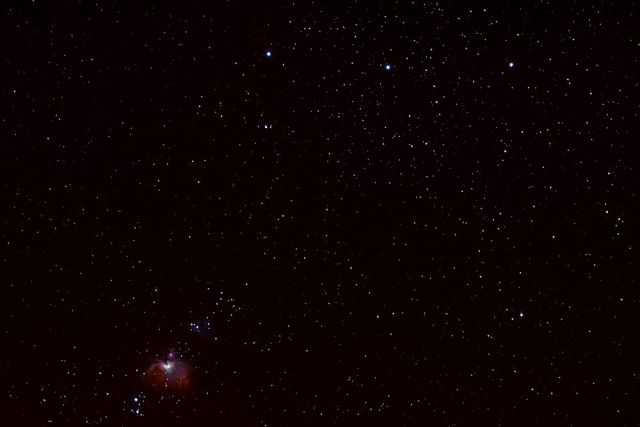
Thanks Fred. I was really aiming to show all the interesting things in that area. The three stars angled upward in the right-center of the frame, are the 3 "belt" stars of the Orion constellation. I thought it was interesting to look at the night sky and compare with the image and see how large these nebula structures really are...
p.5 #19 · Nightscapes using AstroTrac Tracking Mount
I have an update for those waiting for the iOptron Skytracker, .
I got mine yesterday and took a few test shots using my 6D and 135mm f/2L lens.
My initial impressions are very positive. The Skytracker really fixed the annoying issues I had with the Vixen Polarie. The illuminated scope works great but you must download the iOptron App to align polaris with precision.
This mount comes with a built-in wedge for latitude control but no azimuth adjustment. It's the only negative I found with the set-up. However, this problem is solved if you get a pan base like the the Feisol PB-07 mentioned on this thread before. Later on, I will post some pictures of the entire set-up and compare this system with the Astrotrac.
So, I aligned Polaris very easily and precisely in about 30 seconds. I wanted to push this mount to the limit and took a 3-minute shot at 135mm and another 3-minute dark frame.
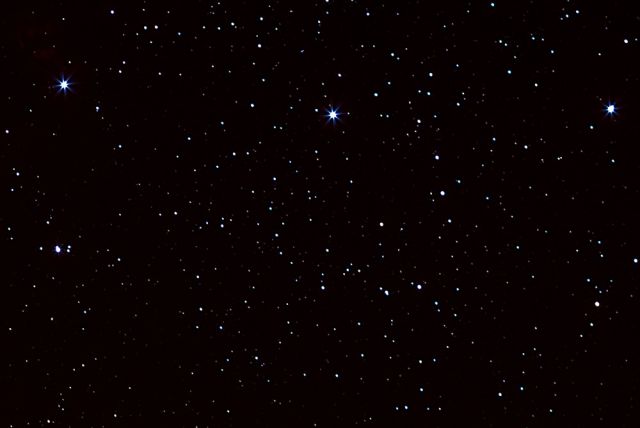
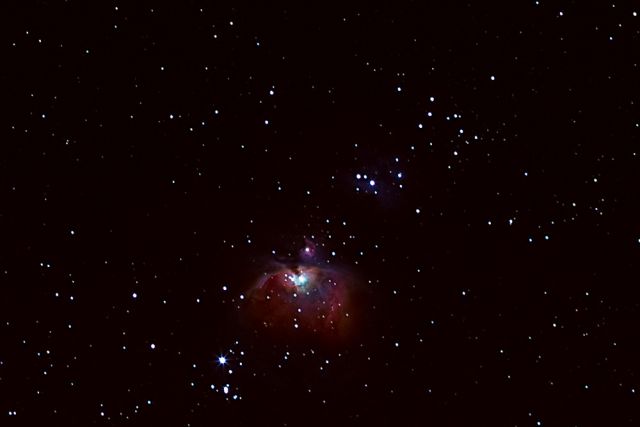
I posted the results below. It looks good to me. It's pretty safe to say that those shooting with wide-angle lenses will have no problems with very long exposures with this new mount.
On the other hand, it may not be able to provide accurate tracking with longer exposures like the Astrotrac did. I tried a few shots at 280mm (Canon 70-200 f/4L + 1.4x extender) and saw trails at the same exposure time.
p.5 #20 · Nightscapes using AstroTrac Tracking Mount
Thanks for the update Fred...your test shots look sharp! and I'm glad to hear the set-up is quick and easy. You've become a star tracking test bed...I'm anxiously awaiting the iOptron ST to be back in stock. I purchased a Feisol PB-07 and it seams quality made with smooth panning for the price.
Jim


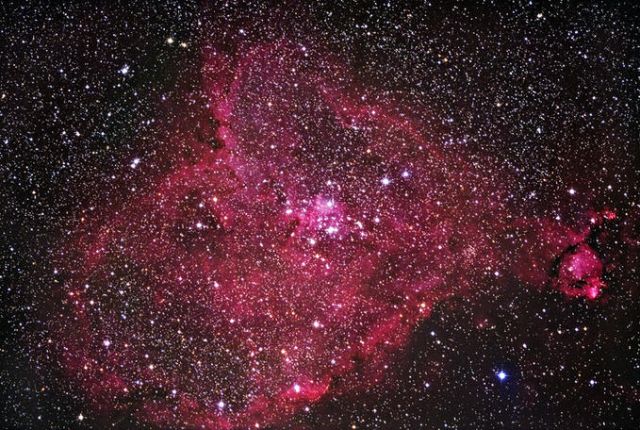
 ....some have alreay stated astro photography is an addiction, stay away at all cost
 . It started out as imaging off the deck....and ended up with this! Go figure.....