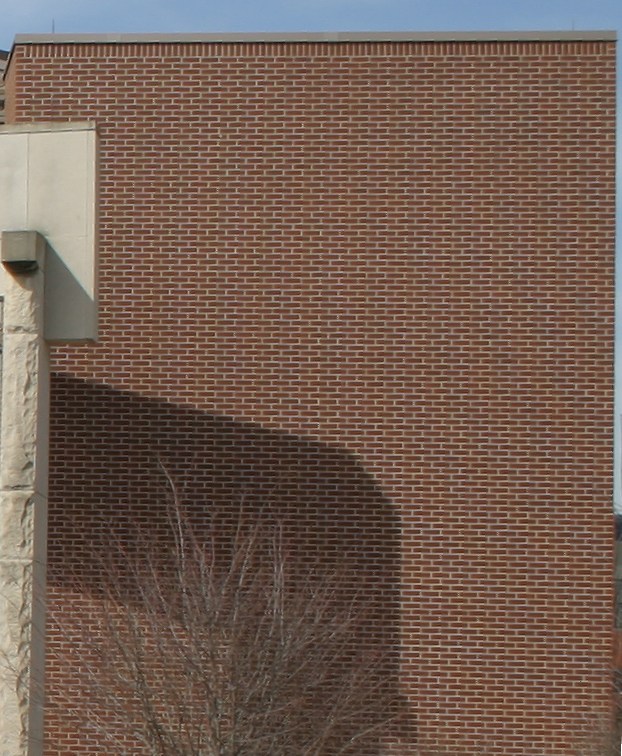
The DSLRs of the last few years have weak anti-aliasing filters already. Thus they produce aliasing. Most people don't know what to look for or aren't photographing things that make it prominent or don't have sharp technique (since shake and de-focus act as anti-aliasing filters) or never print larger than 8x10 or web size.
There is no cure for anti-aliasing other then avoiding it in the first place by using an AA filter bonded to the sensor or less than bitingly sharp optics (when we are talking 36 MPx). For example, shooting at f/16 on full-frame is enough diffraction blur to anti-alias.
Software fudging after the fact is only fudging. You can blur slightly in post or desaturate but it is not completely effective.
The reason aliasing is a problem to be aware of is that when the image is aliased it has recorded false data: aliased spatial frequencies. This is due to the Sampling Theorem (math speak for what is actually a fact) which states that frequencies above half the sampling frequency will be folded back under half the sampling frequency.
It's easier to consider in audio. With a sampling frequency of 44 KHz, a frequency of 26 KHz will get folded around 22 KHz and appear at 18 KHz: audible and out of place and very annoying. 44 / 2 = 22. 26 - 22 = 4. 22 - 4 = 18.
Another example is wagon wheels going backwards in movies due to time-sampling aliasing.
Image data is rarely as regular as audio data, leading people to get lulled into thinking it is a non-issue. It is less of an issue at 36 MPx pictures shown at web size or printed 8x10.
Aliasing shows up in brickwork, window blinds, screens, and fine fabric, among other areas.
Aliasing also produces "jaggies" in diagonal lines, most noticeably around 10 degrees or 80 degrees. It's false data. There are no jaggies on that edge in the real world.
Expect to see more "noise" in shadow areas like grass. The grass is not regular enough to make a pattern of aliasing stand out, but the false data does show up and it is false. Since it is irregular it seems like ISO noise.
I think the reason that pictures like the one posted elsewhere work (very little aliasing visible) is that the D800E has enough pixels that it can rely on the lack of quality of the Nikon lenses to act as an anti-aliasing filter.
That was a tad provocative, since the Nikon (Nikkor) lenses are very good quality and are generally as good as any in their class or so near that the differences have little consequence. The same principles would apply to other leading lens manufacturers.
Thus permit me to expand on my remarks. The high quality Nikkor lenses have limits (like every lens ever manufactured or that will be manufactured). Given the prices they must be sold at, those limits are high, but not stupendous.
I wasn't able to find lists of specific resolutions at line pairs per millimeter (lpm) of Nikkors, and MTF contrast at the lpm is important too. But I have some indication that top quality Nikkors can do about 80 lpm at 50% MTF contrast.
Think of a line pair as a single sine wave cycle, which is what it approximates at 50% MTF: gray to black to gray to white to gray. Thus it gives us the spatial frequency or rather the wavelength at that spatial frequency. One millimetre divided by 80 lpm = 12.5 micrometres per line pair.
The thing to note is that the dimensions of the D800E sensor are 7360 x 4912 pixels and (close to or exactly) 36 x 24 mm. Now, 36 mm = 36,000 micrometres. 36,000/ 7,360 = 4.89 micrometres per sensel (pixel) side.
The Nyquist frequency is half the sampling frequency. The sampling frequency is the pixel density. So two pixels (sensels) side by side must cover no more than one line pair or there will be aliasing and false image data created.
Two sensels span 2 x 4.89 = 9.8 or 10 micrometres. This is less than 12.5 micrometres per line pair. This is good.
Thus, it seems to me, even the best Nikkor lenses are good enough to challenge the sensor with no AA filter, but provide enough blur to act as the AA filter.
In practice, there is some resolution at less than 30 % MTF and thus some small amount of signal (image) will get aliased. But it will generally be overwhelmed by stronger signals of bolder image data or will be weak enough that the aliasing will not be visible under conditions that would cause aliasing with weaker sensors.
In practice, there may not be much difference between the D800 and D800E images. Where there is a difference it is likely to be unfavourable (jaggies and moire and aliasing artifacts).
Ruahrc wrote:
1) what is the physical form of an AA filter? Is it essentially a piece of frosted glass that sits in front of the sensor? Finely sandblasted, or what?
Modern filters work by adjusting the photon wave front to interfere (or do other tricks) with itself. They often incorporate holographic properties (presumably in lieu of the birefringence of the vintage quartz sandwiches). It's pretty well outlined in the patent disclosure, US Patent #6021005. The PDF view has all the figures, which helps demonstrate what's done. (Although it doesn't explain how it works.) For journal papers to actually explain the physics behind it, just google the principals.
Slug69 wrote:
Only a matter of time before they make sensors with the photo sites aranged stochastic fashion.
Retinal cells occur in a Poisson Distribution.
Silver grains occur in a Poisson Distribution in film.
Wikipedia wrote: An everyday example is the graininess that appears as photographs are enlarged; the graininess is due to Poisson fluctuations in the number of reduced silver grains, not to the individual grains themselves. By correlating the graininess with the degree of enlargement, one can estimate the contribution of an individual grain (which is otherwise too small to be seen unaided). Many other molecular applications of Poisson noise have been developed, e.g., estimating the number density of receptor molecules in a cell membrane.