Bobarino
Offline
• •
Upload & Sell: Off
|
 p.2 #12 · B&H 50th Anniv Gitzo 2-series Mountaineer kit arrived ,I'm speechlesss. p.2 #12 · B&H 50th Anniv Gitzo 2-series Mountaineer kit arrived ,I'm speechlesss. | |
Abbott Schindl wrote:
I think Bobarino's got it right: my Mountaineer feels pretty much like a Systematic from a support standpoint.
I've got a GT3541XLS Systematic (6X leg tubes) and a GT3542L Mountaineer (eXact leg tubes). Looking at Gitzo's 2009 and 2016 catalogs, the tube dimensions of the Systematic and Mountaineer are the same:
GT 3542L Mountaineer: 32.9, 29, 25.3, 21.7mm
GT3543LS Systematic: 32.9, 29, 25.3, 21.7mm
Unfortunately I couldn't find similar data for the older Systematic you and I have, so I measured them to be similar to the current models:
GT3541XLS Systematic: 32.2, 28.1, 24.0, 20.0 (6X tubing)
Gitzo says the new tubes are thicker and stronger than the previous generation. I didn't feel like disassembling my tripods to measure, so let's trust Gitzo.
IMO, the big differences between the Systematic and Mountaineer are:
- Systematic's spider may be stronger or provide better support (it's got a bit bigger spread than the Mountaineer).
- Mountaineer has a clever center column that's easily removed for ground-level shooting.
- Leg locks: I prefer the newer G-Lock over the old, and it feels better sealed (but I haven't had issues with the old ones); for me it's mostly a matter of feel in my hand and how easy it is to tighten them.
- Systematics have more interchangeable parts, like the leveling devices, than Mountaineers. Frankly, this hasn't been an issue for me. If I want to do a precision pano, for example, i just mount a rotating plate atop the tripod head, level that (takes a second) and I'm ready to go.
- Frankly, I don't like the feet on the new Systematic. They work fine for my monopods, but I prefer traditional feet on the tripod because when folded the new feet can be a mess.
Frankly, for practical purposes my Series 3 tripods both feel equivalently strong and stiff (hence I rarely use the Systematic any more). The heaviest loads I've put on them are a 1D Mark 4 + EF 500 f/4L (II) + Extender + 600EX-II flash and I've used both for macro stacking as well.
Bottom line: IMO, if you're happy with your current Systematic, just stick with it. Unless, of course, you're coming down with a case of GAS D:...Show more →
I never use the tube diameters in millimeters anymore, I simply use the series number. A 2-series tube is still a 2-series tube, whether it's the top tube of a 2-series tripod,, or the second tube of a 3-series tripod, or third tube of a 4-series tripo, etc. Anything smaller than a 2-series is Hi-Modulus CF, and that goes all the way down to the smallest tubes. A 4-section "0-series" tripod will have a progression of series 0 at the top, to -1 as the second, -2 as the third, and -3 as the lowest tube.,That 0 series tripods legs will all be Hi--Modulus CF
The current tube width differentia from tube to tubel is 3.5mm. This allows for thicker tube walls in comparison to those with the more common 3mm differential seen in most of the Asian models..
Regarding leg-locks, I believe all Gitzos with the exception of the Traveller series, use the "G-Lock Ultra" twist locks, The Traveller series uses the specifically designed and more compact "Traveller G-lock" for better ergonomics/ lighter weight.
My understanding of the current tube construction process goes like this; the carbon starts at one end and is heat-treated to burn off any impurities. The carbon is then extruded through dyes and immediatly "pulled" under constant tension to orient the individual carbon fiber filaments,,, and they're immediately "knit" into complete CF tubes at the other end. Gitzo refers to this process as 3-D construction.
The insane stability of the 5-series and other Systematic tripods has a lot to do with the diameter of the spider. If you draw a centerline along the inside of each leg and look at the convergence-point of those three angles,,, the three converge at various heights above the spider. The 3, 4, series Systematics have smaller diameter spiders than the 5-series,which makes the convergence point at roughly the base of a camera (tripod top-plate stud). The wider 5-series spider projects that convergence point a bit higher,,, at the camera sensor level. Those convergence points are the point of maximum stability.
We could also look at leg shims and realize how they're specifically designed for gap-filling and friction-reduction and so on. There's a lot more "rocket-science" than many will imagine.I find it all quite fascinating.
|


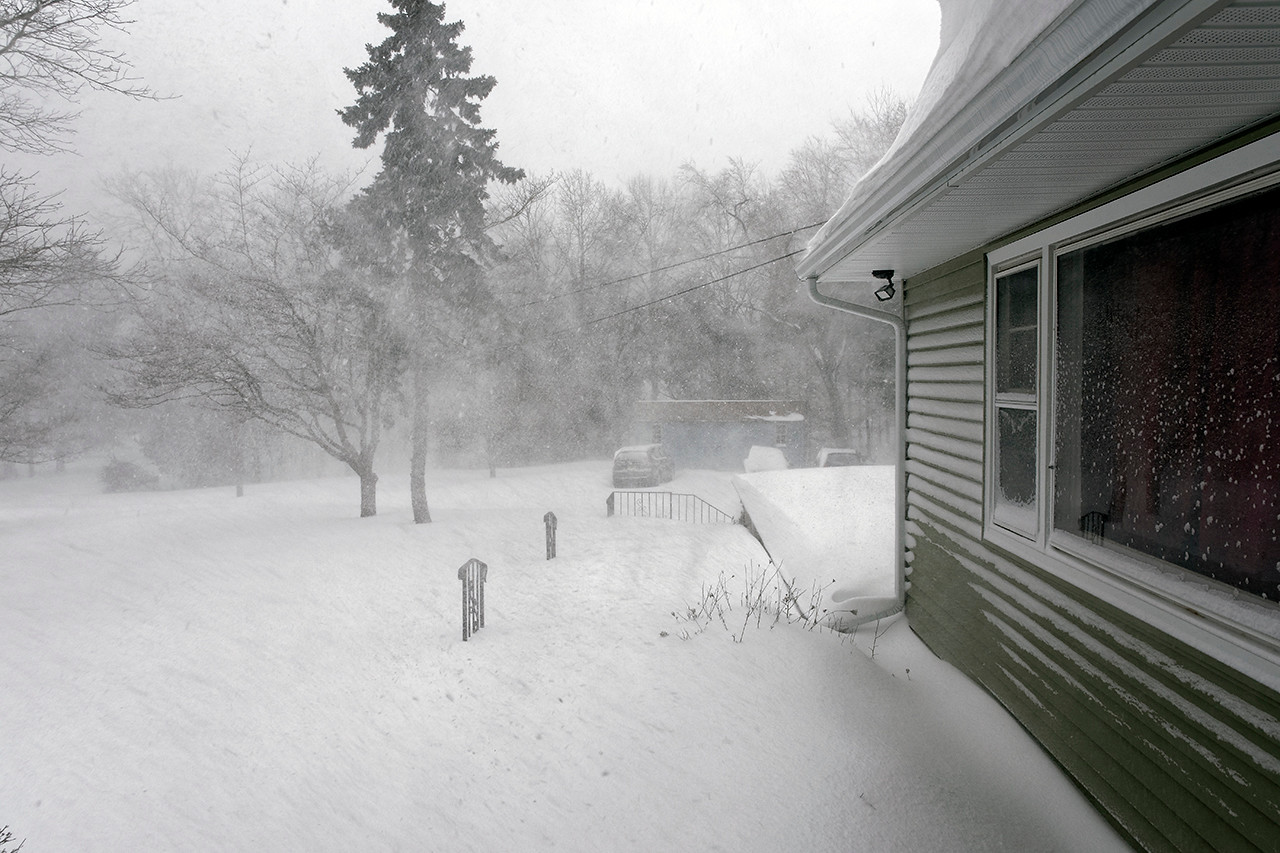
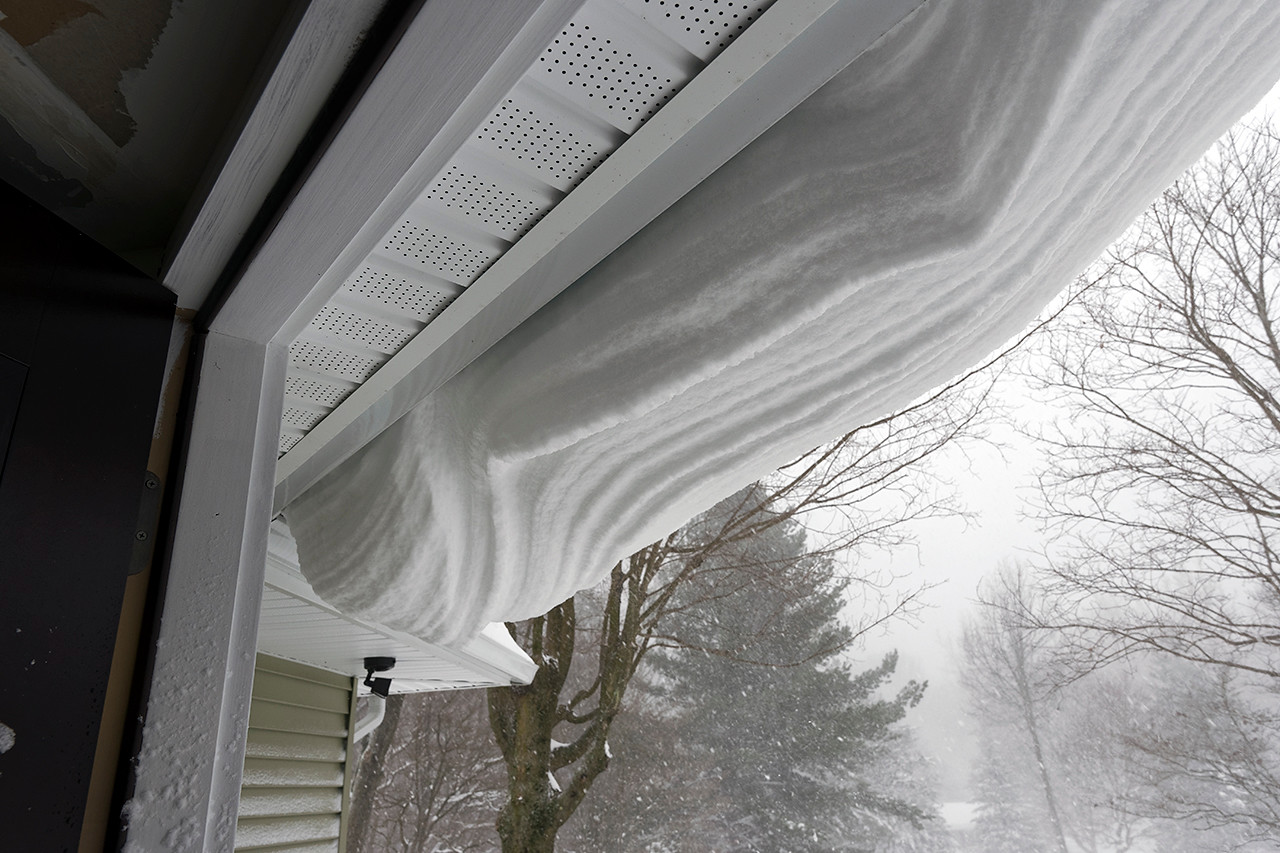
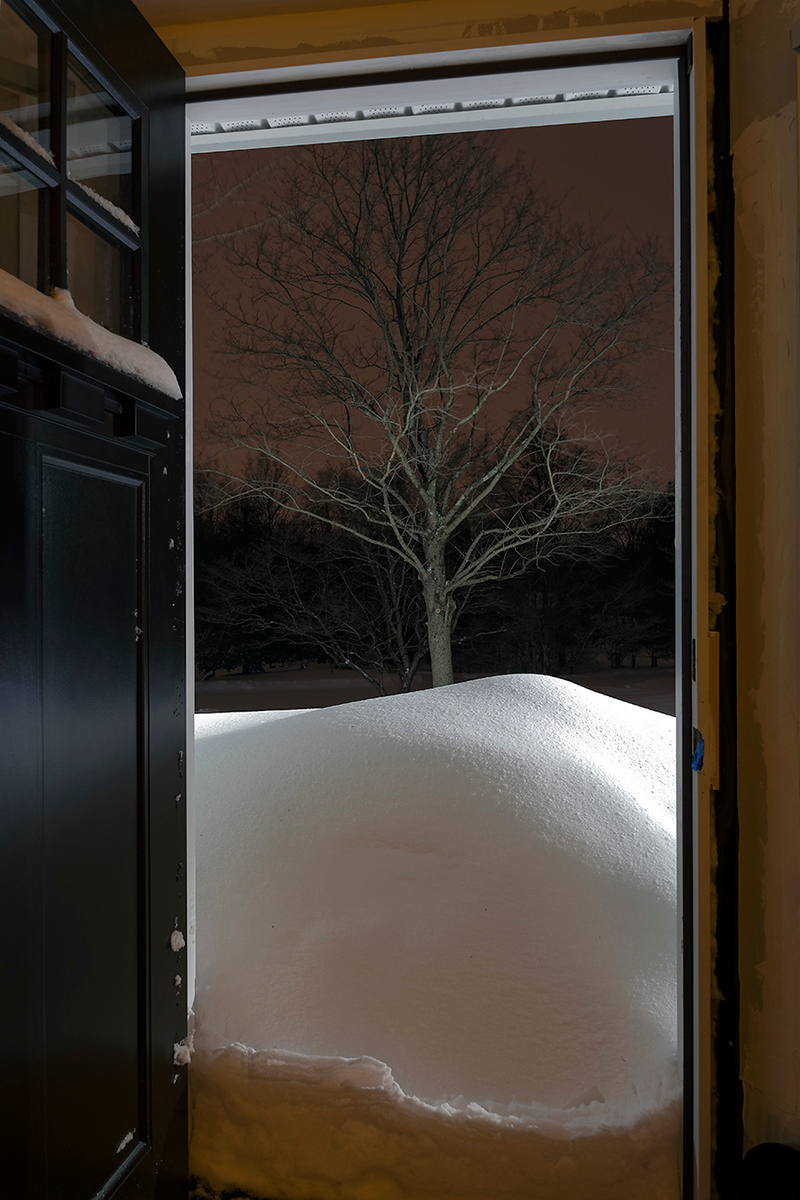
 ) The Mountaineer series are actually "smaller Systematics in disguise". I'll explain shortly. (snow shovelling time here)
 $399
$399