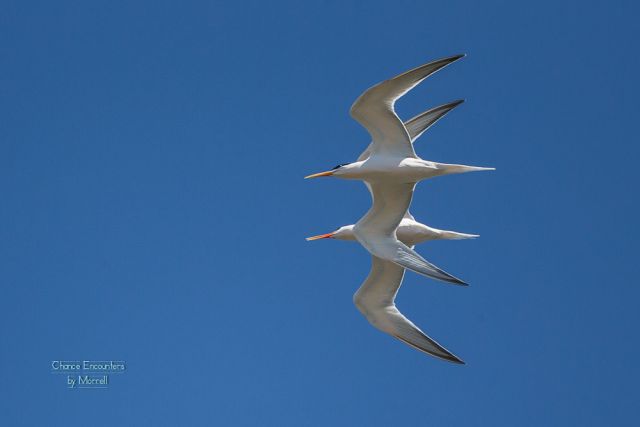
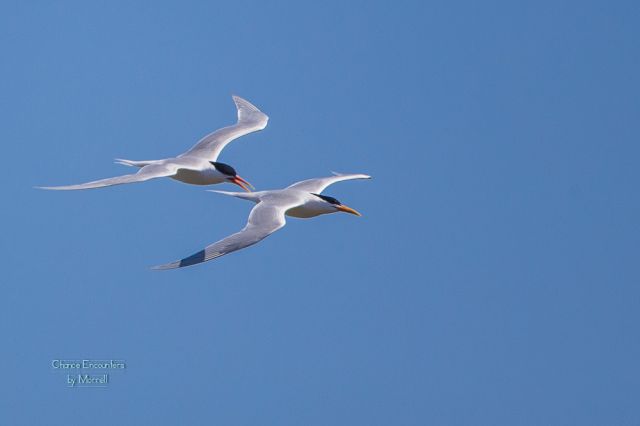
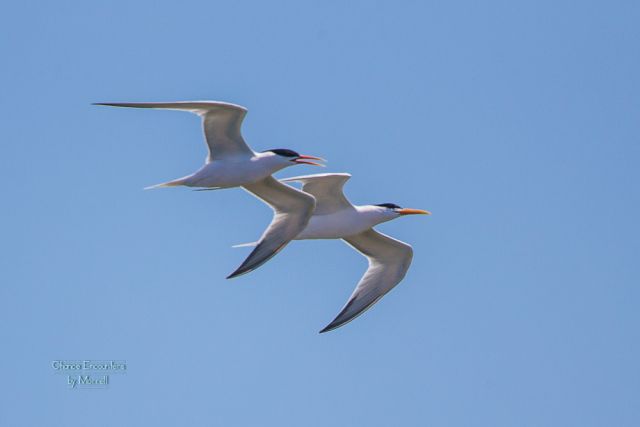
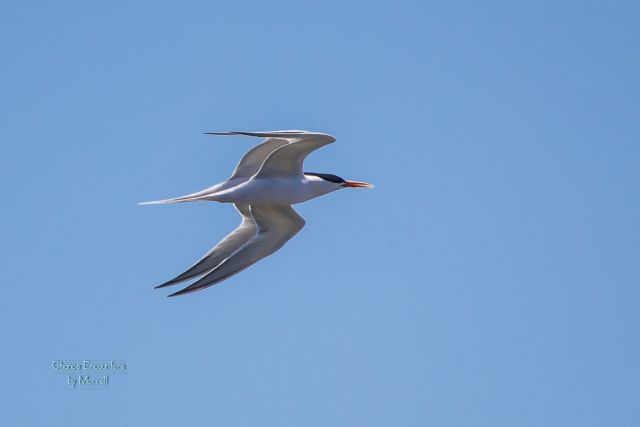
Well done, Db.....those terns look very similar to my Common terns, except they have longer (orange) bills, and perhaps longer wings as well. However, it is hard for me to judge their body size relative to the Common tern......but perhaps they are a bit bigger.
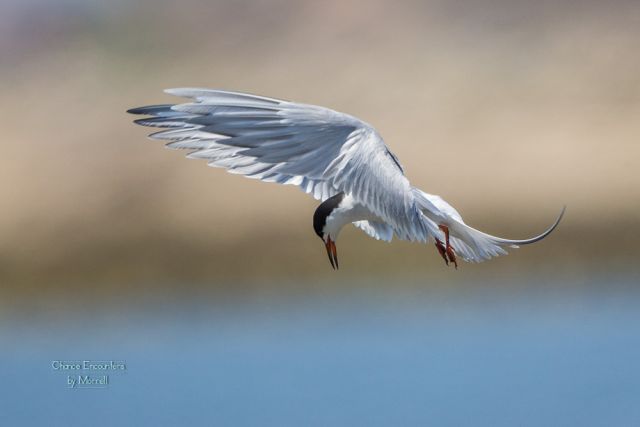
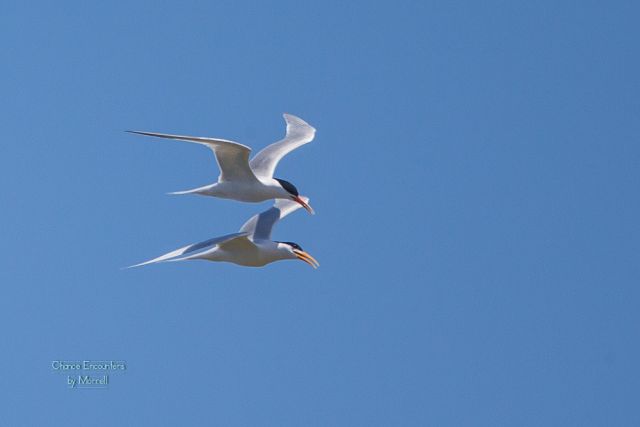
In #1 you got an interesting angle on the bird, and #3 is a fine flap with a pleasing background.
This morning I'll try to go after them with 300 II bare.......hopefully I can get close enough for some decent fishing/diving action. Unless small surface fish happens to be really close to the shore, 300mm is usually not long enough in my case.
Peter/Db, after a bit of surfing, internet style, the following 'Tern' discovery was found and you were spot on Peter. Although the 'Common Tren' is mostly an arctic bird; Canada and Northern Europe, it's been found throughout the northern hemisphere. Below is a link to a variety of Tern and Tern like pijuns here in the California area.
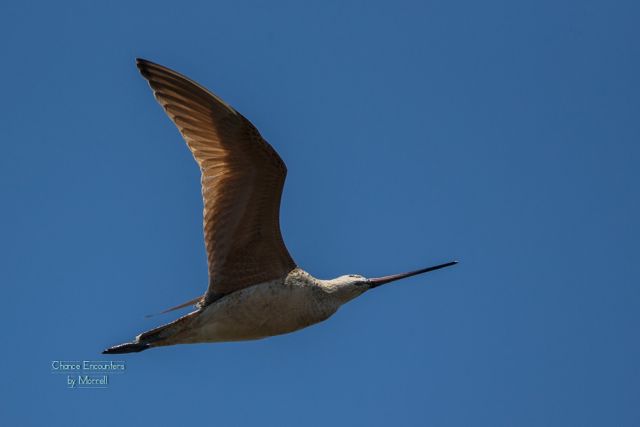
After looking through Db's photos the Black Skimmer seems to have a much bigger beak then the other birds shot. Most of the Terns in CA are around mid-state, in the San Francisco Bay area and a bit further south in Monterrey Bay. There seem to be a few 'Commons' down this way also, a few blown off course I'd guess, or perhaps just a bit lost chasing our two-legged variety of birds that often litter our summer beaches with their bikinis, sun glasses, towels and lotion
After some inspection, the Caspian Tern Hydroprogne caspia, looks much the same as the Common, body wise they are normally 19-23 inches long; 50 - 58cm, weight is about 1.5 to 2 pounds; 650 - 900 grams...so the Wiki tells me. These Caspian Trens look like the ones in the video I sent you of the Bolsa Chica Wetlands...they have grayer feathers on the upper wings, whereas the 'Commons' seem just white like their bodies...
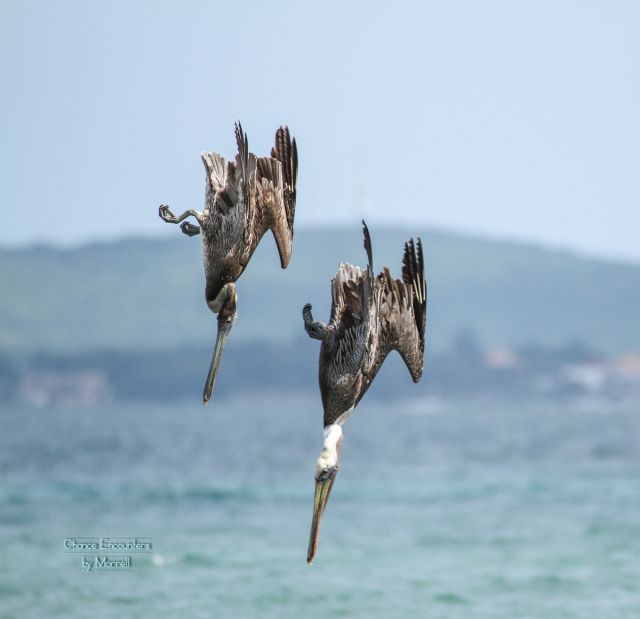
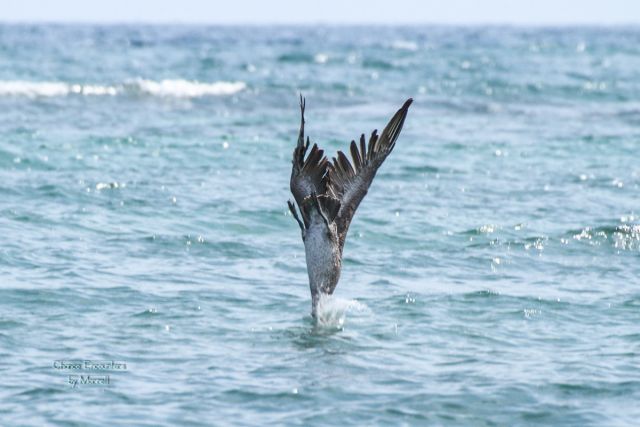
Db, really like your diving images, my imagination in overtime I imaged one of our Brown Pelicans in a steep ocean plunge, the Terns in dive/swoop are much more elegant I'd guess!
Good information Jerry but lets not discount the Einstein effect on the speedier terns in Canada which may account for the shorter and heavier observations. I suppose we could calculate the speed from the measurements.
Jerry, here's one addendum to your tern study: the Caspians are quite large, in fact probably about twice the size of the Common ones.
They have very stout bright red bills and black legs. They also fish/dive from much higher altitude. They are not much of a BIF challenge because they resemble larger seagulls in fligh, and they stay clear off the shore.... they clearly prefer open exapanse of water.
I seldom photograph them.
StillFingerz wrote:
Db, really like your diving images, my imagination in overtime I imaged one of our Brown Pelicans in a steep ocean plunge, the Terns in dive/swoop are much more elegant I'd guess!
Thanks Jerry,
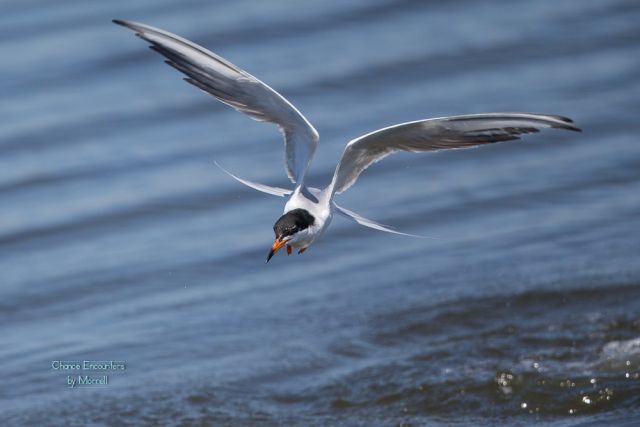
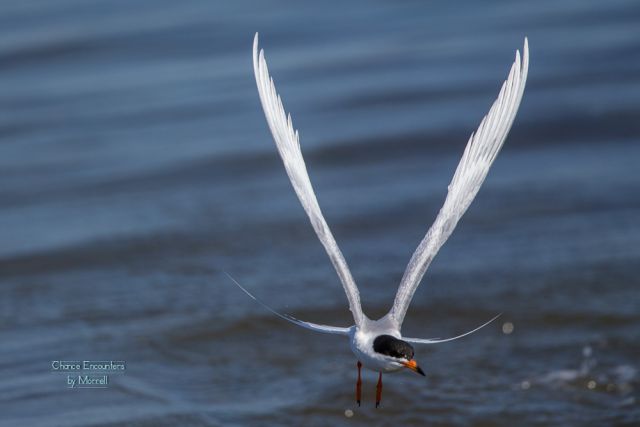
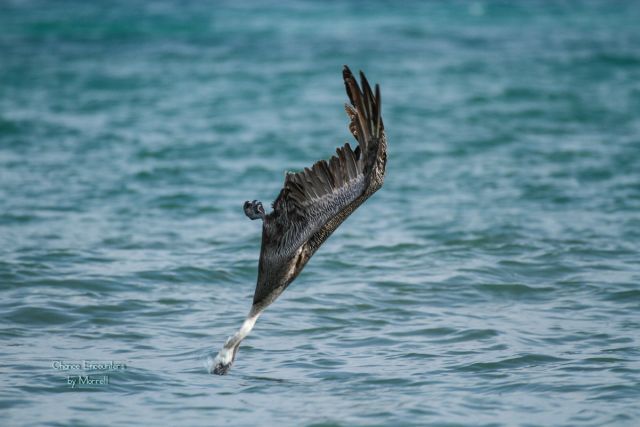
Here are some images to perhaps realize your imagination. These were taken some time ago and I didn't need no st*nking 1D + 500 + 2x then.
Nice shootin Db, that's the plunge's imagined, can watch then all day long. Gliding along their pray spotted then awkward dive, meal in beak, and a long skim back up to their flight path
PetKal wrote:
Jerry, here's one addendum to your tern study: the Caspians are quite large, in fact probably about twice the size of the Common ones.
They have very stout bright red bills and black legs. They also fish/dive from much higher altitude. They are not much of a BIF challenge because they resemble larger seagulls in fligh, and they stay clear off the shore.... they clearly prefer open exapanse of water.
I seldom photograph them.
I take it your Commons are quite swift given half their weight, must be some fine shooting you're doing to capture them so well!
They are lovely pijuns...thanks for shooting a Caspian
p.2 #11 · The virtue of 500 f/4 IS II + 1.4xTC III
big country wrote:
why wouldn't you just roll the 600 ii w/o a tele?
17% less reach, 25% dearer, 0.5kg heavier, more hassle to travel with due to it being a lot longer. 500 + 1.4 combo is a nice compromise of reach, size, weight and price. I'd love the 600 II but most of us only get one choice.
p.2 #12 · The virtue of 500 f/4 IS II + 1.4xTC III
The subject combo is simply much less tiring to use handheld than 600 II bare, especially on repetitive BIF shooting, and the combo is 100mm longer too, although the obvious penalty is a stop of light loss.
Furthermore, 500 II has a significantly better MFD than 600 II.
p.2 #15 · The virtue of 500 f/4 IS II + 1.4xTC III
300 f/2.8 IS has always been one of my favourite BIF lenses, although it often lacks reach, or it requires hard work to compensate for its modest FL.
No doubt, 500 II (+ 1.4xTC III) is generally a more productive BIF lens (combo), but there are times when 500mm is way too long.......that is when 300 f/2.8 IS shines.
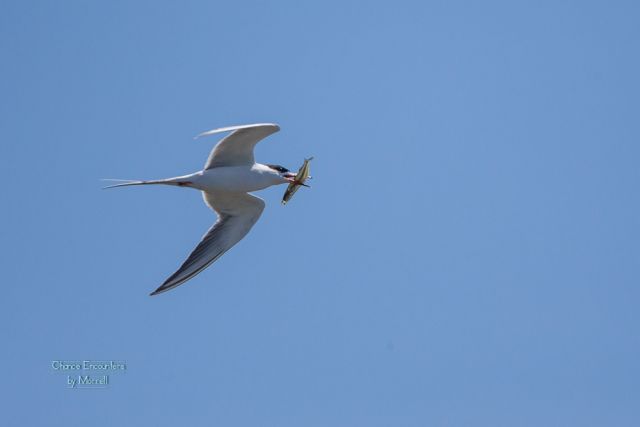
Here is a backlit tern in flight shot which 300 f/2.8 IS MkII handled well.
p.2 #18 · The virtue of 500 f/4 IS II + 1.4xTC III
StillFingerz wrote:
WoW, great shot the background really makes your pijun pop!
Peter, how does your 1d2n or 1ds2 handle the new Mark II teles in combo with the Mark III T/Cs?
Thanx, Jerry.
1DMkIIN and 1DsMkII handle all those lenses/TCs in fundamentally the same way as 1DX.
However, 1DX AF is a bit better, and 1DX handles extreme defocus much better than the older cameras, which is very important with anything 600mm FL and over.
p.2 #19 · The virtue of 500 f/4 IS II + 1.4xTC III
Jerry, the first image is a very major crop only meant to show you the size of the Caspian tern relative to the Ringbill seagull.....quite similar in size except the Caspian appears more stout.
The second image shows the Common tern for form/shape comparison purposes. Alas, I do not seem to have an image of both tern species together. They seldom interact because their ecological niches are sufficiently different. Sadly, seagulls interact with any and all species that mean food for them in one form or another.
p.2 #20 · The virtue of 500 f/4 IS II + 1.4xTC III
Peter, very nice captures, thank you!
The Caspian is indeed much bigger, I've more research/study to do. It's interesting I'd thought gulls would be the larger, video can be deceiving, but I'm not much of a birder or watcher either. Linda, when younger; back in Rhode Island, thinks your Commons may have frequented their northern lake areas, as she remembers them being half the size and sleeker in body and wing. I'll show her today's pictures later today
When we were looking at yesterday's post/images she noted that the Caspian body looked much heavier, stouter, then what she remembers seeing. There also seems to be a feather color difference as well, could be just shadows. The Caspian's back and wing tops are/seem a lighter gray/grey whereas the Common's seem all white?
Your images have very much peeked Linda's interest, going bird watching/shooting in the future will be a joint effort. Now the task at hand, besides my rolling issues, is to go with a spotting scope or regular binoculars I'm guessing a few 'fowl' books; of the non-cooking variety, will be aquired as well, this could be quite fun!
Gull and pelican's abound at our beaches, Herons of various colours are at Bolsa Chica, given help I may be able to reach the interior walks of the reserve, something to look forward to.
Thanks for the 1D info, more to ponder, think I'll grab a T-90 and EOS-3 and fumble around with their 'mode' switching three-button-still-finger-nightmare...managed them once







 the background really makes your pijun pop!