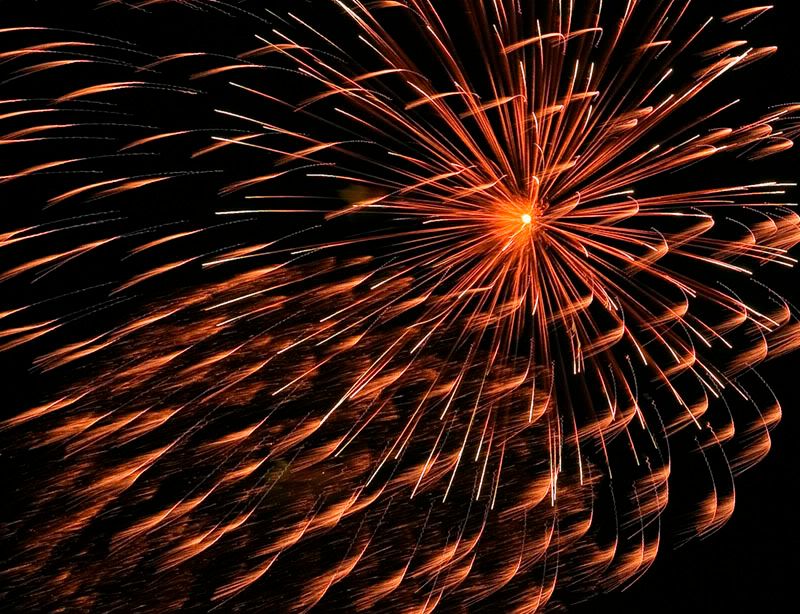
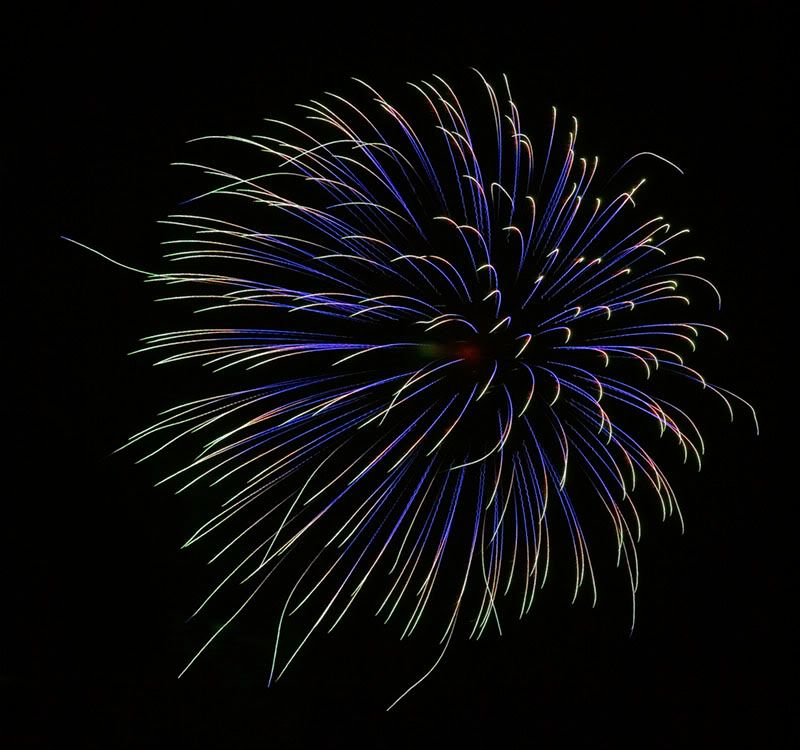
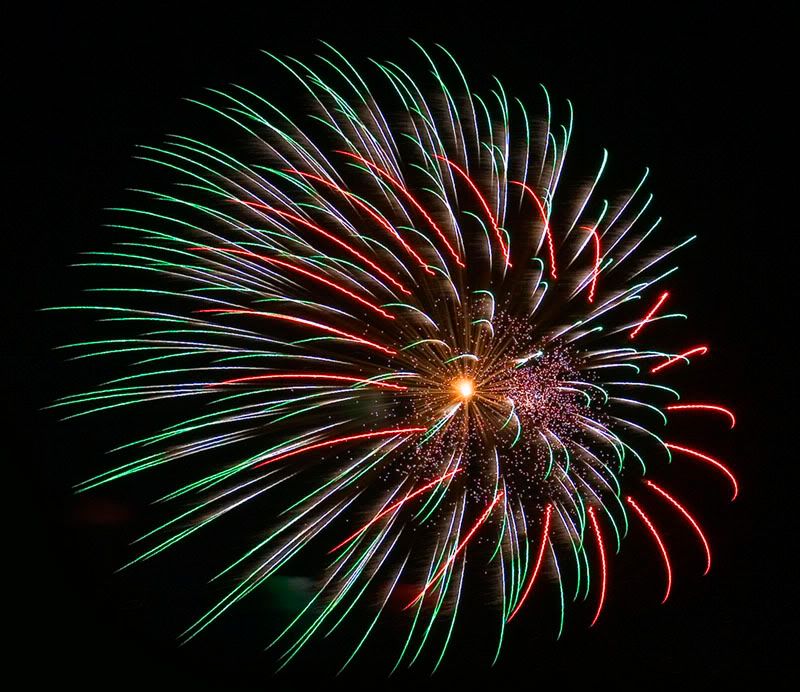
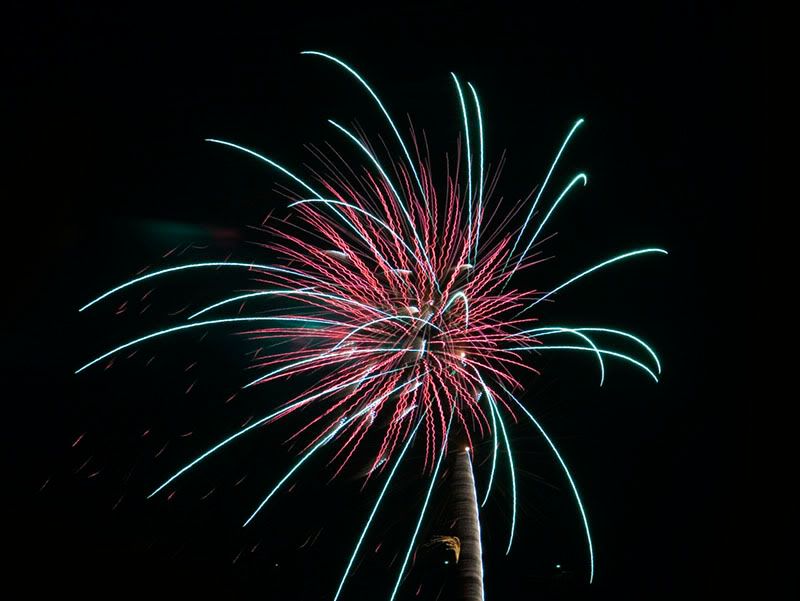
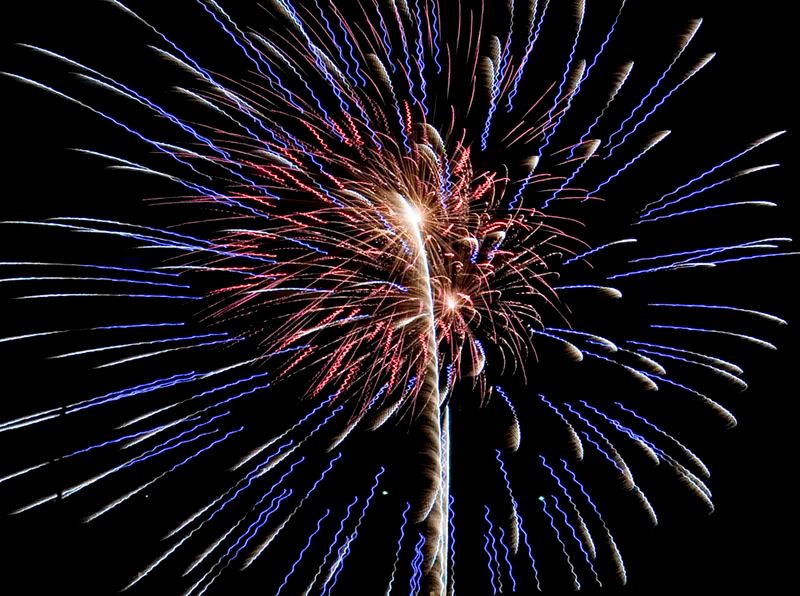
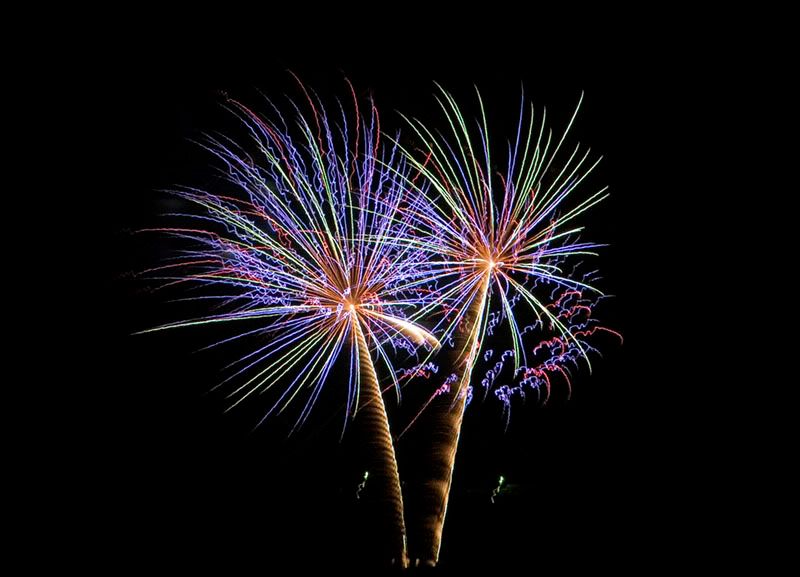
(2009-06-23) OK, time to dust off this old thread and see what new fireworks you'all have been able to capture in the past year, so once again, show us your fireworks!!
In honor of the upcoming 4th of July, show us your fireworks photos!!! ...and how you captured them.
J.D. wrote:
I'd be interested in seeing this too. I've never had any success with fireworks. OTOH, I don't shoot them that often.
I can't believe I don't have any firework shots up on my flickr!!
Anyways, fireworks are easy. Just takes a little set up and creativity. This are tips to start out with, then you can play around with the settings as you go.
1. Use a tripod
2. Use a remote trigger if possible (makes it much easier)
3. Low ISO (100 or 200 depending on what your camera can do) Yes it seem weird to use low ISO for night shots but those fireworks are bright!!
4. Use Manual Mode. If you try to automatic mettering it's going to throw everything off. Don't worry if the metering starts blinking like crazy. You want bright firworks and background dark.
5. use small aperature and set focus to infinity (or slightly less)
6. Exposure time...depends, you want long trails or short trails. Easy thing is to use Bulb mode and a remote to hold the shutter open as long as you want.
Last year's 4th of July from the 17th floor of the Bausch and Lamb building downtown Rochester, shot through glass in a corner conference room. Girlfriend's mother works there, was a great view.
I also think that low ISO and f/16 in manual mode with bulb exposures makes the best fireworks captures because higher ISO or larger apertures tend to overexpose the fireworks and so burn out the colours towards white, causing loss of colour saturation near the centre of each trail. The exposure is determined by the brightness of the fireworks and the fact that they are moving across the image. If they were static then they would just go white in the photos. Because they are moving, the shutter speed is not critical other than to let you capture the right amount of fireworks for a pleasing composition and to prevent too many overlapping explosions that would also burn out to white.
It gets a lot harder when you try to include surrounding landscape features because then shutter speed can be far more significant to get the correct exposure of the background (non-firework) parts. Compromises may be needed.
Using a tripod prevents too many wiggles in the firework trails but handheld can make some interesting effects if used in moderation.
In general the firework trails we capture in photos are a lot longer than we see on the night with our eyes. We need the trails to better represent a moving light show on a stationary snapshot. A bundle of point light sources is rarely as impressive as showing a reasonable amount of trails. Sometimes very long trails work ok but usually there are too many other explosions going on during the exposure for the result to be pleasing in a photo.