justruss
Offline
• • • • •
Upload & Sell: Off
|
 p.2 #12 · i7 3770 vs 3820 for photoshop? p.2 #12 · i7 3770 vs 3820 for photoshop? | |
15Bit wrote:
Hmm, things are hotting up here i see.
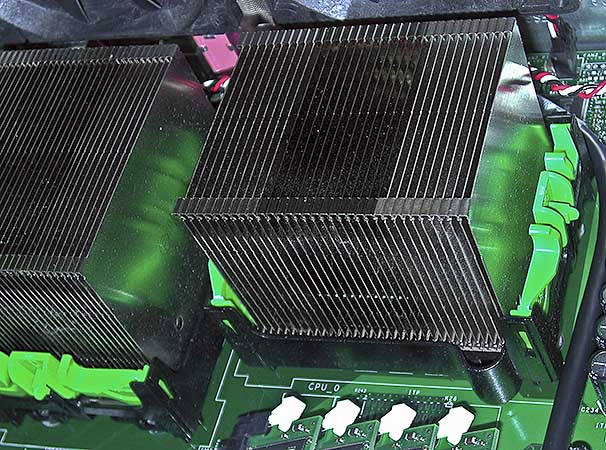
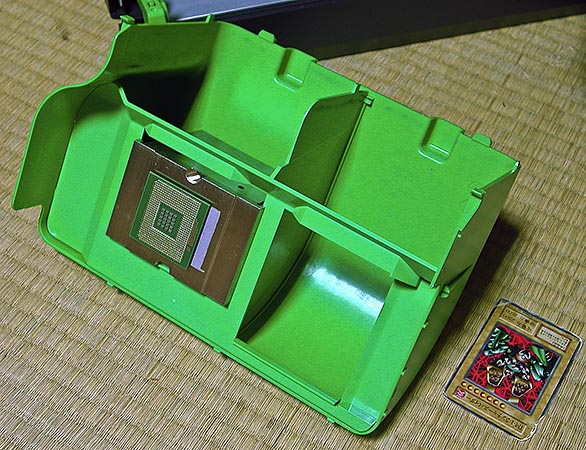
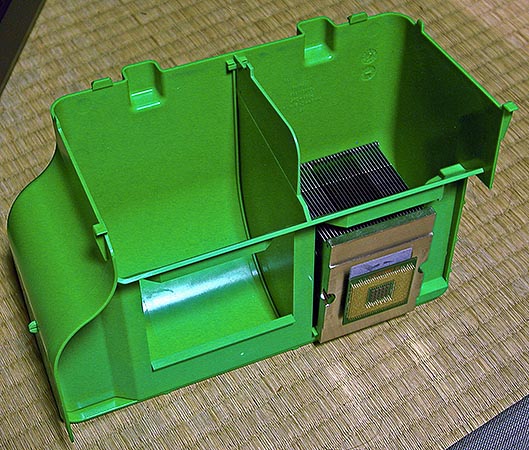
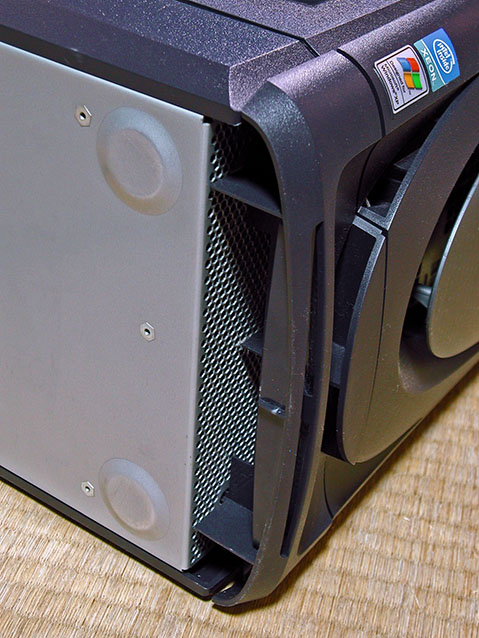
Bifurcator, I actually have one of those P4 Dual Xeon Precision Workstations under my office desk - it runs as the backup server for my labs. And it is a nicely built, well thought out and reliable piece of kit. Its not quiet though, especially when both CPU's spin up.
I have a feeling people are arguing over slightly different applications here, but aren't noticing. There is a place for a multi-socket workstation - for applications which need large amounts of CPU and where you have software that scales decently with core count. That would include rendering software, high end video editing suites and maybe one or two photoshop filters. We have a couple of dual socket Dell workstations at work for doing computational chemistry calculations. That is where you buy the Xeon's - high uptime, high core count machines for applications that need those. The limitations of the Xeons are the clockspeed. Even the fastest 8 core chip will only turbo to 3.1Ghz. That is why they run cooler, and part of the reason why they are more reliable.
For applications which don't scale well with core count (which includes LR, and in the main, photoshop too i think), then clockspeed is what you want. And in this regard a quad core overclocked to run at 4.2-4.4Ghz will leave the Xeons for dead, no matter how many cores you can throw in there.
With respect to the other "workstation" class features, things have changed in recent times. You can buy extremely nice cases for home builds now, as well designed as the workstation cases that Dell offer. My Seasonic PSU came with a 5 year warranty, so i have little doubt about its reliability, and it is spec'd so i can expand my system later (which the Dell's aren't). My last build had a full Intel branded motherboard with overclocking features, and that had a 5 year warranty also: You can get quality components if you want them. You won't get ECC memory support on a desktop motherboard and you'll be limited to 32Gb, but thats not a catastrophe for most of us.
The one place that pre-built workstations do win out is cooling. Things are getting better in the consumer space - my currently Asus motherboard has automatic fan control for 5 fans i think, and includes the ability to completely turn off fans when not needed. This is one of the reasons i bought the motherboard, as this kind of control is something that i think should have been available for desktop boards year ago. Good as it is though, it is not as good as proper workstation cooling control for the simple reason that it needs to be fairly generic in order to support a range of fans and cases, whereas a Dell or HP workstation can have a properly optimised internal airflow design and fan control setup.
I would have to say that my last PC lasted me 5 years, with some upgrades along the way (most notably CPU and SSD). I expect my current i5 to last me at least 3 years and hopefully 4 or 5.
Perhaps an interesting compromise for those wanting both cores and clockspeed is an overclocked 6 core system. There is an interesting read about that here - http://www.tomshardware.com/reviews/core-i7-3970x-sandy-bridge-e-benchmark,3348.html. Much of the discussion also applies to the 4 core vs Xeon argument too. ...Show more →
I'm in total agreement here.
I think you're a few years back, Bifurcator, on this issue for this specific space (we're not talking about a render farm, folding, benching)-- we're talking about mid/upper enthusiast class, meaning 4/8 core/logical cores, doing 2d editing w/ a bit of 1080p video editing (which the 4/8 chips handle just fine), good but not high end GPU. This is the realm where 4 cores overclocked with cheap air cooling (Hyper 212+)/all-in-one hydro (H80 for instance) is a killer combination from a cost and performance standpoint.
Building your own system in this realm is super simple, and definitely significantly cheaper, particularly if you keep an eye out on Newegg/Amazon (live near a Microcenter... bonus!). With even a tiny bit of knowledge, it's easier to support too. Buy components, spend a little time checking reviews/manufacturer specs for compatibility, snap pieces into place. Getting it to run OS X is even only a medium difficulty task with resources like Multibeast (retail installation/no piracy involved), but involves plenty of tinkering if you want it to run operationally smooth on a production machine.
Very few amateurs/enthusiasts are going to build a multi-socket (or even single socket), Xeon/Opteron-based, PASSIVELY cooled system. Even if they go that route, it's going to be actively cooled these days-- and it's NOT going to be quiet. ECC memory is more expensive, as are component costs (Mobo/CPU), for diminishing returns for single-system builds for most people.
In addition, take a look at a generation or three back Xeon/Opteron/-E (Enthusiast desktop chips that are essentially re-branded Xeons) CPU prices. They are not dirt cheap.
|


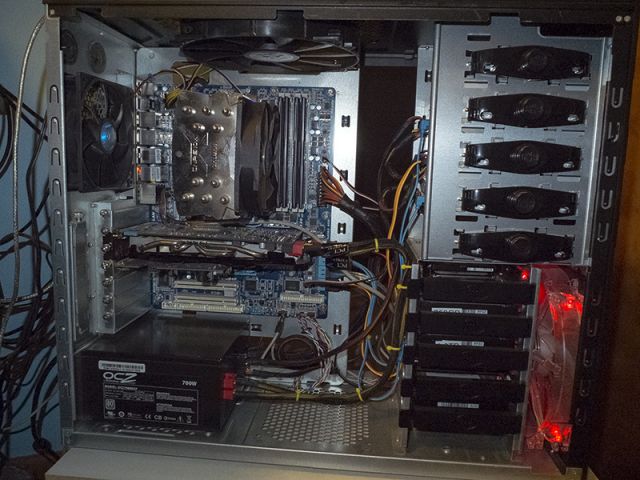

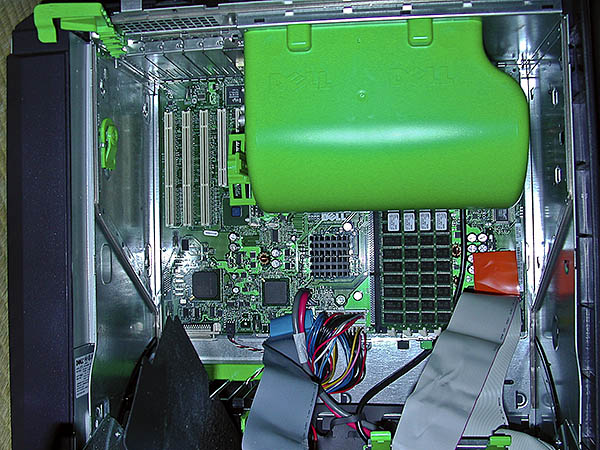
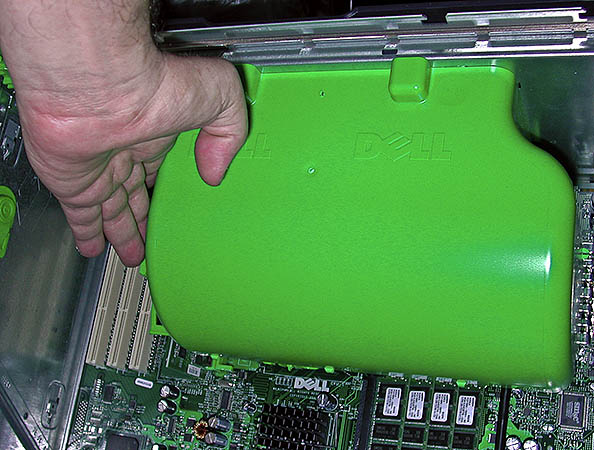
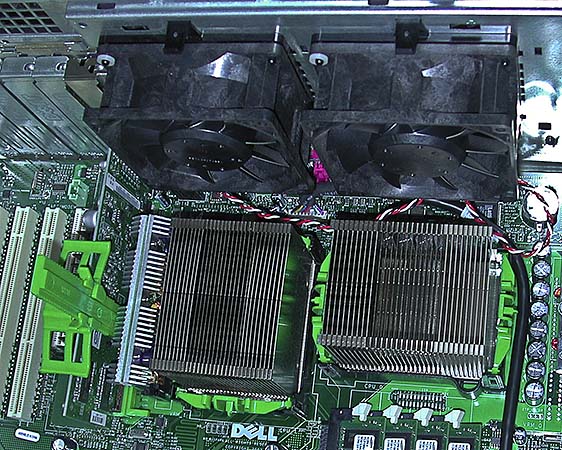


 And I've said pretty much everything there is to say already. People have been divided into various camps over purchasing SOHO PCs for as long as I can remember.
  ). Dell Workstation support - gotta love it.
 Geez, that's reading a lot between the lines that wasn't there. I'm a "Workstation Class Computer" fan-boy to some extent. Dell has pretty good prices and good service but that's the extent of that. And there's no place you can point to where you'll find me saying one way is better than another for everybody. Some ways are cheaper or easier than others depending on the individual's talents and/or the purpose of the machine - but that's all. I certainly never said one way was not "thrilling" or less "thrilling" than another. Silly you...
  The difference between rendering previews at 1min. per frame vs. 15sec. per frame is the difference between having to wait 1 hour vs. 15min - for a super short 60-frame preview. For a 240-frame preview that's 4hrs vs. 1hr. Simple logic shows that in such cases even a machine costing ten times more is well worth it if you can bare the initial cost. And if you can't, get a job.
 I hadn't looked at pricing yet.
